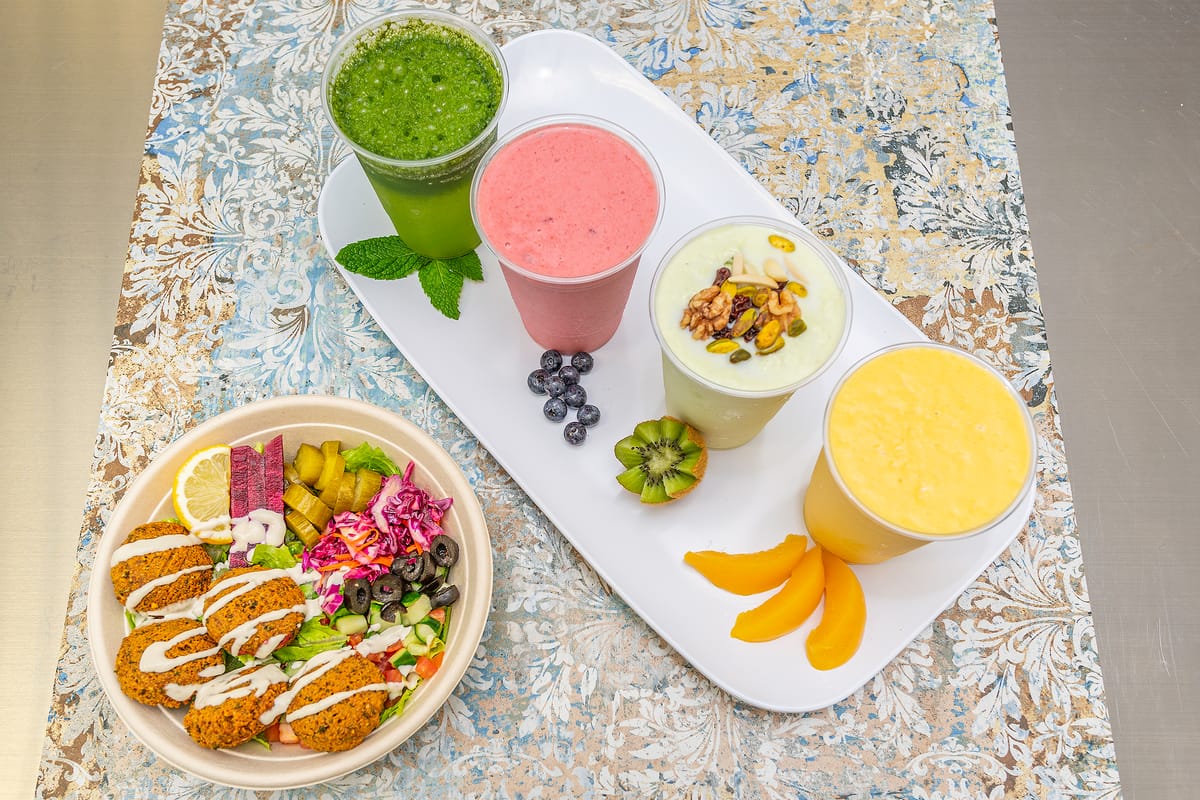
What Is Shakshuka?
The Complete Guide
Eggs poached in a rich, spiced tomato sauce — shakshuka is one of the most beloved breakfast dishes across North Africa and the Levant. Here is everything you need to know about its origins, ingredients, variations, and why it belongs on your table.
4.8 stars on Yelp (92 reviews) -- Open 11:00 AM - 12:00 AM
What Is Shakshuka?
Understanding the dish, the technique, and the flavor
Shakshuka is a single-pan dish built from a deeply seasoned tomato and pepper sauce into which whole eggs are cracked and gently poached. The eggs cook in the simmering sauce, absorbing the flavors of cumin, paprika, garlic, and harissa until the whites are fully set and the yolks remain glossy and just-runny. The entire dish arrives at the table in the skillet it was cooked in, served with warm flatbread or pita on the side for scooping.
The flavor profile is warm, smoky, and savory with a gentle heat that builds rather than bites. The tomatoes provide acidity and body; the bell peppers add sweetness; the spices deliver earthy depth. When an egg yolk breaks into the sauce, it enriches everything it touches, creating bites that are simultaneously bold and silky. Shakshuka is rarely described as delicate — it is assertive, comforting, and deeply satisfying even in small portions.
The dish is categorized differently depending on the region. In North Africa it is a weekday breakfast staple, often eaten communally from the same pan. In the Levant it appears at brunch tables and as a light dinner. In Western countries it has become a weekend brunch mainstay, appearing on menus of restaurants that range from casual cafes to full-service dining rooms. The word shakshuka is believed to derive from an Arabic root meaning "a mixture" — a fitting description for a dish that combines simple pantry ingredients into something greater than the sum of its parts.
Shakshuka requires no special equipment beyond a heavy-bottomed skillet with a lid. It can be made in 25 minutes from start to finish and costs very little per serving. These practical qualities — combined with its nutritional density and the visual drama of eggs nestled in vivid red sauce — explain why the dish has spread far beyond its North African origins to become a global fixture of the modern brunch table.
Origins of Shakshuka
From Tunisian kitchens to tables worldwide
Food historians place the origins of shakshuka firmly in North Africa, with Tunisia widely credited as the dish's birthplace. The foundational technique — poaching eggs in a spiced sauce — appears in North African culinary manuscripts from the 16th century, though those early versions were made without tomatoes, which did not reach the Mediterranean until after European voyages to the Americas. Pre-tomato shakshuka relied on harissa, onion, and dried peppers for its sauce body, producing a drier, more intensely spiced result.
Tomatoes arrived in the Ottoman Empire and North Africa gradually throughout the 17th and 18th centuries. By the 19th century, fresh and preserved tomatoes had become the dominant base ingredient for the dish as it is recognized today. Tunisian cooks found that tomatoes provided the ideal combination of acidity, sweetness, and liquid volume needed to poach eggs efficiently. The tomato-forward version of shakshuka quickly spread west to Morocco and Algeria and east through Libya and Egypt.
The dish reached the Levant through two main channels: Ottoman administrative and trade networks that connected North Africa to the eastern Mediterranean, and — more significantly — through the movement of Sephardic Jewish communities, many of Tunisian and Moroccan origin, who carried their food traditions eastward during the 19th and 20th centuries. In Levantine households, shakshuka was adapted with local spices and herbs, incorporating Aleppo pepper and za'atar-influenced garnishes alongside the traditional North African spice blend.
Global awareness of shakshuka grew substantially in the early 21st century, driven by the international food media's interest in Middle Eastern and Mediterranean cuisine. Food publications and television cooking shows spotlighted the dish starting around 2010, and it appeared on restaurant menus across North America, the United Kingdom, and Australia within a few years. By 2020, shakshuka had become a standard entry on brunch menus in cities from New York to Melbourne, representing one of the most successful examples of a regional dish achieving global mainstream recognition within a single decade.
Earliest egg-in-sauce technique in Tunisian and North African cooking — no tomatoes yet
Tomatoes adopted from the Americas, transforming the sauce base into its modern form
Dish spreads eastward through North Africa and into Levantine communities via trade routes
Shakshuka becomes a household staple across Tunisia, Libya, Egypt, and the broader region
International food media drives global brunch restaurant adoption in the US, UK, and Australia
One of the most searched egg dishes worldwide; standard on Mediterranean restaurant menus globally
Built on Spice, Fire, and Technique
Every shakshuka starts with the same three moves: bloom the spices, build the sauce, and poach the eggs with patience.
How Shakshuka Is Made
Step-by-step breakdown of the classic method
Build the Aromatic Base
Heat two tablespoons of extra-virgin olive oil in a 12-inch cast iron or heavy skillet over medium heat. Add one diced onion and two diced bell peppers — red or a mix of red and yellow. Cook, stirring occasionally, for 8 to 10 minutes until softened and beginning to caramelize at the edges. Add four to five minced garlic cloves and stir for 60 seconds. The kitchen should smell strongly of sweet onion and roasted garlic at this stage.
Bloom the Spices
Add one teaspoon ground cumin, one to two teaspoons smoked paprika, one tablespoon harissa paste, and half a teaspoon each of caraway seeds and ground coriander to the softened vegetables. Stir constantly for 90 seconds. Blooming spices in fat before adding liquid extracts their fat-soluble flavor compounds — a technique central to North African and Levantine cooking — and is what separates deeply flavored shakshuka from flat, one-dimensional versions.
Build the Tomato Sauce
Add one 28-ounce can of whole peeled tomatoes, crushing them by hand as they go in, or use your spoon to break them up in the pan. Season with one teaspoon of salt, half a teaspoon of black pepper, and a pinch of sugar to balance acidity. Stir well and bring to a steady simmer. Reduce heat to medium-low and cook uncovered for 12 to 15 minutes, stirring occasionally, until the sauce thickens, darkens slightly, and the oil visibly pools around the edges. This concentration step is not optional.
Add the Eggs
Use the back of a large spoon to make four to six shallow wells in the surface of the sauce. Crack one egg into a small bowl first, then slide it into the well — this prevents broken yolks and gives you control over placement. Repeat with remaining eggs, spacing them evenly around the pan. Season each egg lightly with flaky salt and a pinch of paprika.
Poach and Cover
Cover the pan with a lid and reduce heat to low. For runny yolks with fully set whites, cook for 5 to 7 minutes. For fully cooked yolks, extend to 8 to 10 minutes. The lid traps steam that cooks the tops of the eggs without requiring you to flip them. Watch carefully — shakshuka eggs go from underdone to overcooked quickly. The whites should be opaque and firm; the yolks should still jiggle slightly when you move the pan.
Finish and Serve
Remove the lid and immediately scatter a generous handful of fresh chopped flat-leaf parsley and cilantro over the dish. Add crumbled feta if desired, a drizzle of high-quality olive oil, and a few pinches of dried chili or smoked paprika for color. Shakshuka is served directly from the skillet at the table. Warm pita bread, crusty sourdough, or challah on the side is non-negotiable.
Key Ingredients in Shakshuka
The spices and components that define the dish's character
Ground cumin is the dominant bass note in shakshuka. One teaspoon per four servings adds warm, slightly bitter earthiness that ties the whole sauce together. Cumin contains the antioxidant apigenin and has long been used in North African cooking as a digestive aid.
Spanish-style smoked paprika, or North African sweet paprika, gives the sauce its deep brick-red color and a subtle smoky sweetness. Use one to two teaspoons. Unlike cayenne, paprika provides color and depth without excessive heat, making the dish approachable for all palates.
Four to six cloves of garlic, sliced thin or minced, are sautéed in olive oil before any other ingredient goes in. Garlic forms the aromatic foundation of the sauce. It softens into a mellow sweetness when cooked low and slow, losing the sharpness that raw garlic carries.
Harissa paste—a Tunisian condiment made from roasted red chilies, garlic, and caraway—is the traditional heat source in North African shakshuka. One tablespoon builds complexity without overwhelming. Dried Aleppo pepper flakes are a gentler Levantine alternative with fruity undertones.
Fresh flat-leaf parsley and cilantro are scattered over the eggs right before serving. The heat of the pan wilts them slightly without destroying their volatile aromatic oils. Some cooks add a squeeze of fresh lemon juice over the finished dish, which cuts through the richness of the eggs and olive oil.
San Marzano whole peeled tomatoes or ripe field tomatoes provide the bulk of the sauce. A 28-ounce can feeds two to three people. Tomatoes supply lycopene—a carotenoid antioxidant more bioavailable when cooked in oil—as well as potassium, vitamin C, and the gentle acidity that balances the richness of the eggs.
Shakshuka Variations Around the World
From the original Tunisian version to modern regional adaptations
Classic Red Shakshuka
Origin: Tunisia / North Africa
The original. A sauce of ripe tomatoes, roasted bell peppers, onion, garlic, cumin, and paprika. Eggs are cracked directly into the simmering sauce and covered until the whites set but the yolks remain runny. Served with crusty bread for scooping.
Green Shakshuka
Origin: Modern Levantine
A contemporary spin that swaps the tomato base for a green sauce built from tomatillos, spinach, kale, jalapeños, and herbs. Popular in Tel Aviv cafes since the 2010s, it delivers a brighter, fresher flavor profile with the same satisfying egg-poaching technique.
Shakshuka with Feta
Origin: Eastern Mediterranean
Crumbled white feta cheese is added to the tomato sauce or scattered over the eggs before the pan is covered. The feta softens and releases its salty, tangy character into the sauce, adding a creamy element and Greek-influenced flavor. Common in Cypriot and Greek restaurants.
Spicy Harissa Shakshuka
Origin: Tunisia
Double the harissa and add a whole dried chili or two to the base. This is the most fiery version, still widely made in Tunisian homes. The additional heat is balanced with a drizzle of thick yogurt over the finished dish. Requires more bread.
Shakshuka with Merguez
Origin: Maghreb North Africa
Sliced merguez—a spiced lamb and beef sausage heavily seasoned with harissa, cumin, and fennel—is browned in the skillet before the tomato base is built over the rendered fat. The sausage fat enriches the entire sauce and turns this into a hearty, protein-dense meal.
Shakshuka vs. Eggs Benedict
Two celebrated egg dishes — how do they stack up?
| Category | Shakshuka | Eggs Benedict |
|---|---|---|
| Cooking method | Eggs poached in seasoned tomato sauce | Eggs poached in water, served on English muffin |
| Origin | North African / Levantine (Tunisia, widespread) | New York City, USA (19th century) |
| Dominant flavor | Smoky, spiced, savory tomato with rich yolk | Rich, buttery, tangy hollandaise |
| Dietary profile | Vegetarian, naturally gluten-free without bread | Contains butter, wheat (English muffin), pork optional |
| Calories per serving | 280–340 kcal (2 eggs, sauce, no bread) | 450–650 kcal (with hollandaise and muffin) |
| Protein content | 16–20g from eggs and chickpeas if added | 18–24g from eggs and Canadian bacon |
| Meal timing | Breakfast, brunch, lunch, or light dinner | Primarily brunch |
| Cook time | 20–30 minutes, one pan | 15–20 minutes, requires separate poaching pot |
| Spice complexity | Cumin, paprika, harissa, garlic — layered | Minimal spice — butter, lemon, cayenne in sauce |
| Best eaten with | Crusty bread, pita, hummus, labneh | English muffin, Canadian bacon, champagne |
High Protein, Low Fuss
Shakshuka delivers 18+ grams of protein in a single pan with minimal prep — breakfast nutrition that actually satisfies.
Health Benefits of Shakshuka
Why nutritionists and health-conscious eaters love this dish
High-Quality Protein
Two large eggs supply 12 to 14 grams of complete protein containing all nine essential amino acids. Adding chickpeas to the sauce brings the per-serving protein total to 18 to 22 grams. Protein from eggs has a biological value of 100 — the highest of any whole food — meaning the body uses nearly all of it.
Lycopene Antioxidants
Cooked tomatoes in an oil-rich sauce are the best dietary source of lycopene — a carotenoid antioxidant 2.5 times more bioavailable from cooked tomatoes than raw ones. Studies published in the American Journal of Clinical Nutrition associate higher lycopene intake with reduced cardiovascular disease risk and improved prostate health.
Anti-Inflammatory Fats
Olive oil supplies oleocanthal, a phenolic compound that inhibits cyclooxygenase enzymes — the same pathway targeted by ibuprofen — at the doses consumed in a standard serving. Two tablespoons of extra-virgin olive oil in a shakshuka recipe provide roughly 30 mg of oleocanthal alongside monounsaturated oleic acid.
Low Glycemic Load
Without bread, a serving of shakshuka containing two eggs and tomato sauce has a glycemic load of approximately 6 — classified as low. The fiber from bell peppers and tomatoes slows glucose absorption. The fat and protein from eggs further blunts the insulin response, making the dish compatible with low-glycemic, diabetic-friendly, and keto-adjacent eating patterns.
Shakshuka Nutrition Facts
Per serving — 2 eggs in tomato-pepper sauce, no bread (approx. 350g serving)
Nutrition Facts
Serving size: 1 portion (approx. 350g) — 2 eggs + sauce
Varies with olive oil amount
Mostly unsaturated (olive oil + egg yolk)
From egg yolk
Primarily from tomatoes and peppers
From tomatoes, peppers, onion
Naturally occurring — no added sugar
From eggs; add chickpeas for 20–24g
Varies with canned tomatoes and added salt
55–70% of daily value from peppers + tomatoes
18–22% of daily value
From egg yolk and bell peppers
19–24% of daily value
Nutritional values are estimates based on standard recipe formulations. Actual values vary by brand of canned tomatoes, amount of olive oil, and egg size. Bread accompaniment adds 150–250 kcal per serving.
What to Order Alongside Mediterranean Egg Dishes
The same sides that pair with shakshuka are staples on our menu
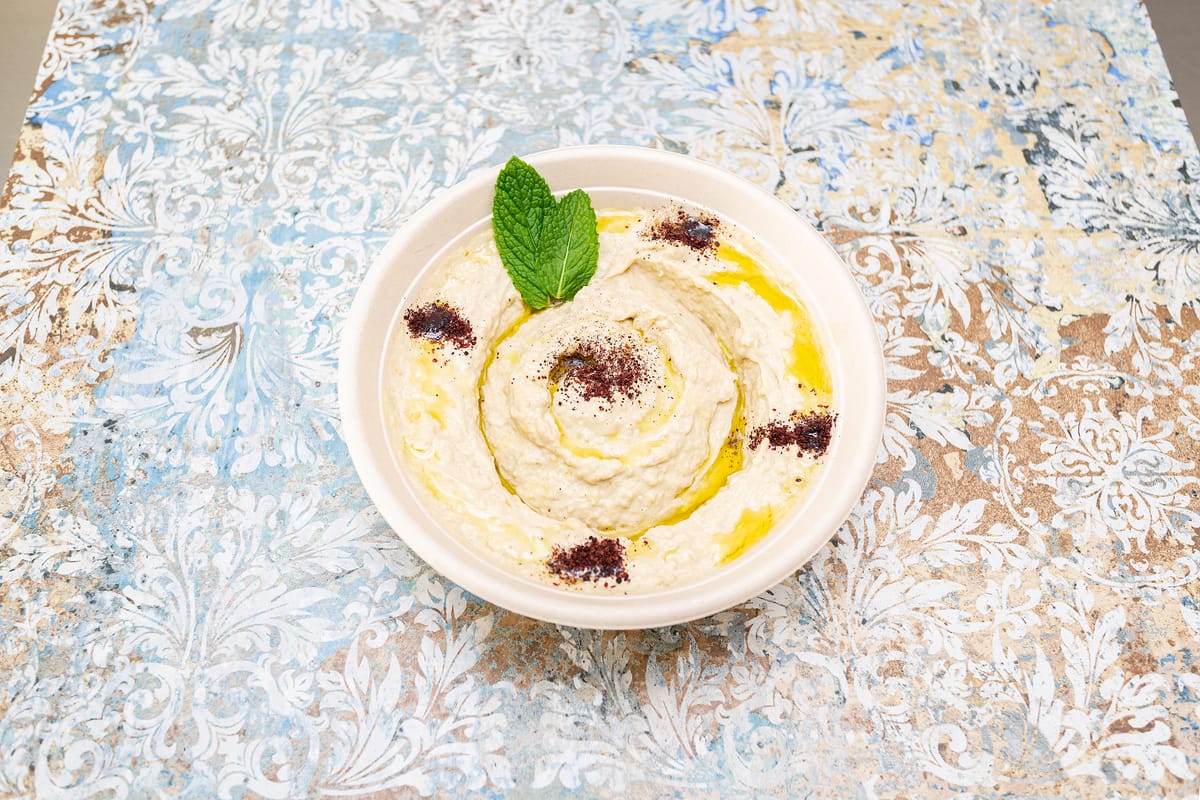
Hummus
$4.95
Hummus and shakshuka are natural partners. The creamy, neutral chickpea base cools the heat of the spiced tomato sauce, and pita dipped in both simultaneously creates a layered bite that is richer than either element alone. Hummus also extends the meal without adding significant calories.
Pita Bread
$0.95
Shakshuka without bread is shakshuka left incomplete. Fresh-baked pita at Taza has the structural integrity to scoop sauce and broken egg yolk without disintegrating. The slightly charred exterior and pillowy interior are exactly what you need to mop a well-seasoned tomato sauce.
Labneh
$4.95
Labneh — thick strained yogurt drizzled with olive oil and dried mint — provides the cool, tangy counterpoint that spiced tomato dishes require. A spoonful of labneh dragged through shakshuka sauce is one of the simplest and most satisfying food combinations in the Mediterranean canon.
Falafel Pita — from $8.95
While not shakshuka per se, our falafel pita shares the same spice DNA — cumin, coriander, herbs — and is the ideal protein-forward companion for those who want a more substantial meal. Order both and split the table.
Lemon Mint — $5.95
Fresh-squeezed lemon and mint is the classic beverage pairing for any spiced egg dish. The bright acidity and herbal coolness of our Lemon Mint juice cuts through sauce richness and resets the palate between bites, exactly as it does in Levantine and North African households.
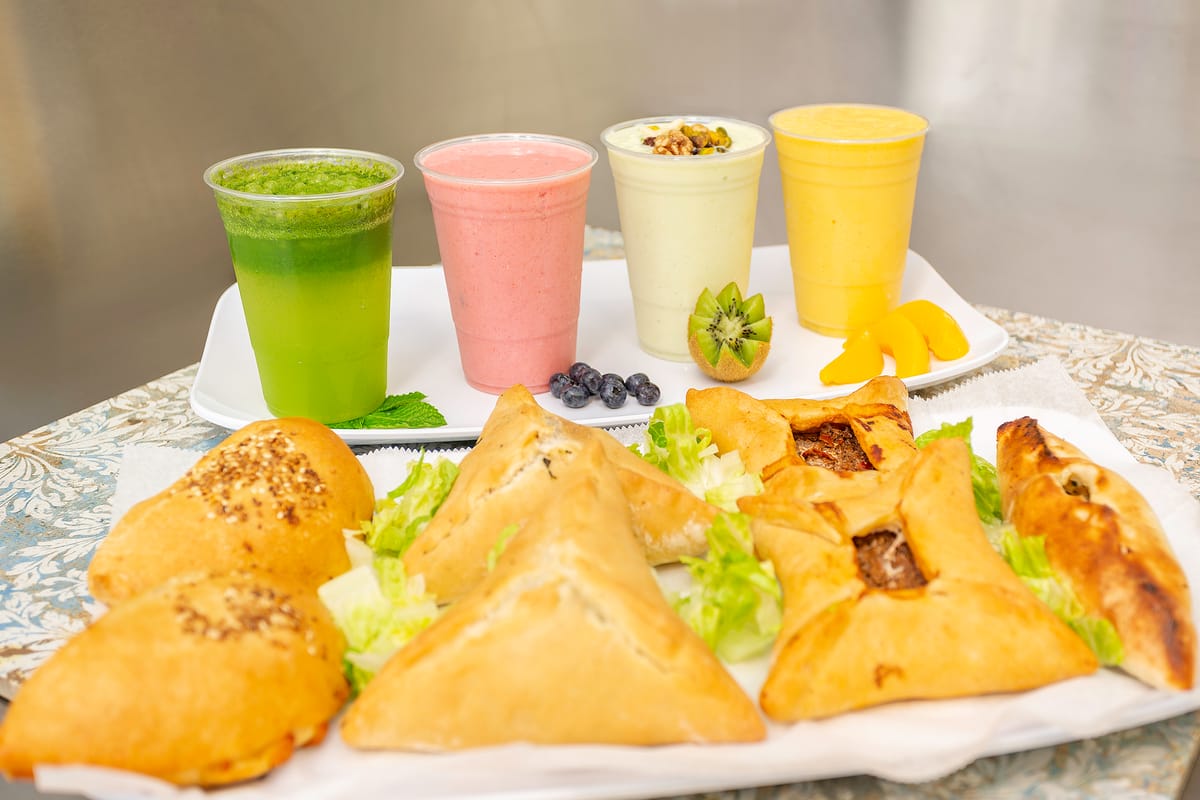
The Mediterranean Table
Shakshuka is one dish in a tradition built on seasonal vegetables, good olive oil, and spice mastery perfected over centuries.
Shakshuka and Mediterranean Breakfast Culture
How egg dishes define morning rituals across the region
In North African and Levantine cultures, the morning meal is rarely a solitary, hurried affair. Breakfast — called ftour in Moroccan Arabic, or futur in other dialects — is a communal event built around a shared table. Multiple dishes are placed simultaneously: fresh bread, olive oil, labneh, zaatar, hard-boiled or fried eggs, fresh vegetables, and a hot pan of shakshuka at the center. Everyone eats from the common pan, tearing bread and scooping together. The meal is both nourishing and social, intended to sustain people through long working hours in historically agricultural or trade-based societies.
Eggs hold particular cultural significance in this food tradition. Across North Africa and the Levant, eggs are considered a complete food — providing protein, fat, and micronutrients in a single affordable package. Poaching them in sauce rather than frying or boiling them separately was a practical innovation: the sauce provided flavor, the eggs provided substance, and cooking everything in one pan meant less fuel consumption and faster cleanup in households without abundant resources. This efficiency-through-flavor philosophy runs through much of Mediterranean cooking.
The cast iron skillet is the traditional vessel for shakshuka precisely because of its ability to retain heat uniformly across a fire or early gas burner. In Tunisian and Moroccan homes, the same heavy pan was used for everything — frying, baking bread on the stovetop, slow-cooking stews — and shakshuka fit naturally into that single-vessel cooking culture. The pan arriving at the table was not a stylistic choice but a practical one, and it has endured unchanged as the definitive way to serve the dish even in contemporary restaurant settings.
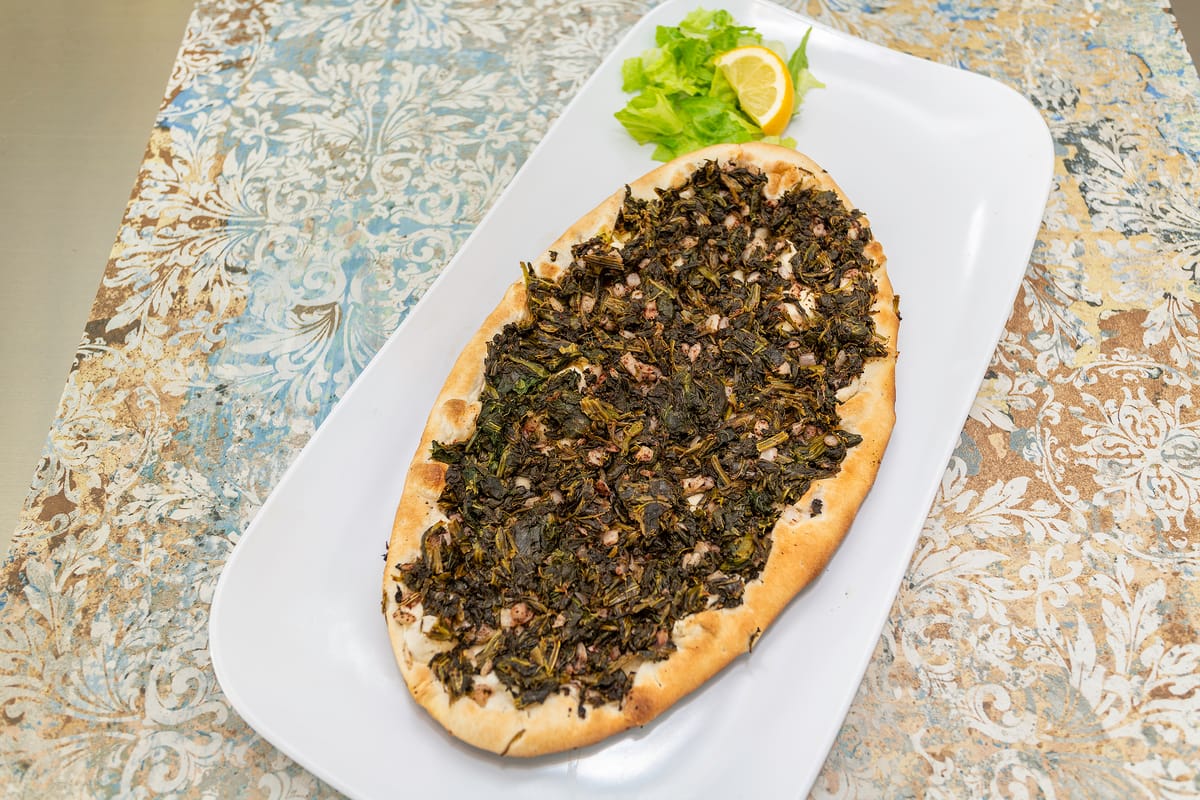
At Taza Shawarma & Falafel in Falls Church, VA, our menu reflects the same respect for Levantine and Mediterranean food traditions. While we do not serve shakshuka directly, the flavor traditions of the region — cumin-forward spices, olive oil as a cooking fat and condiment, fresh herbs at serving time, pita and dips as accompaniments — are woven through everything we make. Our hummus, labneh, and zaatar manaeesh exist in the same cultural continuum as shakshuka, and ordering them together creates an authentic taste of the Mediterranean morning table.
Communal Dining
Shared pans and plates
Spice Mastery
Centuries of refinement
Olive Oil Base
Core cooking fat
Bread as Utensil
Scoop, fold, dip
Shakshuka — Frequently Asked Questions
Shakshuka is a savory dish of eggs poached directly in a simmering sauce of tomatoes, bell peppers, onions, garlic, and spices such as cumin, paprika, and harissa. It is cooked in a single pan and served straight from the skillet. The name comes from an Arabic root meaning 'a mixture' or 'all mixed up,' reflecting the way the sauce components meld together. The dish originated in North Africa — specifically Tunisia — and spread through the Levant and Mediterranean over the last two centuries.
Shakshuka is widely regarded as a nutritionally well-rounded meal. Two eggs in shakshuka sauce provide approximately 16 to 20 grams of complete protein, along with choline for brain function and vitamin D. The tomato base supplies lycopene, an antioxidant shown in research to support cardiovascular health, along with vitamin C and potassium. The olive oil used for sautéing is rich in oleocanthal, an anti-inflammatory compound. One serving without bread contains roughly 280 to 340 calories, making it a high-satiety, relatively low-calorie meal.
The consensus among food historians is that shakshuka originated in North Africa, most likely in what is now Tunisia. The word itself is of Arabic origin and the foundational technique of poaching eggs in spiced sauce appears in 16th-century Tunisian and Moroccan cookbooks. Tomatoes — now the defining ingredient — were introduced to North Africa from the Americas after European colonization, meaning the modern tomato-based version is a post-16th-century development. The dish spread eastward through North African Jewish communities into the Levantine region and beyond during the 19th and 20th centuries.
Eggs in purgatory is an Italian-American dish of eggs poached in marinara or arrabbiata sauce. It shares the same fundamental technique as shakshuka — eggs cooked in tomato sauce — but differs significantly in spicing. Shakshuka uses North African and Levantine spices like cumin, paprika, harissa, and caraway, producing an earthier, smokier flavor. Eggs in purgatory uses Italian herbs such as basil, oregano, and red pepper flakes. Both dishes likely evolved independently or through Mediterranean trade routes, converging on the same efficient one-pan technique.
This is a matter of preference. Traditional shakshuka as made in North African households features runny yolks — the egg white is fully set while the yolk remains liquid and saucy. This allows the yolk to break and mix with the tomato sauce when scooped with bread, creating a rich, combined bite. However, many diners prefer fully cooked yolks for food safety or personal taste reasons. Simply covering the pan for two to three additional minutes after the whites set will firm up the yolks without overcooking them.
The tomato sauce base can be prepared up to four days in advance and stored in a sealed container in the refrigerator. Reheat the sauce in a skillet over medium heat before adding fresh eggs and finishing the dish. Poached eggs do not store well once cooked, so always add eggs to order. The sauce also freezes well for up to three months. Having the base pre-made reduces total active cooking time to under five minutes on busy mornings.
A 10-inch or 12-inch cast iron skillet is the preferred vessel for shakshuka. Cast iron retains heat evenly, which keeps the sauce at a consistent simmer while the eggs cook, and it transitions beautifully from stovetop to oven if you prefer to finish the eggs under the broiler for set whites without an overcooked yolk. A stainless steel or enameled cast iron pan works equally well. Avoid non-stick pans with thin bases — they create hot spots that can scorch the tomato sauce before the eggs finish cooking.
Fresh pita bread or crusty sourdough is the traditional accompaniment — you need something sturdy enough to scoop the egg and sauce without disintegrating. Creamy hummus served alongside extends the meal and adds chickpea-based protein. Labneh — thick strained yogurt drizzled with olive oil — provides a cool, tangy counterpoint to the warm, spiced eggs. A simple chopped salad of cucumber, tomato, and parsley with lemon dressing cuts through the richness. At Taza, our house-baked pita bread, hummus, and labneh are the natural companions to any shakshuka-style experience.
Find Taza in Falls Church, VA
Experience authentic Mediterranean flavors at 5820 Seminary Rd Ste O, Falls Church, VA 22041 — open 11:00 AM - 12:00 AM, Open 7 Days a Week
Address
5820 Seminary Rd Ste O, Falls Church, VA 22041
Hours
11:00 AM - 12:00 AM -- Open 7 Days a Week
Phone
Continue Exploring Mediterranean Food
Taste the Mediterranean at Taza
From fresh-baked pita and house-made hummus to our rotating specials, every bite at Taza Shawarma & Falafel honors the Levantine tradition that gave the world shakshuka. Visit us at 5820 Seminary Rd Ste O, Falls Church, VA 22041 or order online now.