Pita vs Naan: What's the Difference?
Both are flatbreads. Both are baked. Both are delicious. But pita and naan come from different parts of the world, use different doughs, and serve completely different purposes at the table.
4.8 stars on Yelp (92 reviews) -- Open 11:00 AM - 12:00 AM
What Is the Difference Between Pita and Naan?
Two flatbreads, two continents, two completely different doughs.
Pita is a Middle Eastern flatbread made from flour, water, yeast, and salt -- no oil, no dairy, no eggs. It is baked at high heat in a stone oven, where the water in the dough flashes to steam and puffs the bread into a balloon. When it cools, the puff collapses, leaving a hollow pocket inside. That pocket is what makes pita unique: you can split it open and stuff it with shawarma, falafel, or vegetables. You can also tear it into triangles for dipping in hummus or baba ghanoush.
Naan is a South Asian flatbread made with an enriched dough that includes yogurt, ghee or butter, and sometimes egg. It is cooked by pressing the dough against the interior wall of a tandoor -- a cylindrical clay oven heated to extreme temperatures (260-480°C / 500-900°F). The result is soft, pillowy bread with characteristic charred spots on the surface. Naan has no pocket. It is designed to be torn by hand and used to scoop curries, dal, and tandoori meats.
The short version: pita is leaner and has a pocket for stuffing. Naan is richer and is meant for tearing and dipping. Pita goes with Mediterranean food. Naan goes with Indian food. At Taza Shawarma & Falafel in Falls Church, VA, we bake fresh Lebanese-style pita daily -- the kind with a real pocket that holds your shawarma without falling apart.
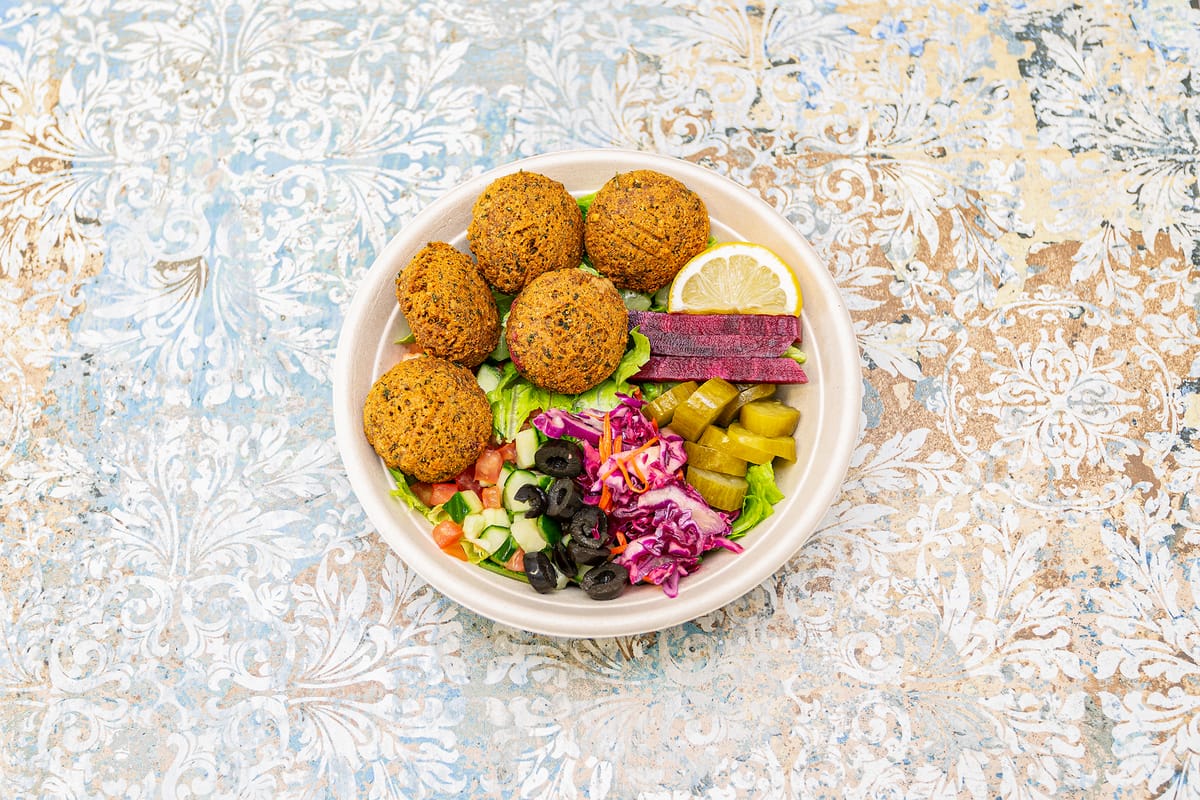
Fresh-Baked Daily
Taza's pita is made from scratch every morning -- flour, water, yeast, salt, and nothing else.
What Is Pita Bread?
The pocket bread of the Middle East, perfected over thousands of years.
Pita bread is a round, leavened flatbread that originated in the Middle East and Eastern Mediterranean thousands of years ago. Archaeologists have found evidence of flatbread baking in the region dating back 14,000 years, making it one of the oldest prepared foods in human history. The name "pita" comes from the Greek word for "flat" or "solid," though the bread itself predates Greek civilization by millennia.
The defining feature of pita is its pocket. The dough -- just flour, water, yeast, and salt -- is rolled into flat circles and baked at very high heat, typically 230-260°C (450-500°F). At that temperature, the moisture in the dough turns to steam almost instantly, inflating the bread like a balloon. The entire baking process takes less than two minutes. When the bread cools, the interior separates into two layers, creating a natural pocket.
This pocket is what makes pita functionally different from every other flatbread. You can cut it in half and fill it with chicken shawarma, falafel, vegetables, and sauces without anything leaking out the bottom. It is, in effect, an edible container. No other common flatbread does this.
Because pita contains no oil, butter, or dairy, it is naturally vegan and lower in calories than most other breads. A single pita (about 60g) has roughly 165 calories, 1g of fat, and 5-6g of protein. At Taza in Falls Church, our pita is baked fresh every day in our stone oven. You can order it as a side for $0.95 or get it as the base of any pita pocket sandwich.
What Is Naan Bread?
The tandoor-baked bread of South Asia, rich in dairy and flavor.
Naan is a leavened flatbread from South Asia, primarily associated with Indian, Pakistani, and Central Asian cuisines. The word "naan" comes from Persian, meaning "bread," and the dish has roots in the Mughal Empire, where it was served in royal courts alongside elaborate curries and tandoori meats. Unlike pita, naan is made from an enriched dough containing yogurt, ghee or melted butter, and sometimes egg. These additions make the dough softer, more elastic, and significantly richer in flavor and calories.
Naan is cooked in a tandoor -- a cylindrical clay oven that reaches extreme temperatures, often 260-480°C (500-900°F). The baker stretches the dough by hand, slaps it against the interior wall of the tandoor, and lets it cook for 60-90 seconds. The intense radiant heat chars the surface in spots while the interior stays soft and pillowy. The bread pulls away from the oven wall slightly puffed but without a pocket -- the yogurt and fat in the dough prevent the clean separation you see in pita.
Common naan varieties include garlic naan (brushed with garlic butter), keema naan (stuffed with spiced ground meat), cheese naan, and plain naan. Peshwari naan, filled with coconut, raisins, and almonds, is popular in British-Indian restaurants. All varieties share the same base: an enriched dough cooked in a tandoor.
A standard piece of naan (about 90g) has roughly 260 calories, 5g of fat, and 8-9g of protein. It is designed to be torn by hand into pieces and used to scoop curries, dal, and sauces. Naan absorbs liquid sauces well because of its dense, slightly spongy texture -- an advantage over pita when eating with soupy dishes, but a disadvantage when you need a bread that holds its shape around a filling.
Pita vs Naan: Complete Comparison
A direct feature-by-feature breakdown of these two flatbreads.
| Feature | Pita | Naan |
|---|---|---|
| Origin | Middle East (Levant, Mesopotamia) | South Asia (India, Pakistan, Central Asia) |
| Key Ingredients | Flour, water, yeast, salt | Flour, yogurt, ghee or oil, yeast, sometimes egg |
| Dairy / Oil in Dough | None -- lean dough | Yes -- yogurt, ghee, or butter |
| Cooking Method | Stone oven at 230-260°C (450-500°F), puffs rapidly | Tandoor clay oven at 260-480°C (500-900°F), pressed against wall |
| Texture | Light, slightly chewy, with a hollow pocket | Soft, pillowy, slightly charred, no pocket |
| Yes -- steam creates a hollow interior | No -- dense, single-layer bread | |
| Calories (1 piece, ~60g) | ~165 calories | ~260 calories |
| Best With | Shawarma, falafel, hummus, dips, salads | Curries, dal, tandoori meats, butter chicken |
| Vegan-Friendly | Yes -- standard recipe has no animal products | Usually not -- contains yogurt and/or ghee |
| Cooking Temp | 230-260°C (450-500°F) | 260-480°C (500-900°F) |
Each bread is optimized for its own cuisine. Pita's pocket makes it the natural choice for Mediterranean sandwiches. Naan's richness makes it ideal for scooping thick Indian curries.
Pita vs Naan: Which Is Healthier?
Pita wins on calories and fat. Naan wins on indulgence.
Pita Bread
The Leaner Option
Pita is one of the leanest breads you can eat. No butter, no oil, no dairy in the dough. If you are counting calories or following a plant-based diet, pita is the clear winner.
Naan Bread
The Richer Option
Naan is richer because of the yogurt and ghee in the dough. Higher in calories and fat, but also more protein. The extra richness pairs well with strong-flavored curries that need a substantial bread.
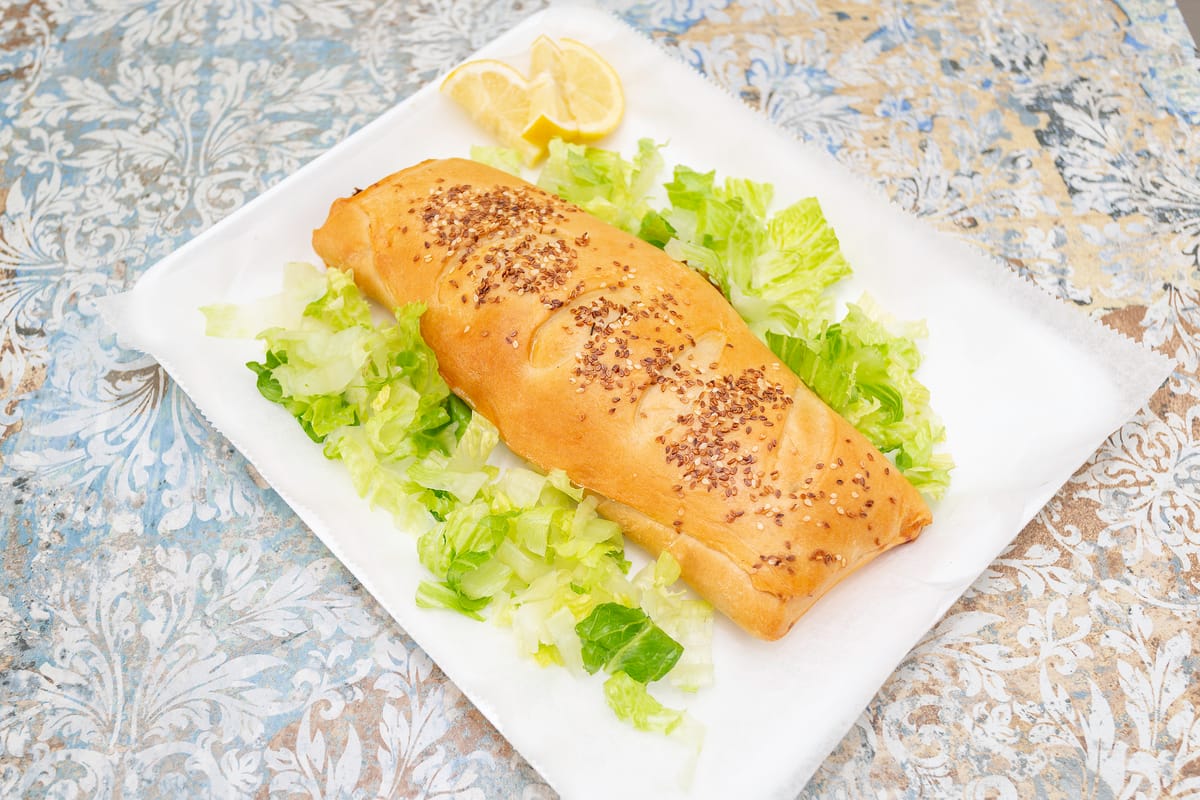
Pita + Hummus
The most natural pairing in Mediterranean food. Tear, scoop, eat, repeat.
Other Flatbreads You Should Know
Pita and naan get the most attention, but the flatbread world is much bigger.
Lavash
Armenia / IranPaper-thin, cracker-like when dried, soft when fresh. Made from flour, water, and salt only. UNESCO-listed as Armenian cultural heritage. Used for wrapping kebabs and cheese, or dried and stored for months.
Shrak / Saj Bread
Levant (Lebanon, Syria, Jordan)Very thin flatbread cooked on a convex dome (saj). Larger and thinner than pita, with a chewy texture. At Taza, we use shrak for our larger shawarma wraps -- it rolls better than pita and holds more filling.
Manaeesh
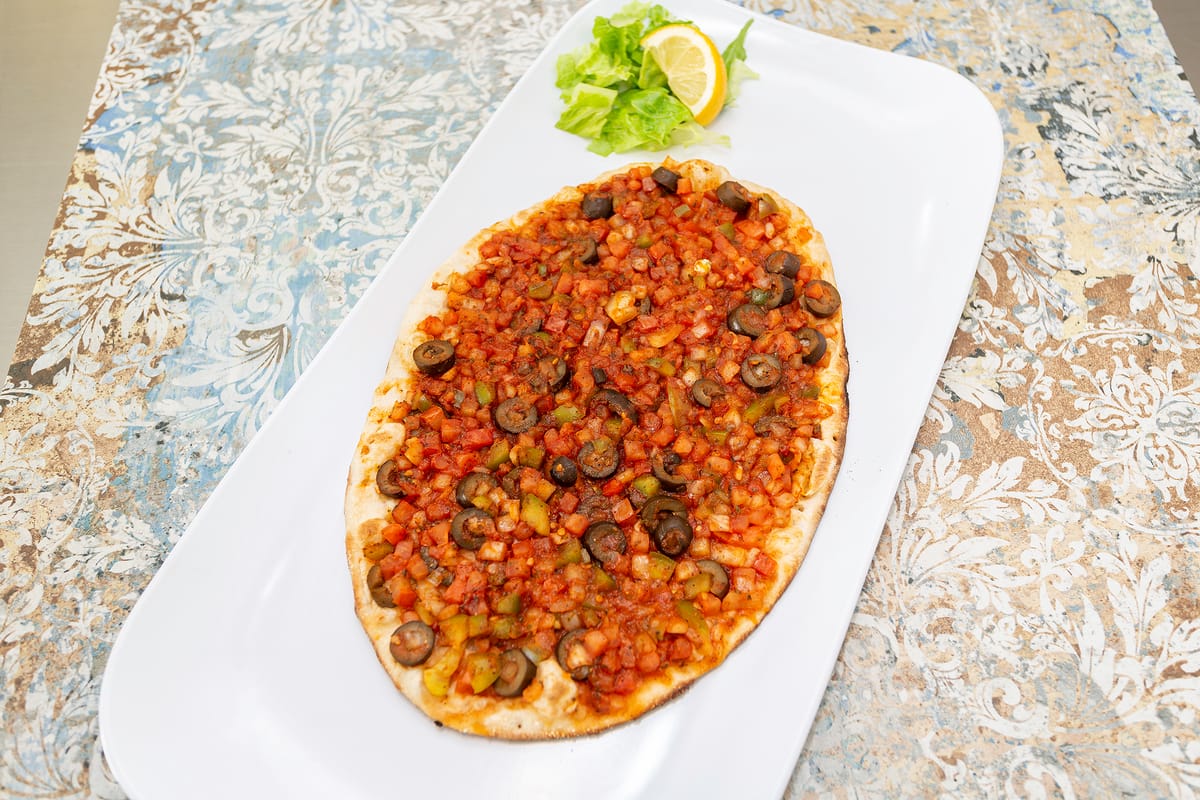
LebanonAn open-faced flatbread baked with toppings like zaatar, cheese, or ground meat. More like a Middle Eastern pizza than a bread for stuffing. Taza serves zaatar, cheese, spinach, and lahm bil ajin manaeesh daily.
Read MoreLaffa / Taboon
Iraq / JordanThick, soft, slightly chewy flatbread baked in a clay taboon oven. Thicker than shrak but thinner than naan. Common in Iraqi and Levantine cuisine. Used for wrapping grilled meats.
At Taza, you can try three of these flatbreads: pita, shrak, and manaeesh. Each serves a different purpose on our menu.
How Pita Is Used at Taza
Pita is the foundation of half our menu. Here is how we put it to work.
At Taza, pita is used in three ways. First, as the base for our pita pocket sandwiches -- chicken shawarma, beef shawarma, and falafel are all stuffed into fresh-baked pita with your choice of 14 toppings. The pocket keeps everything contained, even when loaded with garlic sauce, tahini, pickled turnips, and vegetables.
Second, pita is served as a side with our dips: hummus ($4.95), baba ghanoush ($4.95), and labneh. A warm pita torn into triangles is the traditional way to eat these dips -- utensils are optional.
Third, for customers who want a bread-based bowl, pita can be used as the base layer in a shawarma bowl -- torn pieces of pita underneath rice, meat, and toppings. This is less common than rice or greens as a base, but it is a satisfying option.
Chicken Shawarma Pita -- from $9.95
Spit-roasted chicken shaved thin and stuffed into a warm pita pocket with garlic sauce, pickled turnips, and fresh vegetables. Taza's best seller.
Beef Shawarma Pita -- from $9.95
Marinated beef slow-roasted on the vertical spit, sliced into fresh pita with tahini, lettuce, tomato, and pickled turnips.
Falafel Pita -- from $8.95
Crispy chickpea falafel in a warm pita pocket with tahini, fresh vegetables, and pickles. The original plant-based pita sandwich.
Pita Bread (side) -- $0.95
A single fresh-baked pita, warm from the oven. The perfect companion for hummus, baba ghanoush, or labneh.
When to Choose Pita vs Naan
Pick the right bread for the right meal.
Stuffing a sandwich
The pocket holds fillings without falling apart
Scooping a curry
Soft, sturdy, and tears into perfect scoop shapes
Low-calorie option
~165 cal vs ~260 cal, no dairy or oil in the dough
Rich, buttery flavor
Ghee and yogurt give naan a richer taste
Mediterranean meal
Designed for hummus, shawarma, and falafel
Indian or Pakistani meal
Built for curries, dal, and tandoori dishes
Vegan diet
Standard pita has zero animal products
Dipping in hummus
Tear into triangles, scoop, repeat
The bottom line: pita and naan are both excellent breads that solve different problems. If you are eating Mediterranean food, pita is the right choice. If you are eating Indian food, naan is the right choice. At Taza, we specialize in pita -- and we bake it fresh daily.
Where Pita Is Eaten Around the World
Pita is not just Lebanese. It spans the entire Eastern Mediterranean and beyond.
Pita is a staple across the entire Middle East and Eastern Mediterranean. In Lebanon and Syria, it is the default bread served with every meal -- torn into pieces for scooping hummus, stuffed with shawarma for street food, or baked fresh at home daily. In Jordan and across the Levant, pita is used for falafel sandwiches, dipping in hummus, and as a side to shakshuka. In Turkey, a thicker version called "pide" is used as the base for Turkish pizza-like dishes.
Greece uses a different style of pita -- thicker, softer, without a pocket -- as the base for gyros and souvlaki. Egyptian pita (called "aish baladi") is made with whole wheat flour and is darker, denser, and more rustic than the white flour pita common in Lebanon. Across North Africa, versions of flatbread similar to pita appear in different forms.
In the United States, pita gained mainstream popularity in the 1970s and 1980s as Middle Eastern immigration increased, particularly in areas like Northern Virginia, Dearborn (Michigan), and parts of New York and New Jersey. Today, you can find pita in every American grocery store, though the mass-produced versions often lack the soft, steamy quality of fresh-baked pita from a place like Taza.
How to Store and Reheat Pita and Naan
Both breads are best fresh, but here is how to handle leftovers.
Storing Pita
Storing Naan
Pita vs Naan: Common Questions
Yes, in most cases. A standard pita (about 60g) has roughly 165 calories and contains no dairy, oil, or fat in the dough. Naan of a similar size has about 260 calories because the dough includes yogurt, ghee or butter, and sometimes egg. Pita also has slightly more fiber and less saturated fat. If you are watching calorie or fat intake, pita is the leaner choice. Naan is richer and more indulgent, which is part of its appeal with curries. At Taza, our pita is baked fresh daily with just flour, water, yeast, and salt -- nothing extra.
Not always. A well-made pita puffs up during high-heat baking because the water in the dough turns to steam, creating a hollow interior. But if the dough is too thick, too thin, or if the oven temperature is not high enough, the pocket may not form fully. Some styles of pita -- particularly Greek pita used for gyros -- are intentionally thick and pocketless. The Lebanese-style pita served at Taza has a distinct pocket, which makes it ideal for stuffing with shawarma, falafel, and toppings.
Traditional naan is not vegan. Standard naan dough contains yogurt and ghee (clarified butter), and some recipes add egg. These dairy ingredients are what give naan its soft, pillowy texture and rich flavor. Some restaurants and bakeries now offer vegan naan made with plant-based yogurt and oil instead of ghee, but this is not the traditional recipe. Pita, by contrast, is naturally vegan in its standard form -- flour, water, yeast, and salt only.
You can, but the eating experience will be different. Pita is leaner and has a pocket, so it works best for stuffing and dipping. Naan is richer, softer, and better for tearing and scooping thick sauces. If you serve pita with butter chicken, it will work fine but will not absorb the sauce the same way naan does. If you stuff naan like a pita pocket, the filling will fall out because there is no pocket. Use each bread for what it was designed to do and both will be great.
Pita starts with a simple dough of flour, water, yeast, and salt. The dough is mixed, kneaded until smooth, and left to rise for about an hour. It is then divided into balls, rolled flat into circles about 6-8 inches across, and baked in a very hot oven -- at least 230°C (450°F). The intense heat causes the water in the dough to flash into steam, puffing the bread up like a balloon in under 2 minutes. When it cools, the puff deflates, leaving the signature hollow pocket. At Taza, our pita is baked fresh daily in our stone oven.
Taza bakes fresh pita bread daily for our pita pocket sandwiches -- chicken shawarma pita (from from $9.95), beef shawarma pita (from from $9.95), and falafel pita (from from $8.95). We also use shrak bread -- a thin, traditional Levantine flatbread baked on a dome -- for our larger wraps. And we serve manaeesh, the Lebanese flatbread baked with toppings like zaatar, cheese, and spinach. You can also order a side of pita bread for $0.95 to pair with our hummus, baba ghanoush, or labneh.
Try Taza's Fresh-Baked Pita
Open 11:00 AM - 12:00 AM, Open 7 Days a Week at 5820 Seminary Rd Ste O, Falls Church, VA 22041.
Address
5820 Seminary Rd Ste O, Falls Church, VA 22041
Hours
11:00 AM - 12:00 AM -- Open 7 Days a Week
Phone
Order a Pita Sandwich from Taza
Chicken shawarma, beef shawarma, or falafel -- stuffed into fresh-baked pita with 14 toppings. Online ordering, delivery, or dine in.