The Complete Guide
What Is Shawarma? Everything You Need to Know
Shawarma is one of the most popular street foods on earth, served in over 40 countries. Here is a complete guide: what it is, where it came from, how it is made, and the best way to eat it.
- Yelp 4.8 (92 reviews) (opens in a new tab)
- Open 7 days, 11 AM to midnight
- Free parking at the door
- 5000+Years of History
- 40+Countries Serve It
- 14Toppings at Taza
- $9.95Starting Price
Definition
What Is Shawarma?
The world's most popular spit-roasted street food, in plain terms.
Shawarma is a Middle Eastern street food made from seasoned meat -- typically chicken, beef, or lamb -- stacked in thin layers on a vertical rotating spit and slow-roasted for hours until the outer surface is deeply caramelized and the interior is tender and juicy. When a customer orders, the cook shaves thin slices from the rotating spit with a long blade and serves them immediately. The meat is typically tucked into pita bread or wrapped in flatbread, then topped with fresh vegetables, pickled turnips, and sauces like tahini or garlic mayo.
The word "shawarma" comes from the Turkish "cevirme," meaning "turning" -- a direct reference to the rotating spit that is central to the cooking method. Shawarma is distinct from other grilled meat dishes because of this vertical spit technique: the meat is not grilled on a flat surface, not roasted in an oven, and not fried. It is slow-roasted while rotating, which creates a unique combination of crispy exterior and moist interior that no other cooking method replicates.
At Taza Shawarma & Falafel in Falls Church, VA, shawarma is roasted on the vertical spit and carved to order, using 100% halal chicken and beef. The chicken shawarma pita is $9.95 and the beef at $9.95. Every order comes with your choice from 14 free toppings in store, built at the counter.
The Vertical Spit
Seasoned meat, stacked on a vertical spit and roasted as it turns. Carved to order.
History
A Brief History of Shawarma
From Ottoman Empire street stalls to a global phenomenon served on six continents.
Shawarma's story begins in the Ottoman Empire, most likely in the city of Bursa in present-day Turkey during the 18th or 19th century. The original concept was straightforward: stack thin sheets of seasoned lamb on a vertical iron rod, place it next to a charcoal fire, and let it rotate slowly until the outer layer is cooked through. The cook then shaves off the ready layer and serves it immediately while the next layer continues to cook. This method solved a practical problem -- it allowed a single cook to serve many customers quickly from a single preparation.
As the Ottoman Empire extended across the Middle East and North Africa, the technique traveled with soldiers, merchants, and cooks. In Lebanon and Syria, it became shawarma, gaining garlic sauce, pickled turnips, tahini, and a more complex spice blend heavy on cumin, cinnamon, and cardamom. In Egypt, it picked up heavier spicing and was served with bread and salad. In Iraq, shawarma incorporated amba (pickled mango sauce) and local spice preferences. Each country kept the vertical spit but adapted everything else.
The technique also spread westward. Greek immigrants adapted it into the gyro in the 1920s (using ground meat instead of whole cuts). Turkish immigrants brought doner kebab to Germany in the 1960s and 1970s, where it became the country's most popular fast food. And in the early 20th century, Lebanese immigrants to Mexico adapted the vertical spit technique to marinated pork, creating tacos al pastor -- one of the most popular street foods in Mexico City today.
In the United States, shawarma arrived primarily through Lebanese, Syrian, and Levantine immigration in the late 20th century. Northern Virginia, with its large Middle Eastern and North African diaspora, became one of the country's strongest markets for authentic shawarma. Falls Church and the surrounding area now has dozens of shawarma restaurants, with Taza serving the Levantine style that stays closest to the original tradition.
Process
How Shawarma Is Made: Step by Step
Six steps from raw ingredient to finished sandwich, the way shawarma is traditionally made.
Marinate
Traditionally, cuts of chicken or beef are coated in a marinade of olive oil, lemon juice, garlic, and a blend of spices that often includes cumin, turmeric, cinnamon, cardamom, paprika, and sumac. The meat rests in the marinade so the flavors soak in before it goes on the spit.
Stack
The marinated meat is layered piece by piece onto a vertical metal spit. Thin slices of fat are placed between layers to keep the meat moist during the long roasting process. A well-stacked spit can weigh 30-50 pounds and will serve customers throughout the entire day.
Roast
The loaded spit is placed in front of a vertical heat source and set to rotate slowly. The outer surface of the meat gradually caramelizes, turning golden-brown and slightly crispy. The rotation ensures even cooking on all sides. This slow-roasting process takes 4-6 hours.
Shave
As customers order, the cook uses a long, flat blade to shave thin slices from the outer, fully cooked layer of the spit. Each slice captures the caramelized crust and the tender interior. The spit continues to rotate, exposing fresh meat to the heat source for the next order.
Assemble
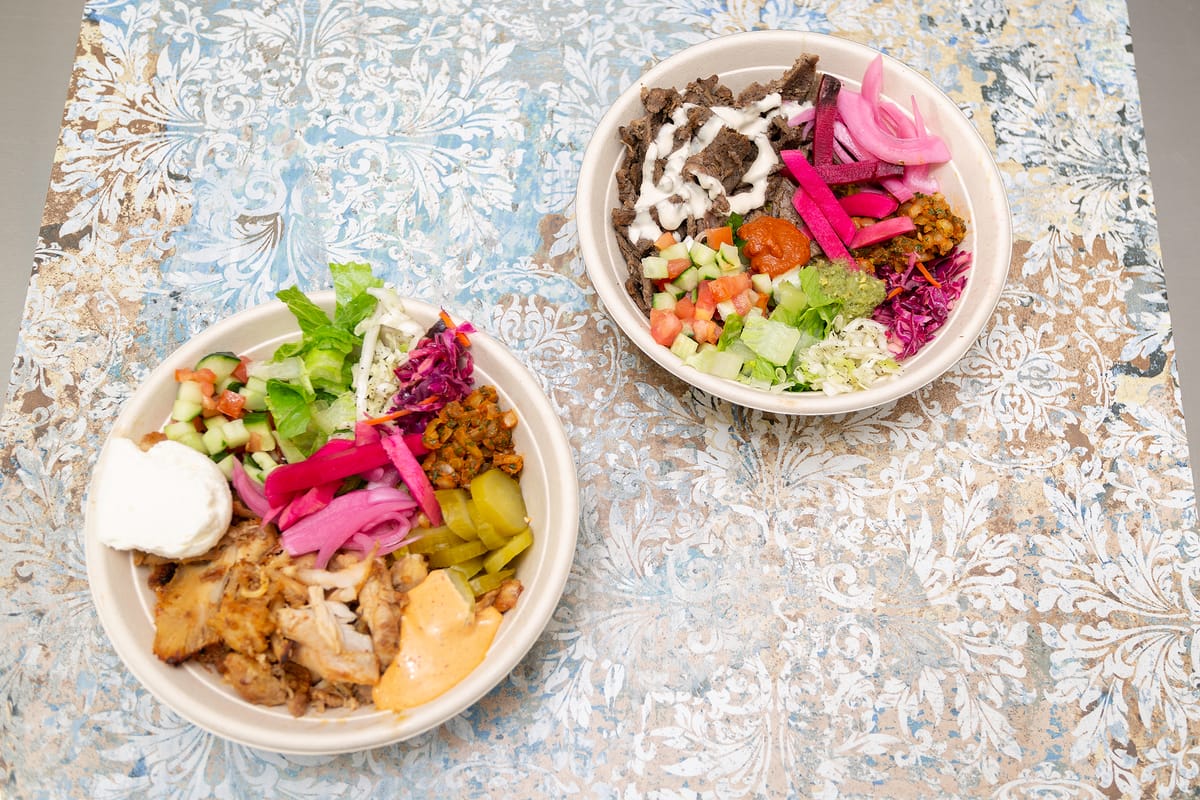
The freshly shaved meat goes directly into a warm pita pocket, onto a shrak flatbread for wrapping, or into a bowl. At Taza, you then tell the counter which of the 14 free toppings you want -- everything from pickled turnips and tahini to hummus and garlic mayo -- and the crew builds it in front of you.
Serve
Your shawarma is handed to you within minutes of ordering. The pita is still warm. The meat is still hot from the spit. From spit to plate, the carving and assembly take only minutes -- but the roasting behind it took far longer.
Types
Types of Shawarma
Three primary meat options, each with its own flavor profile and fan base.
Chicken Shawarma
$9.95
The most popular type worldwide. Chicken thighs and breasts are marinated in cumin, turmeric, garlic, and lemon, then stacked and slow-roasted. The result is lighter and more aromatic than beef. At Taza, the chicken shawarma pita is $9.95 and the bowl at $12.45. Both are carved off the vertical spit to order.
Order NowBeef Shawarma
$9.95
Richer and more intensely flavored than chicken. Beef cuts are typically marinated with a similar spice blend but with more emphasis on cinnamon and allspice. The beef caramelizes more deeply on the spit, developing a stronger crust. Taza's beef shawarma pita is $9.95 and the bowl at $12.45.
Order NowPlant-Based Alternative
$8.95
While not technically shawarma, falafel serves as the plant-based counterpart at any shawarma restaurant. Made from ground chickpeas, fresh herbs, and spices, fried to a crispy golden exterior with a green, herb-packed interior. At Taza, the falafel is fried to order and the falafel pita is $8.95 and the falafel bowl at $10.45. Fully vegan.
Order Now14 Toppings. No Extra Charge.
In store, every shawarma at Taza comes with your choice of 14 free toppings, built at the counter.
Formats
How to Eat Shawarma: Wrap vs Bowl vs Pita vs Platter
Four ways to eat the same meat. Each format changes the experience.
One of shawarma's strengths is versatility. Unlike a burger or a slice of pizza, shawarma is not locked into a single format. The same spit-roasted meat can be served four different ways, each offering a different eating experience, portion size, and nutritional profile. At Taza, every format uses the same freshly shaved meat and the same 14 free toppings in store.
Pita Pocket
$9.95The original street-food format. Pita bread with a natural pocket, stuffed with shaved meat and your toppings. Compact, portable, and satisfying. The pita is baked in the oven at Taza and is soft enough to hold everything without tearing. Best for quick lunches and eating on the go.
OrderShrak Wrap
$11.45A larger format using thin, traditional shrak flatbread -- baked on a dome and rolled tight around the filling. The shrak bread has a delicate, chewy texture and a higher bread-to-meat ratio than pita. Popular with customers who want a bigger, more filling meal. Rolls up tight for mess-free eating.
OrderBowl
$12.45No bread at all. Shaved shawarma served over your choice of base, with your toppings layered on top -- 14 free in store, up to 6 of 11 online. This is a good option for low-carb or high-protein eaters, and it gives you the most toppings per bite because nothing is enclosed.
OrderPlatter
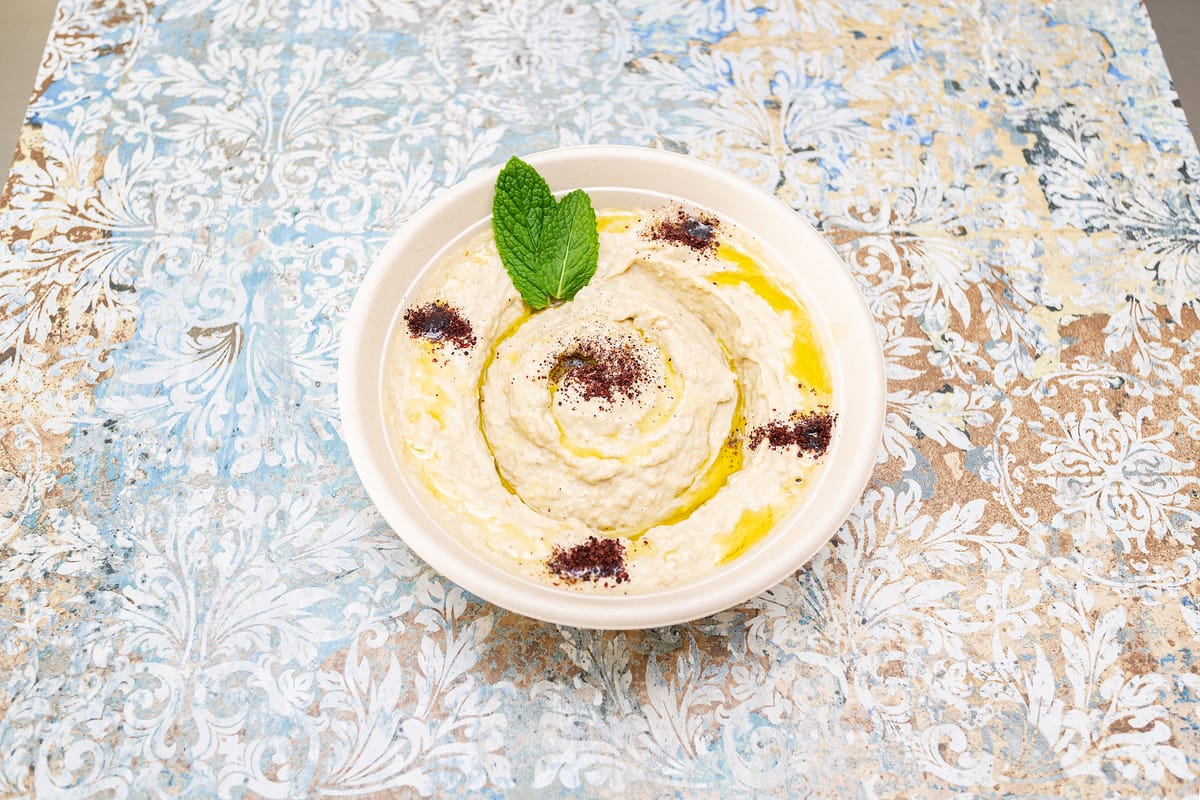
$12.45The full Mediterranean spread. Shawarma meat with rice, salad, pickles, and often a side of hummus or baba ghanouj. Pita bread on the side for tearing and dipping. Great for a full sit-down meal or for sharing at the table. The most food for the price.
OrderToppings
What Goes Inside a Shawarma?
At Taza, every shawarma comes with your choice from 14 free toppings in store — built at the counter.
The toppings are what separate a great shawarma from a mediocre one. A bare shawarma -- just meat in bread -- misses the point. The interplay between the warm, spiced meat and the cool, crunchy vegetables, the creaminess of tahini, the tang of pickled turnips, and the richness of garlic sauce is what makes shawarma a complete eating experience. At Taza, you tell the counter which toppings you want and the crew builds it in front of you.
In store, all 14 toppings are free with every shawarma order at Taza, your choice, built at the counter. Online, you pick up to 6 of 11.
Format Comparison
Pita vs Bowl: Which Shawarma Format Should You Choose?
A side-by-side comparison to help you pick the right format for your meal.
| Feature | Pita Sandwich | Shawarma Bowl |
|---|---|---|
| Best For | On-the-go eating, quick lunch | Low-carb, high-protein, knife-and-fork meal |
| Price at Taza | Chicken $9.95 / Beef $9.95 | Chicken $12.45 / Beef $12.45 |
| Bread Included | Yes — fresh pita pocket | No (rice, greens, or hummus base) |
| Portion Size | Standard single serving | Larger, with more toppings and base |
| Toppings | 14 options, built into the sandwich | 14 options, layered on top of the base |
Wrap vs Platter
| Feature | Shrak Wrap | Platter |
|---|---|---|
| Best For | Bigger appetite, more bread-to-meat ratio | Sharing, full Mediterranean spread |
| Price at Taza | Chicken $11.45 / Beef $11.45 | $12.45 (platter-style bowl) |
| Bread | Thin shrak flatbread, rolled tight | Pita on the side |
| Portion Size | Larger than pita, more filling | Biggest option with sides included |
First-timers: start with the chicken shawarma pita at $9.95. It is the classic order and gives you the classic shawarma experience. Graduate to bowls when you want something lighter, or wraps when you want something bigger.
Global
Shawarma Around the World
How different countries adapted the same technique into their own iconic dishes.
The vertical spit is one of the most widely adapted cooking techniques in human history. Starting from its Ottoman origins, it branched into at least four major global dishes, each reflecting the tastes and ingredients of its adopted country.
Turkey
Doner KebabThe original. Can be made from lamb, beef, or chicken. Served in thick bread (ekmek) or wrapped in lavash. The dominant fast food in Germany, where Turkish immigrants popularized it in the 1970s. Berlin alone has over 1,600 doner shops.
Greece
GyroGround beef and lamb blend, shaped into a cone, cooked on a vertical spit. Served on thick pita with tzatziki, tomato, and onion. The Greek adaptation uses Mediterranean herbs instead of Middle Eastern spices. Read our full comparison at shawarma vs gyro.
Read MoreMexico
Tacos al PastorLebanese immigrants brought the vertical spit to Mexico in the early 1900s. Mexicans adapted it to marinated pork with chili peppers, achiote, and pineapple. Now one of Mexico City's most iconic street foods. The al pastor spit looks nearly identical to a shawarma spit.
Lebanon / Levant
ShawarmaThe Levantine version uses whole marinated cuts of chicken or beef, a complex spice blend (cumin, cinnamon, cardamom, sumac), and is served with tahini, garlic sauce, and pickled turnips in pita or shrak. This is the tradition Taza follows in Falls Church.
Nutrition
Is Shawarma Healthy? A Nutrition Breakdown
How shawarma stacks up nutritionally, and how to order for your goals.
Shawarma is a solid nutritional choice compared to most fast-food alternatives. The chicken version is particularly strong: the meat is marinated in olive oil and spices (not breaded or deep-fried), slow-roasted to render out excess fat, and served with fresh vegetables that add fiber and micronutrients without many calories.
Chicken Pita
Chicken Bowl (greens)
Beef Pita
For the highest protein, lowest calorie option: order a chicken shawarma bowl on a greens base with tahini and all the vegetables. For the most satisfying meal when calories are not a concern: the chicken shawarma shrak wrap with garlic sauce, hummus, and pickled turnips.
Compare this to a typical fast-food burger (700-1000 calories, 35-50g fat) or fried chicken sandwich (600-900 calories, 30-45g fat). Shawarma delivers more protein per calorie, uses healthier cooking methods, and includes built-in vegetables. It is not a diet food, but it is a significantly better choice than the standard American fast-food options.
Taza
Where to Get Shawarma in Falls Church, VA
Taza Shawarma & Falafel on Seminary Road serves authentic Levantine shawarma daily.
If you are in the Falls Church, Arlington, or Bailey's Crossroads area and want to try real shawarma, Taza serves both chicken and beef shawarma carved off the vertical spit using whole cuts of 100% halal meat. The meat is carved to order, with the caramelized outer layer that defines shawarma. Each order is shaved from the spit at the moment you order it.
Chicken shawarma pita: $9.95. Beef shawarma pita: $9.95. Bowls: $12.45. Shrak wraps:$11.45. In store, every order includes 14 toppings at no extra charge.
We are located at 5820 Seminary Rd Ste O, Falls Church, VA 22041, open 11:00 AM - 12:00 AM, Open 7 Days a Week. You can order online for pickup, walk in with free parking at the door, or call us at (703) 340-1014 for large or custom orders. Now that you know what shawarma is, come taste it for yourself.
FAQ
Shawarma: Common Questions Answered
What does shawarma taste like?
Shawarma has a complex, savory flavor profile built from layers of spices and slow roasting. Chicken shawarma tastes warm and aromatic — you will pick up cumin, turmeric, and garlic as the dominant notes, with a subtle sweetness from cinnamon and a tang from sumac. The slow roasting on the spit creates caramelized, slightly crispy edges on the meat, which contrasts with the tender, juicy interior. Beef shawarma is richer and deeper, with more pronounced spice warmth. Both are typically paired with garlic sauce or tahini, which adds a creamy, nutty element. At Taza, the 14-topping selection means every bite is different depending on what you add — pickled turnips bring acidity, hummus adds creaminess, and fresh mint brightens the whole thing.
Is shawarma healthy?
Shawarma can be a relatively healthy meal, especially in the chicken version. A typical chicken shawarma pita runs roughly 450-550 calories, with 30-40 grams of protein from real sliced chicken. The meat is usually marinated in olive oil and spices rather than breaded or deep-fried. The toppings — lettuce, tomatoes, cucumbers, pickles, tahini — add fiber, vitamins, and healthy fats without excessive calories. For an even lighter option, order a chicken shawarma bowl ($12.45) with a greens base instead of rice. Beef shawarma is slightly higher in calories and fat, but still a better choice than most fast food. The key is the cooking method: slow-roasting on a spit renders out excess fat while preserving flavor.
Is all shawarma halal?
No. Shawarma is not automatically halal — it depends on the source of the meat and the preparation practices of each individual restaurant. Halal certification requires that the animal was raised and slaughtered according to Islamic dietary law, and that the kitchen follows halal handling procedures. At Taza Shawarma & Falafel in Falls Church, everything on the menu is 100% halal, and we are proud to serve the halal community in Northern Virginia. Wherever you eat, if halal matters to you, always verify with the restaurant before ordering.
What's the difference between shawarma and kebab?
Shawarma and kebab both involve seasoned meat, but the cooking methods are different. Shawarma is cooked on a vertical rotating spit — thin layers of marinated meat are stacked and slow-roasted for hours, then shaved off as orders come in. Kebab (or kabob) refers to meat that is grilled on skewers, either as whole pieces (shish kebab) or as ground meat formed around skewers (kofte/kofta kebab). The flavor profiles overlap — both use cumin, garlic, and Middle Eastern spice blends — but the texture is completely different. Shawarma gives you thin, caramelized slices with crispy edges. Kebab gives you charred, smoky chunks or patties. Both are staples of Middle Eastern cuisine, but they are separate dishes.
Can you eat shawarma cold?
Technically yes, but shawarma is significantly better when eaten hot or warm. The slow roasting on the spit creates a caramelized exterior that softens and loses its texture when cold. The garlic sauce and tahini can also change consistency when refrigerated. If you have leftover shawarma, reheat it in a skillet or oven (not a microwave, which makes the meat rubbery). At Taza, every order is made fresh — the meat is shaved from the spit at the moment you order, so you always get it at peak temperature and texture.
How many calories in a chicken shawarma wrap?
A chicken shawarma wrap (shrak bread) typically runs roughly 550-700 calories depending on your topping choices. A rough breakdown: shrak bread (200-250 cal), chicken shawarma meat (200-250 cal), garlic sauce and tahini (80-120 cal), and vegetables/toppings (30-60 cal). For a lower-calorie option, order a chicken shawarma pita ($9.95), which uses smaller bread and typically runs about 450-550 calories. For the lowest calorie count, go with a chicken shawarma bowl on a greens base ($12.45), which eliminates the bread entirely and typically comes in around 350-450 calories with vegetables. These are general estimates, not lab-tested figures.
Visit Us
Try Taza's Shawarma Today
Open 11:00 AM - 12:00 AM, Open 7 Days a Week at 5820 Seminary Rd Ste O, Falls Church, VA 22041.
Taza Shawarma & Falafel, Bailey's Crossroads
5820 Seminary Rd Ste O, Falls Church, VA 22041 (directions, opens in a new tab)(703) 340-1014On Seminary Road with free parking at the door. Order ahead for pickup, or come in and build your plate at the counter.
Opening hours
| Monday | 11 AM to midnight |
|---|---|
| Tuesday | 11 AM to midnight |
| Wednesday | 11 AM to midnight |
| Thursday | 11 AM to midnight |
| Friday | 11 AM to midnight |
| Saturday | 11 AM to midnight |
| Sunday | 11 AM to midnight |
Free parking at the door. Halal chicken and beef.
Now You Know What Shawarma Is
Time to Try the Real Thing
Carved off the vertical spit from 100% halal chicken and beef. 14 free toppings in store. Pita, wrap, or bowl. Order online or visit us on Seminary Road.