Mediterranean Spices Guide: Essential Seasonings
From zaatar and sumac to cumin and cardamom, these are the spices that define Mediterranean and Middle Eastern cooking. A practical guide to flavor, usage, and what makes each one essential.
4.8 stars on Yelp (92 reviews) -- Open 11:00 AM - 12:00 AM
What Makes Mediterranean Spices Special?
A flavor tradition rooted in thousands of years of trade, agriculture, and kitchen experimentation.
Mediterranean spices are the aromatics and dried seasonings used across the cuisines of Lebanon, Syria, Turkey, Egypt, Greece, North Africa, and the broader Middle East. What makes these spices distinctive is their emphasis on warm, earthy, and citrusy flavors rather than pure heat. Unlike cuisines that rely on chili peppers for intensity, Mediterranean cooking builds depth through layered combinations of cumin, coriander, cinnamon, allspice, and cardamom -- spices that add complexity without overwhelming the palate. The result is food that tastes rich, aromatic, and balanced rather than simply hot.
The Mediterranean region sits at the crossroads of the ancient spice trade routes that connected Asia, Africa, and Europe. For thousands of years, caravans carried cinnamon from Sri Lanka, black pepper from India, cumin from Egypt, and saffron from Persia through ports in Beirut, Alexandria, Istanbul, and Venice. This geographic advantage meant that Mediterranean cooks had access to a wider variety of spices than almost any other cuisine in the world, and they learned to combine them in ways that are still used today.
At Taza Shawarma & Falafel in Falls Church, these spices are present in every dish. Our shawarma marinade uses 12+ spices. Our falafel blend includes coriander, cumin, and fresh herbs. Our zaatar manaeesh ($6.95) features the classic thyme-sesame-sumac blend. Understanding these spices helps you understand why the food tastes the way it does.
12+ Spices in Every Marinade
Taza's shawarma marinade combines cumin, turmeric, cinnamon, cardamom, paprika, sumac, and more -- applied to whole cuts of halal meat.
What Are the Most Important Mediterranean Spices?
Twelve spices that appear in nearly every Mediterranean and Middle Eastern kitchen. Each one with a distinct flavor and role.
Zaatar
Herbal, earthy, nutty, slightly tart
Used in: Manaeesh, hummus, labneh, roasted vegetables, eggs
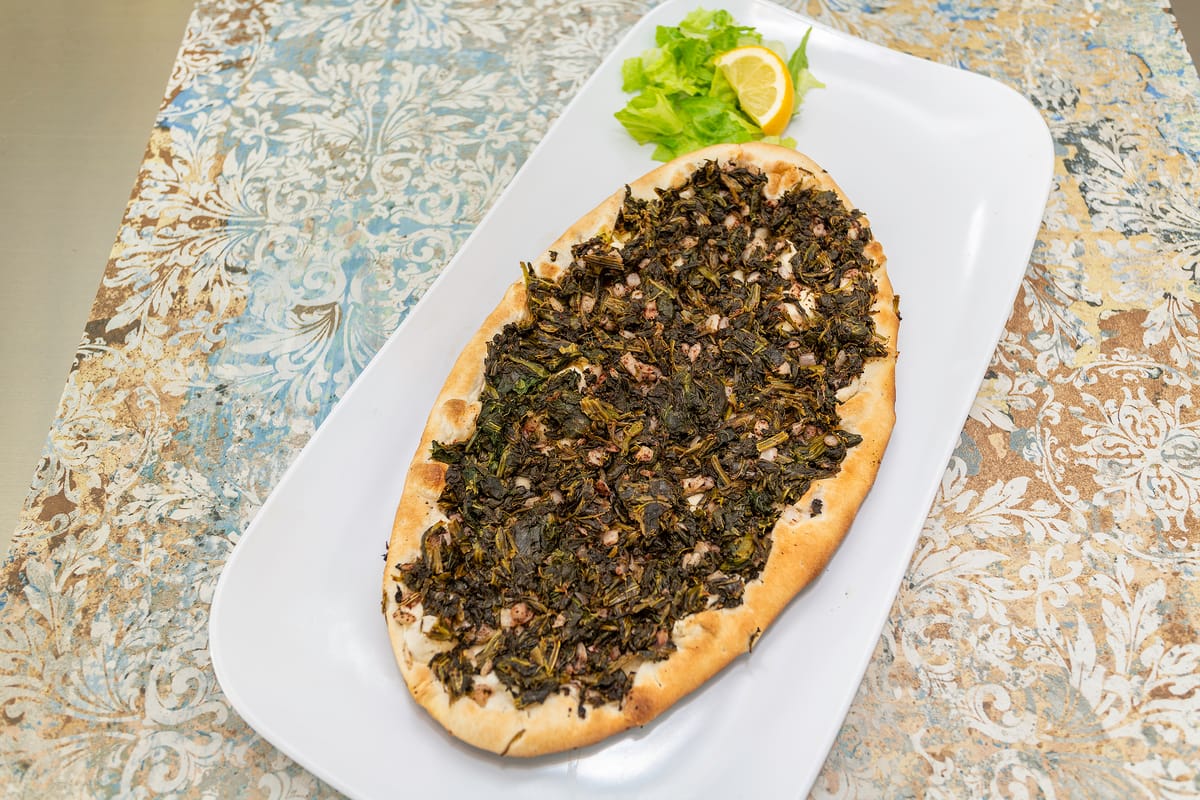
Zaatar refers to both a wild thyme plant and a blended spice made from dried thyme, toasted sesame seeds, sumac, and salt. It is the most iconic seasoning of Levantine cuisine. Mixed with olive oil, it becomes a spread for flatbread -- the basis of zaatar manaeesh, one of Lebanon's most popular breakfast foods. At Taza, zaatar manaeesh is priced at $6.95.
Sumac
Tart, lemony, fruity, slightly astringent
Used in: Fattoush, grilled meats, rice, onion salads, hummus
Ground from dried berries of the sumac bush, this deep red-purple powder provides citric acidity without liquid. It is used as a finishing spice -- sprinkled on top of dishes after cooking rather than cooked into them. Sumac is essential in fattoush salad dressing and is often paired with raw onions to cut their sharpness. It adds both color and flavor to any dish it touches.
Cumin
Warm, earthy, slightly bitter, nutty
Used in: Shawarma, falafel, stews, rice, hummus, meat rubs
Cumin is the backbone of Middle Eastern seasoning. It appears in shawarma marinades, falafel batter, hummus, and nearly every meat dish in the region. Whole cumin seeds can be toasted in a dry pan to intensify their flavor before grinding. Ground cumin is the single most used spice in Mediterranean cooking by volume.
Coriander
Citrusy, floral, slightly sweet, warm
Used in: Falafel, sausages, pickles, stews, spice blends
Coriander seeds (the dried fruit of the cilantro plant) have a completely different flavor from fresh cilantro leaves. The seeds are warm, citrusy, and slightly sweet. They are a primary ingredient in falafel batter, providing much of the characteristic flavor. Coriander is also a key component of baharat and seven spice blends.
Turmeric
Earthy, slightly bitter, warm, peppery
Used in: Shawarma, rice pilafs, soups, marinades
Turmeric provides the golden-yellow color in chicken shawarma and many rice dishes. Its flavor is subtle -- earthy and slightly bitter -- but its contribution to color is significant. Turmeric contains curcumin, a compound extensively studied for anti-inflammatory properties. In shawarma marinades, turmeric works with cumin and paprika to create the characteristic golden crust.
Allspice
Warm blend of cinnamon, nutmeg, and cloves
Used in: Meat pies, kofta, seven spice blend, stews, rice
Allspice is a single berry (from the Pimenta dioica tree) that naturally tastes like a combination of cinnamon, nutmeg, and cloves -- hence the name. It is a cornerstone of Levantine cooking and appears in nearly every seven spice blend. Allspice is particularly important in meat dishes: kofta, sfiha pies, kibbeh, and stuffed grape leaves. It adds warm depth without any single dominant spice note.
Cardamom
Intensely aromatic, sweet, eucalyptus-like, floral
Used in: Arabic coffee, desserts, rice, meat dishes
Green cardamom pods contain small black seeds with an intensely aromatic, almost eucalyptus-like flavor. Cardamom is essential in Arabic coffee (qahwa), where whole pods are crushed and brewed directly with the coffee. In savory cooking, ground cardamom appears in rice pilafs, shawarma spice blends, and some desserts. A little goes a long way -- cardamom is one of the most expensive spices by weight.
Cinnamon
Sweet, warm, woody, slightly spicy
Used in: Shawarma, rice, stews, desserts, seven spice blend
In Mediterranean cooking, cinnamon is used in savory dishes as often as sweet ones. It is a key ingredient in shawarma marinades (especially beef shawarma), rice pilafs, and lamb stews. The savory use of cinnamon is one of the most distinctive characteristics of Middle Eastern cuisine -- it adds warmth and sweetness to meat dishes without any sugar. Ceylon cinnamon is preferred for its delicate, complex flavor.
Paprika
Mildly sweet, slightly smoky, warm
Used in: Shawarma, hummus garnish, marinades, stews
Paprika provides a deep red color and mild, sweet warmth to dishes. It is used in shawarma spice blends for color as much as flavor, and is the traditional garnish sprinkled on top of hummus. Sweet paprika (not hot) is the standard in most Mediterranean recipes. Smoked paprika (pimenton) is less traditional but increasingly popular for adding depth to grilled meats and dips.
Dried Mint
Cool, herbal, earthy, less sharp than fresh
Used in: Labneh, lentil soup, fattoush, yogurt sauces, stuffed vegetables
Dried spearmint has a more concentrated, earthier flavor than fresh mint. It is crumbled over labneh (strained yogurt) with olive oil, stirred into lentil soups, and used in some spice blends. Dried mint and fresh mint serve different purposes in Mediterranean cooking -- dried mint for cooked dishes and garnishes, fresh mint for salads and cold dishes like tabbouleh.
Aleppo Pepper
Fruity, moderately hot, slightly oily, sun-dried
Used in: Kebabs, pasta, eggs, salads, dips, finishing spice
Named after the Syrian city of Aleppo, these crushed red pepper flakes have a fruity, raisin-like sweetness alongside moderate heat (about 10,000 Scoville units -- milder than standard red pepper flakes). The flakes are slightly oily, which gives them a rich mouthfeel. Aleppo pepper is used as a finishing spice, sprinkled on hummus, eggs, salads, and grilled meats. It adds both heat and complexity.
Seven Spice Blend (Baharat)
Complex, warm, aromatic, peppery, sweet
Used in: Meat dishes, rice, stews, savory pies, stuffed vegetables
Seven spice is the all-purpose seasoning blend of Levantine cooking -- the equivalent of garam masala in Indian cuisine or herbes de Provence in French cooking. A typical blend includes allspice, black pepper, cinnamon, coriander, cumin, cloves, and nutmeg. Recipes vary by family. At Taza, seven spice is used in our lahm bil ajin ($8.95) and savory meat pies.
Spice Is Everything
The difference between good Mediterranean food and great Mediterranean food is the quality and freshness of the spices.
What Spice Blends Define Mediterranean Cooking?
Individual spices are rarely used alone. These four blends are the building blocks of the cuisine.
Zaatar Blend
Dried thyme, toasted sesame seeds, sumac, salt
The most recognizable Levantine spice blend. Mixed with olive oil as a spread for flatbread (manaeesh), sprinkled on hummus and labneh, used as a dip with bread and olive oil, or tossed with roasted vegetables. Zaatar manaeesh is a daily breakfast staple across Lebanon and the broader Levant. Each family and region has its own ratio of thyme to sesame to sumac.
At Taza: Our zaatar manaeesh ($6.95) uses a traditional Lebanese zaatar blend baked directly on fresh flatbread dough with extra-virgin olive oil.
Seven Spice (Sab'a Baharat)
Allspice, black pepper, cinnamon, coriander, cumin, cloves, nutmeg
The universal seasoning for Levantine meat dishes. Seven spice goes into ground meat for kibbeh, kafta, sfiha pies, stuffed grape leaves, and meat-topped flatbreads. It is also stirred into rice pilafs and lentil dishes. The blend balances warmth (cinnamon, allspice) with earthiness (cumin, coriander) and sharpness (black pepper, cloves). This is the blend that gives Lebanese meat dishes their characteristic flavor.
At Taza: Seven spice is in our lahm bil ajin ($8.95), sfiha pies, and beef shawarma marinade.
Baharat
Paprika, cumin, coriander, black pepper, cinnamon, cloves, cardamom, nutmeg
Baharat literally means 'spices' in Arabic and refers to a broader spice blend used across the Gulf states, Egypt, and Turkey. It is similar to seven spice but typically includes paprika for color and cardamom for aroma. Baharat is used for marinating meats, seasoning soups and stews, and flavoring rice. The blend varies significantly by country -- Turkish baharat is different from Tunisian baharat.
At Taza: Elements of baharat appear in our shawarma spice rub, giving the meat its layered warmth and golden-brown crust.
Ras el Hanout
10-30+ spices including cardamom, cumin, cinnamon, turmeric, ginger, paprika, rose petals
A North African blend whose name translates to 'head of the shop' -- meaning the shopkeeper's best mix. Ras el hanout can contain anywhere from 10 to 30+ individual spices, making it the most complex blend in Mediterranean cooking. It is used in Moroccan tagines, couscous dishes, and as a meat rub. While primarily North African, its influence extends throughout the Mediterranean.
At Taza: While ras el hanout is not a core Levantine blend, its philosophy of layered spice complexity mirrors how Taza builds its shawarma marinades from 12+ individual spices.
Which Mediterranean Spices Work Best Together?
Certain spice combinations appear so frequently in Mediterranean cooking that they function as default flavor pairings.
Mediterranean cooking rarely uses a single spice in isolation. The flavor profiles are built through combinations that have been refined over centuries of daily cooking. Understanding these pairings helps explain why the food at restaurants like Taza tastes the way it does -- the spices are not random; they are deliberate combinations that create specific flavor effects.
Cumin + Coriander
The foundation pair
These two spices appear together more often than any other combination in Mediterranean cooking. Cumin provides earthy warmth while coriander adds citrusy brightness. Together, they create a balanced base that supports additional spices without competing with them. This pair is the starting point for falafel seasoning, shawarma marinades, and most meat rubs.
Cinnamon + Allspice
Warm sweetness for savory meat
The signature combination that makes Middle Eastern meat dishes taste distinctly different from Western preparations. Cinnamon adds woody sweetness while allspice contributes a complex warm note. Together, they give ground meat dishes, stews, and beef shawarma their characteristic warm, aromatic depth that surprises people who have not encountered savory cinnamon before.
Sumac + Olive Oil
Finishing brightness
Sumac sprinkled into a drizzle of olive oil creates an instant finishing sauce with citric acidity and rich mouthfeel. This combination is used on fattoush, grilled meats, hummus, labneh, and rice. The olive oil carries the sumac flavor across the dish and helps the red-purple color adhere to the food surface.
Turmeric + Paprika + Cumin
The golden shawarma trio
These three spices together create the golden-brown color and warm flavor profile of chicken shawarma. Turmeric provides the base yellow, paprika adds red-orange warmth, and cumin anchors the flavor with earthiness. When applied to chicken and slow-roasted on the spit, this trio creates the caramelized golden crust that defines great shawarma.
Dried vs Fresh, Whole vs Ground: When to Use Each
Knowing which form of a spice to use is as important as knowing which spice to use.
Dried Herbs vs Fresh Herbs
| Factor | Dried | Fresh |
|---|---|---|
| Flavor Intensity | More concentrated, deeper, earthier | Brighter, more aromatic, greener |
| Best Used In | Dry rubs, spice blends, slow-cooked dishes | Finishing dishes, salads, garnishes |
| Shelf Life | 6-12 months in airtight container | 3-7 days refrigerated |
| Heat Tolerance | Withstands long cooking times | Add at end of cooking to preserve flavor |
| Common Examples | Dried mint, dried thyme, sumac, cumin | Fresh parsley, fresh mint, fresh cilantro |
Whole Spices vs Ground Spices
| Factor | Whole | Ground |
|---|---|---|
| Flavor Release | Slower, more gradual during cooking | Immediate, more surface area exposed |
| Shelf Life | 1-3 years (oils stay sealed inside) | 3-6 months (oils evaporate faster) |
| Best For | Marinades, slow roasts, toasting before grinding | Quick dishes, rubs, dressings, finishing |
| Aroma | Released when toasted or crushed | Immediate strong aroma upon opening |
| Common Examples | Whole cumin seeds, coriander seeds, cardamom pods | Ground cumin, ground cinnamon, ground turmeric |
How Does Taza Use These Spices?
Every item on the Taza menu is built on these spice traditions. Here is where you can taste each one.
Chicken Shawarma
From from $9.95
Key spices: Cumin, turmeric, paprika, cinnamon, cardamom, garlic, sumac, coriander
Our chicken shawarma marinade uses 12+ spices applied to whole cuts of halal chicken, which are then stacked on the vertical spit and slow-roasted for hours. The cumin and turmeric create the golden color; the cinnamon and cardamom add warm depth; the sumac provides a citrusy edge.
Order NowBeef Shawarma
From from $9.95
Key spices: Cumin, allspice, cinnamon, black pepper, cardamom, paprika, nutmeg
Beef shawarma uses a spice blend that is heavier on cinnamon and allspice than the chicken version. These warm spices complement the richer, more robust flavor of beef. The result is a deeper, more savory taste with caramelized spice notes on the outer crust.
Order NowFalafel
From from $8.95
Key spices: Coriander, cumin, fresh parsley, fresh cilantro, garlic, onion
Falafel relies on coriander and cumin as its primary spices, combined with large amounts of fresh herbs. The coriander seeds provide a citrusy sweetness that balances the earthy cumin. Fresh parsley and cilantro give the interior its bright green color and herbaceous flavor.
Order NowZaatar Manaeesh
From $6.95
Key spices: Zaatar blend (dried thyme, sesame, sumac), olive oil
The purest expression of the zaatar blend on our menu. Traditional dried thyme is mixed with toasted sesame seeds and sumac, then combined with extra-virgin olive oil and spread generously on fresh flatbread dough before baking. The heat of the oven releases the essential oils in the thyme and sesame.
Order NowHummus
From $4.95
Key spices: Cumin, paprika (garnish), garlic, lemon
Hummus uses cumin as its primary spice, blended into the chickpea-tahini base. The paprika sprinkled on top is both decorative and functional -- it adds a mild, sweet warmth. Some variations include a pinch of sumac or a drizzle of olive oil infused with Aleppo pepper.
Order NowLahm Bil Ajin
From $8.95
Key spices: Seven spice blend, allspice, cinnamon, black pepper, onion
Our Lebanese meat flatbread showcases the seven spice blend at its best. Seasoned ground beef with the full warmth of allspice, cinnamon, and black pepper is spread on thin flatbread dough and baked in our oven. The seven spice gives the meat its characteristic aromatic warmth.
Order NowHow Do You Build a Mediterranean Spice Rack?
Start with these five spices and one blend. They cover 90% of Mediterranean recipes.
You do not need all 12 spices to start cooking Mediterranean food at home. Begin with five individual spices and one pre-made blend, and you will be able to handle most recipes. Buy small quantities from a store with high turnover -- a Middle Eastern grocery in the Falls Church or Bailey's Crossroads area will have fresher spices at lower prices than a typical supermarket spice aisle.
Ground Cumin
The single most versatile Mediterranean spice. Used in shawarma, falafel, hummus, rice, and nearly every meat dish. Start here.
Sumac
Adds citrus acidity without liquid. Sprinkle on salads, grilled meats, rice, and hummus. The flavor is unique and has no real substitute.
Ground Cinnamon
Essential for savory meat dishes (a concept that surprises many Western cooks). Adds warmth to rice pilafs and stews. Use Ceylon cinnamon if possible.
Sweet Paprika
For color and mild warmth. Goes on hummus, into marinades, and on any roasted vegetable. A tablespoon of paprika transforms plain chicken.
Ground Allspice
The backbone of seven spice and most Levantine meat seasoning. Adds warm complexity to ground beef, lamb, and any meat pie filling.
Zaatar Blend (pre-made)
Buy a pre-made Lebanese zaatar blend. Mix with olive oil and spread on toast, flatbread, or pita for an instant breakfast. Also works on roasted vegetables, eggs, and yogurt.
Do Mediterranean Spices Have Health Benefits?
Many of these spices have been studied for their bioactive compounds. Here is what the research says.
Spices are more than flavor agents. Many Mediterranean spices contain bioactive compounds that have been studied for potential health benefits. While no spice is a medicine, the daily consumption of these compounds as part of a balanced Mediterranean diet is associated with better health outcomes in large population studies.
Turmeric (Curcumin)
Anti-inflammatory propertiesCurcumin, the active compound in turmeric, has been studied in over 12,000 published papers for its anti-inflammatory and antioxidant effects. Absorption is enhanced by black pepper (piperine) and fat -- both present in typical Mediterranean cooking. Turmeric appears in shawarma marinades, rice dishes, and soups.
Cinnamon
Blood sugar regulationSeveral studies suggest that cinnamon may help improve insulin sensitivity and support healthy blood sugar levels. Ceylon cinnamon (true cinnamon) is preferred over cassia cinnamon for regular consumption. The amounts used in daily Mediterranean cooking fall within the range studied in clinical trials (1-6 grams per day).
Cumin
Digestive supportCumin has been used traditionally as a digestive aid for centuries. Research suggests that cumin stimulates the secretion of pancreatic enzymes, which can aid in digestion and nutrient absorption. It also contains iron -- one tablespoon of cumin provides about 22% of the daily value.
Sumac
Antioxidant capacitySumac has one of the highest antioxidant capacities of any food tested -- higher than many berries and fruits. The tannins and gallic acid in sumac have been studied for their potential to reduce oxidative stress. Traditional medicine has used sumac for digestive and anti-inflammatory purposes for centuries.
Note: These are summaries of published research, not medical claims. Spices are food ingredients, not supplements. The health benefits of the Mediterranean diet come from the overall dietary pattern -- including olive oil, whole grains, vegetables, and lean proteins -- not from any single spice in isolation. Read more about the health benefits of the Mediterranean diet.
Mediterranean Spices: Common Questions
Shawarma uses a complex blend of 10-12 spices. The core spices are cumin, turmeric, coriander, paprika, cinnamon, allspice, cardamom, and black pepper. Additional seasonings include garlic powder, sumac, dried ginger, and sometimes nutmeg or cloves. At Taza Shawarma & Falafel in Falls Church, our shawarma marinade combines these spices with olive oil, lemon juice, and fresh garlic. The chicken shawarma pita starts at from $9.95 and the beef shawarma pita starts at from $9.95. Each uses a slightly different spice ratio -- chicken emphasizes cumin and turmeric for a golden color, while beef leans heavier on cinnamon and allspice for deeper warmth.
Zaatar is a spice blend made from dried thyme (or oregano, depending on the region), toasted sesame seeds, sumac, and salt. Some versions include dried marjoram or savory. The proportions vary by family recipe and country of origin -- Lebanese zaatar tends to use more thyme and sesame, while some other regional versions add cumin or coriander. Zaatar is mixed with olive oil and spread on flatbread to make zaatar manaeesh, which at Taza is priced at $6.95. It can also be sprinkled on hummus, labneh, salads, eggs, or roasted vegetables.
Sumac has a tart, lemony, slightly fruity flavor without the liquid of actual lemon juice. It is made from dried and ground berries of the sumac bush (Rhus coriaria), which grows throughout the Mediterranean and Middle East. The flavor is more complex than plain citric acid -- there is a deep, berry-like tartness underneath the initial sourness. Sumac is deep red-purple in color and adds a beautiful crimson tint to anything it touches. It is used as a finishing spice, sprinkled on hummus, fattoush salad, grilled meats, rice, and kebabs. At Taza, sumac is available as a topping on our shawarma bowls and plates.
Store spices in airtight containers (glass jars with tight lids are ideal) in a cool, dark, dry place. Avoid storing spices near the stove, oven, or dishwasher -- heat and steam degrade their essential oils faster. Whole spices (cumin seeds, coriander seeds, cardamom pods) last 1-3 years. Ground spices last 6-12 months before losing significant potency. To test if a ground spice is still good, rub a small amount between your fingers and smell it -- if the aroma is faint or flat, it is time to replace it. Buy spices in small quantities from stores with high turnover rather than large bulk bags that sit for months.
Seven spice, known as 'baharat' or 'sab'a baharat' in Arabic, is the foundational spice blend of Levantine and Middle Eastern cooking. Despite the name, the exact number and type of spices vary by family and region. A common Lebanese seven spice blend includes allspice, black pepper, cinnamon, coriander, cumin, cloves, and nutmeg. Some versions substitute ginger, cardamom, or paprika. Seven spice is used in meat dishes, rice pilafs, stews, and savory pies. At Taza, our seasoned ground beef in the lahm bil ajin ($8.95) and sfiha pies uses a traditional seven spice blend.
Falls Church and the surrounding Northern Virginia area has several Middle Eastern and Mediterranean grocery stores that carry authentic spices. Look for stores along Route 7 (Leesburg Pike) and Columbia Pike in Bailey's Crossroads, Annandale, and Seven Corners. Many carry whole and ground sumac, zaatar blends, baharat, Aleppo pepper, and cardamom. For a ready-made taste of these spices, visit Taza Shawarma & Falafel at 5820 Seminary Rd Ste O, Falls Church, VA 22041 -- open 11:00 AM - 12:00 AM, Open 7 Days a Week. Our shawarma, falafel, and manaeesh use these exact spices in every dish.
Taste These Spices at Taza
Open 11:00 AM - 12:00 AM, Open 7 Days a Week at 5820 Seminary Rd Ste O, Falls Church, VA 22041.
Address
5820 Seminary Rd Ste O, Falls Church, VA 22041
Hours
11:00 AM - 12:00 AM -- Open 7 Days a Week
Phone
Taste the Spice Tradition
Shawarma marinated in 12+ spices, falafel with fresh herbs and coriander, zaatar manaeesh straight from the oven. Every dish at Taza is built on the Mediterranean spice tradition.