What Is Labneh? Everything You Need to Know
Thick, tangy, and packed with protein -- labneh is the strained yogurt that millions eat for breakfast every single day across Lebanon, Syria, and Jordan. Here is the full breakdown.
4.8 stars on Yelp (92 reviews) -- Open 11:00 AM - 12:00 AM
What Exactly Is Labneh?
One ingredient, one technique, one of the most versatile foods in the Mediterranean.
Labneh is strained yogurt taken to the extreme -- regular yogurt drained of its whey until it becomes a thick, tangy, spreadable cream. Common across Lebanon, Syria, and Jordan where it is eaten daily for breakfast with olive oil and za'atar. The word "labneh" comes from the Arabic root "laban," which means milk or white. In practice, labneh sits somewhere between yogurt and soft cheese on the texture spectrum. It is thicker than even the thickest Greek yogurt, but softer than a firm cheese like feta.
The process is simple and has not changed in centuries. Whole-milk yogurt is placed in a cheesecloth or muslin bag and hung over a bowl. Gravity does the work -- the liquid whey drips out slowly over 24 to 48 hours, leaving behind a concentrated mass of tangy, protein-rich cream. No additives. No thickeners. No gums or stabilizers. Just yogurt, time, and a cloth. The result has roughly twice the protein density of the original yogurt and a fraction of the lactose, since much of it drains out with the whey.
At Taza Shawarma & Falafel in Falls Church, VA, we serve labneh as a traditional side dish for $4.95. It comes drizzled with extra-virgin olive oil and sprinkled with dried mint, served with warm fresh-baked pita bread ($0.95) for scooping. Whether you have had labneh a thousand times or have never heard of it, this guide covers everything: how it is made, how it compares to Greek yogurt, its nutrition profile, and the best ways to eat it.
Made Fresh. Served Daily.
Taza's labneh, hummus, and baba ghanoush are all prepared in-house with premium ingredients.
How Is Labneh Made?
Three steps, one ingredient, and 24-48 hours of patience.
Culture the Yogurt
Start with full-fat yogurt made from whole milk. The yogurt must contain live active cultures -- Lactobacillus bulgaricus and Streptococcus thermophilus are the two standard strains. These bacteria are what give labneh its characteristic tang. Commercial yogurt works, but traditional Levantine cooks use homemade yogurt cultured from a starter passed down through generations. The higher the fat content of the yogurt, the creamier and richer the final labneh will be. Whole milk yogurt (3.5-4% fat) produces the best results.
Strain for 24-48 Hours
Place the yogurt in a cheesecloth-lined colander or a muslin bag. Set it over a deep bowl in the refrigerator and let gravity pull the liquid whey downward. After 12 hours, the yogurt will be noticeably thicker. After 24 hours, it reaches a spreadable cream consistency -- this is standard labneh. After 48 hours, it becomes dense enough to roll into balls. The longer you strain, the thicker the result. A typical batch of 1 quart of yogurt yields about 1.5 to 2 cups of labneh. The leftover whey can be used in smoothies, bread dough, or soups.
Season and Serve
Transfer the strained labneh to a bowl or plate. Spread it flat, make a well in the center, and drizzle generously with extra-virgin olive oil. The classic Levantine topping is dried mint or za'atar (a blend of dried thyme, sumac, and sesame seeds). Some cooks add a pinch of salt to the yogurt before straining; others season only at the end. At Taza, our labneh comes ready to eat -- olive oil, dried mint, and warm pita bread included. The whole process from yogurt to plate requires zero cooking and zero special equipment.
How Does Labneh Compare to Greek Yogurt?
Both are strained yogurts, but the similarities end at the straining step.
Greek yogurt and labneh are both produced by straining regular yogurt, but the duration and degree of straining set them apart. Greek yogurt is strained for a few hours -- long enough to remove some whey and create a thicker product, but short enough that it remains soft and spoonable. Labneh is strained for 24 to 48 hours, removing nearly all the whey. The result is a product that holds its shape on a plate, can be spread with a knife, and has a consistency closer to cream cheese than to anything you would eat from a cup with a spoon. This extended straining concentrates the protein, fat, and flavor while reducing the lactose content significantly.
The flavor difference is equally clear. Greek yogurt is tangy but mild -- most commercial brands add sugar, fruit, or honey to balance the acidity. Labneh is more assertive. The extended fermentation and concentration produce a sharper, more complex tang that stands on its own. Traditional labneh is never sweetened. It is served savory -- with olive oil, herbs, salt, and bread. This savory orientation makes labneh function more like a cheese or a dip than a breakfast yogurt in the American sense.
| Feature | Labneh | Greek Yogurt |
|---|---|---|
| Thickness | Very thick -- spreadable like cream cheese | Thick and creamy, spoonable |
| Protein (per 100g) | ~10g protein | ~6-10g protein (varies by brand) |
| Fat Content | Higher fat due to concentration (8-11g per 100g) | Moderate fat (0-5g depending on variety) |
| Tanginess | Pronounced, sharp tang from extended straining | Mild to moderate tang |
| Texture | Dense, smooth, holds shape on a plate | Soft, slightly runny, scoopable |
| Whey Content | Almost all whey removed (strained 24-48 hours) | Some whey removed (strained a few hours) |
| Primary Use | Spread, dip, cooking ingredient, mezze staple | Eaten from a cup, parfaits, smoothies, baking |
| Traditional Origin | Levant (Lebanon, Syria, Jordan) | Greece and Eastern Mediterranean |
Both are healthy choices, but labneh offers more protein per serving due to concentration, a thicker texture that works as a spread or dip, and a sharper tang that pairs well with savory foods. Try it at Taza for $4.95.
What Are the Nutrition Facts for Labneh?
A concentrated yogurt with impressive macros and gut-health benefits.
Labneh packs a lot of nutrition into a small serving because the straining process removes water and concentrates the solids. A typical 2-tablespoon (30g) serving of whole-milk labneh contains approximately 50-60 calories, 3-5 grams of protein, 3-4 grams of fat, and 1-2 grams of carbohydrates. The fat is primarily saturated (from the whole milk), with some monounsaturated fat. The protein is casein and whey protein, both high-quality complete proteins containing all essential amino acids.
The probiotic content is where labneh stands out from many other dairy products. Because labneh starts as fermented yogurt, it retains live active cultures -- primarily Lactobacillus and Streptococcus strains. These bacteria support digestive health, may strengthen immune function, and help maintain a healthy gut microbiome. Unlike many processed dips and spreads, labneh is not heat-treated after fermentation, so the beneficial bacteria remain alive and active.
Per 100g Serving
Key Health Benefits
Gut Health
Live probiotics from fermented yogurt support digestion and a healthy microbiome
High Protein
Concentrated protein content makes labneh more satiating than regular yogurt
Low Lactose
Most lactose drains out with the whey, making labneh tolerable for many lactose-sensitive people
Calcium Rich
Good source of calcium for bone health -- 100-150mg per 100g serving
No Additives
Traditional labneh contains one ingredient: yogurt. No gums, thickeners, or artificial flavors
Labneh + Za'atar: A Classic Pair
The tangy creaminess of labneh meets the earthy herbs of za'atar -- a breakfast combination eaten daily across the Levant.
What Are the Best Ways to Eat Labneh?
Five ways to use labneh -- from the traditional Levantine breakfast to unexpected modern twists.
The Classic Breakfast Spread
Spread labneh on a plate, drizzle with olive oil, and sprinkle with za'atar or dried mint. Tear off a piece of warm pita bread and scoop. This is how millions of people in Lebanon, Syria, and Jordan start their morning -- every single day. The combination of cool, tangy cream with grassy olive oil and aromatic herbs is simple and deeply satisfying. At Taza, pair our labneh ($4.95) with a za'atar manaeesh ($6.95) for an authentic Levantine breakfast that takes about five minutes to eat and keeps you full for hours. Add sliced cucumbers, tomatoes, and olives on the side for the full spread.
Dip It Like Hummus
Labneh works as a dip alongside hummus and baba ghanoush on a mezze platter. Its tangy flavor provides contrast to the nuttiness of hummus and the smokiness of baba ghanoush. Serve it in a shallow bowl with a pool of olive oil and a scatter of sumac or Aleppo pepper flakes. Use pita chips, crudites, or flatbread for dipping. At Taza, you can order labneh, hummus ($4.95), and baba ghanoush ($4.95) together for a complete mezze spread. All three come with warm pita.
Bowl Topping
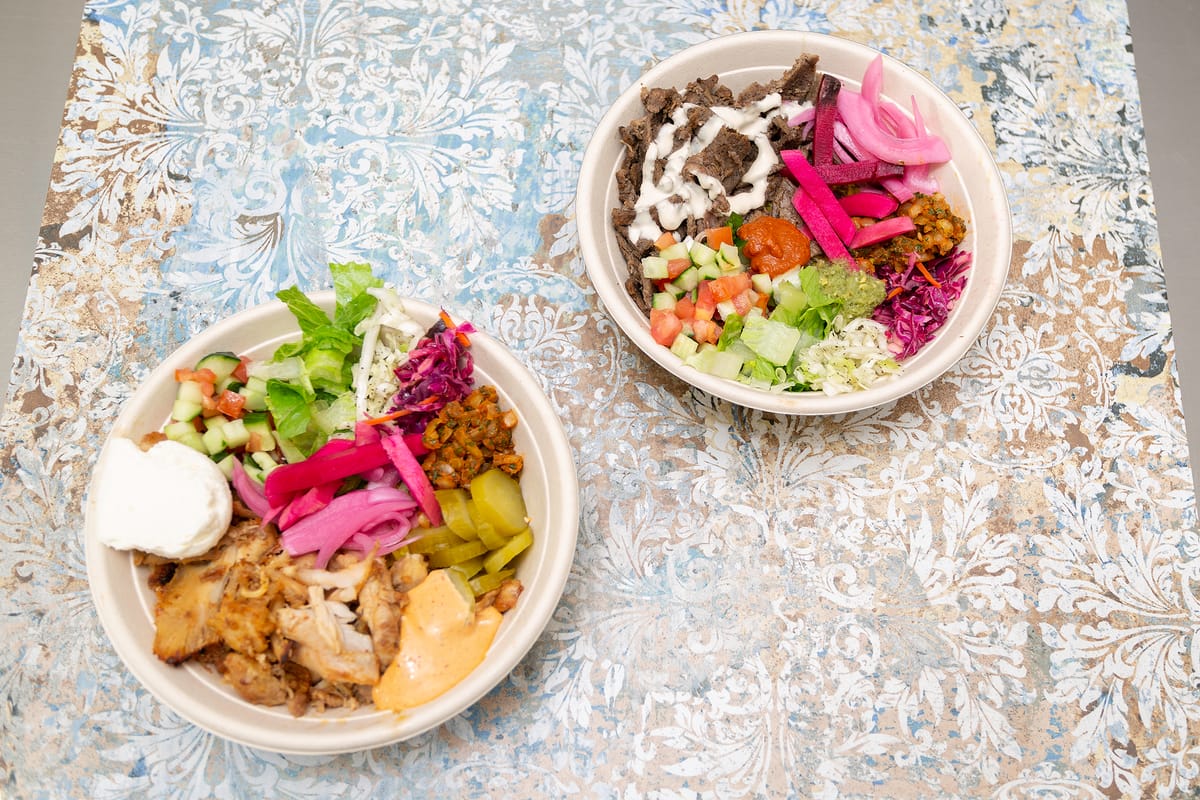
Add a generous spoonful of labneh to any grain bowl, shawarma bowl, or salad. The cool tang cuts through rich, savory meats and adds a creamy element without the heaviness of cheese. At Taza, our chicken shawarma bowl (from from $12.45) pairs well with a side of labneh -- spread it on the side of the bowl or mix it in with the rice and vegetables. The combination of warm shawarma, cool labneh, and crunchy pickled turnips hits three different temperatures and textures in one bite.
Sandwich Spread
Use labneh as a spread inside pita sandwiches, wraps, or flatbreads instead of mayonnaise or mustard. It adds moisture, tang, and creaminess while keeping the ingredient list clean. Spread a thick layer inside a pita, then fill with falafel, shawarma, or roasted vegetables. The labneh acts as both a sauce and a structural element, preventing the bread from getting soggy. At Taza, ask for a side of labneh with your chicken shawarma pita (from from $9.95) or falafel pita (from from $8.95) and spread it yourself for extra richness.
Dessert Base
While traditional labneh is savory, its thick, creamy texture makes an excellent base for simple desserts. Spread labneh in a bowl, drizzle with honey, and top with crushed pistachios, pomegranate seeds, or fresh figs. The tang of the labneh balances the sweetness of the honey, creating a dessert that is rich but not heavy. Some modern Levantine restaurants serve labneh topped with rose petal jam, date syrup, or orange blossom water-soaked walnuts. It is a healthier alternative to cheesecake or ice cream that still feels indulgent.
Why Is Labneh So Important in Levantine Food?
More than a side dish -- labneh is a daily staple woven into the fabric of Middle Eastern cuisine.
In Lebanon, Syria, and Jordan, labneh is not a specialty item or a trendy food -- it is a foundational part of daily eating. The typical Levantine breakfast table includes labneh, olive oil, za'atar, olives, fresh vegetables (cucumbers, tomatoes, mint), and bread. This combination has been standard for generations and remains the most common breakfast format in the region today. A family might go through a kilogram of labneh in a single week. It is as ordinary and essential as butter is in American kitchens or rice is in East Asian households.
The cultural importance of labneh extends beyond breakfast. In rural areas of Lebanon and Syria, families still make labneh at home from fresh yogurt -- often yogurt they have cultured themselves from raw milk. Excess labneh is preserved by rolling it into small balls (called labneh balls or "labneh makbus") and submerging them in olive oil in ceramic jars. This preservation technique predates refrigeration and allows families to store protein-rich food for months. The olive oil-preserved labneh develops a deeper, more complex flavor over time and is considered a delicacy.
Labneh also plays a role in hospitality. In Levantine culture, offering food to guests is a core social practice. A proper mezze spread -- the collection of small dishes served before or alongside the main meal -- almost always includes labneh alongside hummus, baba ghanoush, tabbouleh, and olives. Serving a mezze without labneh would be like setting an American dinner table without salt and pepper -- technically possible, but noticeably incomplete.
At Taza in Falls Church, we serve labneh in the traditional Levantine style because that is how it is meant to be eaten. Olive oil, dried mint, warm pita. No modifications needed. This is a food that has been perfected over centuries, and the best thing a restaurant can do is make it well and serve it simply. Our labneh is $4.95 and available every day we are open -- 11:00 AM - 12:00 AM, Open 7 Days a Week.
Can You Make Labneh at Home?
Yes -- and it is one of the simplest foods you will ever make.
Making labneh at home requires one ingredient (whole-milk yogurt with live cultures), one piece of equipment (a cheesecloth or clean kitchen towel), and 24-48 hours of refrigerator time. Stir a half teaspoon of salt into 32 ounces (1 quart) of full-fat plain yogurt. Line a fine-mesh colander with two layers of cheesecloth, pour the yogurt in, and gather the edges of the cloth into a bundle. Secure with a rubber band or kitchen twine. Place the colander over a deep bowl to catch the dripping whey, and refrigerate.
After 24 hours, you will have a soft, spreadable labneh suitable for dips and breakfast spreads. After 48 hours, the labneh will be firm enough to roll into balls. The yield is roughly half the original volume -- 1 quart of yogurt produces about 2 cups of labneh. Transfer the finished labneh to an airtight container and store it in the refrigerator for up to 2 weeks. Do not discard the whey -- it is rich in protein and can be added to smoothies, used as a liquid in bread dough, or mixed into soups for a subtle tang.
For the best results, use a high-quality whole-milk yogurt without added thickeners (gelatin, pectin, or guar gum), as these can interfere with the straining process. Brands that list only "milk" and "live active cultures" on the ingredient list work best. If you prefer not to make it yourself, come to Taza in Falls Church and try ours for $4.95. We will handle the straining.
Where to Get Labneh in Falls Church, VA
Traditional labneh, made fresh, served the Levantine way.
Labneh Side
$4.95
Traditional strained yogurt, thick and tangy, drizzled with extra-virgin olive oil and sprinkled with dried mint. A refreshing, probiotic-rich side that pairs beautifully with any meal. Served with warm pita. Pairs well with our shawarma pitas, falafel bowls, or as part of a mezze spread with hummus and baba ghanoush. Available for dine-in, takeout, or online ordering.
Pair It With
Complete Your Meal
Order labneh alongside our fresh-baked pita bread ($0.95), za'atar manaeesh ($6.95), or as a side with any shawarma or falafel order. Building a mezze platter? Add hummus ($4.95) and baba ghanoush ($4.95) for the full spread.
Address
5820 Seminary Rd Ste O, Falls Church, VA 22041
Hours
11:00 AM - 12:00 AM -- Open 7 Days a Week
Phone
How Does Labneh Compare to Other Spreads and Dips?
Labneh holds its own against cream cheese, sour cream, ricotta, and other dairy spreads.
In American kitchens, the closest equivalents to labneh are cream cheese, sour cream, and ricotta -- but none of them are true substitutes. Cream cheese is made by coagulating heated milk with acid, then draining the curds. It is dense, mild, and high in fat (around 34g per 100g). Labneh has a similar thickness but a sharper tang, lower fat content (8-14g per 100g), and live active cultures that cream cheese lacks entirely.
Sour cream is thinner than labneh and has a milder tang. It works well as a topping but does not have the body to function as a spread or dip on its own. Ricotta is sweeter, grainier, and completely different in texture -- it is a fresh cheese made from whey, not a strained yogurt. Mascarpone is rich and creamy but lacks the tang and probiotics that make labneh nutritionally distinctive.
The bottom line: if you want a thick, tangy, protein-rich spread with live probiotics and no artificial additives, labneh is the best option in its category. It is lower in fat than cream cheese, thicker than sour cream, tangier than ricotta, and more nutritious than all three. At Taza, our labneh is $4.95 -- a simple, honest product with one ingredient and centuries of tradition behind it.
Labneh
Cream Cheese
Sour Cream
Greek Yogurt
Frequently Asked Questions About Labneh
No. Labneh and cream cheese have a similar thickness, but they are made differently and taste different. Cream cheese is made by adding acid to heated milk and cream, then draining the curds. Labneh is made by straining whole-milk yogurt until the whey separates out -- no additional acid or cream is added. The result is that labneh has a tangy, probiotic-rich flavor profile that cream cheese lacks entirely. Labneh also contains live active cultures because it starts as fermented yogurt, while cream cheese does not. At Taza Shawarma & Falafel in Falls Church, our labneh is served as a traditional side dish with olive oil and dried mint for $4.95.
Yes. Labneh is a dairy product made from strained yogurt and must be kept refrigerated at 40 degrees Fahrenheit or below. When stored properly in an airtight container, homemade labneh lasts 1-2 weeks in the refrigerator. Some traditional preservation methods involve rolling labneh into balls and submerging them in olive oil, which can extend shelf life to several weeks. Commercially produced labneh may contain stabilizers that extend its life further. At Taza, our labneh is prepared fresh and served chilled with warm pita bread.
Labneh is a nutrient-dense food with several health benefits. A typical 2-tablespoon serving contains approximately 50-60 calories, 3-5 grams of protein, and 3-4 grams of fat. Because labneh is made from fermented yogurt, it contains live probiotics (Lactobacillus and Streptococcus strains) that support gut health and digestion. The straining process concentrates the protein and calcium while removing much of the lactose, making labneh easier to digest than regular yogurt for people with mild lactose sensitivity. It also provides B vitamins, phosphorus, and potassium. Compared to many commercial dips, labneh is lower in sodium and free of artificial ingredients.
Labneh tastes like a thicker, tangier version of Greek yogurt with a smooth, creamy texture similar to soft cheese. The dominant flavor is a clean, sharp tang that comes from the lactic acid produced during fermentation. It is not sweet -- traditional labneh has no added sugar. When served in the Levantine style (drizzled with extra-virgin olive oil and sprinkled with dried mint or za'atar), the richness of the oil balances the tang, and the herbs add earthy, aromatic notes. At Taza in Falls Church, we serve labneh this way as a side for $4.95, with warm pita for scooping.
Yes, labneh works as a direct substitute for sour cream in almost every application. Use it on baked potatoes, tacos, chili, or alongside roasted vegetables. Labneh is thicker than sour cream, so you may want to thin it with a small splash of milk or lemon juice if you need a more pourable consistency. The flavor is tangier and more complex than standard sour cream. Labneh also works well in baking recipes that call for sour cream -- it adds moisture and tang to cakes, muffins, and quick breads. The swap is 1:1 by volume.
You can get labneh at Taza Shawarma & Falafel, located at 5820 Seminary Rd Ste O, Falls Church, VA 22041. We serve labneh as a side dish for $4.95, drizzled with olive oil and dried mint, with warm pita bread. We are open 11:00 AM - 12:00 AM, Open 7 Days a Week. You can also find packaged labneh at Middle Eastern grocery stores in the Northern Virginia area, including Halalco in Falls Church, Mediterranean Bakery in Alexandria, and international aisles at some Whole Foods locations. For the freshest labneh served in the traditional style, visit us at Taza.
Ready to Try Real Labneh?
Thick, tangy, and made fresh daily. Labneh at Taza is $4.95, served with olive oil, dried mint, and warm pita. Order online or visit us at 5820 Seminary Rd Ste O, Falls Church, VA 22041.