What Is Za'atar? The Spice Blend You Need to Know
Three ingredients. Two thousand years of daily use. Za'atar is the single most important spice blend in Levantine cooking -- and you can taste it fresh at Taza every day.
4.8 stars on Yelp (92 reviews) -- Open 11:00 AM - 12:00 AM
What Is Za'atar?
A wild herb, a spice blend, and a daily ritual across the Middle East.
Za'atar is both a wild herb (Middle Eastern oregano, Origanum syriacum) and a spice blend made from dried thyme, ground sumac, toasted sesame seeds, and salt. It is the single most important spice blend in Lebanese, Syrian, and Jordanian cooking -- the one blend that every household has on the table. The word itself comes from Arabic and refers to the herb that grows wild across the rocky hillsides of the Levant, from southern Lebanon through Jordan and into Syria.
The spice blend version of za'atar takes that herb (or common thyme as a substitute) and grinds it together with sumac -- a deep red, tangy berry that grows on shrubs throughout the Mediterranean basin -- toasted sesame seeds for crunch and nuttiness, and salt to balance the flavors. The exact ratio varies by region and family. Levantine za'atar tends to be heavier on sumac, giving it a more tart flavor. Lebanese za'atar often has more sesame. Syrian blends may include additional herbs like marjoram or cumin seeds.
At Taza Shawarma & Falafel in Falls Church, VA, za'atar is featured on our za'atar manaeesh ($6.95) and za'atar pie ($2.95), both baked fresh in our stone oven. If you have never tried za'atar, the manaeesh is the best starting point -- it is the bread that introduced the blend to millions of people across the Middle East, and it will introduce it to you.
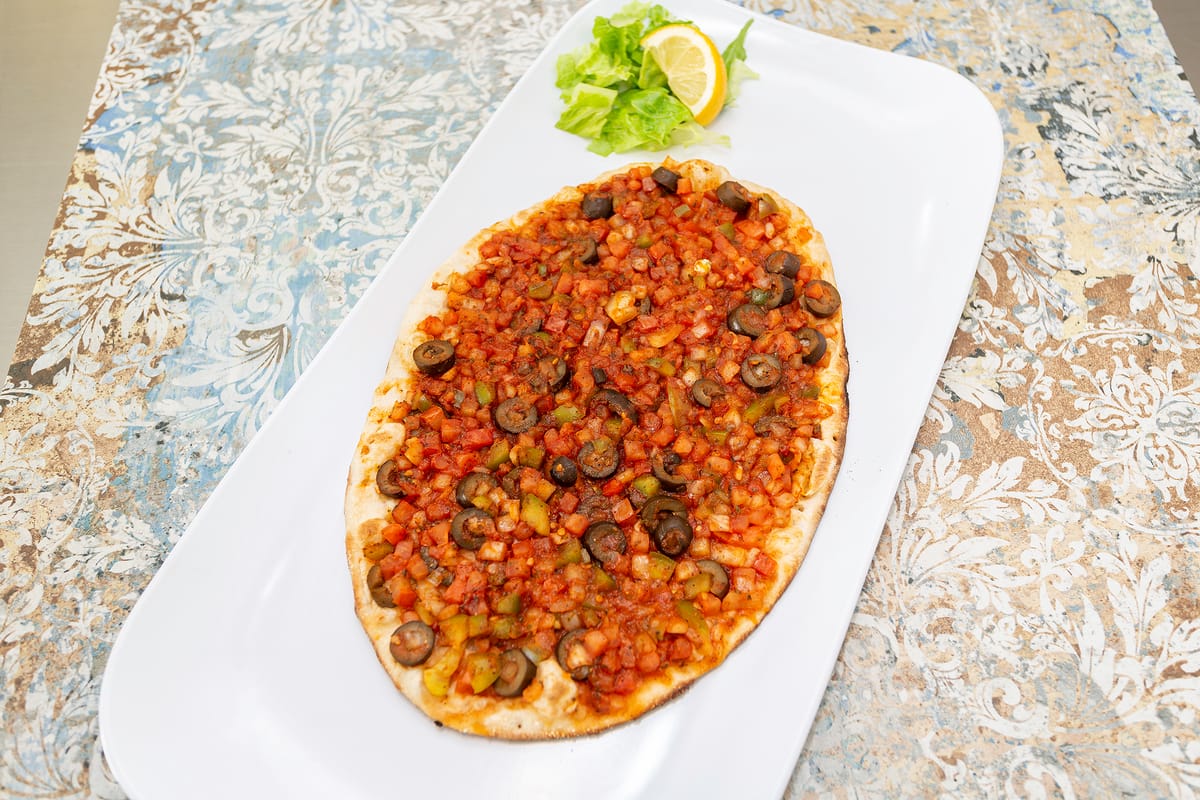
Fresh from the Stone Oven
Taza's manaeesh is baked to order -- za'atar brushed on dough and fired in a stone oven until the edges blister.
What's in the Za'atar Blend?
Four ingredients, each with a specific role. Together they create something greater than the sum.
Thyme / Wild Za'atar
The Herb
The foundation of the blend. In traditional za'atar, this is Origanum syriacum -- a wild herb that grows across the Levantine hillsides. Outside the Middle East, common thyme or a mix of thyme and oregano is used as a substitute. The herb provides the deep, earthy, slightly minty flavor that defines za'atar. It is dried and crumbled before blending.
Sumac
The Tang
Ground sumac berries give za'atar its signature tanginess -- a citrusy, slightly sour note that brightens the entire blend. Sumac is what separates za'atar from Western herb blends like Italian seasoning. The deep red-purple color of sumac also gives za'atar its distinctive appearance. Without sumac, za'atar would taste flat and one-dimensional.
Sesame Seeds
The Crunch
Toasted white sesame seeds add nuttiness and textural contrast. When you bite into za'atar on bread, the sesame seeds pop and crunch between your teeth. They also contribute protein and healthy fats. The seeds are toasted before blending, which deepens their flavor from neutral to rich and aromatic.
Salt
The Balance
Fine salt ties the other three ingredients together, amplifying the herb flavor and balancing the tartness of the sumac. The amount of salt varies by blend -- some commercial za'atar is quite salty, while homemade versions use less. Good za'atar should taste herbal first, then tangy, then nutty, with salt as a background note.
What Does Za'atar Taste Like?
Unlike any Western spice blend. Here is what to expect on your first bite.
Za'atar tastes earthy, tangy, nutty, and herbal -- all at once. The first thing you notice is the herb: a thyme-like, slightly oregano quality that is deep and savory without being heavy. Then the sumac hits -- a bright, citrusy tartness that lifts the whole flavor the way lemon zest lifts a dish. The sesame seeds add a toasty, nutty crunch that rounds everything out. There is no heat or spiciness. Za'atar is savory and aromatic, not aggressive.
The closest Western comparison would be Italian seasoning, but that comparison falls short. Italian seasoning is a mix of dried herbs -- oregano, basil, rosemary -- with no acid or crunch component. Za'atar has sumac (acid) and sesame (crunch), which give it two dimensions that dried herb blends lack. If you mixed Italian seasoning with a squeeze of lemon and a handful of toasted sesame seeds, you would get something in the ballpark -- but not exactly right, because the specific herbs are different.
On bread, za'atar is at its best. When mixed with olive oil and baked on flatbread (manaeesh), the heat transforms it. The oil blooms the herbs, the sesame seeds toast further, and the sumac mellows into a warm tanginess. A fresh za'atar manaeesh from Taza's stone oven is one of those foods where you take the first bite and immediately understand why millions of people eat this every morning.
If you are trying za'atar for the first time, start with the za'atar manaeesh ($6.95) at Taza. It is the purest expression of the blend -- just za'atar, olive oil, and bread. Nothing to distract from the flavor. Once you know what za'atar tastes like on its own, you will start recognizing it in hummus, on labneh, and sprinkled over bowls.
The Cultural Significance of Za'atar
More than a seasoning -- za'atar is identity, memory, and daily ritual across the Levant.
In Lebanon, mothers spread za'atar on bread for their children's school lunches almost universally. The saying "eat za'atar and you will be smart" is repeated in households from Beirut to Tripoli to the Bekaa Valley. Whether or not za'atar actually improves cognitive function (some studies on thyme and sesame suggest anti-inflammatory brain benefits), the belief is deeply held. Za'atar bread and labneh is to a Lebanese kid what peanut butter and jelly is to an American one -- the default, the constant, the taste of home.
Across the Levant, wild za'atar foraging is a cherished tradition passed down through generations. The wild Origanum syriacum plant grows across the hills of Lebanon, Syria, and Jordan. For many families, foraging za'atar from land their ancestors have tended for centuries is an act of cultural continuity. The plant itself has become a symbol of Levantine identity and connection to the land.
Throughout Jordan and Syria, za'atar is mixed into olive oil and served in small dishes at every meal. Restaurant tables in Amman and Damascus often have a bowl of za'atar and olive oil alongside the bread basket the way American tables have salt and pepper. You tear off bread, dip it into the oil-za'atar mixture, and eat it between courses. It is not an appetizer -- it is part of the fabric of the meal.
At Taza in Falls Church, we carry this tradition forward. Our za'atar manaeesh is baked to order in the same style as bakeries across Lebanon. For the diaspora communities of Northern Virginia, it is a taste of home. For everyone else, it is a chance to try something that has been eaten daily in the Levant for over two thousand years.
A Taste of the Levant in Falls Church
Za'atar manaeesh, fresh from the stone oven, served every day at Taza.
5 Ways to Eat Za'atar at Taza
From stone-oven manaeesh to a sprinkle on hummus -- every way to get your za'atar fix.
Za'atar Manaeesh -- $6.95
The definitive way to eat za'atar. Warm flatbread brushed with za'atar mixed in olive oil, baked in a stone oven until the edges crisp and the topping turns fragrant. This is breakfast in Lebanon. At Taza, it is available all day.
Za'atar Pie -- $2.95
Hand-folded pastry dough wrapped around a filling of za'atar, toasted sesame seeds, and olive oil. Baked golden. Portable, affordable, and intensely flavored. A perfect snack on its own or alongside a bowl.
Za'atar and Olive Oil Dip -- Free
The simplest preparation: za'atar mixed into a small dish of extra-virgin olive oil. Tear off pieces of warm pita and dip. This is how za'atar is eaten at home across the Levant -- no cooking required.
Sprinkled on Hummus -- $4.95
A tablespoon of za'atar sprinkled over the top of hummus adds herbal depth and a crunchy sesame texture. It turns a simple dip into something more complex. Ask for za'atar on your hummus at Taza.
On Labneh -- $4.95
Thick strained yogurt topped with za'atar, olive oil, and sometimes dried mint. The tangy labneh and the earthy, tart za'atar are a classic combination -- served at breakfast tables from Beirut to Amman to Falls Church.
Za'atar at Taza Shawarma & Falafel
Fresh-baked za'atar manaeesh and pies, available every day at our Falls Church location.
Taza's za'atar manaeesh is our most traditional menu item. It starts with fresh dough, hand- stretched and brushed with a generous layer of za'atar mixed in extra-virgin olive oil. The flatbread goes into our stone oven and bakes until the edges blister and the za'atar topping turns fragrant and slightly crisp. The result is a warm, aromatic flatbread that tastes exactly like what you would get at a bakery in Beirut.
Our za'atar pie ($2.95) is a more portable option -- hand-folded pastry dough with a za'atar and olive oil filling, baked until golden. It is the kind of thing you eat on the go or pair with a bowl or soup. At under three dollars, it is one of the most affordable ways to try za'atar.
Beyond the dedicated za'atar items, the blend shows up across our menu. You can request za'atar sprinkled on hummus, on labneh, or on bowls. Some regular customers order a chicken shawarma bowl (from $12.45) with za'atar and olive oil drizzled over the top -- a combination that bridges the savory shawarma flavors with the herbal-tangy za'atar.
Other manaeesh options at Taza include cheese manaeesh ($7.95), spinach manaeesh ($7.95), and lahm bil ajin ($8.95) -- all baked fresh in the same stone oven. The za'atar version is the simplest and the most traditional. It is also the cheapest item on our flatbread menu.
Is Za'atar Good for You?
The individual ingredients in za'atar each carry documented nutritional benefits.
Za'atar is not a superfood in the smoothie-bowl sense, but its individual components are nutritionally meaningful. Thyme contains thymol, a compound with documented antimicrobial and antioxidant properties. Sumac is one of the highest-antioxidant spices ever measured -- ORAC testing places it above blueberries, turmeric, and cinnamon. Sesame seeds provide protein, calcium, iron, zinc, and healthy unsaturated fats. Together, these ingredients deliver more nutritional value than most dried seasoning blends.
The folk wisdom of "eat za'atar to be smart" has a basis in biochemistry, if not rigorous clinical evidence. Thymol has been studied for neuroprotective properties. Sesame seeds contain sesamol and sesaminol, compounds associated with anti-inflammatory effects in brain tissue. Sumac's high antioxidant load may help reduce oxidative stress. None of this means eating za'atar will raise your test scores, but the blend is genuinely nutrient-dense for a seasoning.
The practical nutritional benefit of za'atar is simple: it adds intense flavor to food without adding significant calories, fat, or sugar. A tablespoon of za'atar has roughly 10 calories. Compare that to a tablespoon of butter (100 calories) or ranch dressing (73 calories). Za'atar lets you make bread, vegetables, and grains taste great without loading them with calorie-dense sauces. That is a meaningful advantage for anyone watching their intake.
Thymol (from Thyme)
Antimicrobial and antioxidant compound found in thyme. Used in traditional medicine for respiratory health and as a natural preservative.
Sumac Antioxidants
Sumac has one of the highest ORAC values of any spice -- a measure of antioxidant capacity. Higher than turmeric, ginger, or cinnamon.
Sesame Minerals
Sesame seeds provide calcium (88mg per tbsp), iron (1.3mg), zinc (0.7mg), and copper. Important for vegans and those avoiding dairy.
Za'atar's Growing Popularity in American Cooking
From specialty import to mainstream ingredient in under a decade.
Ten years ago, most American cooks had never heard of za'atar. It was available only at Middle Eastern grocery stores and specialty spice shops. That changed rapidly. Yotam Ottolenghi's cookbooks introduced za'atar to mainstream food culture in the 2010s, and food media amplified it from there. By 2020, za'atar was stocked at Whole Foods, Trader Joe's, and Penzeys. By 2024, McCormick released a za'atar blend in major grocery chains.
American chefs have adopted za'atar in ways that would surprise a Lebanese grandmother. It shows up on avocado toast, roasted Brussels sprouts, grilled fish, popcorn, and even pizza. Some of these applications work well -- za'atar on roasted vegetables is excellent. Others lose the plot. The best use of za'atar remains the traditional one: mixed with olive oil and spread on bread.
In Northern Virginia, the za'atar you find at Taza and other Levantine restaurants is the real thing -- sourced from Middle Eastern suppliers, mixed in traditional ratios, and used in traditional preparations. If you have been sprinkling store-bought za'atar on avocado toast and want to know what it actually tastes like on manaeesh, come to Taza. The difference between za'atar as a trendy garnish and za'atar as a core ingredient is significant -- and you will taste it immediately.
Za'atar vs Italian Seasoning: How Do They Differ?
Both are Mediterranean herb blends, but they serve different purposes and taste significantly different.
| Feature | Za'atar | Italian Seasoning |
|---|---|---|
| Origin | Lebanon, Syria, Jordan | Italy / Southern France |
| Key Ingredients | Dried thyme, sumac, sesame seeds, salt | Oregano, basil, rosemary, thyme, sage |
| Flavor Profile | Tangy (sumac), herbal, nutty (sesame), earthy | Herbal, slightly sweet, Mediterranean |
| Best On | Flatbread, olive oil, labneh, eggs, hummus | Pasta, pizza, roasted vegetables, grilled meat |
| Unique Element | Sumac gives a distinctive tartness no Western blend has | Basil gives a sweet, anise-like quality |
| Texture | Crunchy from toasted sesame seeds | Fine, uniform dried herbs |
| Color | Dark green with red-brown sumac specks | Light green, uniform |
| Traditional Use | Mixed with olive oil and spread on bread before baking | Sprinkled on finished dishes as seasoning |
The key difference is sumac. Za'atar has it; Italian seasoning does not. Sumac provides a tartness and acidity that makes za'atar unique among herb blends worldwide. If you have a jar of Italian seasoning at home and want to approximate za'atar, you cannot -- you need sumac, and most Western grocery stores do not carry it in the standard spice aisle.
How Za'atar Varies by Region
Every country -- and many families -- have their own ratio and additions.
Lebanon
Lebanese Style
Heavier on sesame seeds, which gives a nuttier, crunchier texture. The thyme used is often a specific cultivated variety rather than wild foraged. Olive oil quality matters here -- Lebanese za'atar is almost always eaten with Lebanese olive oil, and the oil is considered half the experience.
Levantine
Levantine Style
More sumac than the Lebanese version, making it tangier and more tart. Wild za'atar herb (Origanum syriacum) is preferred over cultivated thyme. Some Levantine blends add caraway seeds or cumin for additional depth. The color tends to be more reddish due to the higher sumac ratio.
Syria
Syrian Style
May include ground pistachios, coriander seeds, or fennel seeds alongside the standard thyme-sumac-sesame base. Syrian za'atar can be more complex and varied than other regional versions. The thyme is sometimes replaced with or supplemented by dried marjoram.
Jordan
Jordanian Style
Similar to Levantine za'atar with a heavy sumac presence. Some Jordanian blends include chickpea flour or ground chickpeas for body and protein. The blend is often coarser-ground than other regional versions, with visible whole sesame seeds and larger herb pieces.
Despite these regional differences, all za'atar blends share the same core identity: dried herbs, sumac, sesame seeds, and salt. The variation is in the ratios and occasional additions, not in the fundamental formula. If you buy za'atar from a Middle Eastern grocery store in Northern Virginia, the label will usually indicate the country of origin -- look for Lebanese or Jordanian za'atar for the most traditional flavor profiles. At Taza, our za'atar reflects the Levantine tradition that runs through all four regional styles.
How to Use Za'atar at Home
Simple ways to add za'atar to your cooking, even if you have never used it before.
The easiest entry point: mix two tablespoons of za'atar with three tablespoons of good olive oil in a small dish. Tear off pieces of bread and dip. That is it. This is how za'atar is eaten in most homes across the Middle East, and it requires zero cooking. Use the best olive oil you have -- the oil carries the flavor.
For cooking, sprinkle za'atar on roasted vegetables (cauliflower, sweet potatoes, chickpeas) during the last five minutes of roasting. Adding it too early can burn the sesame seeds and turn the herbs bitter. It works on scrambled eggs, fried eggs, or folded into an omelet with feta cheese. Stir it into Greek yogurt with olive oil for an instant labneh-style dip. Season grilled chicken thighs with za'atar and lemon before cooking.
For flatbread at home: spread pizza dough or store-bought naan with olive oil, top generously with za'atar, and bake at 425 degrees F for 8-10 minutes. It is not the same as Taza's stone-oven manaeesh, but it gives you the general idea. The fresh dough and high oven temperature are what make the restaurant version better -- the home version is still good.
Store za'atar in an airtight container away from heat and light. It keeps for 6-12 months but tastes best within the first few weeks of opening. If your za'atar has lost its fragrance, it has lost most of its flavor -- time for a new jar. Or time for a trip to Taza, where the za'atar is always fresh.
Za'atar: Common Questions Answered
Not exactly. The word 'za'atar' refers to two things: a wild herb (Origanum syriacum, sometimes called Syrian oregano or Middle Eastern thyme) and a spice blend. The herb itself is related to both thyme and oregano -- it tastes like a cross between the two, with a slightly more peppery bite. The spice blend called za'atar contains dried thyme or the wild za'atar herb, plus ground sumac, toasted sesame seeds, and salt. When someone says 'za'atar' at a restaurant, they almost always mean the blend, not the raw herb alone.
No. Za'atar is not spicy in the chili-pepper sense. It has no heat. The flavor is herbal (from the thyme), tangy (from the sumac), and nutty (from the sesame seeds). If anything, it is closer to a savory seasoning than a spice blend in terms of heat level. The sumac can read as slightly sour or citrusy, which some people initially confuse with spiciness, but it is acidity, not heat. Za'atar is mild enough for children -- in Lebanon, kids eat za'atar bread for breakfast every day.
Za'atar is sold at Middle Eastern grocery stores, specialty spice shops, Whole Foods, and online retailers like Amazon, Kalustyan's, and Burlap & Barrel. In Northern Virginia, international grocery stores in the Falls Church and Arlington corridors stock several brands. Look for za'atar that lists sumac, thyme, and sesame as the main ingredients. Avoid blends that are mostly salt or include a lot of filler herbs. Quality za'atar should smell strongly herbal and look visibly green with red-brown sumac specks. Or skip the jar and eat it at Taza -- our za'atar manaeesh starts at $6.95.
Za'atar is pronounced 'ZAH-tar' with the stress on the first syllable. The apostrophe represents a glottal stop in Arabic (the 'ayn' letter), which is a brief catch in the throat between the two syllables. Most English speakers skip the glottal stop and say 'ZAH-tar' or 'ZAH-tur,' which is close enough. You may also see it spelled zaatar, za'tar, zahtar, or zatar -- they all refer to the same blend.
Yes. In many parts of Lebanon, Syria, and Jordan, people eat za'atar daily, especially at breakfast. Za'atar on bread with olive oil is a standard morning meal for millions of people in the Levant. The ingredients are all whole foods -- dried herbs, sumac berries, sesame seeds, salt -- and none are consumed in quantities that pose health concerns with daily use. The only consideration is sodium: like any seasoning blend, za'atar contains salt, so monitor your overall sodium intake if that is a concern.
Za'atar the herb (Origanum syriacum) is a single plant that grows wild across the hills of Lebanon, Syria, and Jordan. It looks like a scrubby, small-leafed bush and tastes like a combination of thyme and oregano with a peppery edge. Za'atar the blend is a mixture of this dried herb (or common thyme as a substitute), ground sumac, toasted sesame seeds, and salt. The blend is what you find in jars at the store and what restaurants like Taza use on manaeesh and pies. The herb alone is harder to find outside the Middle East and is primarily used in folk medicine and home cooking.
Try Za'atar at Taza
Open 11:00 AM - 12:00 AM, Open 7 Days a Week at 5820 Seminary Rd Ste O, Falls Church, VA 22041.
Address
5820 Seminary Rd Ste O, Falls Church, VA 22041
Hours
11:00 AM - 12:00 AM -- Open 7 Days a Week
Phone
Order Za'atar Manaeesh at Taza
Fresh dough, quality za'atar, stone-oven baked. Starting at $6.95. Order online for pickup or dine in at 5820 Seminary Rd Ste O, Falls Church, VA 22041.