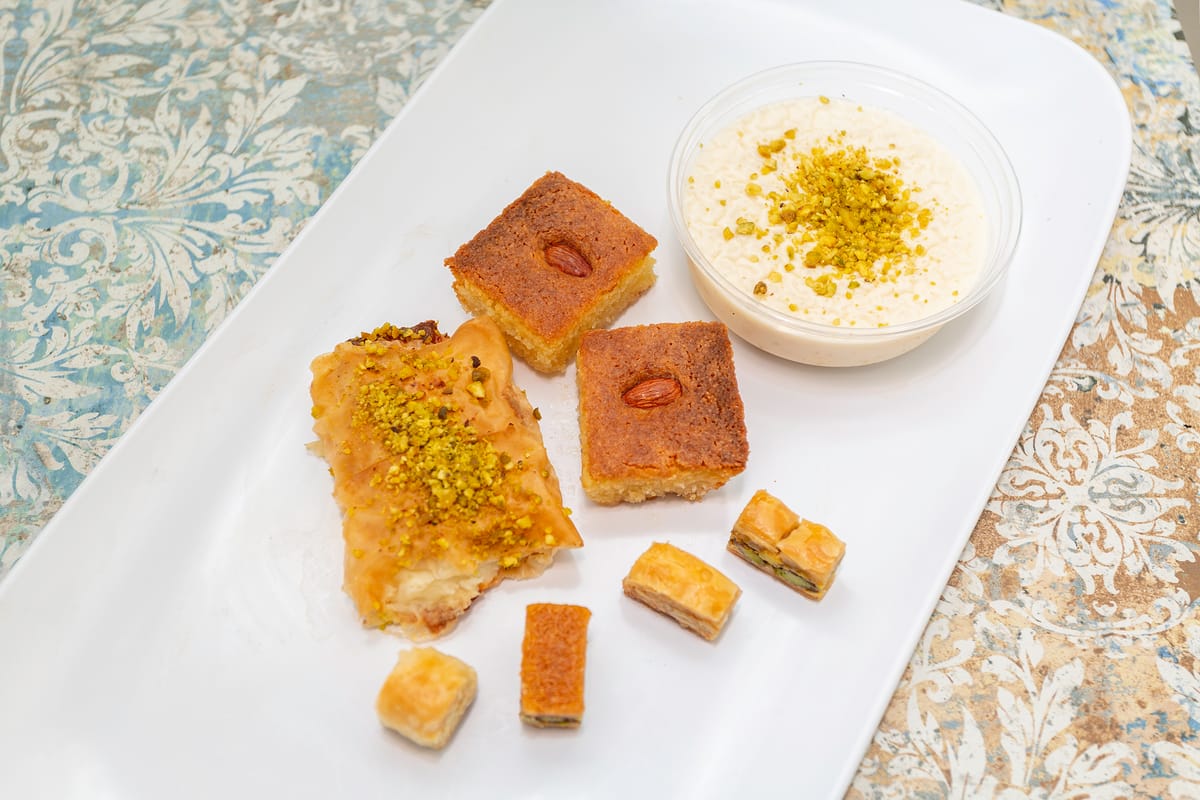
Mediterranean vs Middle Eastern Food: What's the Difference?
These two labels overlap more than most people realize. All Middle Eastern food is Mediterranean, but not all Mediterranean food is Middle Eastern. Here is why the distinction matters -- and where Taza fits in.
4.8 stars on Yelp (92 reviews) -- Open 11:00 AM - 12:00 AM
What Is the Difference Between Mediterranean and Middle Eastern Food?
Geography is the key. One is a region, the other is a subset of it.
Mediterranean food is a broad geographic category covering the cuisines of all 21 countries that border the Mediterranean Sea. That includes Southern European countries like Italy, Spain, France, and Greece. It includes North African countries like Morocco, Tunisia, Algeria, and Egypt. And it includes Eastern Mediterranean countries like Turkey, Lebanon, Syria, and Jordan. The common threads are olive oil, fresh vegetables, grains, legumes, and herbs -- but the specific dishes vary enormously from one end of the sea to the other.
Middle Eastern food refers specifically to the cuisines of the Levant (Lebanon, Syria, Jordan), the Arabian Peninsula (Saudi Arabia, Yemen, UAE, Oman), Iraq, and often extends to include Egypt and North Africa. The staples are chickpeas, tahini, lamb, flatbreads, and spices like za'atar, sumac, cumin, and cinnamon. Most Middle Eastern countries border the Mediterranean Sea, so all Middle Eastern food is technically Mediterranean food -- but Mediterranean food also includes Italian pasta, Spanish paella, and French bouillabaisse, which are not Middle Eastern at all.
When Americans say "Mediterranean restaurant," they usually mean a restaurant serving Lebanese, Syrian, or Turkish food: shawarma, falafel, hummus, pita, and kebabs. That food is technically both Mediterranean and Middle Eastern. Taza Shawarma & Falafel serves Lebanese/Levantine cuisine, which sits right at the intersection of both categories.
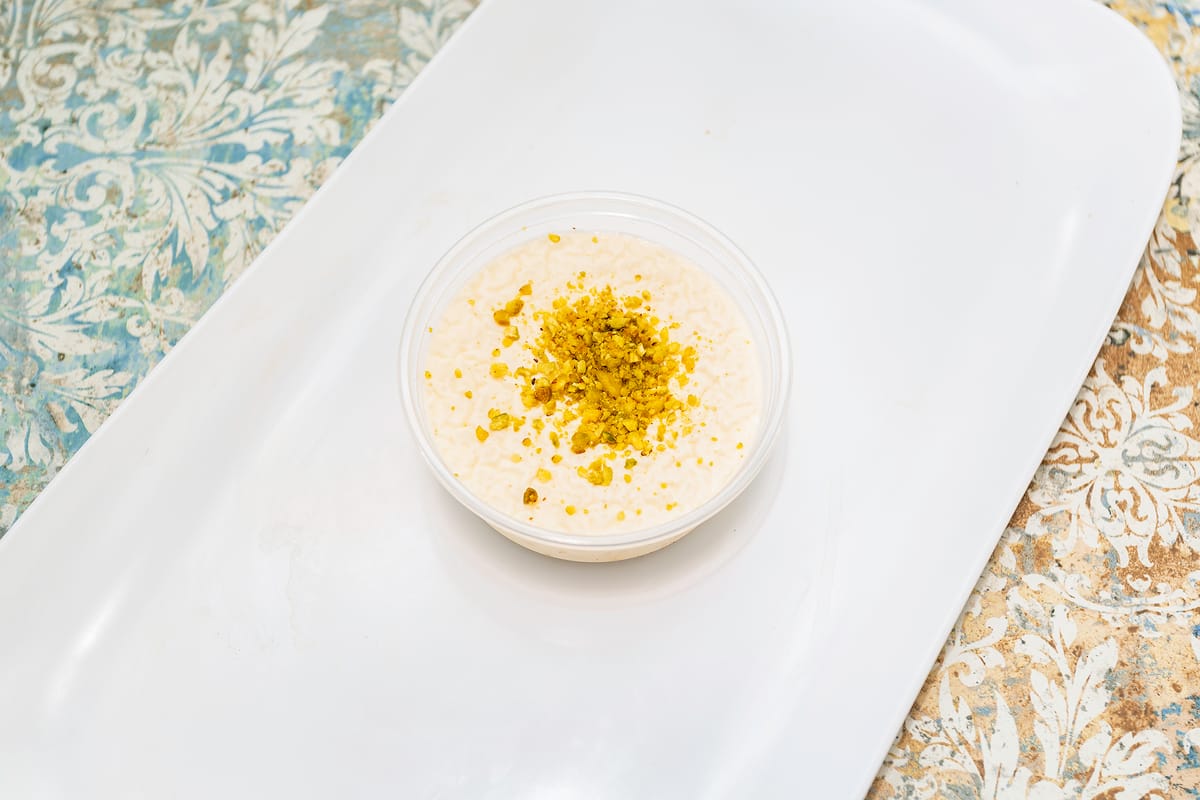
Where Two Worlds Meet
Lebanese food sits at the crossroads of Mediterranean and Middle Eastern culinary traditions.
What Is Mediterranean Food?
A cuisine defined by geography, climate, and shared ingredients across three continents.
Mediterranean food encompasses the culinary traditions of every country touching the Mediterranean Sea. The Mediterranean basin has a specific climate -- warm, dry summers and mild, wet winters -- that produces a consistent set of ingredients across the entire region: olives (and olive oil), grapes (and wine), wheat, citrus, tomatoes, eggplant, garlic, and herbs. These shared ingredients are why a Greek salad and a Lebanese fattoush both taste recognizably "Mediterranean" even though they come from different cultures.
The Mediterranean diet -- formally studied since the 1950s -- is consistently ranked among the healthiest eating patterns in the world. It emphasizes olive oil as the primary fat, high vegetable and legume intake, whole grains, fish and poultry over red meat, and herbs and spices over salt and butter. This dietary pattern is associated with lower rates of heart disease, type 2 diabetes, and certain cancers.
Southern European
Italy, Greece, Spain, France, Croatia
Pasta, pizza, paella, moussaka, bouillabaisse, tapas
North African
Morocco, Tunisia, Algeria, Libya, Egypt
Tagine, couscous, harissa, shakshuka, ful medames
Levantine
Lebanon, Syria, Jordan
Shawarma, falafel, hummus, tabbouleh, manaeesh, kebabs
Turkish
Turkey (bridges Europe and Asia)
Doner kebab, lahmacun, baklava, meze, pide, borek
What Is Middle Eastern Food?
A cuisine shaped by the spice routes, Islamic dietary traditions, and ancient agricultural practices.
Middle Eastern food comes from a more specific geographic region than "Mediterranean." The core Middle Eastern culinary zone includes the Levant (Lebanon, Syria, Jordan), Iraq, and the Arabian Peninsula (Saudi Arabia, Yemen, UAE, Oman, Bahrain, Kuwait, Qatar). Egypt and North African countries are sometimes included, depending on who is drawing the boundaries. Iran and Turkey are often grouped with Middle Eastern food, though both have distinct culinary identities.
The defining ingredients of Middle Eastern food are chickpeas (the base for both hummus and falafel), tahini (ground sesame paste), lamb and chicken as primary proteins, flatbreads as the default carbohydrate, and a spice palette that includes cumin, sumac, za'atar, cinnamon, cardamom, and turmeric. These spices distinguish Middle Eastern cooking from Southern European Mediterranean food, which leans on dried herbs (oregano, basil, rosemary) rather than ground spices.
Halal dietary laws shape much of Middle Eastern food preparation. Most meat in Middle Eastern countries is halal -- slaughtered according to Islamic guidelines. Pork is absent from traditional Middle Eastern cuisine (unlike Southern European Mediterranean food, where pork is common). At Taza in Falls Church, all meats are halal certified, reflecting the authentic Middle Eastern sourcing standard.
Levantine
Lebanon, Syria, Jordan
Shawarma, hummus, falafel, tabbouleh, fattoush, manaeesh, kibbeh
Gulf / Arabian
Saudi Arabia, UAE, Oman, Yemen, Kuwait
Kabsa, machboos, harees, saloona, luqaimat, Arabic coffee
North African
Egypt, Libya, Tunisia, Morocco, Algeria
Koshari, tagine, couscous, harissa, ful medames, shakshuka
Mediterranean vs Middle Eastern: Complete Comparison
A direct category-by-category breakdown of these two overlapping food traditions.
| Category | Mediterranean | Middle Eastern |
|---|---|---|
| Geographic Scope | 21 countries bordering the Mediterranean Sea | Levant, Arabian Peninsula, North Africa, parts of Central Asia |
| Key Countries | Italy, Greece, Spain, Turkey, Lebanon, Morocco, Tunisia, Egypt | Lebanon, Syria, Jordan, Iraq, Saudi Arabia, Yemen, Egypt |
| Staple Oils | Olive oil (universal across the region) | Olive oil (Levant), sesame oil (tahini), ghee (Gulf states) |
| Primary Proteins | Fish, seafood, lamb, chicken, legumes | Lamb, chicken, beef, chickpeas, lentils |
| Staple Grains | Wheat (pasta, bread), rice, couscous, bulgur | Flatbreads (pita, shrak), rice, bulgur, freekeh |
| Key Spices | Oregano, basil, thyme, saffron, rosemary | Cumin, sumac, za'atar, cinnamon, cardamom, turmeric |
| Signature Dishes | Pasta, paella, moussaka, couscous, hummus, falafel | Shawarma, falafel, hummus, manaeesh, knafeh, kebabs |
| Dietary Laws | Varies by country (secular, Christian, Muslim, Jewish) | Primarily halal (Islamic dietary law) in most countries |
| Common Dips | Hummus, tzatziki, romesco, baba ghanoush, tapenade | Hummus, baba ghanoush, labneh, muhammara, tahini |
| Bread Types | Focaccia, ciabatta, pita, baguette, flatbreads | Pita, shrak/saj, manaeesh, lavash, khubz |
Notice the overlap in oils, grains, and proteins. The biggest differences are in spice profiles (herbs vs. ground spices) and the specific dishes each tradition is known for.
What Mediterranean and Middle Eastern Food Have in Common
The Venn diagram of these two cuisines has a massive shared center.
Only Mediterranean
Dishes from the European and Western Mediterranean that are not part of Middle Eastern cuisine:
Shared by Both
Dishes and ingredients found in both Mediterranean and Middle Eastern traditions:
Only Middle Eastern
Dishes specific to the Middle East that are not traditionally found in European Mediterranean cuisine:
The shared center is large because the Eastern Mediterranean (Lebanon, Syria, Turkey) is where both food traditions physically overlap. This is exactly where Taza's cuisine comes from.
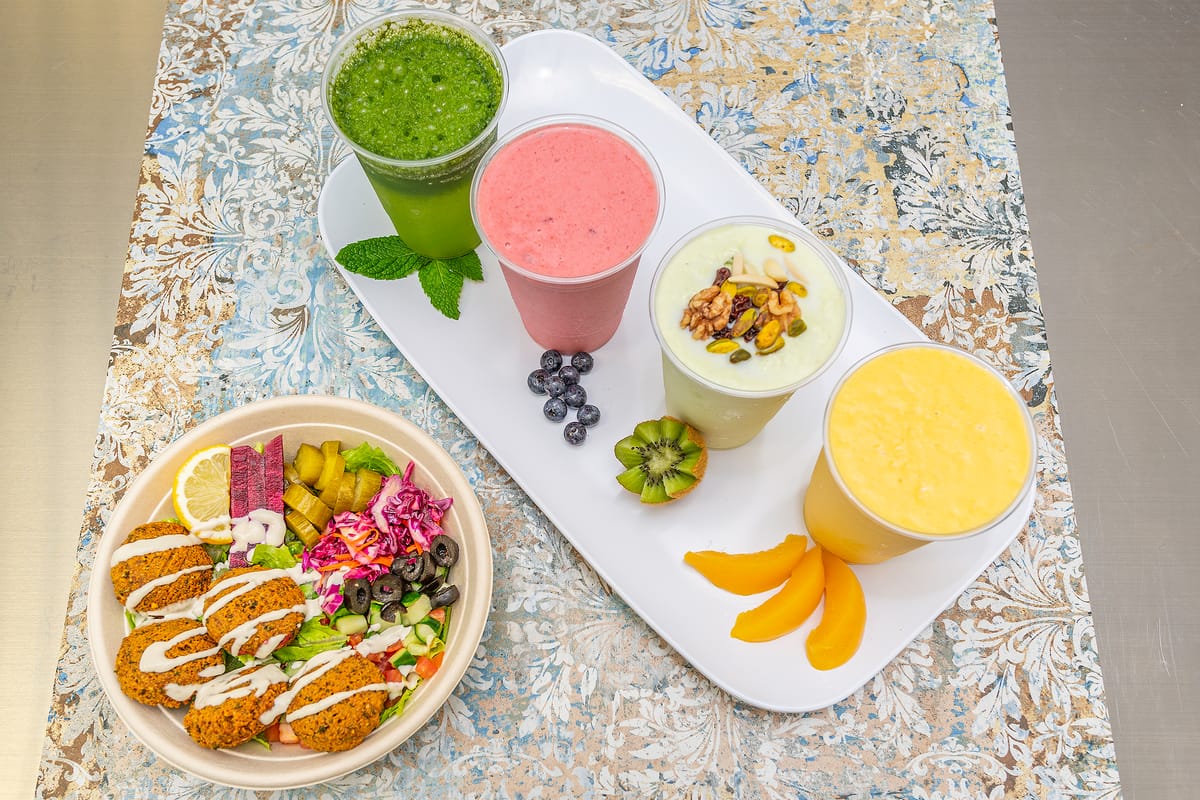
Levantine Cuisine at Its Core
Taza's menu draws from the Lebanese and Syrian traditions that sit at the intersection of Mediterranean and Middle Eastern food.
Where Does Taza Fit?
Taza is specifically Lebanese/Levantine -- the cuisine that sits at the exact intersection.
Taza Shawarma & Falafel in Falls Church, VA serves Lebanese and Levantine cuisine. Lebanon is a country on the Eastern Mediterranean coast, bordered by Syria to the north and east. Its food is simultaneously Mediterranean and Middle Eastern -- it uses olive oil as a base (Mediterranean trait), features chickpeas and tahini prominently (Middle Eastern trait), relies on warm spices like cumin and sumac (Middle Eastern), and emphasizes fresh vegetables and grains (Mediterranean).
If someone asks "Is Taza a Mediterranean restaurant or a Middle Eastern restaurant?" -- the honest answer is both. Our chicken shawarma (from $9.95) is a Middle Eastern dish served in a Mediterranean style. Our hummus ($4.95) is claimed by every culture around the Eastern Mediterranean. Our zaatar manaeesh ($6.95) is specifically Lebanese. Our falafel (from $8.95) is eaten across the entire region from Cairo to Beirut to Istanbul.
The menu at Taza includes 40+ items spanning pita sandwiches, shrak wraps, bowls, manaeesh flatbreads, specialty pies, dips, and salads. Every dish uses halal-certified meats, fresh vegetables, and traditional preparation methods. Whether you call it Mediterranean or Middle Eastern, the food at Taza represents the Levantine tradition at its most authentic -- the exact food culture that most Americans mean when they search for either term.
Why Americans Use These Terms Interchangeably
It is not ignorance -- it is a naming problem baked into how these cuisines arrived in the US.
In the 1990s and 2000s, as Lebanese, Syrian, and Turkish restaurants spread across American cities, many owners chose to label themselves "Mediterranean" rather than "Middle Eastern" or "Arab." This was partly a marketing decision -- "Mediterranean" sounded familiar and appealing to American diners who associated the word with healthy, olive-oil-based food. "Middle Eastern" carried political baggage, particularly after 9/11, that some restaurant owners wanted to avoid.
The result is that a generation of Americans learned to call hummus, shawarma, and falafel "Mediterranean food" even though these are specifically Levantine/Middle Eastern dishes. Italian restaurants never needed to call themselves "Mediterranean" because "Italian food" was already a recognized category. Lebanese and Syrian restaurants adopted the broader label because "Lebanese food" was less familiar to most Americans.
Today, the terms are used almost interchangeably in American English when referring to Levantine cuisine. Both are technically correct -- Lebanon is a Mediterranean country, and its food is Middle Eastern. The confusion only arises when someone expects "Mediterranean" to include Italian pasta or Spanish tapas and instead finds shawarma and falafel. At Taza, we call our food what it is: Lebanese. And Lebanese food is both Mediterranean and Middle Eastern.
6 Dishes That Are Both Mediterranean and Middle Eastern
These dishes from Taza's menu belong to both culinary traditions. Each one is available for order daily.
Chicken Shawarma -- from $9.95
Spit-roasted chicken, a Levantine original that is now served across the Mediterranean diaspora. At Taza, it is made from whole-cut marinated chicken, shaved to order.
Falafel -- from $8.95
Crispy chickpea fritters originating in Egypt or the Levant, now a staple in Mediterranean restaurants from Berlin to Buenos Aires. Taza's falafel is fried to order.
Hummus -- $4.95
Chickpea and tahini dip found across the Levant and beyond. Lebanese, Syrian, Jordanian, and Turkish cuisines all feature hummus. Taza's version is blended smooth with lemon and garlic.
Zaatar Manaeesh -- $6.95
A specifically Lebanese flatbread topped with zaatar, sesame, and olive oil. Less well-known internationally but deeply rooted in Levantine breakfast culture.
Baba Ghanoush -- $4.95
Smoky roasted eggplant dip with tahini, common across the Levant and Turkey. Served at Mediterranean restaurants worldwide. Taza's version is fire-roasted for deep smokiness.
Tabbouleh (Fattoush Salad)
Fresh parsley-based salad with bulgur wheat, tomatoes, and lemon dressing. A Lebanese original that has become one of the most recognized Mediterranean salads globally.
Is Middle Eastern Food Part of the Mediterranean Diet?
The Mediterranean diet was studied in Southern Europe, but its principles apply perfectly to Levantine cuisine.
The Mediterranean diet was formally described by American physiologist Ancel Keys in the 1950s, based on eating patterns he observed in Southern Italy and Greece. The diet emphasizes olive oil, vegetables, legumes, whole grains, fish, and moderate wine consumption. Keys did not study Lebanese or Syrian eating habits specifically, but the Levantine diet shares nearly every structural element: olive oil as the primary cooking fat, heavy use of chickpeas and lentils, fresh vegetables at every meal, flatbreads as the main grain, and grilled lean proteins.
In fact, Lebanese cuisine may be an even better fit for the "Mediterranean diet" than Italian food, because Lebanese cooking uses less cheese, less cream, and less processed carbohydrate than Italian cuisine. A meal of grilled chicken shawarma, hummus, fresh salad, and pita hits every Mediterranean diet target: lean protein, healthy fat (olive oil and tahini), fiber (chickpeas and vegetables), and whole-grain bread.
At Taza, you can build a meal that aligns perfectly with Mediterranean dietary principles. A chicken shawarma bowl on greens with hummus and fresh vegetables is a textbook Mediterranean diet meal -- high in olive oil, protein, fiber, and micronutrients, low in processed ingredients and refined sugar. The fact that it comes from a "Middle Eastern" restaurant does not make it any less "Mediterranean."
How the Spice Profiles Differ
The fastest way to tell Mediterranean and Middle Eastern food apart is the seasoning.
European Mediterranean Herbs
Italian, Greek, Spanish, and French kitchens rely on:
These are mostly dried herbs -- leafy, aromatic, and relatively mild. The flavor profile is "herby" rather than "spicy."
Middle Eastern / Levantine Spices
Lebanese, Syrian, and Levantine kitchens build on:
These are mostly ground spices -- warm, aromatic, and complex. The flavor profile is "warm and layered" rather than "herby."
Mediterranean vs Middle Eastern Food: Common Questions
Shawarma is both. It originated in the Middle East (specifically the Ottoman Empire / Levant region), which is geographically part of the Eastern Mediterranean. When Americans say 'Mediterranean restaurant,' they often mean exactly the kind of food shawarma comes from: Lebanese, Syrian, and Turkish cuisine. Shawarma is a Middle Eastern dish served at Mediterranean restaurants. At Taza in Falls Church, our chicken shawarma pita starts at from $9.95 and our beef shawarma pita at from $9.95.
Yes. Greece borders the Mediterranean Sea and its cuisine is one of the most well-known Mediterranean food traditions. Greek food includes dishes like moussaka, souvlaki, gyro, tzatziki, spanakopita, and Greek salad. However, Greek food is just one slice of the Mediterranean -- Italian, Spanish, Turkish, Lebanese, Moroccan, and Tunisian cuisines are all Mediterranean too. The Mediterranean region spans three continents and 21 countries.
Turkey sits at the literal intersection of both categories. Western Turkey borders the Mediterranean and Aegean seas, so its cuisine is geographically Mediterranean. Eastern Turkey borders Syria and Iraq, connecting it to Middle Eastern culinary traditions. Turkish food shares ingredients with both Greek cuisine (olive oil, yogurt, lamb, eggplant) and Levantine cuisine (kebabs, flatbreads, spice blends). Doner kebab -- the ancestor of both shawarma and gyro -- is Turkish.
The Mediterranean diet is consistently ranked among the healthiest diets in the world by researchers. The healthiest components include: olive oil as the primary fat source, high vegetable and legume intake, fresh herbs instead of heavy sauces, lean proteins like chicken and fish, and whole grains like bulgur and freekeh. At Taza, healthy options include our falafel bowl (from from $10.45) with greens and vegetables, chicken shawarma bowls with a salad base, and sides like hummus and baba ghanoush. Avoiding fried items and choosing grilled proteins keeps any Mediterranean meal on the lighter side.
Lebanese food is a subset of Mediterranean food, not the same thing. Lebanon borders the Mediterranean Sea, so its cuisine qualifies as Mediterranean -- but Mediterranean food also includes Italian pasta, Spanish tapas, Greek moussaka, Moroccan tagine, and dozens of other regional cuisines. What is true is that when most Americans think of 'Mediterranean food,' they are specifically picturing Levantine (Lebanese/Syrian) dishes: hummus, falafel, shawarma, pita bread, and tabbouleh. Taza serves Lebanese/Levantine food, which is both Mediterranean and Middle Eastern.
The Mediterranean diet's health benefits come from several structural factors: heavy use of olive oil (rich in monounsaturated fats), high consumption of vegetables, legumes, and whole grains, moderate protein from fish, chicken, and plant sources, limited red meat and processed food, and herbs and spices instead of salt and cream-based sauces. The diet is associated with lower rates of heart disease, diabetes, and certain cancers. At Taza, the core ingredients -- grilled chicken and beef, chickpeas (hummus and falafel), tahini, fresh vegetables, and olive oil -- align directly with Mediterranean dietary principles.
Try Authentic Levantine Food at Taza
Open 11:00 AM - 12:00 AM, Open 7 Days a Week at 5820 Seminary Rd Ste O, Falls Church, VA 22041.
Address
5820 Seminary Rd Ste O, Falls Church, VA 22041
Hours
11:00 AM - 12:00 AM -- Open 7 Days a Week
Phone
Order from Taza Today
Shawarma, falafel, hummus, manaeesh, and 40+ dishes that are both Mediterranean and Middle Eastern. Online ordering, delivery, or dine in at Falls Church, VA.