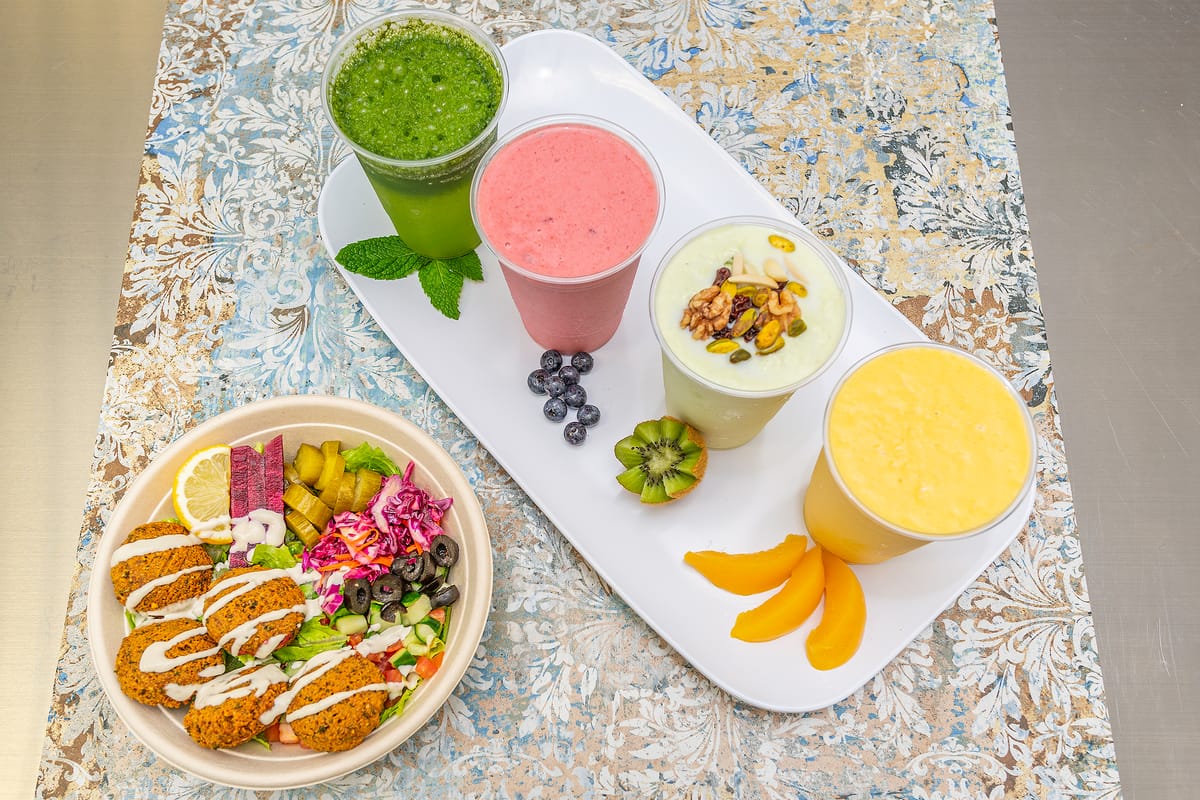
Hummus vs Peanut Butter: Which Spread Is Healthier?
Two of the most popular spreads on American tables go head-to-head. One is made from chickpeas and tahini. The other from roasted peanuts. Here is how they compare on calories, protein, fat, fiber, allergens, and versatility.
4.8 stars on Yelp (92 reviews) -- Open 11:00 AM - 12:00 AM
Hummus vs Peanut Butter: How Are They Different?
Both are plant-based spreads. Both start with a legume. But their nutrition profiles could not be more different.
Hummus and peanut butter occupy the same shelf space in most kitchens -- a thick, protein-containing spread you smear on bread or scoop with something crunchy. But that surface similarity hides dramatic nutritional differences. Hummus is made from cooked chickpeas blended with tahini (ground sesame paste), fresh lemon juice, and garlic, finished with extra-virgin olive oil. It has been a daily staple across the Levant region for centuries. Peanut butter is simply roasted peanuts ground into a paste, sometimes with added sugar, salt, and stabilizing oils. Its modern American form dates to the late 19th century.
The most striking difference is calorie density. A 2-tablespoon serving of peanut butter contains about 190 calories -- nearly three times the 70 calories in the same amount of hummus. That gap comes almost entirely from fat content: peanut butter has 16g of fat per serving versus hummus's 3.5g. On the protein side, the equation reverses: peanut butter delivers 7g of protein per 2 tablespoons, while hummus provides 2g. Both have the same amount of fiber (1.5g) and similar carbohydrates (6g) per serving. So the choice comes down to your priority: lower calories or higher protein.
At Taza Shawarma & Falafel in Falls Church, VA, we make hummus fresh every morning from chickpeas, tahini, lemon, garlic, and olive oil. Our hummus is $4.95 per order, served with warm pita. Whether you are choosing between hummus and peanut butter for health reasons, allergy management, or simply curiosity, this guide covers everything you need to make an informed decision.
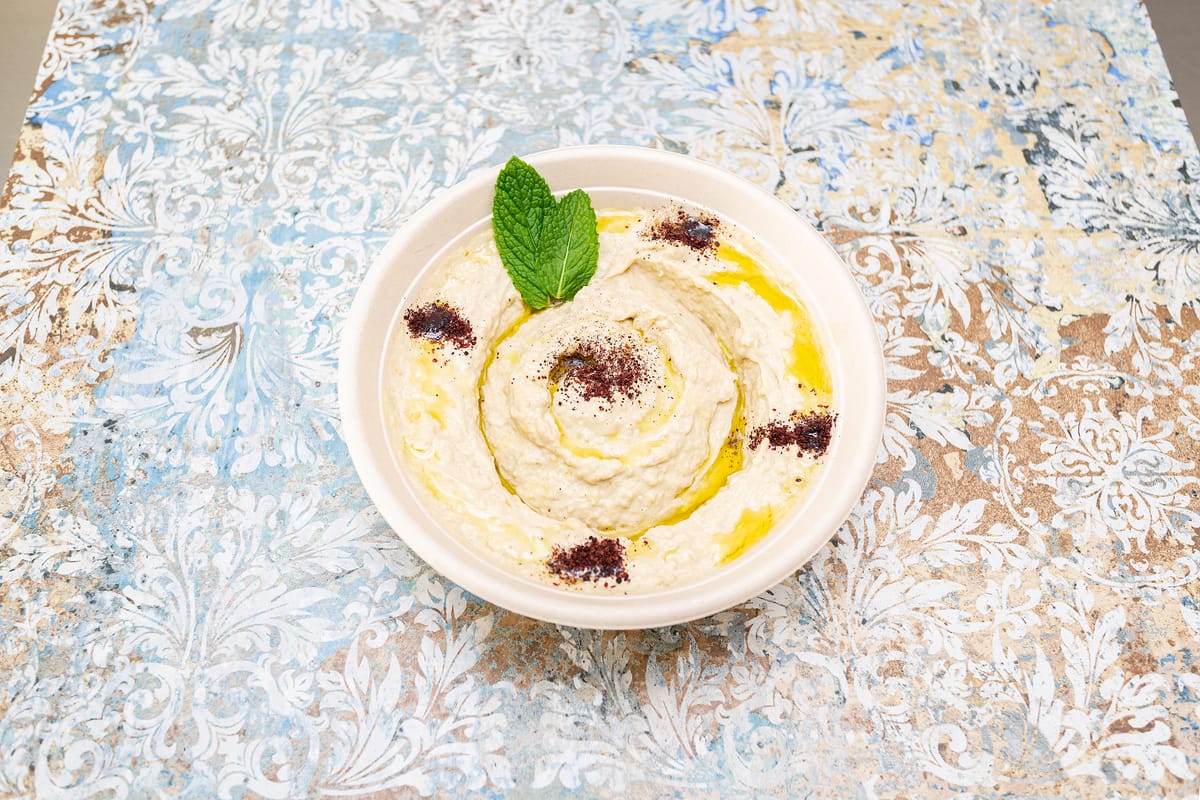
Two Spreads, Two Nutritional Profiles
Hummus brings fewer calories and more versatility. Peanut butter brings more protein and energy density. Both belong in a healthy diet.
What Makes Each Spread Unique?
The ingredients and origins explain why they taste and perform so differently.
What Is Hummus?
$4.95 at Taza
Hummus is a smooth, thick dip and spread made from cooked chickpeas blended with tahini, fresh lemon juice, raw garlic, and extra-virgin olive oil. The word simply means "chickpeas" in Arabic. Its roots stretch back thousands of years across the Levant -- modern-day Lebanon, Syria, Jordan, and neighboring regions. It has become one of the fastest-growing condiment categories in the United States over the last two decades.
The texture is dense, smooth, and perfectly spreadable. The flavor is earthy from chickpeas, nutty from tahini, tangy from lemon, and sharp from raw garlic. Traditional hummus is served at room temperature with a generous pool of olive oil on top. It is naturally vegan and gluten-free, and contains no tree nuts or peanuts in its classic form.
How Taza makes hummus from scratchWhat Is Peanut Butter?
American staple since the 1890s
Peanut butter is a paste made from dry-roasted peanuts, ground until smooth or chunky. Despite the name, peanuts are actually legumes (closely related to chickpeas) rather than true tree nuts. Most commercial peanut butters also contain salt, added sugar, and hydrogenated oils for stability and sweetness. Natural peanut butters contain only peanuts and salt. The Aztecs are believed to have created an early peanut paste, but the product's modern form was developed in the United States in the late 19th century.
The texture ranges from perfectly smooth to chunky with visible peanut pieces. The flavor is rich, nutty, sweet (in commercial versions), and deeply savory in natural versions. Peanut butter has an exceptionally long shelf life -- unopened jars last up to a year, and opened jars last 3-4 months refrigerated.
Note: Taza specializes in Levantine cuisine. We do not serve peanut butter, but hummus fills a parallel role as a high-protein plant-based spread -- with far fewer calories.
Nutritional Head-to-Head: Hummus vs Peanut Butter
Per 2-tablespoon (approximately 30g) serving -- the standard spread portion.
Hummus (2 tbsp / 30g)
Strengths: Dramatically fewer calories, lower fat, nut-free, more versatile in cooking.
Peanut Butter (2 tbsp / 32g)
Strengths: Much higher protein, longer shelf life, excellent for high-energy fueling.
The calorie gap is stark: peanut butter delivers 190 calories per 2 tablespoons versus 70 for hummus. But peanut butter packs 7g of protein against hummus's 2g. Both dips share identical fiber (1.5g) and carbohydrate (6g) counts -- the real differences lie in fat density and protein content.
The Calorie Gap: Why Hummus Is the Lighter Choice
Peanut butter has nearly three times the calories of hummus per serving.
The calorie difference between hummus and peanut butter is one of the largest you will find comparing two plant-based spreads. A 2-tablespoon serving of peanut butter contains approximately 190 calories, while the same amount of hummus contains roughly 70 calories. That is a 120-calorie difference per serving -- enough to matter significantly if you eat these spreads regularly. The gap comes almost entirely from fat content: peanut butter's 16 grams of fat versus hummus's 3.5 grams.
The practical implication is significant. If you replace your daily 2-tablespoon serving of peanut butter on toast with hummus, you save roughly 120 calories per day -- 840 calories per week, or the equivalent of skipping a small meal. Over a month, that difference compounds to more than 3,600 calories. For calorie- conscious eating, hummus is a transformative swap that does not require sacrificing flavor, satisfaction, or nutritional value.
Peanut butter's calorie density is not a flaw -- it is a feature for certain applications. Athletes needing calorie-dense fuel, growing teenagers, or anyone needing to gain weight can use peanut butter's high calorie count to their advantage. But for the majority of adults managing their weight or eating at a caloric maintenance level, hummus delivers more food volume and more culinary versatility per calorie. At Taza, our hummus is just $4.95 per order -- one of the best value items on our menu.
Protein: Peanut Butter's Clear Advantage
With 7g of protein per 2 tablespoons, peanut butter outperforms hummus as a concentrated protein source. But hummus still contributes meaningful plant protein.
Protein Comparison: Peanut Butter Wins Decisively
Per gram of spread, peanut butter delivers roughly three and a half times more protein.
Peanut Butter: 7g Protein per 2 Tbsp
Peanuts are one of the most protein-dense legumes available. A single ounce of dry roasted peanuts contains about 7 grams of protein, and that density carries fully into peanut butter. For plant-based eaters trying to meet protein targets, peanut butter is a reliable and calorie-efficient protein source. Two tablespoons on whole grain bread creates a complete amino acid profile when combined, approaching the quality of animal protein.
Hummus: 2g Protein per 2 Tbsp
Hummus provides meaningful protein from chickpeas, but considerably less per serving than peanut butter. The protein story changes significantly when you eat hummus as part of a larger Levantine meal. A falafel bowl at Taza, combining hummus base with chickpea falafel and chicken shawarma, can deliver 25-30 grams of protein in a single meal. On its own as a dip, hummus contributes protein incrementally rather than as a concentrated source.
If protein per serving is your only metric, peanut butter wins clearly. But hummus pairs naturally with other high-protein ingredients -- falafel, grilled chicken, tahini -- allowing you to build protein-rich meals without the caloric weight of peanut butter. A falafel bowl at Taza is from $10.45.
Fat Comparison: Quantity vs Quality
Peanut butter has more fat, but both spreads deliver predominantly heart-healthy unsaturated fat.
Peanut butter contains 16 grams of fat per 2-tablespoon serving versus hummus's 3.5 grams -- a difference of more than 4.5 times. That sounds alarming until you examine the fat composition. About 80% of peanut butter's fat is unsaturated: roughly 50% monounsaturated oleic acid (the same heart-healthy fat in olive oil and avocado) and 30% polyunsaturated fat. Only about 3 grams are saturated fat -- considerably less than butter, cheese, or coconut oil.
Hummus gets its fat from tahini (ground sesame, rich in polyunsaturated fat) and olive oil (monounsaturated). Its saturated fat content is just 0.4 grams per serving -- among the lowest of any spread. In absolute terms, hummus is leaner. In relative terms, both spreads deliver high-quality fat profiles. Neither is a saturated fat concern the way butter, cheese, or processed spreads are. Peanut butter contains more total fat simply because its ingredient -- peanuts -- is naturally higher in fat than chickpeas.
One meaningful difference: commercial peanut butters often contain partially hydrogenated oils added for shelf stability. These trans fats, even in small amounts, are associated with elevated LDL cholesterol. Natural peanut butter (ingredients: peanuts, salt) avoids this entirely. Hummus never contains hydrogenated oils in its traditional form. At Taza, our hummus is made fresh from whole ingredients daily -- no stabilizers, no additives.
Allergens: A Critical Difference
Peanut allergy is one of the most common and severe food allergies. Hummus is peanut-free and tree-nut-free in its classic form.
Allergen Profile: An Important Practical Difference
For millions of people, this comparison is not optional -- it is a safety question.
Hummus Allergen Profile
Traditional hummus contains sesame (from tahini), which is a recognized major allergen under U.S. labeling law as of 2023. However, sesame allergy affects approximately 0.1-0.2% of the population -- significantly less common than peanut allergy. Chickpea allergy exists but is rare. Classic hummus contains no tree nuts, no peanuts, no dairy, no gluten, and no eggs.
- Peanut-free
- Tree nut-free
- Dairy-free
- Gluten-free
- Egg-free
- Contains sesame (tahini)
Peanut Butter Allergen Profile
Peanut is one of the top-9 major food allergens in the United States and one of the most prevalent globally. Approximately 1-2% of Americans have a peanut allergy, and reactions can range from mild hives to life-threatening anaphylaxis. Peanut butter is banned from most school cafeterias and many public facilities for this reason. It is not suitable for nut-free environments.
- Contains peanut (major allergen)
- Dairy-free
- Gluten-free (natural varieties)
- Egg-free
- Sesame-free
- Not suitable for nut-free environments
For school lunches, office snacks, or catering for mixed groups, hummus is almost always the safer choice. Its allergen profile is significantly more benign than peanut butter's, and it can be served in environments where peanut products are prohibited.
Hummus vs Peanut Butter: Complete Comparison Table
Every important difference in one place.
| Feature | Hummus | Peanut Butter |
|---|---|---|
| Base Ingredient | Chickpeas (garbanzo beans) | Peanuts (technically a legume) |
| Origin | Middle East / Levant region | South America / United States |
| Calories (2 tbsp / ~30g) | ~70 cal | ~190 cal |
| Total Fat (2 tbsp) | 3.5g (mostly polyunsaturated) | 16g (mostly monounsaturated) |
| Protein (2 tbsp) | 2g | 7g |
| Fiber (2 tbsp) | 1.5g | 1.5g |
| Carbohydrates (2 tbsp) | 6g | 6g |
| Sodium (2 tbsp) | ~130mg | ~147mg (salted varieties) |
| Sugar (2 tbsp) | ~0.3g (natural) | ~3g (varies by brand) |
| Saturated Fat (2 tbsp) | 0.4g | 3g |
| Major Allergen | Sesame (tahini); chickpea allergy rare | Peanut (top-9 allergen, highly common) |
| Versatility | Dip, spread, bowl base, sauce, marinade | Spread, smoothie ingredient, baking, sauce |
| Shelf Life (Opened, Refrigerated) | 5–7 days | 3–4 months |
| Average Store Price (10–16 oz) | $3–$5 | $3–$6 |
| Dietary Suitability | Vegan, gluten-free, nut-free | Vegan, gluten-free (not nut-free) |
| Best Paired With | Pita, falafel, vegetables, grilled meats, wraps | Bread, crackers, fruit, oats, smoothies |
The table highlights two spreads with very different strengths. Hummus leads on calories, allergen safety, fat content, and culinary versatility. Peanut butter leads on protein, energy density, and shelf life. The right choice depends entirely on what you need the spread to do.
When to Choose Hummus vs Peanut Butter
Both spreads serve important dietary purposes. The right one depends on your goal, your diet, and the meal context.
From Legume to Spread: How Each Is Produced
Understanding the process explains why they taste and perform so differently.
How Hummus Is Made
Dried chickpeas are soaked overnight in cold water until they double in size.
The soaked chickpeas are boiled until completely soft -- about 60 to 90 minutes. Canned chickpeas skip this step.
The cooked chickpeas are blended while still warm with tahini, fresh lemon juice, raw garlic, and salt until perfectly smooth.
Ice water is added gradually during blending to achieve the airy, light texture of great hummus.
The finished hummus is plated with a generous drizzle of extra-virgin olive oil, paprika, and fresh parsley.
How Peanut Butter Is Made
Raw peanuts are dry-roasted at high temperatures (around 160°C/320°F) until golden brown, developing the characteristic roasted flavor.
The roasted peanuts are blanched to remove their papery skins, which can add bitterness.
The blanched peanuts are fed into large grinding machines. Two passes create smooth peanut butter; one pass creates chunky style.
Commercial brands add salt, sugar, and sometimes stabilizing oils (hydrogenated vegetable oil) to prevent oil separation.
Natural peanut butter skips additives entirely -- only peanuts and optionally salt. Oil separation is normal and requires stirring before use.
When to Choose Hummus vs Peanut Butter
A practical decision guide based on your dietary goals and situation.
Calorie Reduction
Hummus
70 calories per 2 tablespoons versus 190 for peanut butter. Switching your daily spread saves approximately 120 calories -- 840 calories per week. For weight management, hummus is the clear choice.
High Protein
Peanut Butter
7g protein per 2 tablespoons versus hummus's 2g. If you need a concentrated plant-based protein source for post-workout recovery or building muscle, peanut butter delivers more than three times the protein.
Allergen Safety
Hummus
Peanut allergy affects 1-2% of Americans and causes severe reactions. Hummus contains sesame (a less common allergen) but no peanuts, tree nuts, dairy, or gluten. For schools, offices, and catering, hummus is almost always safer.
Energy-Dense Fueling
Peanut Butter
Athletes, active children, and those needing calorie-dense food benefit from peanut butter's 190 calories and 16g fat per serving. It provides sustained energy release that hummus's lower fat content cannot match.
Meal Prep Friendly
Peanut Butter
Peanut butter lasts 3-4 months refrigerated. Hummus lasts 5-7 days. For infrequent shoppers or those who buy large quantities, peanut butter is the more convenient option by a wide margin.
Culinary Versatility
Hummus
Hummus works as a dip, spread, bowl base, salad dressing, marinade, and sauce. Peanut butter excels as a spread, smoothie addition, and baking ingredient. In savory Mediterranean cooking, hummus has no rival.
Heart Health
Hummus (Edge)
Both spreads are dominated by unsaturated fats. Hummus has the edge because of dramatically lower saturated fat (0.4g vs 3g) and no added sugars. Natural peanut butter is also heart-healthy, but commercial versions often contain stabilizing fats and added sugar.
Budget Friendly
Roughly Equal
A 10-oz container of hummus costs $3-5. A 16-oz jar of peanut butter costs $3-6. Per serving, peanut butter is slightly more economical because the serving size (2 tbsp) goes further as a calorie source. Hummus offers better value if you consider culinary versatility.
Want Both?
Start at Taza!
You do not have to choose forever. Use peanut butter where its protein density and flavor shine, and hummus everywhere else. At Taza, fresh hummus is $4.95 with warm pita. Try it as a dip, a bowl base, or a wrap spread.
Six Ways Taza Serves Hummus
Hummus is not just a side dish at Taza -- it is built into nearly every part of the menu.
Classic Dip with Warm Pita
Thick, creamy hummus served alongside warm pita bread for scooping. The traditional Levantine way to eat it. A completely different eating experience from spreading peanut butter on bread -- hummus invites communal dipping and sharing. Pita at Taza: $0.95.
Hummus Bowl Base
Spread a generous layer of hummus in a bowl and pile falafel, grilled chicken, or vegetables on top. This application has no peanut butter equivalent -- the savory, garlicky profile of hummus pairs naturally with Middle Eastern spices and grilled proteins.
Paired with Falafel
Crispy chickpea falafel dipped into chickpea hummus creates a plant-protein powerhouse. Both ingredients come from the same legume, creating an earthy, satisfying flavor harmony. A falafel pita with hummus is from $8.95.
Inside Shawarma Wraps
Hummus spread inside a chicken or beef shawarma wrap acts as a sauce and protein source simultaneously. It keeps the wrap moist and adds a creamy layer that peanut butter could never replicate in this context. Included at no extra charge on any Taza wrap.
Vegetable Dip Platter
Hummus with raw carrots, celery, cucumber, and bell pepper creates one of the most nutritionally efficient snack combinations possible -- far lower in calories than peanut butter with crackers, and richer in fiber from the vegetables.
Thinned into a Dressing
Thin hummus with lemon juice and a splash of water to create a creamy, high-protein salad dressing. This technique has no peanut butter parallel in Mediterranean cooking. It coats greens evenly and adds garlic flavor without the caloric weight of olive oil or tahini-only dressings.
Fresh Hummus at Taza Shawarma & Falafel
Made daily at 5820 Seminary Rd Ste O, Falls Church, VA 22041. Here is how to order it.
Hummus Dip
$4.95
Creamy chickpea hummus with tahini, lemon, garlic, and olive oil. Served with warm pita bread. The lowest-calorie, most versatile spread on our menu.
Learn moreFalafel Pita
from $8.95
Crispy chickpea falafel in warm pita with hummus, tahini, lettuce, tomato, and pickles. Two chickpea-based proteins in one sandwich -- the plant-protein powerhouse.
Learn moreChicken Shawarma Bowl
from $12.45
Marinated chicken over rice or greens with hummus on the side. A complete meal with protein, fiber, and healthy fat that outperforms a peanut butter sandwich on every nutritional metric.
Learn moreHummus and Peanut Butter Both Deserve a Place in Your Diet
They serve different purposes. Understanding those purposes makes both more useful.
Neither hummus nor peanut butter is the objectively superior spread. They operate in different dietary contexts with different nutritional strengths. Peanut butter is the go-to for calorie-dense, protein-rich fueling -- the kind you need on a long hike, before a weight-training session, or when you need a filling snack that will hold you until your next meal. Its calorie density is a feature, not a bug, in those situations.
Hummus excels everywhere else. It is the spread you reach for when you want maximum flavor and versatility at minimum caloric cost. It works as a dip, a sauce, a bowl base, a marinade, and a spread. It pairs with the full breadth of Levantine cuisine -- falafel, shawarma, grilled vegetables, fresh herbs, pickled turnips. It contains no major nut allergens. And in its traditional form, it has just five whole-food ingredients: cooked chickpeas, tahini, lemon juice, garlic, and olive oil.
At Taza Shawarma & Falafel, we make hummus from scratch every morning. No preservatives, no additives, no compromise on quality. Our hummus is $4.95 per order, served with warm pita. If you have been eating the same jar of peanut butter every morning and wondering what else is out there, come try something that has been nourishing people across the Levant for thousands of years. We think you will find it worth the switch.
Frequently Asked Questions: Hummus vs Peanut Butter
It depends on what you mean by healthier. Hummus has far fewer calories (70 vs 190 per 2 tablespoons), less fat (3.5g vs 16g), and no major nut allergen risk. Peanut butter has significantly more protein (7g vs 2g) and a longer shelf life. Both contain healthy unsaturated fats and similar fiber. For calorie-conscious eating, hummus wins decisively. For high-protein fueling, peanut butter is the stronger option. Neither is nutritionally inferior -- they serve different purposes. At Taza in Falls Church, fresh hummus is $4.95 with warm pita bread.
Peanut butter has nearly three times more calories than hummus. A standard 2-tablespoon serving of peanut butter delivers approximately 190 calories, while the same amount of hummus contains roughly 70 calories. This gap comes almost entirely from fat content: peanut butter has 16g of fat per 2 tablespoons compared to hummus's 3.5g. This makes hummus a significantly lighter option for dipping, snacking, or spreading on bread. If you are tracking calories for weight management, hummus gives you far more volume and variety per calorie than peanut butter.
Peanut butter delivers far more protein. A 2-tablespoon serving of peanut butter contains about 7 grams of protein, while the same amount of hummus contains 2 grams. Peanuts are protein-dense -- even denser than chickpeas by weight. For post-workout recovery, pre-exercise fueling, or building a high-protein plant-based diet, peanut butter is the stronger protein source of the two. However, hummus still contributes meaningful protein, especially when paired with high-protein Taza menu items like falafel, which is from $8.95 per pita.
In some applications, yes. Hummus works as a savory substitute for peanut butter on wraps and sandwiches, particularly when paired with Mediterranean flavors like grilled chicken, cucumber, and tomato. It does not work as a peanut butter substitute in baked goods, smoothies, or sweet applications because its flavor profile is savory (garlic, lemon) rather than nutty and sweet. Peanut butter can substitute for hummus on a cracker or vegetable platter in a pinch, but lacks hummus's ability to function as a bowl base or marinade. They are both spreads but with very different culinary personalities.
Hummus is generally better suited for weight-loss eating patterns. At 70 calories per 2 tablespoons versus peanut butter's 190 calories, hummus lets you eat the same volume of food for dramatically fewer calories. Its fiber content (1.5g per serving) and water content from chickpeas also create more satiety per calorie than peanut butter's dense fat profile. That said, peanut butter's higher fat and protein content can suppress appetite more powerfully -- some research suggests high-fat snacks reduce total calorie intake later in the day. Both can fit into a weight-loss plan. Hummus is better for low-calorie snacking; peanut butter is better for high-satiety meals.
Both are nutritious options for children, but their suitability varies. Peanut butter is one of the top-9 major allergens and is banned in many school environments. Many children have peanut allergies, which can be severe. Hummus contains sesame (from tahini), which is also a recognized allergen, though peanut allergies are considerably more prevalent. Hummus is also lower in calories and fat, which suits growing children who still need nutrient-dense food without excess energy. For school lunches or allergen-aware environments, hummus is often the safer and lighter choice. For calorie-dense fueling after sports, peanut butter's higher energy density may be beneficial.
Traditional hummus does not contain peanuts. Classic hummus is made from chickpeas (garbanzo beans), tahini (ground sesame seeds), lemon juice, garlic, and olive oil. There are no nuts in the standard recipe. Some flavored hummus variations may include pine nuts as a topping, and some commercial varieties are manufactured in facilities that also process tree nuts or peanuts, so cross-contamination is possible. If you have a peanut allergy, always check the label. Taza's hummus, made in-house from chickpeas, tahini, lemon, and garlic, does not contain peanuts.
It depends on the phase of training. Before exercise, peanut butter provides dense energy (190 cal and 7g protein per 2 tablespoons) that sustains performance during prolonged activity. After exercise, peanut butter's protein supports muscle repair. Hummus works well as a pre-training snack for shorter sessions because its lower calorie and fat content prevents digestive discomfort. Post-workout, combining both -- hummus in a falafel bowl with chicken shawarma -- delivers the carbohydrates, protein, and healthy fat that recovery requires. A chicken shawarma bowl at Taza is from $12.45.
Taza Shawarma & Falafel at 5820 Seminary Rd Ste O, Falls Church, VA 22041 makes hummus fresh every day from chickpeas, tahini, lemon juice, and garlic. It is $4.95 and comes with warm pita bread. You can eat it as a standalone dip, use it as a bowl base, or get it spread inside any wrap or pita. Taza is open 11:00 AM - 12:00 AM, 7 days a week. Order online at tazava.com or call (703) 340-1014.
Fresh Hummus at Taza in Falls Church
Open 11:00 AM - 12:00 AM, 7 days a week at 5820 Seminary Rd Ste O, Falls Church, VA 22041.
Address
5820 Seminary Rd Ste O, Falls Church, VA 22041
Hours
11:00 AM - 12:00 AM -- Open 7 Days a Week
Phone
Try Taza's Fresh-Made Hummus
Made from scratch every morning -- chickpeas, tahini, lemon, garlic. Just $4.95 with warm pita bread. Order online or call (703) 340-1014.