Hummus vs Tahini: What's the Difference?
They are not the same thing. Tahini is ground sesame seeds -- one ingredient. Hummus is a dip that uses tahini as one of its components. Here is the full breakdown.
4.8 stars on Yelp (92 reviews) -- Open 11:00 AM - 12:00 AM
Why People Confuse Hummus and Tahini
They appear together on every menu. Here is why they are fundamentally different.
Walk into any Mediterranean restaurant and you will see both tahini and hummus on the menu. They are both beige. They are both creamy. They both come with pita bread. So people naturally assume they are the same thing, or at least interchangeable. They are not. The relationship is straightforward: tahini is an ingredient in hummus. Tahini is ground sesame seeds -- one ingredient, nothing added. Hummus is a dip made from cooked chickpeas blended with tahini, lemon juice, garlic, and olive oil. Tahini goes into hummus the same way flour goes into bread.
At Taza Shawarma & Falafel in Falls Church, VA, tahini appears as a sauce drizzled on falafel sandwiches and shawarma plates, while hummus appears as a side dip ($4.95) served in a shallow bowl with olive oil and warm pita. They occupy the same table but fill completely different roles.
The one-sentence answer: Tahini is a paste made from ground sesame seeds. Hummus is a dip made from chickpeas that contains tahini as one of its ingredients. Tahini is a component; hummus is the finished product.
One Is an Ingredient. The Other Is a Dish.
Tahini is the building block. Hummus is what you build with it.
What Exactly Is Each One?
A clear look at what tahini and hummus actually are.
What Is Tahini?
Tahini is a paste made from a single ingredient: sesame seeds. The seeds are hulled, lightly toasted (sometimes raw), and ground until they release their natural oil and form a smooth, pourable paste. No chickpeas, no lemon, no garlic. Just sesame. The word "tahini" comes from the Arabic "tahana," meaning "to grind." It has been a staple across the Middle East, North Africa, and parts of Asia for thousands of years, used in cooking the way Western kitchens use butter or cream.
The color ranges from pale tan (hulled seeds) to dark brown (unhulled seeds). The texture is smooth and slightly oily, similar to natural peanut butter but thinner and more pourable. When you open a jar, you will see a layer of oil on top -- this is normal and just needs to be stirred back in.
Read our complete tahini guideWhat Is Hummus?
$4.95 at Taza
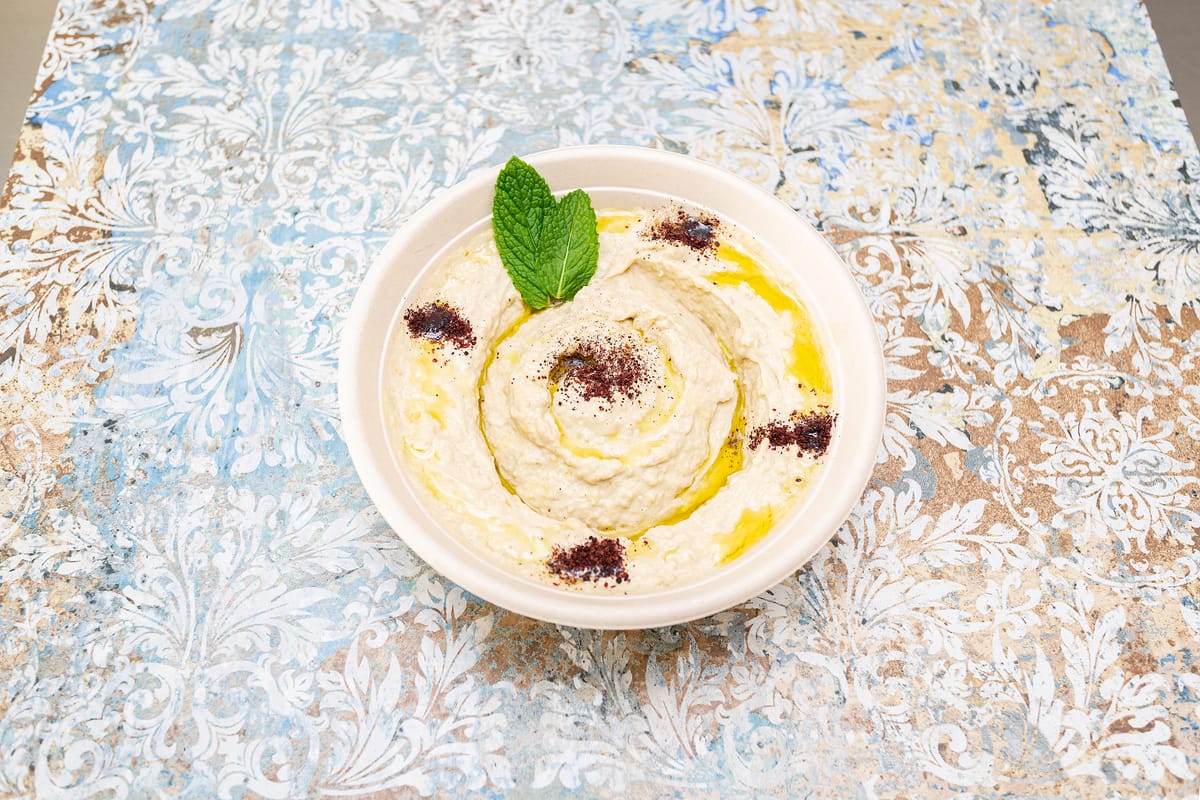
Hummus is a thick, creamy dip made from cooked chickpeas blended with tahini, fresh lemon juice, raw garlic, and extra-virgin olive oil. The word "hummus" literally means "chickpeas" in Arabic. Unlike tahini, hummus is a finished dish -- a recipe with multiple components. Chickpeas provide body and protein. Tahini provides richness. Lemon adds brightness. Garlic adds bite. Olive oil adds silkiness. The result is far more complex than any single ingredient.
The color is pale beige, topped with golden olive oil and a dash of paprika. The texture is dense, smooth, and scoopable -- it holds its shape on a plate. You eat hummus by scooping it with pita bread, spreading it on sandwiches, or using it as a base layer in grain bowls. At Taza, our hummus is blended until velvet-smooth and served warm with fresh pita bread.
See how hummus is madeHow Do Tahini and Hummus Taste?
Side-by-side taste and texture comparison.
Tahini Taste & Texture
- Nutty and rich, like toasted sesame seeds
- Slightly bitter finish, especially in unhulled varieties
- Savory and earthy throughout, no sweetness
- Pourable and drizzlable, thinner than peanut butter
- Color: pale tan to golden brown
Hummus Taste & Texture
- Earthy and mild from chickpeas, subtle nuttiness from the tahini
- Bright tang from lemon juice, sharp bite from raw garlic
- Creamy and smooth when properly blended, never gritty
- Thick and scoopable -- holds its shape on a plate
- Color: pale beige, topped with golden olive oil and paprika
The easiest way to tell them apart: if you can pour it, it is tahini. If you can scoop it with bread, it is hummus.
Nutritional Comparison: Tahini vs Hummus
How the two stack up per 2-tablespoon (30g) serving.
Tahini (per 2 tbsp)
Best for: Calcium, iron, healthy fats, mineral density. Higher calorie but more nutrient-dense per serving.
Hummus (per 2 tbsp)
Best for: Lower calories, more fiber, higher folate. Better for calorie-conscious eating and digestive health.
Tahini is more calorie-dense because it is almost entirely fat from sesame seeds. Hummus is diluted by water-heavy chickpeas, which adds fiber and complex carbohydrates while bringing down the calorie count.
Both on Every Table at Taza
Tahini as sauce, hummus as dip -- they work together on every plate we serve.
How We Use Tahini and Hummus at Taza
Same kitchen, very different jobs.
Tahini at Taza: The Sauce
At Taza, tahini is our go-to sauce. We thin it with water and lemon juice, season it with salt, and drizzle it on nearly everything. It comes standard on every falafel pita (from $8.95), where it soaks into the warm bread and coats the crispy falafel. It is drizzled over shawarma plates, poured across grain bowls, and served alongside grilled vegetables.
Hummus at Taza: The Dip
At Taza, hummus is a standalone dish. We serve it as a side ($4.95) in a shallow bowl, drizzled with olive oil and paprika, with warm pita bread for scooping. Many customers also use hummus as a bowl base -- a bed of creamy hummus under rice, protein, and toppings creates a richer meal than rice or greens alone.
How to Use Tahini and Hummus at Home
Both are versatile, but in very different ways.
Tahini: The Kitchen Workhorse
Tahini is one of the most versatile pantry ingredients you can own. It works in both sweet and savory cooking, and a jar lasts months in the fridge. Here is how to use it.
- Salad dressings: whisk with lemon juice, garlic, and water for a creamy vinaigrette
- Baking: add to cookie dough, brownies, or banana bread for nutty richness
- Marinades: blend with cumin, paprika, and yogurt for grilled chicken or vegetables
- Smoothies: stir in a tablespoon for protein, calcium, and a nutty undertone
- Sauces: thin with water and lemon for falafel sauce, or mix with soy sauce for Asian noodles
- Desserts: drizzle over ice cream, blend into halva, or swirl into oatmeal
Hummus: The Ready-to-Eat Star
Hummus is a finished food. You open it, scoop it, and eat it. No mixing or thinning required, which makes it the faster option for snacking and meal prep.
- Dip: serve with pita chips, crackers, or raw vegetables for snacking
- Sandwich spread: replace mayo or mustard with hummus for added protein and fiber
- Bowl base: use a thick layer of hummus under grains, roasted vegetables, and protein
- Toast topping: spread on toast, top with cherry tomatoes, olive oil, and za'atar
- Pasta sauce: thin with pasta water and toss with warm noodles and roasted garlic
- Wrap filler: spread inside a tortilla with grilled chicken, lettuce, and pickled onions
How to Store Tahini and Hummus
One lasts months, the other lasts days.
Tahini Storage
- Unopened: 1-2 years in a cool, dark pantry
- Opened: 6+ months refrigerated, stir before each use
- Oil separation is normal -- just stir it back together
- Can be frozen for up to 12 months
Hummus Storage
- Homemade: 3-5 days refrigerated in an airtight container
- Store-bought (opened): 7-10 days refrigerated
- Do not leave at room temperature for more than 2 hours
- Can be frozen for up to 4 months (texture may change slightly)
Tahini is a pantry staple that lasts for months. Hummus should be eaten within a week. Keep tahini on hand for cooking; pick up hummus for snacking -- or stop by Taza where it is made fresh daily.
Tahini vs Hummus: Complete Comparison
Every important difference at a glance.
| Feature | Tahini | Hummus |
|---|---|---|
| What It Is | Ground sesame seed paste | Dip made from chickpeas, tahini, lemon, garlic, olive oil |
| Number of Ingredients | 1 (sesame seeds) | 5+ (chickpeas, tahini, lemon, garlic, olive oil) |
| Texture | Pourable, drizzlable, thin paste | Thick, scoopable, creamy dip |
| Flavor | Nutty, slightly bitter, rich | Earthy, garlicky, tangy, mild |
| Color | Pale tan to dark brown | Pale beige with golden olive oil on top |
| Calories (2 tbsp) | 89 cal | 50 cal |
| Total Fat (2 tbsp) | 8g | 3g |
| Protein (2 tbsp) | 2.6g | 2.4g |
| Fiber (2 tbsp) | 0.7g | 1.8g |
| Calcium (2 tbsp) | 13% DV | 2% DV |
| Iron (2 tbsp) | 8% DV | 4% DV |
| Primary Use | Sauce, dressing, ingredient in dips and baking | Dip, spread, appetizer, bowl base |
| Role at Taza | Sauce drizzled on falafel, shawarma, and bowls | Side dip/appetizer served with warm pita |
| Storage (opened) | 6 months refrigerated | 5-7 days refrigerated |
| Dietary | Vegan, gluten-free, keto-friendly | Vegan, gluten-free |
The fundamental difference: tahini is one ingredient (ground sesame seeds). Hummus is a recipe that uses tahini as one of five or more components. Everything else follows from that single distinction.
Tahini on Falafel, Hummus on the Side
The classic combination: tahini sauce drizzled on crispy falafel, with a bowl of hummus and warm pita alongside.
Which Should You Order at Taza?
It depends on what you are eating. Here is a quick decision guide.
You are ordering a falafel pita or wrap
Tahini comes on it automatically
Every falafel sandwich at Taza (from $8.95) includes tahini sauce as the standard dressing. It soaks into the warm pita and coats the crispy falafel. No need to order it separately.
You want an appetizer or a snack to share
Order hummus
Hummus ($4.95) is served as a standalone dish with warm pita. Thick, scoopable, and satisfying on its own. Perfect as a starter while you wait for your main order.
You are building a bowl
Consider both -- hummus as base, tahini as sauce
Request hummus as your bowl base for protein and creaminess, then let tahini sauce drizzle over the top as a finishing dressing. Thick hummus underneath, thin tahini on top.
You are ordering chicken or beef shawarma
Tahini comes standard, add hummus on the side
Shawarma sandwiches include tahini and garlic sauce. Add a side of hummus ($4.95) for extra pita dipping. Warm shawarma with both sauces and a side of hummus is a complete meal.
You want something light and low-calorie
Order hummus
At 50 calories per 2 tablespoons versus 89 for tahini, hummus is the lighter option. It also has more fiber (1.8g vs 0.7g). Pair it with raw vegetables instead of pita to keep calories even lower.
You need more calcium or iron in your diet
Ask for extra tahini
Tahini has 13% of your daily calcium and 8% of your daily iron per 2 tablespoons. If you are vegan or trying to increase mineral intake, request extra tahini sauce on your order.
Tahini Is an Ingredient in Hummus
Understanding this relationship changes how you cook and order.
When you make hummus from scratch, you start by cooking dried chickpeas until they are soft enough to mash with your fingers. Then you blend them with tahini -- usually about 3-4 tablespoons per can of chickpeas. The tahini does three things: it adds richness (sesame oil is about 50% fat), it adds calcium and iron, and it creates that signature smooth, creamy texture. Without tahini, blended chickpeas are grainy and dry. With tahini, they become the silky dip you know as hummus.
This is why different hummus recipes taste different depending on how much tahini is used. A tahini-heavy hummus will taste nuttier and richer. A tahini-light hummus will taste more strongly of chickpeas and lemon. Lebanese-style hummus tends to use a generous amount of tahini. Some grocery-store brands use very little and compensate with extra oil or water, which is why restaurant hummus almost always tastes better than the store-bought version. At Taza, we use a traditional ratio that gives our hummus a balanced flavor -- rich enough to stand on its own, mild enough to pair with everything from falafel to shawarma.
Hummus or Tahini for Dipping?
What works best depends on what you are dipping.
If you are tearing off pieces of warm pita bread and dipping, hummus is the clear winner. It is thick enough to cling to the bread, flavorful enough to eat bite after bite, and satisfying enough to serve as a snack on its own. Tahini sauce is too thin for bread dipping -- it will drip off before it reaches your mouth. At Taza, we serve hummus as a dipping dish ($4.95) with warm pita bread ($0.95). For raw vegetables, both work -- hummus clings and adds a thick layer, while tahini coats lightly with a nuttier, tangier flavor.
For falafel specifically, tahini sauce is traditional. The thin, pourable consistency lets it seep into the cracks of the crispy falafel exterior and soak into the warm bread. Hummus alongside falafel is common as a separate dip on the plate, but the sauce that goes directly on the falafel is always tahini-based. At Taza, our falafel pita comes with tahini sauce inside, and you can add a side of hummus to scoop between bites.
Hummus vs Tahini: Frequently Asked Questions
No. Tahini is a single-ingredient paste made from ground sesame seeds. Hummus is a multi-ingredient dip made from chickpeas, tahini, lemon juice, garlic, and olive oil. Tahini is actually one of the ingredients inside hummus. Think of it this way: tahini is to hummus what flour is to bread -- a building block, not the finished product. At Taza Shawarma & Falafel, we use tahini as a sauce on sandwiches and bowls, and we serve hummus ($4.95) as a standalone dip with warm pita.
It depends on the use case. As a dip for pita or vegetables, they are not interchangeable -- tahini is thin and pourable, hummus is thick and scoopable. As a sandwich condiment, tahini works better because it drizzles evenly. As a salad dressing base, tahini emulsifies smoothly with lemon juice and water. For a party dip, hummus is what you want. For a pourable sauce or baking ingredient, tahini is the right call.
Both are healthy with different strengths. Per 2-tablespoon serving, tahini has more calories (89 vs 50), more fat (8g vs 3g), and significantly more calcium (13% DV vs 2% DV) and iron (8% DV vs 4% DV). Hummus has more fiber (1.8g vs 0.7g) and fewer calories. For minerals like calcium and iron, tahini wins. For lower calories and higher fiber, hummus wins. Both are plant-based and cholesterol-free.
Plain tahini has a nutty, slightly bitter flavor with a rich, oily mouthfeel. The taste is similar to unsweetened natural peanut butter but more savory. High-quality tahini from hulled, roasted sesame seeds tastes smoother and less bitter. Lower-quality tahini from unhulled seeds can be gritty and harsh. At Taza, we use smooth, hulled tahini with a clean, nutty flavor. Mixed with lemon juice and water, it transforms into a lighter, tangier sauce.
Tahini serves three functions in hummus. First, it adds richness and body -- sesame oil creates a smooth texture that chickpeas alone cannot achieve. Second, it adds nutty depth that balances the earthiness of chickpeas and the sharpness of garlic. Third, it provides calcium, iron, and healthy monounsaturated fats. Without tahini, hummus would be drier, grainier, and less nutritious. You can make chickpea dip without tahini, but it would not technically be hummus.
You can, but most people find straight tahini too thick and intense. The standard approach is to thin it with water and lemon juice, add salt and garlic, and make tahini sauce. This is what we do at Taza -- our tahini sauce is thinned, seasoned tahini drizzled on falafel, shawarma, and bowls. For dipping bread, hummus ($4.95 with pita at Taza) is the better choice. For a drizzling sauce, tahini sauce is what you want.
Yes. Tahini is served as a sauce on our falafel pitas (from $8.95), shawarma sandwiches, and bowls -- it comes standard on most items. Hummus is served as a side dip ($4.95) with warm pita bread, and can also be used as a bowl base. Many customers order hummus as an appetizer and enjoy tahini sauce on their main sandwich or bowl.
Tahini is much more shelf-stable. Unopened, it lasts 1-2 years in your pantry. Opened, it keeps 6+ months refrigerated -- just stir before each use because the oil separates. Hummus is perishable and should always be refrigerated. Homemade hummus lasts 3-5 days. Store-bought lasts 7-10 days after opening. Neither should sit at room temperature for more than 2 hours. When in doubt, fresh is best -- stop by Taza and we will make it for you.
Try Both Tahini and Hummus at Taza
Fresh tahini sauce on every sandwich. Creamy hummus made daily.
Address
5820 Seminary Rd Ste O, Falls Church, VA 22041
Hours
11:00 AM - 12:00 AM -- Open 7 Days a Week
Phone
Tahini Sauce or Hummus Dip? Get Both at Taza.
Tahini drizzled on your sandwich. Hummus scooped with warm pita. Both made fresh daily in Falls Church, VA.