Hummus vs Guacamole: Which Dip Is Healthier?
Two of America's most beloved dips go head-to-head. One is made from chickpeas and tahini. The other from ripe avocados and lime. Here's how they compare on nutrition, taste, versatility, and value.
4.8 stars on Yelp (92 reviews) -- Open 11:00 AM - 12:00 AM
Hummus vs Guacamole: How Are They Different?
Different continents, different ingredients, different strengths.
Hummus and guacamole are the two most popular dips in the United States, and they could not be more different in origin, taste, or nutritional profile. Hummus is a thick, smooth, garlicky dip made from cooked chickpeas blended with tahini (ground sesame paste), fresh lemon juice, and garlic. It traces its roots to the Middle East, where it has been a dietary staple for centuries. Guacamole is a chunky, herbaceous mash of ripe avocados mixed with lime juice, cilantro, onion, and often jalapeno peppers. It comes from Mexico, where the Aztecs were making a version of it as far back as the 1500s.
Nutritionally, hummus has more protein, more fiber, and more iron, making it the better pick when you want staying power. Guacamole has fewer calories and more heart-healthy monounsaturated fat from avocado, plus a heavy dose of potassium. The right choice depends on what you need: quick energy and fullness from hummus, or lighter calories and healthy fats from guacamole.
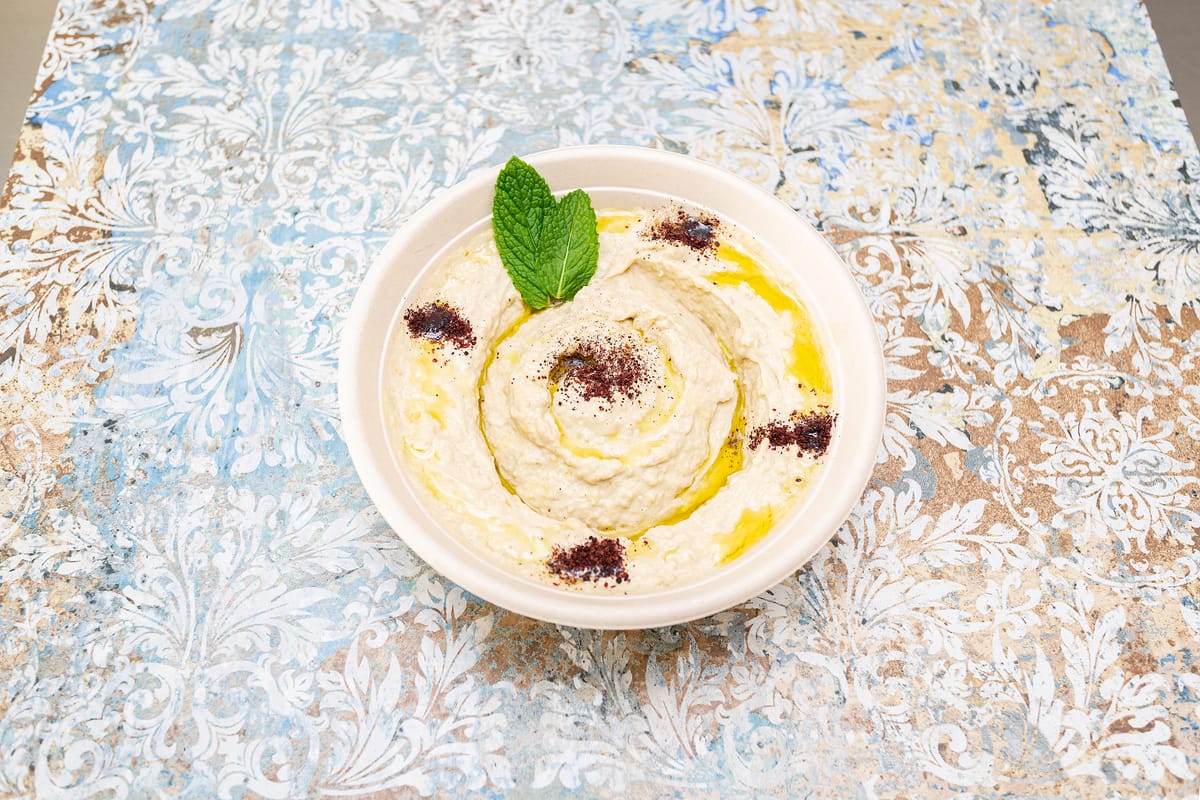
At Taza Shawarma & Falafel in Falls Church, VA, we serve fresh hummus made from scratch every morning -- chickpeas, tahini, lemon, garlic, and extra-virgin olive oil. Our hummus is $4.95 per order, served with warm pita bread. Whether you are team hummus, team guac, or both, this guide breaks down every difference so you can choose with confidence.
Two Dips, Two Continents
Hummus from the Middle East and guacamole from Mexico -- both beloved, both plant-based, both endlessly debated.
What Makes Each Dip Unique?
The ingredients tell the whole story.
What Is Hummus?
$4.95 at Taza
Hummus is a smooth, thick dip made from cooked chickpeas (garbanzo beans) blended with tahini, fresh lemon juice, raw garlic, and extra-virgin olive oil. The word "hummus" simply means "chickpeas" in Arabic. Its origins stretch back thousands of years across the Levant region -- modern-day Lebanon, Syria, Jordan, and surrounding areas. Hummus has become one of the fastest-growing snack foods in the United States, with annual sales exceeding $800 million.
The texture is dense, creamy, and perfectly spreadable. The flavor is earthy and nutty from the chickpeas, subtly bitter from raw tahini, tangy from fresh lemon, and sharp from garlic. Traditional hummus is always served at room temperature with a generous pool of olive oil on top and a dusting of paprika or sumac. It is vegan, gluten-free, and high in plant protein.
How Taza makes hummus from scratchWhat Is Guacamole?
Mexican origin
Guacamole is a chunky, vibrant dip made from ripe Hass avocados mashed with fresh lime juice, diced white onion, chopped cilantro, minced jalapeno peppers, and salt. The name comes from the Nahuatl word "ahuacamolli" -- "avocado sauce." The Aztecs were preparing an early version of guacamole by the 16th century, and it became a defining condiment of Mexican cuisine.
The texture is deliberately chunky, with visible pieces of avocado, onion, and cilantro throughout. The flavor is buttery and rich from the avocado, bright and acidic from the lime, herbaceous from the cilantro, and subtly spicy from the jalapeno. Unlike hummus, guacamole is best eaten immediately after preparation -- exposure to air causes the avocado to oxidize and turn brown within hours.
Note: Taza specializes in Middle Eastern cuisine, so guacamole is not on our menu. But hummus fills the same role -- and then some.
Nutritional Head-to-Head: Hummus vs Guacamole
Per 2-tablespoon (about 30g) serving -- the standard dip portion.
Hummus (2 tbsp / 30g)
Strengths: Higher protein, more fiber, more iron, better shelf life, lower fat per serving.
Guacamole (2 tbsp / 30g)
Strengths: Fewer calories, more potassium, rich in monounsaturated fat, lower sodium, lower carbs.
Neither dip is "unhealthy." Hummus delivers more plant protein and fiber per serving. Guacamole delivers more heart-healthy monounsaturated fat and potassium. The best choice depends on your dietary goals and what you are pairing the dip with.
The Fat Factor: Not All Fats Are Equal
Guacamole has more total fat, but the type of fat matters more than the amount.
Guacamole contains about 4.5 grams of fat per 2-tablespoon serving, compared to 3.5 grams in hummus. On the surface, that makes hummus the leaner option. But the composition of those fats tells a more nuanced story. Avocados are one of the richest natural sources of oleic acid, a monounsaturated fatty acid that has been consistently linked to reduced LDL cholesterol, lower inflammation, and improved heart health. About 70% of the fat in guacamole is monounsaturated, making it one of the healthiest fat profiles in any whole food.
Hummus gets its fat from two sources: tahini (ground sesame seeds) and olive oil. Tahini is rich in polyunsaturated fats, which support brain function and cell membrane integrity. Olive oil contributes monounsaturated fat similar to avocado. The combined fat profile of hummus is a balanced mix of mono- and polyunsaturated fats with very low saturated fat (0.4g per serving). Both dips are remarkably low in saturated fat compared to dairy-based dips like sour cream or cheese-based queso.
The takeaway: if your primary concern is heart-healthy monounsaturated fat, guacamole has a slight edge. If you want a balanced fat profile with the added benefit of more protein and fiber, hummus is the stronger all-around choice. Either way, both dips are nutritionally superior to processed dips like ranch, french onion, or nacho cheese.
Protein, Fiber, and Staying Power
When it comes to keeping you full, hummus has a clear advantage thanks to chickpea protein and dietary fiber.
Protein Comparison: Hummus Wins Decisively
If you need plant-based protein, this is not a close contest.
Hummus: 2g Protein per 2 Tbsp
Chickpeas are legumes -- one of the best plant-based protein sources available. A single cup of cooked chickpeas delivers 15 grams of protein. That protein carries over into hummus, giving every serving a meaningful contribution to your daily intake. Paired with whole grain pita, the amino acid profile becomes complete, rivaling animal protein in quality.
Guacamole: 0.6g Protein per 2 Tbsp
Avocados are a fruit, and like most fruits, their protein content is minimal. A whole avocado has about 4 grams of protein, but once mashed and portioned into servings, each 2-tablespoon scoop delivers less than 1 gram. Guacamole is fundamentally a fat source, not a protein source. For vegetarians relying on plant protein, hummus is the far more functional dip.
Hummus has more than 3 times the protein of guacamole per serving. For anyone on a vegetarian, vegan, or plant-forward diet, this makes hummus one of the most efficient protein-delivery vehicles in the entire snack category. At Taza, pairing hummus with a falafel bowl creates a meal with over 20 grams of plant protein.
Fiber Comparison: Both Deliver, Hummus Leads
Gut health and satiety depend heavily on dietary fiber.
Hummus provides 1.5 grams of fiber per 2-tablespoon serving, while guacamole provides 1.2 grams. The gap is modest per serving, but it compounds across a typical snacking session. Eat 4 tablespoons of hummus (a common portion) and you get 3 grams of fiber. That same amount of guacamole gives you 2.4 grams. Over the course of a day where you snack on dips at lunch and again in the afternoon, the difference adds up meaningfully toward the recommended 25-30 grams of daily fiber that most Americans fall short on.
The source of fiber is different between the two dips. Hummus gets its fiber from chickpeas, which are rich in both soluble and insoluble fiber. Soluble fiber slows digestion and helps regulate blood sugar. Insoluble fiber adds bulk and promotes regular digestion. Guacamole's fiber comes from avocado, which is predominantly soluble fiber. Both types are beneficial, but the combination in chickpeas gives hummus a slight edge for overall digestive health.
For a high-fiber meal at Taza, try a hummus bowl loaded with falafel, tabbouleh, and pickled vegetables. Between the chickpea hummus, chickpea falafel, and fresh vegetables, you can easily reach 10+ grams of fiber in a single sitting -- roughly a third of your daily target from one meal.
Hummus vs Guacamole: Complete Comparison Table
Every important difference in one place.
| Feature | Hummus | Guacamole |
|---|---|---|
| Base Ingredient | Chickpeas (garbanzo beans) | Avocado |
| Origin | Middle East / Levant region | Mexico / Central America |
| Calories (2 tbsp) | ~70 cal | ~50 cal |
| Total Fat (2 tbsp) | 3.5g (mostly polyunsaturated) | 4.5g (mostly monounsaturated) |
| Protein (2 tbsp) | 2g | 0.6g |
| Fiber (2 tbsp) | 1.5g | 1.2g |
| Carbs (2 tbsp) | 6g | 2.5g |
| Sodium (2 tbsp) | ~130mg | ~105mg |
| Key Healthy Fat | Polyunsaturated (from tahini/olive oil) | Monounsaturated oleic acid (from avocado) |
| Texture | Smooth, thick, creamy, spreadable | Chunky, soft, slightly fibrous |
| Flavor Profile | Earthy, nutty, tangy, garlicky | Rich, buttery, bright, herbaceous |
| Shelf Life (Refrigerated) | 5-7 days (up to 10 sealed) | 1-2 days before browning |
| Versatility | Dip, spread, bowl base, sauce, marinade | Dip, toast topping, taco/burrito filler |
| Average Store Price | $3-5 for 10 oz container | $5-8 for 12 oz container |
| Dietary | Vegan, gluten-free, nut-free | Vegan, gluten-free, nut-free |
| Best Paired With | Pita, falafel, wraps, raw vegetables, grilled meats | Tortilla chips, tacos, burritos, toast |
The table makes it clear: these are complementary dips, not competitors. Hummus excels at protein, fiber, shelf life, and versatility. Guacamole excels at low-carb macros, healthy monounsaturated fat, and potassium content. The "winner" depends entirely on your priorities.
Which Dip Is More Versatile?
Hummus is a dip, a spread, a sauce, and a bowl base. Guacamole is mainly a dip.
Hummus wins the versatility contest by a wide margin. You can eat it as a standalone dip with pita or vegetables. You can spread it inside a pita pocket or wrap as a sauce replacement. You can use it as a bowl base instead of rice or greens. You can thin it with lemon and water to make a salad dressing. You can even use it as a marinade for chicken or a topping for roasted vegetables. At Taza alone, hummus appears in at least six different menu applications, from wraps to bowls to platters.
Guacamole, by contrast, is primarily a dip or a topping. It works brilliantly with tortilla chips, on tacos, inside burritos, and on avocado toast. But its chunky texture makes it a poor spread for sandwiches (it falls apart and squeezes out). Its tendency to brown within hours makes it unsuitable as a make-ahead meal component. You would never use guacamole as a bowl base or a salad dressing -- the texture and oxidation issues make those applications impractical.
For restaurants like Taza, this versatility is one reason hummus appears on nearly every plate. It functions as a condiment, a protein source, a textural element, and a flavor carrier all at once. Guacamole serves its role beautifully in Mexican cuisine, but hummus operates across a wider range of culinary contexts.
Shelf Life and Cost: The Practical Comparison
Beyond nutrition, two factors that affect everyday eating habits.
Shelf Life
Hummus lasts 5-7 days in the refrigerator once opened, and up to 10 days if sealed and untouched. Store-bought hummus with preservatives can last even longer. The chickpea base is naturally resistant to oxidation, and the lemon juice and garlic act as mild preservatives that slow bacterial growth.
Guacamole begins browning within 30-60 minutes of being made, and even with plastic wrap pressed directly onto the surface, it rarely looks appetizing beyond 24-48 hours. This oxidation is harmless -- brown guacamole is safe to eat -- but the color change and texture degradation make day-old guac unappealing to most people. For meal prepping, hummus is the far more practical choice.
Cost Comparison
Hummus is consistently more affordable than guacamole. A 10-oz container of store-bought hummus typically costs $3-5. A 12-oz container of prepared guacamole runs $5-8. Making either from scratch widens the gap further: a can of chickpeas and a jar of tahini can produce multiple batches of hummus for under $6 total. A batch of guacamole requires 3-4 ripe avocados ($5-8 depending on season) plus limes, cilantro, and onion.
Avocado prices are also significantly more volatile than chickpea prices. Drought in Mexico or California, supply chain disruptions, and seasonal fluctuations can push avocado prices above $2.50 per fruit. Chickpeas, as a shelf-stable dried legume, have far more stable pricing year-round. For budget- conscious households, hummus delivers better nutritional value per dollar.
The Verdict: Different Strengths
Hummus and guacamole are not competitors -- they serve different purposes in different cuisines. Here is when to pick each one.
When to Choose Hummus vs Guacamole
A practical decision guide based on your goals.
High Protein
Hummus
2g protein per 2 tablespoons from chickpeas. More than 3 times guacamole's protein content. Best for plant-based diets, post-workout recovery, and meals where you want staying power.
Fewer Calories
Guacamole
50 calories per 2 tablespoons vs 70 for hummus. The 29% calorie advantage holds up across serving sizes. Choose guac when you want a lighter dip for chips or tacos.
Heart-Healthy Fat
Guacamole
Avocado is one of nature's richest sources of oleic acid, a monounsaturated fat linked to lower LDL cholesterol and reduced inflammation. If heart health is your priority, guacamole has the edge.
Meal Prep Friendly
Hummus
Lasts 5-7 days refrigerated without browning or texture loss. Guacamole turns brown within hours. For weekly meal prep, batch cooking, or make-ahead lunches, hummus is the only practical option.
Keto / Low Carb
Guacamole
2.5g carbs per serving vs 6g for hummus. Chickpeas are starchy legumes excluded from most strict keto plans. Guacamole's high-fat, low-carb profile fits keto macros perfectly.
Maximum Versatility
Hummus
Works as a dip, spread, bowl base, sauce, dressing, and marinade. Guacamole is primarily a dip or topping. For a single ingredient that plays multiple roles, hummus is unmatched.
Budget Friendly
Hummus
$3-5 for a 10 oz container vs $5-8 for 12 oz of guac. Chickpeas are shelf-stable and price-stable. Avocado prices fluctuate seasonally. Hummus delivers more nutrition per dollar.
Gut Health
Both (Edge: Hummus)
Both provide dietary fiber that feeds beneficial gut bacteria. Hummus has more total fiber and includes both soluble and insoluble types from chickpeas. Guacamole's avocado fiber is predominantly soluble.
Love Both?
Get Hummus at Taza!
You do not have to pick one forever. Eat guac with Mexican food and hummus with Mediterranean food. At Taza, our fresh hummus is $4.95 with warm pita. Try it as a dip, a bowl base, or a spread inside any wrap.
Six Ways Taza Serves Hummus
Hummus is not just a side dish at Taza -- it is woven into nearly every part of the menu.
Classic Dip with Pita
The most traditional way. Warm pita bread torn by hand, scooped through thick, creamy hummus. Simple, satisfying, and how hummus has been eaten across the Middle East for centuries. Pita at Taza: $0.95.
Hummus Bowl Base
Replace rice or greens with a bed of hummus in any Taza bowl. The chickpea protein and creamy texture make it a filling, lower-carb alternative that guacamole simply cannot replicate because it browns too fast.
Paired with Falafel
Chickpea meets chickpea. Falafel dipped into hummus creates a double dose of plant protein with complementary textures: crispy-crunchy outside, smooth-creamy inside. A falafel pita with hummus is from $8.95.
Inside Wraps and Pitas
Hummus spread inside a shawarma wrap holds ingredients together and adds moisture without making the bread soggy. It works as a sauce replacement. Available at no extra charge on any Taza sandwich.
Vegetable Dip Platter
Hummus with raw carrots, cucumbers, and bell peppers is one of the lowest-calorie snack combinations you can build. Higher in fiber and protein than guac with chips, and the vegetables stay crisp for hours.
Salad Dressing Alternative
Thinned with lemon juice and water, hummus becomes a creamy, high-protein salad dressing. It coats greens evenly, adds garlic flavor, and replaces calorie-heavy ranch or caesar without sacrificing creaminess.
Both Dips Deserve a Place on Your Table
This is not about picking a winner -- it is about understanding what each dip does best.
Hummus and guacamole are both plant-based, whole-food dips that deliver genuine nutritional value. Neither contains artificial ingredients in their traditional forms. Neither is "junk food." Both belong in a healthy diet. The difference comes down to context. Eating tacos? Guacamole is the natural choice. Building a Mediterranean bowl with falafel and grilled chicken? Hummus is the foundation. Having a snack with raw vegetables? Either works beautifully.
If forced to pick one based purely on nutritional density, hummus has a slight overall edge. It delivers more protein, more fiber, more iron, and more B vitamins per serving. It lasts longer in the fridge. It costs less. And it works in more culinary applications. But guacamole's monounsaturated fat profile, potassium content, and lower calorie count make it an equally valid choice for different dietary goals.
At Taza Shawarma & Falafel, we are obviously biased toward hummus -- it is one of the cornerstones of our menu. Our hummus is made fresh every morning from cooked chickpeas, tahini, lemon, and garlic. It is $4.95 per order, served with warm pita bread. Whether you have been eating hummus for years or you are trying it for the first time after reading this comparison, we think you will understand why millions of people across the Middle East have been choosing it as their daily dip for thousands of years.
Hummus at Taza Shawarma & Falafel
Fresh hummus made daily at 5820 Seminary Rd Ste O, Falls Church, VA 22041. Here is how to eat it.
Hummus Dip
$4.95
Creamy chickpea dip with tahini, lemon, garlic, and olive oil. Served with warm pita bread. The classic starting point.
Learn moreFalafel Pita
from $8.95
Crispy chickpea falafel in warm pita with hummus, tahini, lettuce, tomato, and pickles. Double chickpea protein in every bite.
Learn moreFalafel Bowl
from $10.45
Falafel over rice or greens with hummus on the side. Build it your way with 14+ toppings. The ultimate hummus-centric meal.
Learn moreFrequently Asked Questions: Hummus vs Guacamole
Both are healthy, and the answer depends on what you need from your food. Hummus has more protein (2g vs 0.6g per 2 tablespoons) and more fiber (1.5g vs 1.2g), making it better for satiety and sustained energy. Guacamole has fewer calories (50 vs 70 per 2 tablespoons) and is rich in heart-healthy monounsaturated fats from avocado. If you want more protein and staying power, hummus wins. If you want fewer calories and more potassium, guacamole has the edge. Both are vegan, gluten-free, and made from whole-food plant ingredients. At Taza in Falls Church, our hummus is $4.95 and made fresh daily from chickpeas, tahini, lemon, and garlic.
Hummus has more calories per serving. A standard 2-tablespoon serving of hummus has about 70 calories, while the same amount of guacamole has about 50 calories. However, this difference narrows when you look at how people actually eat these dips. Most people consume more guacamole per sitting because its lighter texture and buttery flavor make portion control harder. A typical guacamole serving at a restaurant is 3-4 tablespoons (100-150 calories), while hummus is often portioned at 2-3 tablespoons (70-105 calories). Calorie-for-calorie, hummus delivers more protein and fiber, which means it keeps you full longer.
You can, but the results vary depending on the dish. Guacamole works as a substitute for hummus on sandwiches and wraps, adding creaminess and healthy fat. It does not work as well as a bowl base because it browns quickly when spread thin and heated. Hummus is far more versatile as a substitute for guacamole -- it works on tacos, burritos, and even with chips. The flavors are different enough that neither is a perfect swap, but both fill the same functional role as a creamy, plant-based spread or dip. At Taza, hummus is available as a spread on any wrap or pita at no extra charge.
Guacamole turns brown because of enzymatic oxidation. When avocado flesh is exposed to oxygen, an enzyme called polyphenol oxidase reacts and produces brown melanin compounds. This process starts within 30 minutes of cutting the avocado and accelerates over a few hours. Hummus does not brown because chickpeas lack the same concentration of polyphenol oxidase. Lemon juice in both dips slows oxidation (the citric acid lowers pH and deactivates the enzyme), but guacamole's oxidation is much faster. This is why hummus lasts 5-7 days refrigerated while guacamole starts browning within hours.
Hummus has significantly more protein. Per 2-tablespoon serving, hummus provides about 2 grams of protein compared to guacamole's 0.6 grams -- more than three times as much. This is because chickpeas are legumes, one of the best plant-based protein sources. Avocados are a fruit with high fat content but very little protein. If you are eating dips as part of a high-protein or plant-based diet, hummus is the stronger pick. Pair it with falafel (also made from chickpeas) for a high-protein vegetarian meal. At Taza, a falafel pita with hummus is from $8.95.
Both can support weight loss when eaten in reasonable portions. Guacamole has fewer calories per serving (50 vs 70 per 2 tablespoons) and its monounsaturated fats have been linked to reduced belly fat in some studies. However, hummus has more protein and fiber, which keep you feeling full longer and may reduce overall calorie intake throughout the day. The best choice depends on your eating pattern. If you tend to overeat dips, hummus's higher fiber content helps with portion control. If you eat controlled portions and want lower calorie density, guacamole works well. Either way, the key is what you dip into them -- chips add empty calories, while vegetables and pita keep the meal nutritious.
Guacamole is far better for a keto diet. A 2-tablespoon serving of guacamole has about 2.5g of carbs with 4.5g of fat, fitting neatly into keto macros. Hummus has about 6g of carbs per 2 tablespoons because chickpeas are a starchy legume. Most strict keto plans limit total daily carbs to 20-50 grams, and even a moderate serving of hummus (4 tablespoons, 12g carbs) takes up a significant portion of that allowance. If you follow keto, guacamole is the clear winner. If you follow a balanced or Mediterranean-style diet, hummus is the more filling and protein-rich option.
Taza Shawarma & Falafel at 5820 Seminary Rd Ste O, Falls Church, VA 22041 serves fresh hummus made daily from chickpeas, tahini, fresh lemon juice, and garlic. The hummus is $4.95 and comes with warm pita bread. You can also order hummus as a side with any meal, use it as a bowl base, or get it as a spread in any wrap or pita. Taza is open 11:00 AM - 12:00 AM, 7 days a week. Order online or call (703) 340-1014.
Fresh Hummus at Taza in Falls Church
Open 11:00 AM - 12:00 AM, 7 days a week at 5820 Seminary Rd Ste O, Falls Church, VA 22041.
Address
5820 Seminary Rd Ste O, Falls Church, VA 22041
Hours
11:00 AM - 12:00 AM -- Open 7 Days a Week
Phone
Try Taza's Fresh-Made Hummus Today
Made from scratch every morning -- chickpeas, tahini, lemon, garlic. Just $4.95 with warm pita bread. Order online or call (703) 340-1014.