History of Hummus: From Ancient Levant to American Favorite
Hummus has traveled from the ancient fields of the Fertile Crescent to supermarket shelves and restaurant tables across every continent. Here is the full story of how five ingredients conquered the world.
4.8 stars on Yelp (92 reviews) -- Open 11:00 AM - 12:00 AM
Where Did Hummus Come From?
Tracing the roots of the world's most recognized dip from ancient agriculture to modern dining.
Hummus is one of the oldest continuously consumed foods in human history. The word itself comes from the Arabic "hummus" meaning chickpea, and the full name of the dish, hummus bi tahina, translates to "chickpeas with tahini." That simple name captures the essence of a food that has persisted for millennia because it is built on ingredients that grow abundantly across the eastern Mediterranean and the Middle East. Chickpeas, sesame seeds, lemons, garlic, and olive oil have all been cultivated in the same geographic band for thousands of years, making their combination almost inevitable.
The story of hummus cannot be separated from the story of agriculture itself. Chickpeas were among the earliest crops domesticated by human beings, with archaeological evidence placing their cultivation in the Fertile Crescent as far back as 7,500 BCE. Sesame seeds, the raw material for tahini, were cultivated in the Indus Valley and Mesopotamia by 3,000 BCE. Lemons arrived in the Mediterranean from Southeast Asia along ancient trade routes. Garlic was grown in Egypt and the Levant for both culinary and medicinal purposes for at least 5,000 years. The ingredients assembled over centuries, and the dish emerged somewhere in the overlap of these agricultural traditions.
Today, hummus is consumed in over 100 countries and has become a staple in American households, European supermarkets, and restaurants from Falls Church to Frankfurt to Fujairah. Its journey from ancient subsistence food to billion-dollar global product is a story of trade, migration, cultural exchange, and the simple fact that five well-chosen ingredients, prepared with care, produce something that nearly everyone finds delicious. At Taza Shawarma & Falafel on Seminary Road in Falls Church, we make hummus fresh every day using the same core ingredients that cooks in the ancient Levant would recognize.
Ancient Origins: Chickpeas, Mesopotamia, and the Levant
How the raw ingredients of hummus came together over millennia of agricultural development.
The chickpea, Cicer arietinum, is one of the oldest cultivated legumes on Earth. Archaeological sites in southeastern Turkey and northern Syria have yielded carbonized chickpea remains dating to approximately 7,500 BCE, placing the legume among the founding crops of the Neolithic agricultural revolution. From those early fields in the Fertile Crescent, chickpea cultivation spread south into the Levant, west along the Mediterranean coast, and east into Mesopotamia and the Indian subcontinent. By 3,000 BCE, chickpeas were a dietary staple from Egypt to the Indus Valley, valued for their high protein content, long storage life, and ability to grow in dry, rocky soil where wheat and barley struggled.
Ancient cooks prepared chickpeas in numerous ways: boiled whole in stews, ground into flour for flatbreads, roasted as a snack, and mashed into pastes. Egyptian tomb paintings from the Middle Kingdom period, roughly 2,000 BCE, depict the preparation of legume-based dishes. Sumerian cuneiform tablets reference chickpeas as part of temple rations. Greek and Roman writers including Pliny the Elder noted the chickpea as a common food of the Mediterranean world. The idea of mashing chickpeas into a smooth paste was not a sudden invention but a gradual refinement of techniques that had been developing for millennia across the region.
The critical missing element in the ancient period was tahini. While sesame seeds were cultivated in Mesopotamia and the Indus Valley by 3,000 BCE, the process of grinding sesame seeds into a smooth, oily paste appears to have developed later. Historical records suggest that tahini production became widespread in the Levant and Egypt sometime between the 9th and 13th centuries CE. Before tahini, mashed chickpea dishes likely relied on olive oil alone for richness, creating something closer to a coarse bean dip than the creamy hummus we know today.
The convergence of all five core ingredients -- chickpeas, tahini, lemon juice, garlic, and salt -- into a single dish required centuries of agricultural exchange and culinary experimentation. Lemons did not arrive in the Mediterranean from their native Southeast Asia until the early centuries of the Common Era, carried along trade routes through Persia and the Arabian Peninsula. Once all the pieces were in place, the dish that would become hummus bi tahina was only a matter of time. The earliest written evidence of that final combination comes from 13th-century Egypt, but the unwritten tradition almost certainly predates the written one by generations.
The Evolution of Modern Hummus
How tahini, lemon, garlic, and olive oil transformed mashed chickpeas into the dish the world knows today.
The oldest known written recipe that closely resembles modern hummus appears in Kitab al-Wusla il al-Habib, a 13th-century cookbook compiled in Cairo during the Mamluk period. The recipe describes mashed chickpeas combined with vinegar, pickled lemons, herbs, oil, and spices. Tahini is absent from this earliest version, suggesting that the integration of sesame paste into the dish occurred after the 13th century, likely in the Levantine regions where tahini production was already a well-established craft. The transition from vinegar to fresh lemon juice also appears to have happened gradually as lemon cultivation expanded across the eastern Mediterranean.
By the Ottoman period, spanning the 14th through early 20th centuries, hummus bi tahina had become a recognizable part of the culinary landscape across the eastern Mediterranean. Ottoman cookbooks and travel accounts describe mezze spreads featuring chickpea dips served alongside flatbread, olives, and grilled meats in the cities of Damascus, Beirut, Aleppo, Cairo, and Istanbul. The dish was not yet called by a single standardized name, and regional variations in ingredients and preparation were substantial, but the core concept -- chickpeas blended with tahini and acid -- had solidified across a wide geographic area.
The technique of preparing hummus also evolved during this period. Early methods involved pounding chickpeas in a stone mortar, which produced a coarser texture. As hand-cranked mills and, later, mechanical grinders became available, the texture of hummus grew progressively smoother. The practice of peeling cooked chickpeas before blending, which produces the silkiest possible result, became a hallmark of Lebanese preparation and remains a distinguishing feature of high-quality hummus to this day. The choice of tahini also mattered: Levantine cooks favored lighter tahini made from hulled sesame seeds, while some Egyptian preparations used darker, unhulled varieties with a more intense, bitter flavor.
The finishing ritual of hummus -- the swirl of olive oil pooled in the center, the dusting of paprika or sumac, the scattering of whole chickpeas or chopped parsley -- developed as the dish moved from home kitchens to restaurants and street stalls. These garnishes served both practical and aesthetic purposes. The olive oil prevented the surface from drying out and added richness. The paprika and herbs provided color contrast against the pale beige base. The presentation became standardized enough that a plate of hummus was instantly recognizable from Tripoli to Alexandria, creating a visual identity as strong as its flavor. That same presentation is what you see when we plate our hummus at Taza in Falls Church today.
Regional Claims and Traditions
Lebanon, Egypt, Syria, Turkey, and Jordan each bring a distinct approach to the same ancient dish.
Few foods generate as much national pride and culinary debate as hummus. Multiple countries across the eastern Mediterranean and Middle East claim hummus as their own, and each has a legitimate historical connection to the dish. The truth is that hummus did not emerge from a single kitchen or a single nation. It developed across a broad region where chickpeas, sesame, lemons, and garlic all grew, and where cooks shared techniques through trade, travel, and centuries of cultural exchange. Attempting to assign hummus to one country is like attempting to assign bread to one country -- the practice is too old and too widespread for any single claim to hold.
What is genuinely interesting is how each country's version differs. The variations in tahini ratio, spice additions, texture preferences, and serving conventions reveal distinct culinary philosophies that have developed over centuries. These regional styles are not minor tweaks but fundamentally different eating experiences, and understanding them deepens appreciation for what appears, on the surface, to be a simple dip. The following breakdown covers the five most recognized regional traditions, each of which has contributed something to the hummus served at restaurants across Northern Virginia and the greater Washington, D.C. area today.
The Global Standard
Lebanese hummus sets the benchmark recognized around the world. The preparation emphasizes extreme smoothness achieved by peeling cooked chickpeas before blending. The tahini ratio is generous, often equal to or exceeding the volume of chickpeas. Lemon juice is used liberally, and a single raw garlic clove provides sharpness without overwhelming the palate. The finished dip is served in a shallow dish, swirled with a well in the center holding a pool of high-quality extra-virgin olive oil. Whole cooked chickpeas, a dusting of paprika, and fresh parsley complete the presentation. The texture should be silky enough that a piece of pita glides through without resistance.
Cumin-Forward and Bold
Egyptian hummus, locally called hummus bi tahina, tends toward a bolder spice profile than its Levantine counterparts. Cumin is the defining addition, used both in the blend and as a finishing sprinkle on top. Egyptian preparations often include a higher proportion of tahini relative to lemon, creating a richer, heavier texture that pairs well with the country's aish baladi flatbread. Some Cairo street vendors add a spoonful of ful medames (stewed fava beans) on top, bridging the gap between hummus and Egypt's national breakfast dish. The overall character is earthier and more robust than the bright, tart Lebanese version.
Lighter and Brighter
Syrian hummus favors a lighter hand and brighter acidity. Aleppo-style hummus frequently includes a higher ratio of lemon juice and sometimes incorporates a small amount of yogurt, which adds a subtle tanginess and smoother body. The garlic is used sparingly, and the texture is whipped to an almost mousse-like consistency. Syrian cooks in Damascus and Aleppo traditionally serve hummus for breakfast alongside pickled vegetables, olives, and fresh mint. The garnish often features Aleppo pepper flakes rather than standard paprika, adding a fruity warmth that distinguishes it from other regional versions.
Butter-Finished and Warm
Turkish hummus, called humus in Turkish, often appears as a warm dish rather than a cold dip. The preparation is broadly similar to the Levantine base, but Turkish cooks frequently finish the dish with a drizzle of melted butter infused with paprika or red pepper flakes, spooned over the top just before serving. Some versions from southeastern Turkey incorporate ground lamb or beef sauteed with pine nuts as a topping, transforming hummus from a side dish into a standalone entree. The warm serving temperature and the richness of the butter create a distinctly different eating experience from the cold Lebanese standard.
Rustic and Textured
Jordanian hummus tends toward a coarser, more rustic texture than the silky-smooth Lebanese ideal. The chickpeas are mashed rather than pureed to a fine paste, leaving noticeable chunks that give each bite a varied mouthfeel. Olive oil is used generously, and the tahini tends to be slightly roasted, contributing a nuttier, deeper flavor. In Amman and other Jordanian cities, hummus is often served as part of a mezze spread that includes falafel, pickled turnips, and fresh taboon bread baked in a wood-fired oven. The rusticity of the preparation reflects a preference for hearty, communal eating.
Regional Hummus Styles Compared
How the five major traditions differ in texture, spice, serving style, and signature garnishes.
| Characteristic | Lebanese (Taza's Style) | Other Regional Styles |
|---|---|---|
| Texture | Ultra-smooth, silky, peeled chickpeas blended to a mousse-like consistency | Egyptian: thick and heavy; Syrian: light and whipped; Turkish: warm and creamy; Jordanian: coarse and rustic |
| Tahini Ratio | Generous -- often equal to or exceeding the volume of chickpeas | Egyptian: high ratio; Syrian: moderate; Turkish: moderate; Jordanian: moderate with roasted tahini |
| Key Spice | Paprika garnish only; the dip itself relies on garlic and lemon for flavor | Egyptian: cumin-forward; Syrian: Aleppo pepper; Turkish: paprika butter; Jordanian: sumac |
| Serving Temperature | Room temperature or slightly chilled, with olive oil pooled in the center | Turkish: often served warm with melted butter; all others: room temperature |
| Typical Accompaniment | Fresh-baked pita bread, raw vegetables, pickled turnips | Egyptian: aish baladi; Syrian: pickles and olives; Turkish: ground meat topping; Jordanian: taboon bread |
| Signature Garnish | Olive oil pool, paprika dusting, whole chickpeas, fresh parsley | Egyptian: cumin and ful; Syrian: Aleppo pepper; Turkish: butter and red pepper; Jordanian: olive oil and herbs |
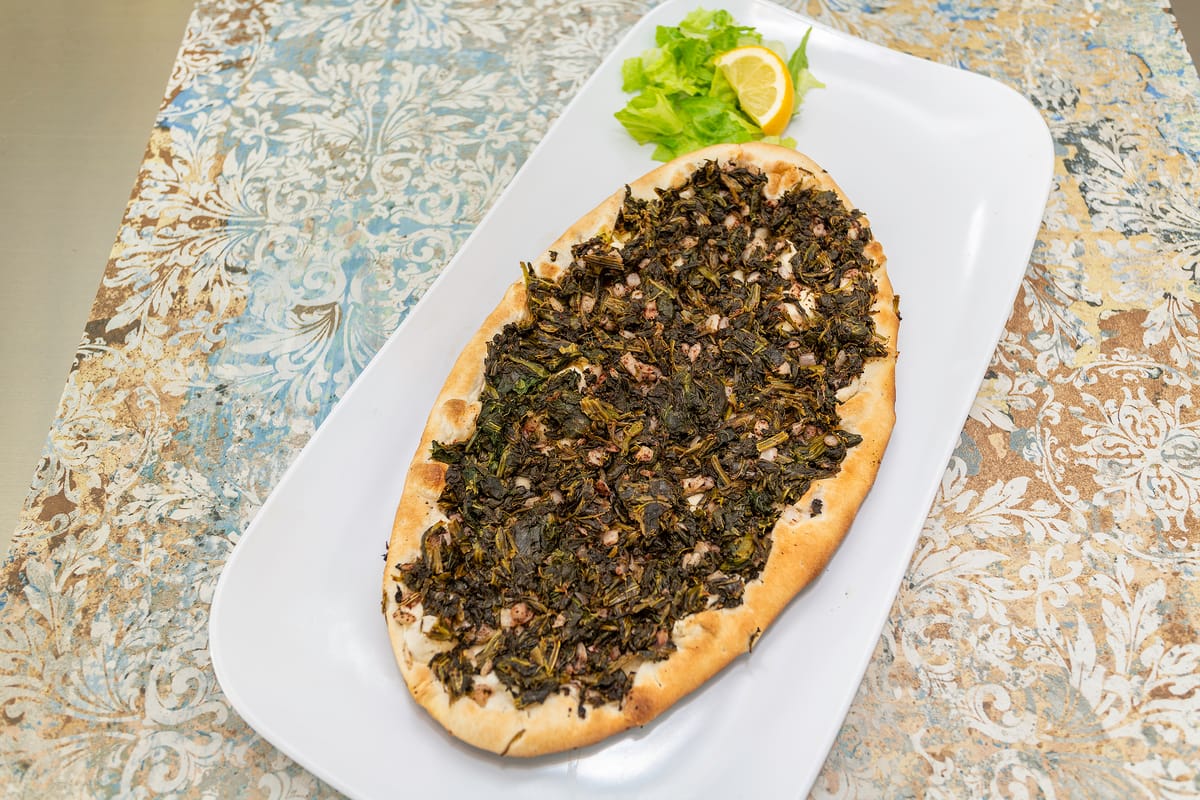
From Ancient Fields to Your Table
Seven thousand years of agricultural tradition, five ingredients, one dish that unites cultures across the globe.
Hummus Comes to America
How immigration, specialty stores, and supermarket shelves brought hummus from niche to nationwide.
Hummus arrived in the United States the same way most foods arrive: in the kitchens and grocery bags of immigrants. Lebanese, Syrian, and Egyptian families who settled in American cities throughout the early and mid-20th century brought their recipes with them, preparing hummus at home and selling it in small Middle Eastern grocery stores and restaurants. For decades, hummus existed almost exclusively within these immigrant communities and in a handful of specialty food stores in cities like New York, Detroit, and the Northern Virginia suburbs of Washington, D.C. If you wanted hummus in 1970s Falls Church, you either made it at home or knew which small shop on Seminary Road or Columbia Pike carried it.
The first wave of broader American awareness came through the natural foods and vegetarian movements of the 1970s and 1980s. The Moosewood Cookbook, published in 1977, included a hummus recipe and introduced the dish to a generation of health-conscious American cooks who had never encountered Middle Eastern cuisine. Natural food co-ops and whole-food stores began stocking hummus alongside tofu, sprouts, and brown rice. This placed hummus in a new cultural category: it was no longer just an ethnic food but also a health food, and that repositioning would prove crucial to its eventual mainstream success.
The real inflection point came in the late 1990s and early 2000s, when commercially produced hummus appeared on supermarket shelves for the first time at scale. Sabra Dipping Company, a joint venture that would grow into the largest hummus brand in the United States, began national distribution in 1999. Tribe Mediterranean Foods, Cedar's, and other brands followed. Suddenly, hummus was available at every Safeway, Kroger, and Whole Foods in the country, including the stores along Route 7 and Leesburg Pike that serve the Falls Church and Northern Virginia market. Between 2005 and 2015, supermarket hummus sales in the United States grew by over 2,000 percent.
The supermarket boom had a paradoxical effect on Middle Eastern restaurants. On one hand, it introduced millions of Americans to hummus for the first time, creating a base of familiarity that made people more likely to order it at a restaurant. On the other hand, it set a low baseline for what many Americans thought hummus should taste like -- a slightly grainy, shelf-stable dip with preservatives and a flat flavor profile. For restaurants like Taza in Falls Church, this created both a challenge and an opportunity. The challenge was competing with a three-dollar tub from the grocery store. The opportunity was showing customers how dramatically different fresh, restaurant-made hummus tastes when it is prepared properly with quality ingredients and traditional technique.
The Hummus Boom: From Ethnic Food to Mainstream
How hummus became a billion-dollar American food category and a fixture in one out of every four households.
The numbers tell a story that no other food category in the American market can match. In 2003, annual hummus sales in the United States totaled approximately $5 million. By 2013, that figure had crossed $725 million. By 2020, the U.S. hummus market surpassed $1 billion in annual sales and has continued to grow since. Over 25 percent of American households now purchase hummus regularly, according to data from the International Food Information Council. No other Middle Eastern food product has achieved anything close to this level of American market penetration.
Several converging trends fueled the boom. The protein movement of the 2010s positioned hummus as a plant-based protein source that appealed to vegetarians, vegans, and flexitarians alike. The snacking trend, driven by the shift away from three fixed meals toward throughout-the-day grazing, made hummus and vegetables a convenient desk-side or afternoon option. The Mediterranean diet, consistently ranked among the healthiest dietary patterns by nutritional researchers, placed hummus at the center of its recommended foods. Health magazines, food blogs, and social media influencers amplified these messages to millions of consumers who were already primed to try it.
The flavor innovation wave pushed hummus further into the mainstream. Brands introduced roasted red pepper hummus, roasted garlic hummus, everything bagel hummus, buffalo-style hummus, dark chocolate hummus, and dozens of other variations that would be unrecognizable in Beirut or Cairo. These flavored varieties drew in consumers who might not have purchased traditional hummus on its own, expanding the total market. Industry analysts estimated that flavored hummus accounted for over 40 percent of total hummus sales by the mid-2010s.
The boom also created a growing subset of American consumers who understood that fresh, restaurant-made hummus was a fundamentally different product from what came in a plastic tub. This segment drove traffic to Middle Eastern restaurants in food-forward markets like the D.C. metropolitan area, where the density of Lebanese, Syrian, and other Arab-owned restaurants provided easy access to the real thing. Northern Virginia, with its deep Middle Eastern culinary roots along corridors like Seminary Road in Falls Church and Columbia Pike in Arlington, became one of the best places in the entire country to experience the gap between mass-produced hummus and the handmade version.
$1B+ Annual Market
The U.S. hummus market crossed $1 billion in annual sales by 2020, making it the fastest-growing dip category in American grocery history.
25% of U.S. Households
More than one in four American households now purchases hummus regularly, a figure that was below 5 percent as recently as 2005.
Plant-Based Leader
Hummus leads all plant-based dips in U.S. market share, driven by its protein content, fiber, and alignment with Mediterranean and vegan diets.
Hummus in Northern Virginia
Why the D.C. suburbs are one of the best places in America to eat fresh, restaurant-made hummus.
Northern Virginia has one of the largest and most established Middle Eastern and Arab-American communities on the East Coast. Beginning in the 1960s and 1970s, Lebanese, Syrian, Egyptian, and other immigrants settled in the Falls Church, Arlington, and Fairfax corridor, drawn by employment opportunities in the federal government, defense contracting, and the professional service industries that surround the nation's capital. They brought their culinary traditions with them and opened restaurants, bakeries, and grocery stores that served their communities while also introducing the broader Northern Virginia population to Middle Eastern cuisine for the first time.
The result is a culinary corridor that stretches from Columbia Pike in Arlington through Falls Church along Route 7 and Seminary Road, into Annandale and Fairfax City, and out to the Tysons and Herndon areas. Along this corridor, dozens of Middle Eastern restaurants compete for customers who know the difference between good hummus and great hummus. That competition has pushed quality upward. Restaurant owners in Northern Virginia cannot get away with cutting corners on ingredients or technique because their customers include people who grew up eating hummus in Beirut, Damascus, and Cairo. The bar is set by the diaspora community, and every restaurant must clear it.
For residents of Falls Church and the surrounding communities, this concentration of Middle Eastern restaurants means access to fresh hummus that is categorically different from the store-bought version. Restaurant hummus is made from dried chickpeas that have been soaked overnight and cooked until extremely soft. The tahini is fresh. The lemon juice is squeezed that day. The garlic is raw and pungent. There are no preservatives, no citric acid, and no gums to extend shelf life. The texture is smoother, the flavor is brighter, and the overall eating experience is closer to what you would find at a corner hummus shop in Beirut than anything available in a plastic container at the grocery store.
This is the food environment in which Taza operates. We are located at 5820 Seminary Rd Ste O, Falls Church, VA 22041, in the heart of the Seminary Road corridor where Middle Eastern food has been a neighborhood fixture for decades. Our hummus is priced at $4.95 and served with warm pita bread. It is also available as a bowl base for our falafel and shawarma bowls, replacing rice or greens as the foundation of the dish. When a customer in Falls Church orders hummus from Taza, they are participating in a culinary tradition that connects this specific corner of Northern Virginia to thousands of years of food history across the Mediterranean and the Middle East.
How Taza Honors Hummus Tradition
Daily preparation, quality tahini, proper technique, and no shortcuts on Seminary Road.
The name Taza means "fresh" in Arabic, and that principle defines how we approach hummus. Our hummus is made daily in our kitchen at 5820 Seminary Rd Ste O in Falls Church. The process begins with dried chickpeas that are sorted, rinsed, and soaked overnight. The next morning, the chickpeas are cooked until they are soft enough to crush between two fingers with no resistance. This extended cooking time is the single most important step in producing smooth hummus. Under-cooked chickpeas produce a grainy texture that no amount of blending can fully correct. We do not use canned chickpeas because they are pre-cooked to a firmness that is adequate for salads but insufficient for the silky consistency that traditional hummus demands.
The tahini we use is a quality sesame paste ground from hulled sesame seeds. The difference between good tahini and commodity tahini is comparable to the difference between fresh-pressed olive oil and a generic vegetable oil: both are technically fats, but they taste nothing alike. Quality tahini has a smooth, slightly sweet, nutty flavor without bitterness. Lower-grade tahini, often made from unhulled seeds with excessive roasting, introduces a harsh, astringent note that overpowers the delicate balance of the finished hummus. We source our tahini carefully and taste-test each batch to maintain consistency.
The lemon juice is fresh-squeezed, not bottled. The garlic is raw. The olive oil that finishes each plate is extra-virgin. These are not luxury ingredients by any standard; they are the baseline requirements for hummus that tastes the way it is supposed to taste. The problem in the mass-produced hummus market is that each of these ingredients gets substituted for a cheaper, more shelf-stable alternative -- citric acid for lemon juice, garlic powder for fresh garlic, soybean oil for olive oil -- and the cumulative effect of those substitutions is a product that bears only a passing resemblance to the original.
At Taza, you can order hummus as a side dish for $4.95, served with warm pita bread baked on site. You can also use hummus as the base for any of our bowls, replacing rice or greens with a generous bed of freshly made hummus topped with your choice of falafel, chicken shawarma, or beef shawarma plus your selection from 14 fresh toppings. Baba ghanouj, our smoky roasted eggplant dip, is available at $4.95 for those who want to explore the full range of Levantine dips. We are open 11:00 AM - 12:00 AM, Open 7 Days a Week. You can order online for pickup, order delivery, or call us at (703) 340-1014. The history of hummus spans seven millennia and multiple civilizations. The best way to appreciate that history is to taste hummus made the traditional way, with no shortcuts, at a restaurant that takes the tradition seriously.
Daily Preparation
Dried chickpeas are soaked overnight and cooked each morning until perfectly soft. No canned chickpeas, no pre-made batches from yesterday. Every serving comes from that day's preparation.
Quality Tahini
We use a premium sesame paste ground from hulled seeds. Each batch is taste-tested for the smooth, nutty flavor profile that defines great hummus and avoids the bitterness of lower-grade alternatives.
Proper Technique
Extended cooking, thorough blending, and the right ratio of tahini to chickpeas produce the smooth, creamy texture that separates restaurant hummus from shelf-stable store-bought versions.
Fresh Ingredients Only
Fresh-squeezed lemon juice, raw garlic, extra-virgin olive oil. No citric acid, no garlic powder, no vegetable oil substitutes. The same five core ingredients that have defined hummus for centuries.
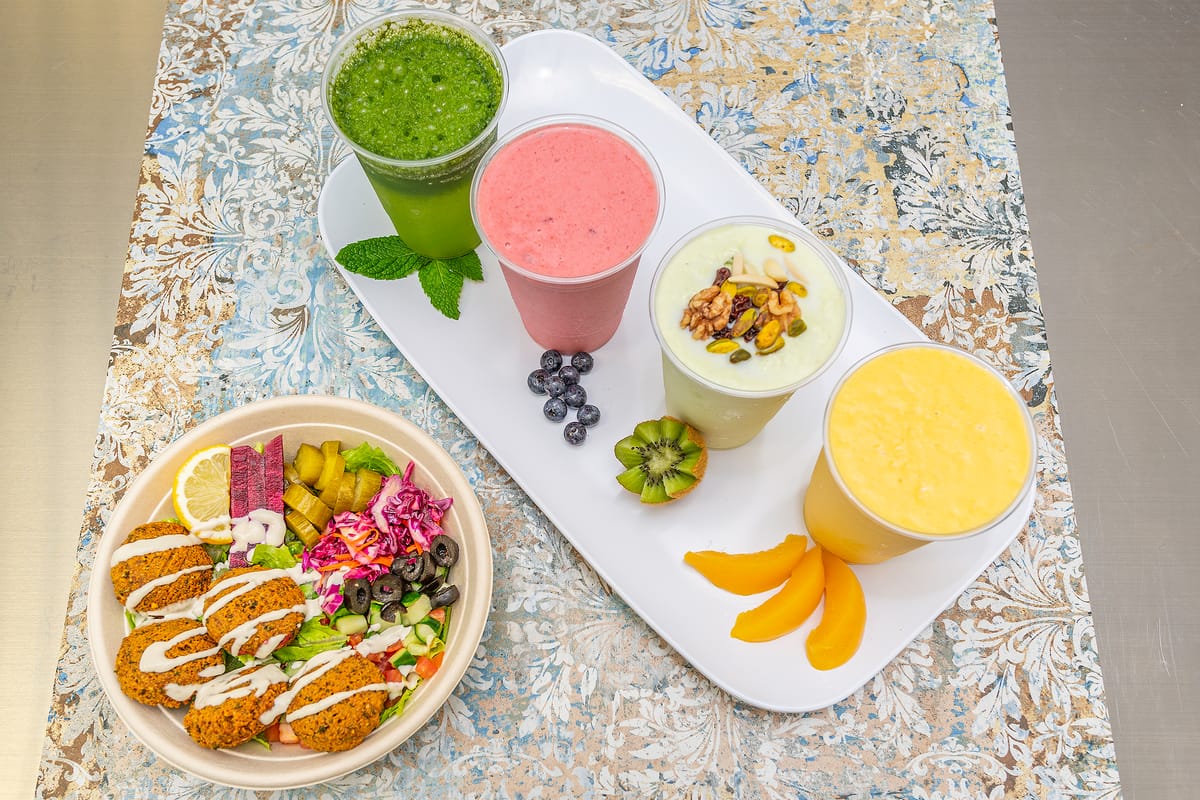
Made Fresh, Served With Pride
Traditional Levantine hummus prepared daily at Taza on Seminary Road in Falls Church, VA.
Hummus Through the Ages
Key moments in the 7,000-year journey from ancient fields to modern tables.
Chickpeas Domesticated in the Fertile Crescent
Archaeological evidence from southeastern Turkey and northern Syria shows carbonized chickpea remains among the earliest cultivated crops. Chickpeas become a dietary staple across the ancient Levant, Mesopotamia, and eventually the entire Mediterranean basin, valued for their protein content and ability to grow in arid soil.
Sesame Cultivation Spreads Across Mesopotamia
Sesame seeds are cultivated in the Indus Valley and Mesopotamia, establishing the raw material for what would eventually become tahini. Ancient Sumerian and Akkadian texts reference sesame oil as a valuable trade commodity. The grinding of sesame into a paste develops gradually over the following centuries.
Legume-Based Dishes Appear in Ancient Egypt
Egyptian tomb paintings from the Middle Kingdom period depict the preparation of legume-based foods. While not yet hummus in its modern form, these preparations establish the tradition of cooking, mashing, and seasoning legumes that would eventually lead to the dish. Garlic and olive oil are already present in the Egyptian culinary repertoire.
Tahini Production Becomes Widespread
Tahini production spreads across the Levant and Egypt, with historical references appearing in Arabic manuscripts and cookbooks. The grinding of hulled sesame seeds into a smooth paste becomes a specialized craft in cities like Damascus, Aleppo, and Cairo. This is the final key ingredient needed for modern hummus.
Earliest Written Hummus-Like Recipe in Cairo
Kitab al-Wusla il al-Habib, a cookbook compiled in Cairo during the Mamluk period, contains the oldest known written recipe for a dish resembling hummus: mashed chickpeas with vinegar, pickled lemons, herbs, and spices. Tahini is absent from this version, but the foundation of the dish is clearly established.
Hummus Bi Tahina Crystallizes Across the Ottoman Empire
During the Ottoman period, the combination of chickpeas with tahini becomes standard across the eastern Mediterranean. Regional variations emerge in Lebanon, Syria, Egypt, Turkey, and Jordan. The dish becomes a fixture of the mezze table served alongside flatbread, olives, and grilled meats in cities from Beirut to Istanbul.
Middle Eastern Immigration Brings Hummus to America
Lebanese, Syrian, and Egyptian immigrants open restaurants and grocery stores in American cities including New York, Detroit, and the Northern Virginia suburbs of Washington, D.C. Hummus begins appearing in natural food stores and vegetarian cookbooks during the 1970s, reaching a broader audience for the first time.
The Supermarket Hummus Boom
Sabra, Tribe, Cedar's, and other brands bring packaged hummus to mainstream American supermarkets. Sales explode from $5 million in 2003 to over $725 million by 2013. Hummus transitions from ethnic specialty to mainstream American food. Over 25 percent of U.S. households become regular purchasers.
A Billion-Dollar Category and Growing
The U.S. hummus market exceeds $1 billion in annual sales. Fresh restaurant-made hummus sees growing demand as consumers recognize the quality gap between packaged and handmade versions. In Northern Virginia, restaurants like Taza on Seminary Road in Falls Church serve hummus made daily from the same five ingredients that have defined the dish for centuries.
Hummus History: Common Questions Answered
The exact origin of hummus is debated among food historians, but the earliest known written recipe for a dish closely resembling modern hummus appears in Kitab al-Wusla il al-Habib, a 13th-century cookbook compiled in Cairo, Egypt. Chickpeas themselves were cultivated in the ancient Levant and Mesopotamia as far back as 7,000 years ago. The combination of chickpeas with tahini, lemon, and garlic likely developed over centuries across the eastern Mediterranean and Middle East, with Lebanon, Egypt, Syria, Turkey, and Jordan all playing roles in the evolution of the dish we know today.
No single person or nation invented hummus. The dish evolved gradually across the eastern Mediterranean and Middle East over centuries. Chickpeas were first cultivated in the Fertile Crescent around 7,000 BCE. Tahini production dates to at least the 13th century. The combination of these ingredients into a dip or spread developed organically across multiple cultures. Lebanon, Egypt, Syria, Turkey, and Jordan all have deep historical ties to hummus, and each has contributed regional variations that shaped the dish into its modern form.
The oldest known written recipe resembling modern hummus appears in Kitab al-Wusla il al-Habib, a 13th-century Egyptian cookbook. That recipe called for mashed chickpeas mixed with vinegar, pickled lemons, herbs, and spices. Notably, tahini was not included in the earliest version. The integration of tahini into hummus likely occurred sometime between the 13th and 18th centuries, probably in the Levantine regions of present-day Lebanon and Syria, where tahini production was already well established.
Hummus arrived in the United States with Lebanese, Syrian, and other Middle Eastern immigrants throughout the 20th century, but it remained a niche specialty food until the 1990s. The real tipping point came when Sabra and other brands began selling pre-packaged hummus in mainstream supermarkets in the early 2000s. By 2010, hummus was one of the fastest-growing food categories in the U.S. grocery market. Today the American hummus market exceeds $1 billion annually, and hummus is stocked in over 25% of American households.
Hummus is widely regarded as a nutritious food. A typical serving provides plant-based protein from chickpeas, healthy monounsaturated fats from tahini and olive oil, dietary fiber, and essential minerals including iron, folate, and phosphorus. It is naturally gluten-free and vegan. The calorie density is moderate, roughly 70 calories per two-tablespoon serving. Research published in the Journal of Nutrition and Food Sciences found that hummus consumers tend to have higher overall diet quality and lower body weight compared to non-consumers.
Restaurant hummus, especially at Middle Eastern restaurants like Taza in Falls Church, is made fresh with dried chickpeas that are soaked overnight and cooked until extremely soft. Store-bought hummus relies on canned chickpeas and is made in large industrial batches, then preserved with citric acid and other stabilizers that alter the flavor profile. Fresh hummus also uses a higher proportion of tahini and better-quality olive oil. The texture of fresh hummus is noticeably smoother and creamier because the chickpeas are processed at their peak softness, something that cannot be replicated in shelf-stable packaging.
Traditional hummus is made from five core ingredients: cooked chickpeas (garbanzo beans), tahini (ground sesame seed paste), fresh lemon juice, garlic, and salt. Extra-virgin olive oil is used as a garnish rather than a base ingredient, though some preparations incorporate it into the blend. The quality and ratio of these five ingredients account for the vast differences in taste and texture between various hummus preparations. At Taza, we use premium chickpeas, quality tahini, and fresh lemon juice to create our signature hummus, priced at $4.95 and served with warm pita.
Taza Shawarma & Falafel at 5820 Seminary Rd Ste O in Falls Church, VA 22041, serves fresh hummus made daily from dried chickpeas, quality tahini, fresh lemon juice, and garlic. Our hummus is prepared in small batches throughout the day to maintain peak freshness and is served with warm pita bread. We are open 11 AM to midnight, seven days a week. You can order online for pickup, call us at (703) 340-1014, or visit us in person. Our hummus is also available as a base for our shawarma and falafel bowls.
Taste the Tradition at Taza
Open 11:00 AM - 12:00 AM, Open 7 Days a Week at 5820 Seminary Rd Ste O, Falls Church, VA 22041.
Address
5820 Seminary Rd Ste O, Falls Church, VA 22041
Hours
11:00 AM - 12:00 AM -- Open 7 Days a Week
Phone
Taste It for Yourself
Made fresh daily from dried chickpeas, quality tahini, fresh lemon juice, and raw garlic. Served with warm pita. Order online or visit us on Seminary Road in Falls Church.