The History of Falafel: From Ancient Street Food to Modern Classic
A thousand-year journey from Egyptian kitchens to your plate in Falls Church. How a humble bean fritter became one of the most recognized foods on earth.
4.8 stars on Yelp (92 reviews) -- Open 11:00 AM - 12:00 AM
Where Did Falafel Come From?
Multiple cultures claim falafel. The truth is more interesting than any single origin story.
Few foods carry as much history in every bite as falafel. Today it appears on menus from Tokyo to Toronto, served in pita pockets on street corners, plated in grain bowls at health food restaurants, and ordered by the dozen at places like Taza Shawarma & Falafel in Falls Church, VA. But where did this crispy, herb-packed fritter actually begin? The answer takes us back over a thousand years, across multiple countries, and through a story of religious practice, agricultural adaptation, and culinary ingenuity that shaped one of the world's most enduring recipes.
The origin of falafel is not a clean, single-point narrative. No one person invented it, no one country can claim exclusive ownership, and no written record pinpoints the exact moment someone first ground dried legumes into a paste, shaped them into balls, and dropped them into hot oil. What historians do agree on is that the practice began in Egypt, likely among Coptic Christian communities, and then traveled north into the Levant where it was adapted with different ingredients and techniques. Understanding that journey means understanding the food itself -- and appreciating why a properly made falafel at a restaurant like Taza connects you to something genuinely ancient.
This is the story of how falafel went from a regional fasting food in the Nile Valley to the most popular street food across the entire Middle East, then crossed oceans to become a fixture on American menus. Along the way, we will look at the Egyptian original, the Levantine evolution, the regional variations that exist today, and how falafel finally landed in Northern Virginia -- where you can taste the result of all that history at 5820 Seminary Rd Ste O, Falls Church, VA 22041.
How Did Falafel Begin in Egypt?
The story starts with fava beans, religious fasting, and the streets of Alexandria.
The earliest credible origin theory for falafel points to Egypt, where a dish called ta'ameya has been made for centuries. Ta'ameya is prepared from dried fava beans (known locally as ful) that are soaked, ground to a paste with generous amounts of fresh herbs -- typically dill, leek, parsley, and cilantro -- seasoned with cumin and coriander, shaped into flat patties, and deep-fried. The most widely cited theory connects ta'ameya to Egypt's Coptic Christian community, who needed protein-rich foods that contained no meat or animal products during the extended Lenten fasting periods observed in their religious calendar. Dried fava beans provided that protein cheaply and abundantly.
Egypt's Nile Valley has been one of the world's most productive agricultural regions for thousands of years, and fava beans have been cultivated there since at least the ancient period. The crop thrives in the fertile silt deposited by the annual Nile floods, and dried fava beans store well in Egypt's warm, dry climate. This made ful one of the most reliable and affordable protein sources for ordinary Egyptians across every social class. Ful medames -- a slow-cooked fava bean stew -- remains Egypt's national breakfast dish to this day. Ta'ameya emerged as another way to use the same staple legume, but with a different technique that produced a crispy, portable, and deeply satisfying result.
The city of Alexandria, Egypt's Mediterranean port, became a center for ta'ameya street food culture. Vendors would set up large vats of oil at busy intersections and market entrances, frying fresh batches throughout the day. Workers, sailors, students, and shoppers could buy a few pieces wrapped in flatbread for a small sum -- a complete meal that was hot, filling, and inexpensive. This street food model proved so effective that it became the template for how falafel would be sold everywhere it traveled. The economics were simple: dried beans cost almost nothing, herbs grew freely, and oil could be reused. A vendor's main investment was the frying equipment itself.
Egyptian ta'ameya has a distinctly different character from the chickpea falafel most Americans know. The fava bean base produces a creamier, moister interior. The generous use of dill gives it a brighter, more herbaceous flavor. And the flat, disc-like shape -- about three inches across -- means more surface area for crisping, which creates a higher ratio of crunchy exterior to soft interior. If you have only ever had chickpea falafel, trying an authentic Egyptian ta'ameya reveals just how much the recipe changed as it moved north into the Levant. Both versions are excellent, but they are genuinely different dishes that share a common ancestor.
How Did Chickpea Falafel Develop in the Levant?
When the recipe moved north into Lebanon, Syria, and Jordan, the key ingredient changed.
As the concept of a fried legume fritter spread from Egypt northward through trade routes and population movements, it entered regions where fava beans were less dominant and chickpeas were the staple legume. The Levant -- the eastern Mediterranean region encompassing modern-day Lebanon, Syria, and Jordan -- had been cultivating chickpeas for thousands of years. The climate and soil conditions across the Levantine highlands and valleys were well suited to chickpea agriculture, and the legume was already central to local cuisine in the form of hummus, stews, and roasted snacks. When cooks in these regions encountered the Egyptian ta'ameya tradition, they did what cooks everywhere do: they adapted it using what was locally available and affordable.
The substitution of chickpeas for fava beans changed the dish in several meaningful ways. Chickpeas have a different starch composition than fava beans, which produces a drier, more crumbly texture in the finished fritter. To compensate, Levantine cooks adjusted the herb ratio, leaning more heavily on parsley and cilantro while reducing or eliminating the dill that characterizes Egyptian ta'ameya. They also changed the shape, forming the mixture into smaller, rounder balls rather than flat patties. The round shape meant a thicker layer of crispy exterior surrounding the herb-flecked interior -- a textural contrast that became the defining quality of Levantine falafel and the version most of the world recognizes today.
The Levantine version also developed a stronger connection to tahini sauce. In Egypt, ta'ameya is often served with amba (mango pickle sauce) or simple hot sauce. In Lebanon and Syria, tahini -- made from ground sesame seeds, lemon juice, garlic, and water -- became the definitive falafel condiment. The creamy, slightly bitter tahini balances the earthy chickpea flavor and cuts through the richness of the fried exterior. This pairing of chickpea falafel with tahini sauce, wrapped in pita bread with fresh salad, became the standard serving format that spread across the Middle East and eventually the world.
Each country in the Levant developed its own subtle variations. Lebanese falafel tends to be heavily spiced with cumin and sometimes includes a pinch of cinnamon or allspice. Syrian falafel is often slightly larger and may incorporate a small amount of bulgur wheat for texture. Jordanian falafel frequently features a more assertive garlic presence and is sometimes served with a yogurt-based sauce alongside tahini. These regional differences are real but subtle -- all Levantine falafel shares the chickpea base, round shape, and crispy-outside, herb-green-inside character that distinguishes it from the Egyptian original. At Taza in Falls Church, our recipe draws from this Levantine tradition, using raw chickpeas ground with fresh herbs and whole spices.
How Does Egyptian Falafel Differ from Levantine Falafel?
Same technique, different ingredients. Here is how the two main traditions compare.
| Characteristic | Egyptian (Ta'ameya) | Levantine (Chickpea) |
|---|---|---|
| Primary Legume | Fava beans (ful) | Chickpeas |
| Shape | Flat, disc-like patty | Round ball or slight oval |
| Color (Interior) | Bright green from herbs and fava | Green-gold from chickpeas and parsley |
| Typical Herbs | Dill, leek, parsley, cilantro | Parsley, cilantro, onion |
| Spice Profile | Cumin, coriander, sometimes anise | Cumin, coriander, sometimes allspice |
| Common Serving Style | In aish baladi (Egyptian flatbread) with pickled vegetables | In pita with tahini, salad, and pickled turnips |
| Size | Larger, about 3 inches across | Smaller, about 1.5-2 inches in diameter |
| Texture | Creamy, moist interior | Drier, more crumbly, crispier shell |
Both traditions produce an outstanding result. The Egyptian version is creamier and more herbaceous; the Levantine version is crispier and nuttier. At Taza, our falafel follows the Levantine chickpea tradition that has become the global standard.
Why Did Falafel Become the Ultimate Street Food?
Affordable, portable, filling, and completely plant-based -- falafel solved every problem at once.
Understanding why falafel became the dominant street food across the Middle East and North Africa requires understanding the economics of street vending in that region. Vendors needed a product that was cheap to produce in large quantities, held its quality for hours without refrigeration, could be served quickly with minimal equipment, and provided enough calories and protein to count as a real meal. Falafel met every one of these criteria. Dried chickpeas or fava beans cost very little per kilogram. Once soaked and ground, the mixture could be shaped and fried in minutes. A finished falafel ball maintains its texture and flavor at room temperature far longer than most cooked foods. And wrapped in flatbread with a few vegetables, it delivered a complete meal for a price that even the poorest customer could afford.
The falafel cart became a fixture of daily life in cities across the region. In Cairo, Damascus, Beirut, and Amman, falafel vendors operated -- and still operate -- at virtually every major intersection, market entrance, bus station, and university campus. The rhythms of falafel vending follow the rhythms of the city itself: early morning batches for workers grabbing breakfast on the way to a job site, midday rushes for office employees on their lunch break, and evening rounds for families heading home after shopping. A skilled falafel vendor can produce hundreds of pieces per hour, shaping the mixture by hand with a specialized two-piece mold called an aleb falafel and dropping each piece into the oil with practiced speed.
The social role of falafel in the Middle East goes beyond simple sustenance. Falafel carts and small shops serve as informal gathering spots where neighbors catch up, coworkers eat together, and students fuel long study sessions. The price point makes it democratic -- a university professor and a taxi driver eat the same falafel from the same cart. This egalitarian quality is part of what makes falafel culturally important. It is not a food associated with wealth or special occasions. It is everyday food, workday food, food that belongs to everyone. That same spirit drives how we approach falafel at Taza in Falls Church -- quality that is accessible, not exclusive, priced so that a falafel pita at from $8.95 is a real option for a weekday lunch or a quick dinner on Seminary Road.
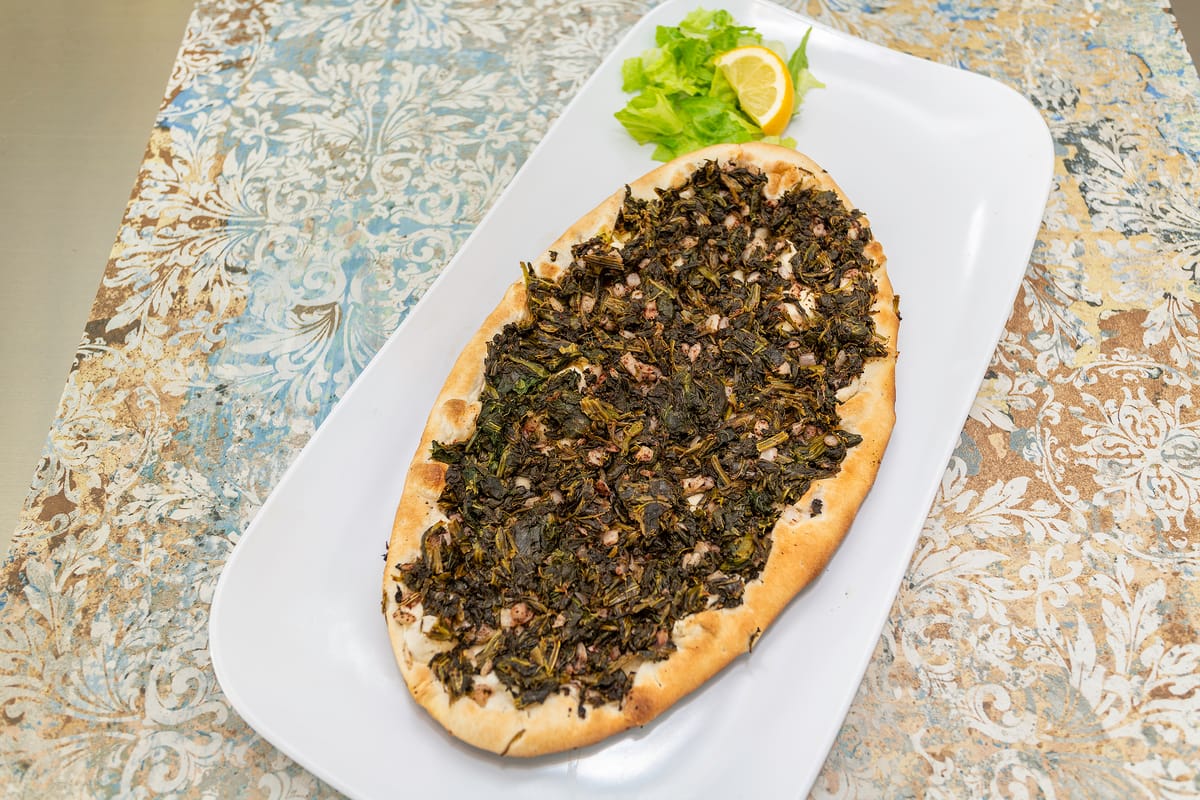
From Ancient Kitchens to Your Table
The recipe has traveled a thousand years and thousands of miles. The fundamentals have not changed: dried legumes, fresh herbs, hot oil.
How Did Falafel Come to the United States?
Immigration waves, New York food carts, and the slow rise from niche ethnic food to mainstream staple.
Falafel arrived in the United States through waves of immigration from the Middle East and North Africa during the twentieth century. The earliest Arab-American communities established restaurants and grocery stores in cities like New York, Detroit, and Dearborn, Michigan beginning in the early 1900s. These businesses initially served their own communities, offering familiar foods to immigrants who missed the cuisine of home. Falafel appeared on the menus of these early restaurants not as an exotic specialty but as a basic, everyday item -- the way a diner serves eggs or a taqueria serves tacos. For decades, falafel remained largely unknown to Americans outside of Arab and Middle Eastern neighborhoods.
The first significant crossover into broader American awareness came in the 1970s and 1980s, primarily in New York City. Middle Eastern food carts began appearing alongside hot dog vendors and pretzel sellers on Manhattan sidewalks. The format was perfect for New York's street food culture: falafel in a pita was handheld, filling, and cheap. College students, in particular, became early adopters. University neighborhoods in cities with large immigrant populations -- the East Village in Manhattan, Dearborn near the University of Michigan, and areas around UC Berkeley -- became incubators for falafel awareness among young Americans who might not have encountered the food in their hometowns.
The real acceleration came in the 2000s and 2010s, driven by several converging trends. The Mediterranean diet gained widespread recognition as one of the healthiest eating patterns in the world, and falafel fit neatly into that framework. The rise of vegetarianism and veganism created demand for satisfying plant-based proteins, and falafel -- which has been vegan for its entire existence -- was a natural beneficiary. Fast-casual restaurant chains began adding falafel to their menus. Grocery stores started stocking frozen falafel and dry falafel mixes. Food trucks featuring Middle Eastern cuisine became fixtures at lunch spots in cities nationwide.
The Washington, D.C. metropolitan area played a notable role in this expansion. Northern Virginia, in particular, has long been home to one of the largest and most established Middle Eastern and Arab communities in the United States. Fairfax County, Arlington, and Falls Church have hosted Middle Eastern restaurants, bakeries, and grocery stores for decades. This concentration of authentic Middle Eastern food businesses means that the falafel available in Northern Virginia is often made to the same standards you would find in Beirut or Amman -- not the mass-produced, frozen version served at chain restaurants. Taza Shawarma & Falafel on Seminary Road in Falls Church carries on that tradition of authenticity.
Why Is Northern Virginia a Hub for Authentic Falafel?
Falls Church and the broader NoVA region offer some of the best Middle Eastern food outside the Middle East.
Northern Virginia occupies a unique position in the American food landscape when it comes to Middle Eastern cuisine. The region's proximity to Washington, D.C. -- and the diplomatic, military, and international business communities that come with it -- created early demand for authentic foods from the Middle East. As far back as the 1970s and 1980s, Middle Eastern restaurants were opening along corridors like Route 7, Columbia Pike, and Seminary Road. Unlike many American cities where Middle Eastern food was adapted to local tastes, Northern Virginia's customer base included enough people from the region itself to support restaurants that made no compromises on authenticity.
Falls Church, specifically, sits at a crossroads that makes it an ideal location for Middle Eastern dining. The city draws from a diverse residential population, a steady flow of workers commuting through the area, and the students and staff of nearby schools and institutions. Seminary Road, where Taza is located, connects to major thoroughfares that bring customers from across Fairfax County, Arlington, and Alexandria. The result is a customer base that includes both longtime fans of Middle Eastern food who know exactly what authentic falafel should taste like, and newcomers who are trying it for the first time and deserve to experience the real thing rather than a frozen imitation.
The quality standard in Northern Virginia is high because the competition is high. A restaurant serving mediocre falafel in this region will not survive, because customers have other options -- including making it at home, since Middle Eastern grocery stores selling dried chickpeas and fresh herbs are abundant in the area. To earn a loyal following here, a restaurant must do things correctly: start with raw dried chickpeas, not canned; grind them fresh with real herbs; shape each piece by hand; and fry at the proper temperature. That is the standard Taza upholds every day at 5820 Seminary Rd Ste O, Falls Church, VA 22041, open 11:00 AM - 12:00 AM, Open 7 Days a Week.
What Is the Falafel Renaissance?
Bowls, health food, and the vegan movement have given falafel a new global audience.
The Bowl Movement
The grain bowl trend that swept American restaurants in the 2010s created a perfect new format for falafel. Instead of wrapping falafel in pita, restaurants began serving it over rice, quinoa, or mixed greens with tahini, hummus, and roasted vegetables. This format appealed to health-conscious diners who wanted a lighter meal without bread, and it showcased falafel as a standalone protein rather than a sandwich filling. At Taza, our falafel bowl (from from $10.45) lets you build exactly the bowl you want with your choice of base and 14 toppings.
The Plant-Based Surge
Falafel existed as a vegan food for over a thousand years before the word 'vegan' was coined in 1944. But the modern plant-based movement has given falafel enormous new visibility. As millions of Americans reduce their meat consumption -- whether for health, environmental, or ethical reasons -- falafel offers something that most modern plant-based products cannot: a clean ingredient list with no processed protein isolates, no binding agents, and no laboratory-derived flavors. It is whole-food, plant-based eating that predates the trend by centuries.
Global Fusion Adaptations
Chefs around the world have begun incorporating falafel into dishes that the original Egyptian makers of ta'ameya could never have imagined. Falafel tacos in Los Angeles. Falafel banh mi in food trucks across Austin. Falafel-topped pizza in Brooklyn. Falafel sushi rolls in Tokyo. These fusion experiments work because falafel's flavor profile -- earthy, herby, nutty, with a crispy exterior -- complements a wide range of cuisines and condiments. The base recipe is versatile enough to adapt without losing its identity.
The Quality Counter-Movement
As falafel becomes more mainstream, a counter-movement has emerged focused on preserving traditional preparation methods. This means using raw dried chickpeas instead of canned, grinding fresh rather than using commercial falafel powder, hand-forming each piece rather than using industrial presses, and frying at the correct temperature rather than baking to cut costs. Restaurants like Taza in Falls Church represent this approach -- honoring the thousand-year tradition by refusing to take shortcuts that sacrifice the quality people have loved for generations.
How Does Taza Honor a Thousand Years of Falafel Tradition?
Fresh chickpeas, daily preparation, hand-forming, and proper frying. No powder. No frozen mix. No shortcuts.
When you order falafel at Taza Shawarma & Falafel on Seminary Road in Falls Church, you are eating a food that has been prepared using fundamentally the same method for over a thousand years. We start with raw dried chickpeas -- not canned, not pre-cooked -- that are soaked overnight until they absorb enough water to grind smoothly. The next morning, those chickpeas are ground fresh with bunches of parsley, cilantro, onion, and garlic, then seasoned with cumin, coriander, and a small amount of baking powder for lift. The result is a bright green mixture with a texture somewhere between a coarse paste and a stiff dough.
Each falafel ball is formed by hand -- not stamped out by a machine -- and dropped into oil that is maintained at the correct frying temperature. This matters because temperature control is the difference between falafel that is crispy on the outside and fluffy on the inside versus falafel that is greasy, dense, or undercooked at the center. A properly fried falafel ball should have a thin, golden shell that audibly cracks when you bite through it, revealing an interior that is bright green from real herbs, not brown from overcooking or pale from using a powder mix. That green interior is the signature of authentic falafel made from scratch.
We serve our falafel in three formats, each with access to our full toppings selection of 14 items at no extra charge. The Falafel Pita (from from $8.95) is the classic street food format -- falafel tucked into fresh-baked pita with lettuce, tomatoes, cucumbers, pickles, and tahini. The Falafel Shrak Wrap (from from $9.95) wraps everything in thin, traditional shrak flatbread for a lighter, chewier experience. And the Falafel Bowl (from from $10.45) serves falafel over your choice of rice, greens, or hummus -- the modern bowl format that has introduced falafel to a whole new generation of eaters. All three formats honor the same principle: fresh chickpeas, real herbs, proper technique, no compromises.
Falafel Pita
from $8.95
Our signature falafel—crispy on the outside, herb-green on the inside—tucked into a warm, fresh-baked pita pocket. Topped with lettuce, tomatoes, cucumbers, pickles, and drizzled with creamy tahini sauce. A beloved vegetarian classic.
Order NowFalafel Shrak Wrap
from $9.95
Our crunchy falafel wrapped in traditional thin shrak flatbread with creamy hummus, fresh Arabic salad, pickles, and tahini sauce. The shrak bread adds a delicate, chewy texture that pairs perfectly with the crispy falafel.
Order NowFalafel Bowl
from $10.45
A hearty bowl starting with your choice of rice, mixed greens, or hummus base, topped with our crispy-fresh falafel. Finished with tomatoes, cucumbers, Arabic salad, tahini sauce, and a drizzle of olive oil. A satisfying vegetarian meal.
Order NowHow Did Falafel Spread Across the World?
Key milestones in falafel's journey from the Nile Valley to global recognition.
Origins in Egypt
Coptic Christians in Egypt develop ta'ameya as a protein-rich food for Lenten fasting. Made from dried fava beans, herbs, and spices, fried in oil. The dish becomes a staple of Alexandria's street food scene and spreads throughout the Nile Valley. Ful (fava bean) agriculture supports mass production at extremely low cost.
Spreads to the Levant
The fried legume fritter concept moves north along trade routes into Lebanon, Syria, and Jordan. Local cooks substitute chickpeas for fava beans due to regional agricultural differences. The shape changes from flat patties to round balls. Tahini replaces other sauces as the primary condiment. The chickpea version begins its own distinct evolution.
Becomes the Dominant Street Food
Falafel carts and small shops establish themselves as fixtures in every major city across the Middle East. The falafel vendor becomes a recognized profession. The dish crosses class boundaries -- eaten daily by workers, students, merchants, and families. Regional variations solidify in Egypt, Lebanon, Syria, Jordan, and across North Africa.
Arrives in the United States
Arab immigrants open restaurants in New York, Detroit, and Dearborn, serving falafel as an everyday menu item. The dish remains largely unknown outside Arab-American communities. Middle Eastern grocery stores begin selling dried chickpeas and falafel-making supplies to immigrant families recreating the food of home.
New York Street Food Breakthrough
Middle Eastern food carts begin appearing on New York City sidewalks. College students discover falafel as an affordable, filling meal. Falafel's reputation as a cheap, satisfying food grows in university towns and dense urban neighborhoods. The first wave of non-Arab Americans begin seeking out falafel regularly.
Global Recognition and the Health Food Movement
Mediterranean diet research, the plant-based movement, and the grain bowl trend converge to push falafel into the American mainstream. Fast-casual chains add it to menus. Grocery stores stock frozen falafel. Food trucks and restaurants like Taza Shawarma & Falafel in Falls Church serve the authentic version -- made fresh from raw chickpeas every day -- to a growing audience that values both tradition and quality.
Why Does Falafel Matter Beyond the Plate?
Falafel is more than food. It carries identity, memory, and connection across generations.
For millions of people across the Middle East and the global diaspora, falafel is not simply a convenient food. It carries cultural weight. It is the smell of a grandmother's kitchen on a Friday morning. It is the taste of a street corner near the school you attended as a child. It is the first thing many immigrants seek out when they arrive in a new country -- a familiar anchor in an unfamiliar landscape. When someone from Beirut or Amman or Cairo walks into a restaurant in Falls Church and tastes falafel that reminds them of home, that moment matters. Food is how cultures preserve themselves across distance and time.
Falafel also carries significance as one of the great examples of a food that crossed every boundary. It moved from one country to another, from one religion's fasting tradition to a secular everyday meal, from poverty food to gourmet restaurant menus, from the Middle East to every inhabited continent. Few foods have traveled so far while retaining their essential character. A falafel ball made in Falls Church today uses the same core technique as a ta'ameya made in Alexandria a thousand years ago: dried legumes, fresh herbs, hot oil. The recipe did not need modernization or industrial processing to succeed globally. It succeeded because it was already perfect for what it needed to do.
At Taza Shawarma & Falafel, we take that history seriously. When we grind raw chickpeas with fresh herbs every morning, we are participating in a culinary tradition that spans centuries and continents. When a customer on Seminary Road in Falls Church takes their first bite of our falafel, they are tasting the same fundamental flavors that street food customers in the Levant have enjoyed for generations. That continuity is something we are proud to maintain -- not as a marketing claim, but as a daily practice. Fresh chickpeas, real herbs, proper technique. That is falafel the way it was meant to be made, and that is how we make it every day at 5820 Seminary Rd Ste O, Falls Church, VA 22041.
Common Questions About the History of Falafel
The most widely supported theory traces falafel to Egypt, where Coptic Christians made ta'ameya from fava beans as a protein-rich food during Lenten fasting periods. The dish likely dates back over a thousand years in that region. From Egypt, the concept spread north through the Levant -- into Lebanon, Syria, and Jordan -- where cooks adapted the recipe using chickpeas instead of fava beans. There is no single inventor or exact date, but Egypt's claim to the earliest version is the strongest in culinary scholarship.
Ta'ameya is the Egyptian predecessor and cousin of falafel. The key difference is the legume: ta'ameya is made from dried fava beans (ful), while the Levantine falafel that most of the world knows is made from chickpeas. Ta'ameya tends to be flatter and disc-shaped, with a creamier interior and a brighter green color from generous use of dill and leek. Levantine falafel is typically formed into rounder balls, has a crispier exterior, and relies more heavily on parsley and cilantro for its herbaceous flavor. Both are deep-fried and served in flatbread with similar accompaniments.
The legume choice reflects regional agriculture. Egypt has cultivated fava beans for thousands of years -- the Nile Valley's fertile soil is ideal for fava production, and ful (dried fava beans) remain a dietary staple there to this day. Chickpeas, meanwhile, grow more readily in the drier soils of the Levant region, across modern-day Lebanon, Syria, and Jordan. When the concept of a ground-legume fritter traveled north from Egypt, local cooks naturally substituted the legume that was most abundant and affordable in their own area. The result was two parallel traditions that share a technique but differ in their base ingredient.
Reliable historical estimates place falafel's origins at roughly 1,000 years ago, though some food historians argue the tradition could be older. Written records from medieval Egypt reference fried bean preparations that closely match the description of ta'ameya. The chickpea version likely developed a few centuries later as the recipe moved into the Levant. It is worth noting that exact dating is difficult because street food traditions were rarely documented by historians of that era, who focused on court cuisine and royal feasts instead.
Falafel arrived in the United States with waves of Arab immigration in the early and mid twentieth century. Middle Eastern restaurants appeared in cities like New York, Detroit, and Dearborn, Michigan during the 1960s and 1970s. Falafel initially remained a niche food known mainly within immigrant communities. It began entering the American mainstream in the 1990s and 2000s as interest in Mediterranean and Middle Eastern cuisine grew. Today, falafel is widely available in fast-casual restaurants, grocery stores, and food trucks across the country, including right here in Falls Church, Virginia at Taza Shawarma & Falafel.
Falafel is one of the oldest intentionally prepared vegan foods still eaten worldwide, though calling it the absolute oldest would be an overstatement. Hummus, which is also chickpea-based, has similarly ancient roots. Flatbreads and grain porridges predate both. What makes falafel notable is that it was specifically developed as a protein-rich alternative to meat during religious fasting -- making it one of the earliest known examples of a plant-based protein food created to fill the nutritional role of animal products. That thousand-year track record is remarkable in the context of today's plant-based food movement.
At Taza Shawarma & Falafel in Falls Church, we make our falafel fresh daily from raw dried chickpeas that are soaked overnight, then ground with fresh parsley, cilantro, onion, garlic, cumin, coriander, and a small amount of baking powder for lift. The mixture is hand-formed into balls and deep-fried at the proper temperature until the outside is golden-brown and crispy while the interior stays bright green. We never use falafel powder, frozen mixes, canned chickpeas, or pre-formed patties. You can try our falafel in a pita (from from $8.95), a shrak wrap (from from $9.95), or a bowl (from from $10.45).
Falafel became street food because it solves several practical problems at once. It is inexpensive to produce in bulk, since dried legumes are among the cheapest protein sources available. It holds its shape and texture well at ambient temperature, which matters for cart vendors who do not have refrigeration. It is fully portable when wrapped in flatbread. And it is naturally filling due to the protein and fiber content of chickpeas or fava beans. These qualities made falafel the go-to affordable meal for workers, students, and families across the Middle East -- a role it still fills today in cities from Cairo to Beirut to right here in Northern Virginia.
Taste a Thousand Years of History at Taza
Open 11:00 AM - 12:00 AM, Open 7 Days a Week at 5820 Seminary Rd Ste O, Falls Church, VA 22041.
Address
5820 Seminary Rd Ste O, Falls Church, VA 22041
Hours
11:00 AM - 12:00 AM -- Open 7 Days a Week
Phone
Experience Authentic Falafel at Taza
Made fresh from raw chickpeas every day on Seminary Road in Falls Church. Pita, wrap, or bowl -- all with 14 toppings included. No shortcuts, no compromises.