The 5 Secrets Behind Restaurant-Quality Hummus
Why does restaurant hummus taste so different from the tub in your fridge? The answer comes down to five techniques that transform ordinary chickpeas into something extraordinary.
4.8 stars on Yelp (92 reviews) -- Open 11:00 AM - 12:00 AM
What Makes Restaurant Hummus Different
The gap between store-bought hummus and the version served at a Levantine restaurant is not a matter of brand or marketing. It is a matter of method.
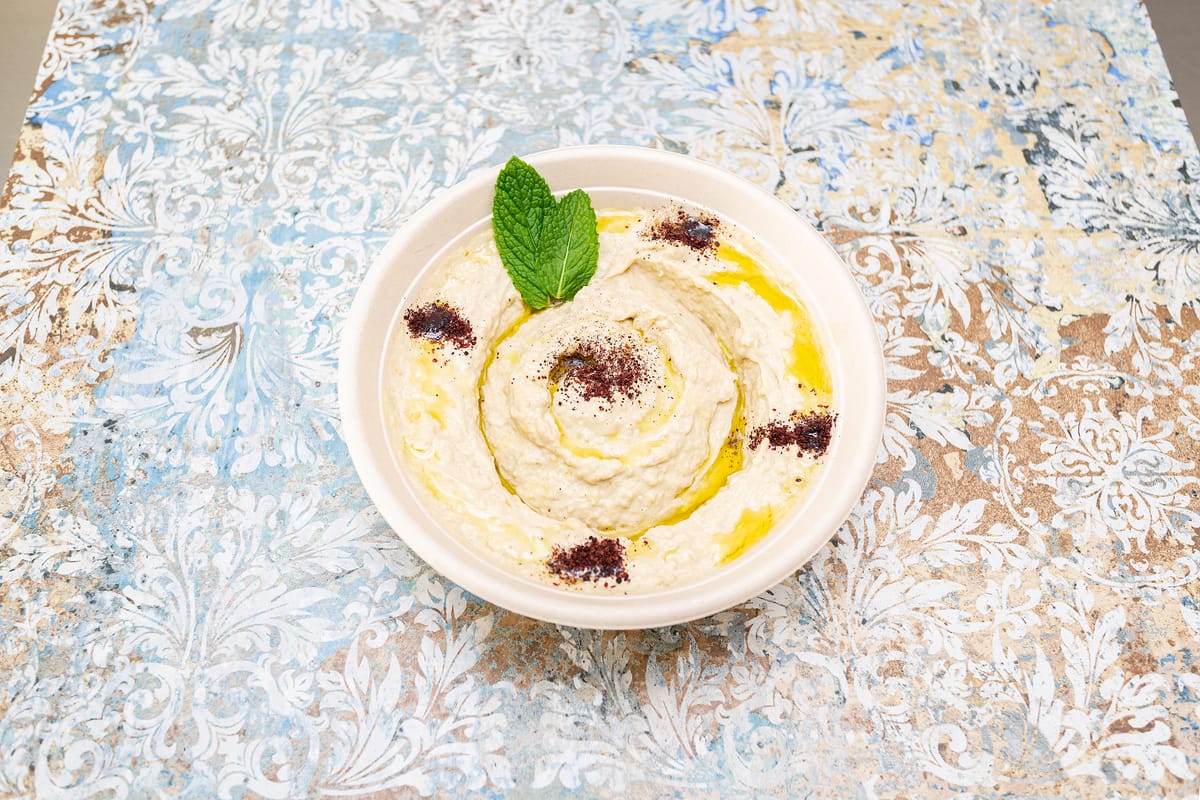
Walk into any traditional Levantine restaurant and order a plate of hummus. Before you taste it, you will notice the difference. The surface gleams with a pool of golden olive oil in the center. The texture ripples in smooth, concentric swirls from the back of a spoon. The color is a warm, living beige rather than the pale gray of a plastic tub. Then you dip a piece of warm pita bread into it, and the contrast with every store-bought hummus you have ever eaten becomes immediate and permanent.
Store-bought hummus is manufactured for shelf stability. The formulas prioritize a 45- to 70-day refrigerated shelf life, which requires preservatives like potassium sorbate and citric acid that alter both flavor and texture. The chickpeas are processed in industrial volumes where individual batch quality is secondary to consistency across millions of units. Tahini ratios are kept low to manage cost. The garlic is dehydrated. The lemon is a concentrate. Every decision optimizes for longevity and logistics rather than taste.
Restaurant hummus, by contrast, is made fresh with a single objective: flavor. The chickpeas are dried, soaked overnight, and cooked until they practically dissolve. The tahini is measured generously. The lemon juice is squeezed that morning. The garlic is raw. Nothing is preserved because nothing needs to last beyond the day it was prepared. That freshness is the foundation of everything that follows, and it is the reason that no amount of seasoning adjustment will make a store-bought tub taste like what you get at the table.
The Core Principle
The gap between mediocre hummus and exceptional hummus is not about exotic ingredients or complicated techniques. It is about respecting five fundamental steps that traditional Levantine cooks have followed for centuries. Each step is straightforward. Combined, they produce a result that is unmistakably superior. Here are those five secrets.
Five Techniques That Change Everything
Each of these techniques is used daily at Taza and in kitchens across Lebanon, Syria, and Jordan. None of them is difficult. All of them matter.
Start with Dried Chickpeas, Not Canned
This is the single most consequential decision in the entire process. Dried chickpeas soaked overnight in cold water and simmered with a half teaspoon of baking soda for 40 to 60 minutes produce a fundamentally different base than canned chickpeas. The baking soda raises the cooking water's pH, which breaks down the pectin in the chickpea cell walls far more aggressively than neutral water alone. The resulting chickpeas are so soft you can crush them between your fingers with almost no pressure.
When processed, these chickpeas blend into a paste that is inherently smooth rather than granular. Canned chickpeas have already been pressure-cooked in their sealed container and cannot reach the same softness no matter how long you simmer them afterward. One pound of dried chickpeas yields approximately four cups cooked — enough for two generous batches. The cost per batch is lower than canned, and the quality improvement is transformative.
Whip with Ice Water for Cloud-Like Texture
This is the technique that separates good hummus from the ethereal, almost weightless hummus at the best Levantine restaurants. While the food processor is running, add two to four tablespoons of ice-cold water in a thin stream. The cold water lightens the consistency by incorporating tiny air bubbles into the emulsion and prevents friction heat from the blade from warming the mixture, which would cause proteins and starches to tighten and produce a denser result.
Start with two tablespoons and add more a teaspoon at a time until the hummus is thick enough to hold a swirl but light enough to scoop effortlessly with pita. Some cooks use aquafaba (chickpea cooking liquid) instead of plain water. The starches in the cooking liquid act as an emulsifier, binding the fat from the tahini with the water content for an even smoother result. If you cooked your chickpeas from dried, save that cooking liquid — it is liquid gold for hummus.
Use Far More Tahini Than You Think You Need
The most common mistake in Western hummus recipes is under-tahini-ing. Many cookbooks call for two or three tablespoons per can of chickpeas. Traditional Levantine hummus uses a ratio closer to one part tahini to one part chickpeas by volume — three-quarters to a full cup per cup of cooked chickpeas. Tahini provides the richness, nutty depth, and characteristic creaminess. Without adequate tahini, hummus tastes flat and one-dimensional. With the right amount, the flavors become layered: earthy chickpea, nutty sesame, bright citrus, and sharp garlic, all in harmony.
Tahini quality matters enormously. Look for paste made from hulled, lightly roasted sesame seeds — it should be pourable, not stiff, and taste nutty and slightly sweet with no bitterness. Unhulled tahini retains the outer seed coat, which contributes a bitter, astringent flavor that can overpower the other ingredients. Store tahini in the refrigerator after opening and stir it well before measuring, since the oil separates and rises to the top over time.
Fresh Lemon Juice — Never Bottled, Never Concentrate
Bottled lemon juice and lemon concentrate taste fundamentally different from fresh-squeezed juice. The pasteurization process used to stabilize bottled juice destroys volatile aromatic compounds that contribute brightness and lift. What remains is a flat, one-note acidity that adds sourness without the complex citrus character that fresh lemon provides. The difference is immediately apparent in a dish as simple as hummus, where every ingredient is exposed.
Use the juice of one large lemon (approximately three tablespoons) per batch of hummus made from one cup of dried chickpeas. Roll the lemon firmly on the counter before cutting it to break the internal membranes and release more juice. Taste and adjust — the lemon should brighten the hummus without making it overtly sour. The acidity also serves a structural purpose, interacting with the tahini to create a lighter, more emulsified texture.
A useful technique borrowed from Levantine grandmothers: squeeze the lemon juice over the minced garlic in a small bowl and let the mixture sit for five to ten minutes before adding it to the food processor. The acid mellows the raw garlic's harshest compounds while preserving its aromatic punch, and the garlic infuses the lemon juice with a subtle savory depth.
Garlic Timing: Mellow First, Blend Last
Raw garlic contains allicin, a sulfur compound that is responsible for both the flavor and the burning sensation that can overwhelm a dish when used carelessly. The common approach of tossing whole garlic cloves into the food processor with everything else produces uneven distribution — some bites are aggressively garlicky while others have none. The professional technique is more deliberate.
Mince or microplane one to two garlic cloves and combine them with the lemon juice in a small bowl. Let this mixture rest for five to ten minutes while you prepare the other components. During this resting period, the citric acid in the lemon juice partially neutralizes the harshest allicin compounds, producing a garlic flavor that is aromatic and warm rather than sharp and biting. When you add this lemon-garlic slurry to the food processor during the final blending stage, it distributes evenly throughout the hummus.
The number of garlic cloves is a matter of personal preference. One small clove produces a subtle background note. Two medium cloves produce the assertive but balanced garlic flavor found in most Levantine restaurants. Three or more cloves produce a garlic-forward hummus that is delicious for garlic enthusiasts but may be too intense for some palates. Start with one clove and add more in your next batch once you know your preference.
Tahini Quality Matters More Than Anything Else
The difference between good tahini and bad tahini is the difference between hummus you crave and hummus you tolerate.
Why Tahini Quality Makes or Breaks Your Hummus
Tahini is not a condiment in hummus — it is a primary structural ingredient that accounts for up to half the volume of the finished dish.
Tahini is a paste made from ground sesame seeds, and the quality variance across brands is staggering. At the top end, you find tahini made from hulled, lightly roasted sesame seeds that have been stone-ground into a smooth, pourable paste with a golden-amber color and a rich, nutty aroma. At the bottom end, you find tahini made from unhulled seeds processed in high-speed mills that generate friction heat, resulting in a gritty, bitter paste with a dull gray-brown color.
The hull of a sesame seed contains oxalates and tannins that contribute astringency and bitterness. Hulling removes this outer coating, leaving the creamy, fat-rich kernel that produces a milder, sweeter paste. Light roasting before grinding develops toasted, nutty flavors without introducing the scorched bitterness that over-roasted sesame can produce. The best tahini brands source seeds from Ethiopia, which are prized for their high oil content and clean flavor.
When shopping for tahini, look for a jar that is pourable after stirring. If the paste is stiff and clay-like, it has likely been processed without adequate oil content or has been sitting on the shelf too long. Taste it straight from the jar before using it in hummus — it should taste nutty and faintly sweet with no lingering bitterness. At Taza, we source our tahini from a supplier that uses hulled Ethiopian sesame seeds, stone-ground in small batches. That tahini is the backbone of our hummus, which is available daily for $4.95.
Fresh Hummus vs Store-Bought Hummus
A direct comparison of fresh hummus — whether made at home from dried chickpeas or served at a restaurant like Taza — against mass-produced store-bought alternatives.
| Attribute | Fresh (Homemade / Restaurant) | Store-Bought |
|---|---|---|
| Chickpea Source | Dried, soaked overnight, cooked fresh | Canned, pre-cooked, preserved in liquid |
| Tahini Ratio | High — up to 1:1 with chickpeas | Low — reduced for cost savings |
| Texture | Silky, whipped, cloud-like smoothness | Dense, pasty, slightly grainy |
| Lemon Juice | Fresh-squeezed, bright acidity | Citric acid or concentrate |
| Garlic | Raw cloves, added at optimal timing | Garlic powder or dehydrated granules |
| Olive Oil | Extra-virgin, cold-pressed, finishing drizzle | Canola or soybean oil blend |
| Preservatives | None — consumed within 3-5 days | Potassium sorbate, sodium benzoate |
| Shelf Life | 3-5 days refrigerated at peak quality | 45-70 days sealed, shorter once opened |
| Flavor Depth | Layered — nutty, tangy, garlicky, bright | Flat, one-dimensional, muted |
| Color | Warm beige with golden olive oil sheen | Pale gray-beige, uniform, dull |
| Serving Temperature | Room temperature, optimal flavor release | Cold from refrigerator, muted taste |
| Approximate Cost per Serving | $0.60-$0.90 homemade / $4-$6 restaurant | $0.50-$0.75 per 2 tbsp serving |
The comparison above covers 12 attributes. In every category that affects taste and texture, fresh preparation holds a decisive advantage. Store-bought hummus wins only on convenience and shelf life — trade-offs that matter for grocery retail but not for the eating experience. At Taza, our hummus ($4.95) is made fresh daily, and the difference is on the plate.
Beyond Classic: Five Hummus Variations Worth Trying
The Levantine tradition has always embraced variation. Here are five ways to build on the classic foundation.
Five Hummus Styles Worth Mastering
Once you have the classic technique down, these variations open up a world of flavor possibilities.
Classic Levantine
The foundation that all other variations build upon. Dried chickpeas soaked overnight, cooked with a pinch of baking soda until falling apart, then blended with generous tahini, fresh lemon juice, raw garlic, and salt. Finished with a swirl of extra-virgin olive oil, a dusting of paprika, and a few whole chickpeas. The texture should be smooth enough that warm pita glides through without resistance. This is the version that built hummus into a global staple, and it remains the gold standard for a reason.
Roasted Garlic
Whole garlic heads are wrapped in foil with olive oil and roasted at 400 degrees Fahrenheit until the cloves turn golden and soft enough to squeeze from their skins. The roasting process converts the sharp allicin in raw garlic into mellow, caramelized sugars with deep savory notes. Blended into the chickpea base, roasted garlic creates a warmer, sweeter hummus that appeals to people who find raw garlic too aggressive. A drizzle of the roasting oil adds another layer of richness.
Roasted Red Pepper
Red bell peppers charred over an open flame or under a broiler until the skin blisters and blackens, then peeled and seeded. The smoky, sweet flesh is blended directly into the chickpea-tahini base, turning the hummus a striking coral-orange color. Some preparations add a pinch of smoked paprika or cumin to amplify the roasted character. This variation is one of the most commercially successful, accounting for roughly 15 percent of all hummus sold in American supermarkets.
Avocado Hummus
A newer variation that marries Levantine and Central American traditions. Ripe avocado is blended into the chickpea base, contributing healthy monounsaturated fats and a creamy, buttery richness. The tahini can be reduced slightly since the avocado provides its own fat content. A squeeze of lime juice alongside the traditional lemon keeps the avocado from browning. Fresh cilantro and a pinch of cumin push the flavor toward a fusion profile that works equally well with pita chips and tortilla chips.
Beet Hummus
Roasted beets are pureed and folded into the chickpea-tahini base, creating a vivid magenta hummus that stands out on any table. The beets add earthy sweetness and a slightly mineral undertone that pairs well with the nuttiness of tahini. A generous squeeze of lemon juice is necessary to balance the beet's natural sugars. Beet hummus has become a favorite at dinner parties and catering events because of its dramatic color, and it pairs particularly well with goat cheese crumbles and toasted walnuts on top.
Hummus Nutrition: What You Get Per Serving
Hummus is one of the few dips that delivers genuine nutritional value alongside great taste.
Macronutrient Profile (per 2 tbsp)
- Calories70 kcal
- Protein2g
- Total Fat4g
- Carbohydrates6g
- Dietary Fiber2g
- Sodium70mg
Key Micronutrients
- Iron4% DV
- Folate6% DV
- Phosphorus4% DV
- Manganese5% DV
- Vitamin B63% DV
- Copper4% DV
Hummus is naturally vegan, gluten-free, and rich in plant-based protein. The chickpea-tahini combination provides a complete amino acid profile when paired with whole grains like pita bread, making it a particularly valuable protein source for vegetarians and vegans. The fiber content (approximately 2 grams per two-tablespoon serving) promotes digestive health and contributes to the feeling of satiety that makes hummus a satisfying snack.
The fats in hummus come primarily from tahini and olive oil — both sources of monounsaturated and polyunsaturated fatty acids that support cardiovascular health. Research published in the Journal of Nutrition and Food Sciences has found that regular hummus consumers tend to have higher intakes of fiber, polyunsaturated fats, vitamin A, vitamin E, vitamin C, folate, magnesium, potassium, and iron compared to non-consumers. The same study found that hummus eaters had lower body mass index on average, likely because hummus displaces less nutritious dips and snacks in the diet.
For athletes and active individuals, hummus paired with vegetables or whole-grain pita provides a balanced combination of complex carbohydrates, protein, and healthy fats that supports sustained energy without the blood sugar spike associated with processed snacks. A post-workout serving of hummus with pita delivers both the protein needed for muscle repair and the carbohydrates needed to replenish glycogen stores.
Hummus at Taza: Fresh Daily in Falls Church
We make our hummus from dried chickpeas every morning. Come taste the difference at 5820 Seminary Rd.
Hummus and Beyond at Taza
Our hummus is the foundation, but it is only the beginning. These are the dishes where you can taste our commitment to fresh, traditional preparation.
Hummus
$4.95Our velvety-smooth hummus is made from premium chickpeas, blended with tahini, fresh lemon juice, garlic, and finished with a generous drizzle of extra-virgin olive oil and a dash of paprika. Served with warm pita bread.
Falafel Pita
from $8.95Our signature falafel—crispy on the outside, herb-green on the inside—tucked into a warm, fresh-baked pita pocket. Topped with lettuce, tomatoes, cucumbers, pickles, and drizzled with creamy tahini sauce. A beloved vegetarian classic.
Baba Ghanouj
$4.95Fire-roasted eggplant, peeled and blended with tahini, fresh lemon juice, garlic, and a hint of cumin. The result is a smoky, creamy dip that's rich in flavor and perfect for scooping with warm pita bread.
Chicken Shawarma Bowl
from $12.45Generous slices of our signature chicken shawarma over your choice of basmati rice, mixed greens, or creamy hummus. Topped with Arabic salad, pickled turnips, garlic sauce, and fresh herbs. A protein-packed Mediterranean feast.
Pita Bread
$0.95Our house-baked pita bread, made fresh daily with premium flour. Soft, warm, and pillowy—the perfect vessel for scooping hummus, baba ghanoush, or any of our dips.
Labneh
$4.95Traditional strained yogurt, thick and tangy, drizzled with extra-virgin olive oil and sprinkled with dried mint. A refreshing, probiotic-rich side that pairs beautifully with any meal. Served with warm pita.
Six Common Hummus Mistakes and How to Fix Them
Even experienced home cooks make these errors. Each one has a straightforward fix.
Using Cold Chickpeas Straight from the Can
Canned chickpeas need heat to break down properly. If you must use canned, simmer them for 20 to 30 minutes with a pinch of baking soda before draining and blending. The baking soda raises the pH, which weakens the cell walls of the chickpeas and produces a dramatically smoother texture. Cold, straight-from-the-can chickpeas will always produce a grainy, chalky hummus no matter how long you blend them. The difference between warm and cold chickpeas is the single biggest factor separating average hummus from outstanding hummus.
Skimping on Tahini
Many home cooks use two or three tablespoons of tahini for an entire can of chickpeas. That ratio produces chickpea dip, not hummus. Traditional Levantine hummus uses tahini at a ratio of roughly one part tahini to one part chickpeas by volume. Quality tahini made from hulled sesame seeds costs more than the cheap, bitter varieties, but it provides the nutty richness and silky fat content that makes restaurant hummus taste so different from homemade attempts. Invest in good tahini and use it generously.
Forgetting the Ice Water
Ice water is a secret weapon that many home cooks overlook entirely. Adding two to four tablespoons of ice-cold water while the food processor is running lightens the texture and whips air into the blend, creating the fluffy, cloud-like consistency found in high-end Levantine restaurants. The cold temperature also prevents the friction heat from the blade from warming the hummus, which would cause it to thicken and lose its airy quality. Add the water gradually until you reach the ideal spreadable consistency.
Adding Garlic Too Early or Too Late
Garlic timing matters more than most people realize. If you add raw garlic at the beginning of blending, it gets processed into tiny fragments that release sharp, pungent compounds unevenly throughout the hummus. The better approach is to mince or microplane the garlic first and let it sit in lemon juice for five to ten minutes. The acid mellows the harshest edges of raw allicin while preserving the garlic's aromatic bite. This lemon-garlic slurry is then added during the final blending stage.
Not Peeling the Chickpeas
Each chickpea has a thin, translucent skin that contributes a papery, slightly bitter quality to the finished hummus. Removing these skins is tedious — you pinch each chickpea between your thumb and forefinger to slip the skin off — but the payoff is dramatic. Peeled chickpeas produce a hummus so smooth it almost resembles a mousse. If peeling by hand feels too labor-intensive, the baking soda simmering method loosens most skins, which float to the surface and can be skimmed away with a slotted spoon.
Using a Blender Instead of a Food Processor
Standard blenders are designed for liquids. Their tall, narrow jars create air pockets where thick hummus gets trapped, requiring constant scraping and resulting in uneven processing. A food processor's wide, flat bowl keeps the chickpea mixture in contact with the blade, producing a more uniform texture with less effort. If a food processor is unavailable, a high-powered blender like a Vitamix can work, but you will need to add more liquid and use the tamper tool to keep the mixture moving.
Putting It All Together: The Complete Process
Here is the full sequence from dried chickpeas to finished hummus, incorporating all five secrets.
Step 1: Soak (8-12 hours)
Place one cup of dried chickpeas in a large bowl and cover with three inches of cold water. Add a half teaspoon of baking soda. Cover and let sit at room temperature overnight. The chickpeas will roughly double in volume. Drain and rinse thoroughly before cooking.
Step 2: Cook (40-60 minutes)
Place the drained chickpeas in a pot with fresh water covering them by two inches. Add another half teaspoon of baking soda. Bring to a boil, then reduce to a steady simmer. Cook for 40 to 60 minutes until the chickpeas practically dissolve between your fingers. Skim foam and loose skins from the surface. Reserve half a cup of the cooking liquid before draining.
Step 3: Prepare the Garlic-Lemon Slurry (5-10 minutes)
While the chickpeas cook, mince or microplane one to two garlic cloves into a small bowl. Squeeze the juice of one large lemon over the garlic and let the mixture sit for at least five minutes. The acid tempers the raw garlic's sharpest compounds while preserving its aromatic character.
Step 4: Blend the Tahini Base (2 minutes)
Add three-quarters cup of quality tahini, one teaspoon of salt, and the garlic-lemon slurry to a food processor. Process for one to two minutes until the mixture becomes pale and fluffy. This step whips air into the tahini and creates a lighter base for the chickpeas.
Step 5: Add Chickpeas and Whip (3-5 minutes)
Add the hot, drained chickpeas to the food processor and blend for three to five minutes, scraping the sides once or twice. While the processor runs, drizzle in two to four tablespoons of ice water (or reserved cooking liquid) a teaspoon at a time. Continue processing until completely smooth with a light, airy consistency.
Step 6: Plate and Garnish
Spread the hummus onto a wide, shallow plate using the back of a spoon, creating a well in the center. Fill the well with extra-virgin olive oil. Garnish with whole chickpeas, a dusting of paprika or sumac, and fresh parsley. Serve at room temperature with warm pita bread.
Skip the Work — Let Us Make It for You
All five secrets, executed fresh every morning at Taza in Falls Church.
Fresh Hummus Daily at Taza in Falls Church
5820 Seminary Rd Ste O, Falls Church, VA 22041 — Open 11:00 AM - 12:00 AM, Open 7 Days a Week
Address
5820 Seminary Rd Ste O, Falls Church, VA 22041
Hours
11:00 AM - 12:00 AM -- Open 7 Days a Week
Phone
At Taza Shawarma & Falafel, our hummus is prepared fresh every morning using dried chickpeas that have been soaked overnight and simmered with baking soda until they reach the falling-apart softness that defines great hummus. We blend them with quality tahini from hulled sesame seeds, fresh lemon juice squeezed that day, and raw garlic mellowed in citrus. The result is a hummus that is silky, rich, and deeply flavored — the kind of hummus that these five secrets are designed to produce.
Our hummus ($4.95) is served with warm pita bread and is also available as a base for our falafel and shawarma bowls. Pair it with our baba ghanouj ($4.95) and labneh ($4.95) for a full Levantine dip spread that covers every flavor profile — earthy, smoky, and tangy. We are located at 5820 Seminary Rd Ste O, Falls Church, VA 22041 and open 11:00 AM - 12:00 AM, seven days a week. Order online, call us at (703) 340-1014, or walk in. We are ready when you are.
Hummus Recipe Secrets: Frequently Asked Questions
Three factors account for most of the difference. First, restaurants use dried chickpeas soaked overnight and cooked with baking soda until extremely soft, producing a base that is far smoother than anything made from canned chickpeas. Second, the tahini-to-chickpea ratio in restaurant hummus is much higher — often approaching one-to-one by volume — which adds richness and depth. Third, the seasoning technique is more refined, with garlic mellowed in lemon juice before blending and ice water whipped in at the end to lighten the texture. At Taza in Falls Church, our hummus is made fresh daily using these traditional methods.
Yes, but the texture will not reach the same level of smoothness. Simmering canned or pre-cooked chickpeas with half a teaspoon of baking soda for 20 minutes will loosen many of the skins, which float to the surface and can be skimmed off. A high-powered food processor run for four to five minutes will also break down most remaining skin fragments. The result will be noticeably smoother than a quick blend, but still not quite as silky as hummus made with individually peeled chickpeas. For most home cooks, the baking soda shortcut provides an excellent balance of effort and result.
Traditional Levantine hummus uses a higher tahini ratio than most Western recipes suggest. A good starting point is three-quarters of a cup of tahini for every 15-ounce can of chickpeas (or equivalent dried chickpeas after cooking). Many restaurants, including Taza, use even more — approaching a one-to-one ratio by volume. The tahini provides the creamy richness, nutty flavor, and smooth fat content that distinguishes exceptional hummus from ordinary chickpea dip. If the hummus tastes flat or one-dimensional, the most likely fix is adding more tahini.
Bitterness in hummus almost always traces back to one of three sources. The most common is low-quality tahini made from unhulled sesame seeds, which retain a bitter outer coating. Switch to tahini made from hulled, lightly roasted sesame seeds. The second source is over-processing garlic, which releases harsh sulfur compounds. Mince garlic first and soak it in lemon juice for five to ten minutes before adding. The third source is old or oxidized olive oil used as a finishing drizzle. Use fresh, high-quality extra-virgin olive oil for the best results.
Homemade hummus without preservatives stays at peak quality for three to five days when stored in an airtight container in the refrigerator at 40 degrees Fahrenheit or below. The surface may darken slightly from oxidation, which is harmless — stir it before serving. After five days, the lemon juice flavor begins to fade and the texture may become denser. For the best experience, make hummus in small batches that you will consume within three or four days. Store-bought hummus with preservatives lasts longer, but at the cost of flavor and freshness.
Hummus can be a valuable part of a weight-management plan when eaten in appropriate portions. A two-tablespoon serving provides about 70 calories, 2 grams of protein, 2 grams of fiber, and 4 grams of healthy fats — a combination that promotes satiety. The fiber and protein slow digestion, helping you feel full longer. Research published in the Journal of Nutrition and Food Sciences found that regular hummus consumers tend to have higher diet quality and lower body mass index. The key is portion awareness, since hummus is calorie-dense enough that large servings can add up.
Spread the hummus in a wide, shallow bowl or plate using the back of a spoon to create a well in the center. Fill the well with a generous pool of extra-virgin olive oil. Garnish with whole cooked chickpeas, a dusting of paprika or sumac, and fresh herbs like parsley or mint. Serve at room temperature, not cold, since cold hummus mutes the flavor. Pair with warm pita bread cut into triangles, sliced vegetables like carrots, cucumbers, and bell peppers, and olives. For a full spread, add baba ghanouj and labneh alongside the hummus.
Taza Shawarma & Falafel at 5820 Seminary Rd Ste O, Falls Church, VA 22041 serves fresh hummus made daily from dried chickpeas, quality tahini, fresh lemon juice, and garlic. Our hummus ($4.95) is prepared in small batches throughout the day and served with warm pita bread. We are open 11:00 AM - 12:00 AM, seven days a week. Order online at our website, call (703) 340-1014, or visit us in person. Our hummus is also available as a base for shawarma and falafel bowls.
Continue Exploring Hummus and Mediterranean Food
Taste the Difference Five Secrets Make
Our hummus is made from dried chickpeas, quality tahini, fresh lemon, and raw garlic — prepared fresh every morning at Taza in Falls Church. Order now and skip the overnight soak.