What Is Sumac? The Tangy Spice That Changed Everything
Deep crimson. Tart as a lemon. Dry as a powder. Sumac has been the secret souring agent of Middle Eastern cooking for thousands of years -- and it still turns up on every plate at Taza.
4.8 stars on Yelp (92 reviews) -- Open 11:00 AM - 12:00 AM
What Is Sumac?
A deep crimson spice ground from dried berries -- tart, lemony, and unlike anything in your standard spice rack.
Sumac is a deep crimson spice ground from the dried berries of the Rhus coriaria shrub, a hardy plant that grows wild across the rocky hillsides of the Middle East, Mediterranean, and parts of Central Asia. The berries grow in dense, conical clusters at the tips of the branches, ripening from green to a rich burgundy-red in late summer. Once harvested, the berries are dried in the sun and ground into a coarse, vibrant powder that ranges from ruby to almost maroon depending on the variety and region.
The flavor of sumac is tart, lemony, and slightly fruity -- imagine squeezing a lemon over your food, but without the liquid. That is sumac in a sentence. The tartness comes from malic acid and citric acid naturally present in the berries, the same acids found in apples and citrus fruit. But sumac carries a complexity that plain lemon juice does not: a faint floral note, a whisper of berry-like sweetness underneath the acid, and a depth that builds over several bites rather than hitting all at once. There is no heat, no bitterness, no astringency. Just bright, clean tartness with layers.
At Taza Shawarma & Falafel in Falls Church, VA, sumac shows up across the menu -- in the fattoush dressing, inside the za'atar spice blend on our manaeesh, and as a finishing sprinkle on bowls and salads. If you have never consciously tasted sumac, you have almost certainly eaten it without realizing -- it is that pervasive in Levantine cooking. This guide covers everything: what sumac is, what it tastes like, how it has been used for millennia, and why it deserves a permanent place in your kitchen.
The Color Tells the Story
Deep crimson sumac powder -- the darker the red, the fresher the spice. Taza uses sumac daily across our menu.
What Does Sumac Taste Like?
Citrusy acidity without the liquid. Like a dry lemon squeeze with a fruity undertone.
Put a pinch of sumac on your tongue and here is what happens: first, a sharp hit of tartness -- not puckering like raw lemon, but forward and unmistakable. Then the flavor opens up. A fruity note emerges, somewhere between cranberry and unripe raspberry, carrying a faint floral quality that lemon juice simply does not have. The acid lingers but never turns harsh. Your mouth waters the way it does after biting into a tart apple. That is the malic acid doing its work -- the same compound that makes Granny Smith apples sour.
The texture matters. Unlike lemon juice, which is liquid, sumac is a dry powder. When you sprinkle it on food, it clings to surfaces and delivers tartness in concentrated spots rather than a uniform wash of acid. On a piece of grilled chicken, each grain of sumac delivers a tiny burst of citrus. On a salad, the powder stains the leaves ruby-red and distributes flavor unevenly in the best possible way -- some bites are more tart, others more savory, creating the kind of variation that keeps eating interesting.
On rice, sumac adds color without altering the texture. A dusting of crimson powder over white basmati rice at Taza turns a simple grain side into something that looks and tastes intentional. The tartness cuts through the starchiness of the rice and works alongside the garlic sauce, tahini, and pickled turnips that accompany our shawarma bowls. Without sumac, the bowl is good. With sumac, it is balanced.
If you are tasting sumac for the first time, order a chicken shawarma bowl (from $12.45) at Taza and ask for extra sumac on top. You will see the crimson powder land on the rice and greens, and after one bite you will understand why this spice has been used for thousands of years. It does something that no other single ingredient does -- adds acidity and color in a dry form, without disrupting the texture of the dish.
How Sumac Became the Middle East's Souring Agent
Before lemons were widespread, sumac was the primary way cooks added acidity to food.
Sumac has been used in cooking for at least two thousand years, and likely much longer. Ancient Roman records mention sumac as a souring agent, and the Greek physician Dioscorides wrote about its medicinal properties in the first century. But the deepest roots of sumac use are in the Middle East and eastern Mediterranean, where the Rhus coriaria shrub grows abundantly. Long before lemons became widely available in the region -- citrus cultivation spread slowly westward from Southeast Asia and did not become common in the Mediterranean until the Middle Ages -- sumac was the go-to ingredient when cooks needed acidity.
Across medieval Levantine and Persian cuisine, sumac played the role that lemon juice and vinegar play in modern Western cooking. Stews were soured with sumac. Grilled meats were seasoned with it. Rice dishes were garnished with its crimson powder. The ninth- century cookbook "Kitab al-Tabikh" by Ibn Sayyar al-Warraq, one of the oldest surviving Arabic cookbooks, includes multiple recipes calling for sumac as the primary acid component. In a world without refrigeration or year-round citrus, dried sumac berries were a reliable, shelf-stable source of tartness.
Even after lemons became widespread in the Mediterranean, sumac held its place. It does things that lemon juice cannot: it adds color, it delivers acidity in dry form, and it carries a fruity complexity that straight citrus acid lacks. In Lebanese, Syrian, Jordanian, and Turkish cooking, sumac and lemon juice are not interchangeable -- they are complementary. Fattoush dressing uses both sumac and lemon juice. Many grilled meat preparations call for sumac as a dry rub and lemon as a squeeze-at-the-table condiment.
Today, sumac remains a pantry staple across the Middle East. In Lebanon and Syria, families keep jars of ground sumac alongside salt and black pepper. In Turkey, sumac shakers sit on restaurant tables the way hot sauce bottles sit on tables in the American South. The spice has outlasted empires, survived the lemon revolution, and earned its place not through novelty but through irreplaceability. Nothing else does what sumac does.
How Is Sumac Made? From Berry to Spice Jar
The process is simple: harvest, dry, grind. The quality depends entirely on the berries.
Harvest
Sumac berries are harvested in late summer when they reach peak ripeness -- deep red, slightly tacky to the touch, and intensely tart. The conical berry clusters (called drupes) are cut from the branches of the Rhus coriaria shrub. Timing matters: harvest too early and the flavor is weak; too late and the berries dry on the branch and lose their punch. The best sumac comes from high-altitude, rocky terrain where the shrubs grow slowly and concentrate their flavor.
Drying
The berry clusters are spread on clean surfaces and dried in the sun for several days. Traditional producers in Lebanon and Turkey lay them on flat rooftops. The drying process concentrates the malic and citric acids, intensifying the tartness. The berries lose most of their moisture and shrink to hard, dark-red pellets. Some producers use dehydrators for faster, more consistent results, but sun-drying remains the traditional method and is preferred by artisanal producers.
Grinding
Once fully dried, the berries (including their thin outer coating and the small seed inside) are ground into a coarse powder. The grinding process is calibrated to produce a texture finer than coarse salt but not as fine as flour -- the ideal consistency for sprinkling. Some producers sift out the hard seed fragments after grinding for a smoother texture. The ground powder should be a vibrant deep crimson; dull brown color indicates old or low-quality berries.
Packaging
Ground sumac is packaged in airtight containers to preserve freshness. Some commercial brands add salt as a filler and preservative -- check the ingredient list and choose pure sumac when possible. Quality sumac should list only one ingredient: ground sumac berries. The spice keeps its potency for 12 to 18 months in a sealed container stored away from heat and light. After that, the tartness fades and the color dulls.
Finishing Spice, Not an Afterthought
At Taza, sumac is dusted over plates as a final step -- crimson powder on golden shawarma, white rice, green salad.
How Sumac Is Used in Cooking
From fattoush dressing to za'atar blend to a finishing sprinkle on kebabs -- sumac shows up everywhere.
Fattoush Salad
Sumac is the defining ingredient in fattoush dressing. Ground sumac gets whisked into olive oil and lemon juice to create a tart, ruby-tinted vinaigrette that coats the romaine, tomatoes, cucumbers, radishes, and crispy pita chips. Without sumac, fattoush is just a regular salad. With it, the dressing has that distinctive Levantine tang that keeps you reaching for another forkful.
Za'atar Manaeesh -- $6.95
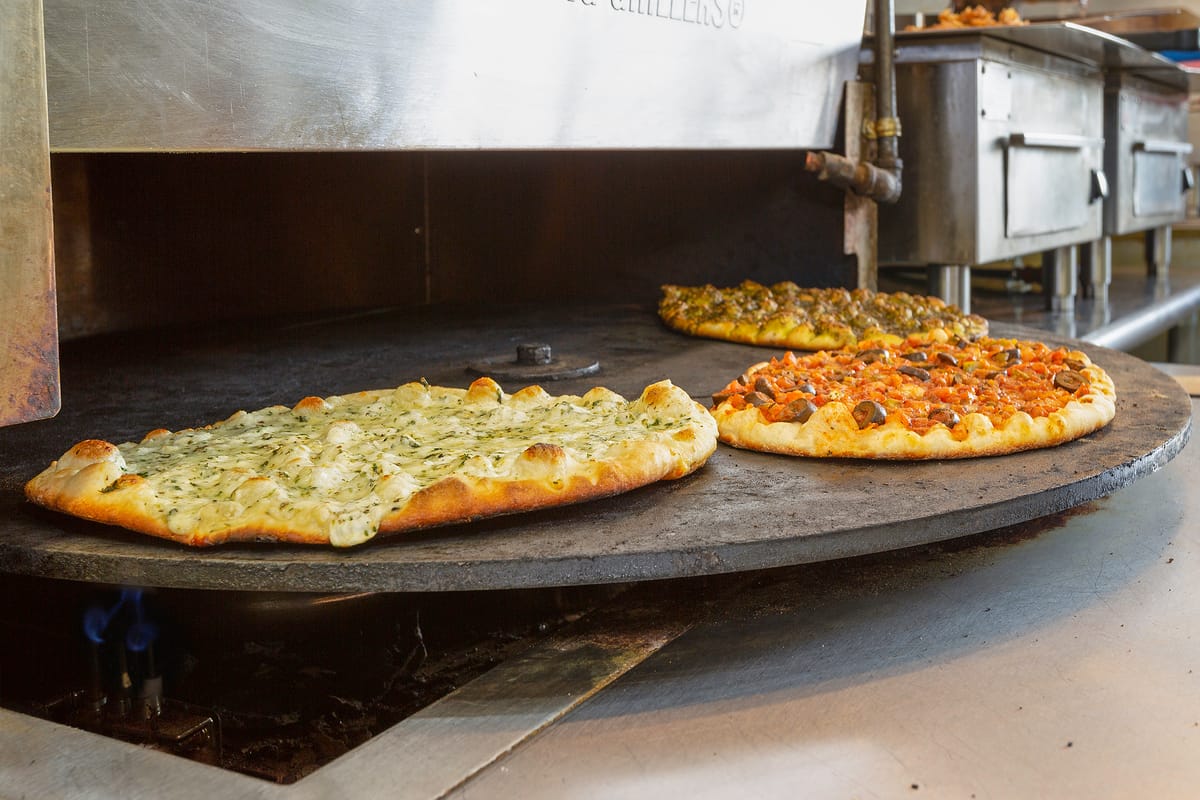
Sumac is one of three core ingredients in the za'atar spice blend -- alongside dried thyme and toasted sesame seeds. When za'atar is mixed with olive oil and baked on flatbread, the sumac provides the tart, citrusy note that lifts the earthy herbs. Every bite of Taza's stone-oven manaeesh carries that sumac brightness.
Shawarma Bowls -- from from $12.45
A pinch of sumac sprinkled over a chicken or beef shawarma bowl adds a pop of color and a tart counterpoint to the savory, caramelized meat. The crimson powder lands on white rice, green lettuce, and golden shawarma, making the bowl look as striking as it tastes. Ask for sumac on your next bowl at Taza.
Sumac Onion Salad
Thinly sliced red onions tossed with ground sumac, a drizzle of olive oil, and a pinch of salt. This vibrant, magenta-stained condiment appears alongside kebabs, falafel, and shawarma across the Middle East. The sumac tames the raw bite of the onion and turns it into something sweet, tart, and deeply savory all at once.
Finishing Spice on Shawarma
At Taza, sumac serves as a finishing spice -- dusted over freshly sliced chicken shawarma or beef shawarma right before serving. That final hit of tartness cuts through the richness of the slow-roasted meat and the creamy garlic sauce, balancing every bite without adding any liquid.
On Flatbreads and Wraps
A sprinkle of sumac on a warm pita pocket or shrak wrap adds a dimension that salt and pepper cannot. The dry tartness complements the soft, chewy bread and the fillings inside. It works on every protein option from falafel to beef shawarma to chicken.
Is Sumac Good for You? Health Benefits Explained
One of the highest antioxidant scores of any spice ever measured -- and that is just the beginning.
Sumac is a nutritional outlier among spices. ORAC (Oxygen Radical Absorbance Capacity) testing -- a measure of antioxidant capacity -- ranks ground sumac among the highest of all spices, with scores exceeding 300,000 micromoles of Trolox equivalents per 100 grams. For context, turmeric scores around 127,000 and dried oregano around 175,000. The antioxidant load comes from tannins, flavonoids, and anthocyanins -- the same compounds that give sumac its deep crimson color and tart flavor.
Research has explored sumac's potential anti-inflammatory properties. Studies published in the Journal of Medicinal Food and other peer-reviewed publications have found that sumac extract may reduce markers of inflammation in laboratory settings. These findings are preliminary and come from concentrated extracts rather than culinary doses, but they support the traditional use of sumac in folk medicine across the Middle East, where it has been used for centuries to treat digestive issues and inflammation.
Blood sugar management is another area of interest. Several studies have found that sumac consumption may help moderate post-meal blood sugar spikes. A study in the Iranian Journal of Pharmaceutical Research found that participants who consumed sumac with meals had lower post-prandial glucose levels compared to a control group. The mechanism is thought to involve sumac's effect on carbohydrate absorption. Again, this research is early-stage and not a basis for medical advice, but it adds to the picture of sumac as a nutritionally meaningful spice.
The practical takeaway: sumac adds intense flavor to food while contributing virtually zero calories, fat, or sugar. A teaspoon of ground sumac has approximately three calories and delivers more antioxidants per gram than almost any other common food ingredient. You are not going to cure anything by sprinkling sumac on your shawarma bowl, but you are adding genuine nutritional value without adding nutritional cost. That makes sumac one of the most efficient flavor enhancers in any kitchen.
Antioxidant Powerhouse
ORAC scores above 300,000 -- higher than turmeric, cinnamon, or blueberries. The tannins and anthocyanins that give sumac its crimson color are potent free-radical scavengers.
Anti-Inflammatory Potential
Laboratory studies suggest sumac extract may reduce markers of inflammation. Traditional Middle Eastern folk medicine has used sumac for digestive and inflammatory conditions for centuries.
Blood Sugar Support
Early research indicates sumac may help moderate post-meal blood sugar spikes. The effect is thought to involve slowed carbohydrate absorption, though more research is needed.
How Taza Uses Sumac in Falls Church
From the za'atar blend to fattoush dressing to a finishing dusting on every bowl.
Sumac runs through Taza's kitchen in ways both visible and hidden. The most obvious is color: when you receive a shawarma bowl or a salad at Taza, look for the crimson dusting on top. That is ground sumac, applied as a finishing spice right before the dish leaves the kitchen. It is there for flavor -- that dry, tart punch that balances the richness of slow-roasted chicken shawarma (from $9.95) or beef shawarma (from $9.95) -- but it is also there for visual impact. The deep red against white rice and green lettuce makes the plate look intentional and alive.
Inside the za'atar blend on our manaeesh ($6.95), sumac is the ingredient responsible for the tangy note that separates za'atar from a generic dried herb mix. When the manaeesh bakes in Taza's stone oven, the heat mellows the sumac slightly, turning its sharp tartness into a warm, rounded acidity that integrates with the olive oil and thyme. Every piece of za'atar manaeesh you tear off carries sumac in every bite.
In our fattoush salad, sumac is the backbone of the dressing. Ground sumac is whisked with olive oil, lemon juice, and garlic to create a dressing that is simultaneously tart from two sources -- the sumac and the lemon. The sumac provides the ruby color that tints the romaine and the crispy pita chips, while the lemon provides the brighter, sharper acid note. Together, they create a dressing that is more complex than either ingredient could produce alone.
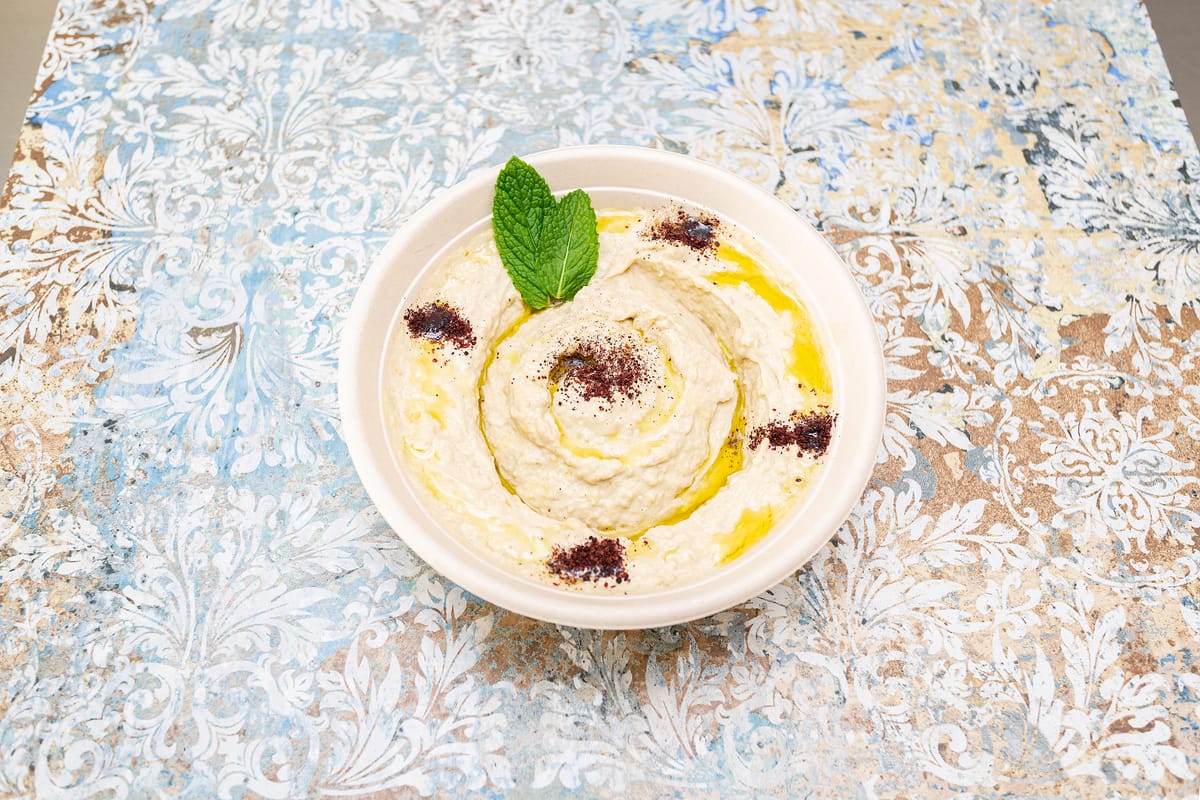
Want to experience sumac front and center? Order a falafel bowl (from $10.45) and ask for extra sumac. Or try the hummus ($4.95) with a sumac sprinkle on top -- the tart spice cuts through the creamy chickpea base and adds a dimension that is hard to replicate any other way. Baba ghanouj ($4.95) with sumac is another standout: the smoky eggplant dip meets the tart, fruity spice and the combination is remarkable.
From the Spit to the Plate
Sumac meets shawarma -- a dusting of crimson tartness over golden, slow-roasted chicken and beef.
Sumac vs Lemon Juice: How Do They Compare as Acids?
Both add tartness to food, but they do it in fundamentally different ways.
| Feature | Sumac | Lemon Juice |
|---|---|---|
| Form | Dry powder (ground berries) | Liquid |
| Flavor Profile | Tart, fruity, slightly floral | Sharp, clean, one-note acid |
| Color Effect | Deep crimson -- stains food ruby-red | Pale yellow -- minimal visual impact |
| Moisture Impact | None -- adds flavor without liquid | Adds liquid that can thin sauces or wilt greens |
| Best Use | Finishing spice, salad dressing, dry rubs | Marinades, dressings, cooked sauces |
| Shelf Life | 12-18 months in airtight container | 2-4 weeks fresh, indefinite bottled |
| Heat Tolerance | Best added after cooking to preserve flavor | Tolerates heat well in cooking |
| Antioxidant Load | Extremely high (one of the highest ORAC spices) | Moderate (vitamin C) |
The fundamental difference: sumac adds acidity without adding liquid. This makes it irreplaceable for finishing dishes, garnishing dips, and seasoning surfaces where moisture would be unwelcome. Lemon juice is better for cooking and marinades where liquid is needed. The best Levantine dishes -- like Taza's fattoush dressing -- use both.
How to Buy and Store Sumac
What to look for, what to avoid, and how to keep it fresh once you bring it home.
When buying sumac, color is your primary quality indicator. Fresh, high-quality sumac is a deep, vibrant crimson -- the kind of red that looks almost too intense to be natural. If the powder has faded to brown, rust, or dull brick-red, it is either old or was made from inferior berries. Fresh sumac should also have a noticeable tart aroma the moment you open the container. If it smells like nothing, pass on it. The tartness fades first as sumac ages, and once the smell is gone the flavor is not far behind.
Check the ingredient list. Pure ground sumac should contain one ingredient: sumac. Some brands add salt as a filler, which dilutes the flavor and changes the seasoning math of any recipe. A few brands add citric acid to boost the tartness of lower-quality berries -- avoid these as well. The best sumac comes from Turkey, Lebanon, and Jordan, where the Rhus coriaria shrub grows in its native habitat. Middle Eastern grocery stores in Northern Virginia stock several brands, often at significantly lower prices than specialty spice shops or Amazon.
For storage, keep ground sumac in an airtight container -- a glass jar with a tight lid, a sealed spice tin, or a ziplock bag with the air pressed out. Store it in a cool, dark place. The pantry shelf is fine; the fridge or freezer is not necessary but will extend shelf life. Avoid storing sumac near the stove, where heat and steam will degrade it faster. Properly stored, ground sumac maintains peak flavor for 12 to 18 months. After that, it does not become unsafe -- it just becomes progressively less flavorful. Or skip the jar entirely and come to Taza, where the sumac is always fresh.
What to Look For
- Deep crimson color, not brown or dull
- Tart aroma when you open the container
- Single ingredient: ground sumac berries
- Origin: Turkey, Lebanon, or Jordan
What to Avoid
- Brown or faded color (indicates age)
- Salt listed as a secondary ingredient
- Added citric acid (masks poor quality)
- No tart smell when opened
Storage Tips
- Airtight glass jar or sealed tin
- Cool, dark pantry shelf
- Away from heat and steam
- Use within 12-18 months for best flavor
Sumac's Growing Popularity in American Kitchens
From specialty import to trending spice in under a decade.
Sumac followed the same trajectory in American food culture as za'atar, turmeric, and harissa -- from unknown specialty ingredient to mainstream pantry item in roughly a decade. Food writers and cookbook authors like Yotam Ottolenghi, Reem Kassis, and Samin Nosrat introduced sumac to American home cooks through recipes that highlighted its unique ability to add acidity without liquid. By the early 2020s, sumac was available at Whole Foods, Trader Joe's, and Penzeys, and food media had declared it a "must-have" spice.
American chefs have embraced sumac with creativity. It appears on roasted vegetables, avocado toast, grilled fish, popcorn, hummus bowls, and grain salads at restaurants across the country. Some of these applications are excellent -- sumac on roasted cauliflower or grilled lamb is genuinely outstanding. Others miss the point, treating sumac as a colorful garnish rather than a functional acid component. The best use of sumac is always purposeful: it should be there because the dish needs tartness, not because the chef wants a pop of red.
In Northern Virginia, you do not need to guess at how sumac is meant to be used. Restaurants like Taza that serve traditional Levantine food use sumac the way it has been used for centuries -- in fattoush dressing, in za'atar blends, as a finishing spice on grilled meats and rice. If you have been experimenting with sumac at home and want to taste it in its original context, come to Taza. The gap between sumac as a trendy addition and sumac as a foundational ingredient is wide, and you will taste it immediately.
What Pairs Well with Sumac?
Sumac plays well with other Mediterranean spices, fresh herbs, and rich proteins.
Sumac + Olive Oil
Classic Combination
The most traditional pairing. Olive oil mellows sumac's tartness and carries its flavor across the palate. Mixed together and drizzled over bread, rice, or grilled vegetables, the combination is the essence of Levantine cooking. The fat in the oil also helps release sumac's fat-soluble flavor compounds, which is why sumac tastes more complex in oil than sprinkled dry.
Sumac + Thyme (Za'atar)
The Defining Blend
Sumac and dried thyme are two of three ingredients in za'atar, the most important spice blend in Levantine cuisine. The earthy, savory quality of thyme and the bright tartness of sumac balance each other perfectly. On Taza's manaeesh, this combination is baked into every bite. Learn more in our guide to za'atar.
Sumac + Grilled Meat
Natural Partners
The tartness of sumac cuts through the richness of grilled and slow-roasted meats the way lemon does, but without adding moisture. On chicken shawarma, sumac brightens the caramelized, savory flavors. On beef shawarma, it provides a counterpoint to the deep, umami richness. This is why sumac shakers sit on restaurant tables across Turkey and Lebanon.
Sumac + Raw Onion
The Levantine Condiment
Sumac tames the harsh bite of raw onion and transforms it into something gentle, sweet, and tart. Sliced onions tossed with sumac and olive oil turn deep magenta and develop a mellow, fruity flavor. This sumac onion salad appears alongside grilled meats at restaurants from Beirut to Istanbul to Falls Church.
Frequently Asked Questions About Sumac
Sumac tastes tart, citrusy, and slightly fruity -- like a dry lemon squeeze with a floral edge. It is not sour in the puckering, vinegar sense. The tartness is rounder and more complex than lemon juice, with a faint berry-like sweetness underneath. There is no heat or spiciness. If you have ever tasted a tart cranberry or a sour cherry, sumac occupies a similar flavor space but with more citrus and less sweetness. On food, it reads as a bright, acidic note that lifts everything around it without adding moisture.
Yes. Culinary sumac (Rhus coriaria) has been eaten for thousands of years across the Middle East and Mediterranean and is completely safe. It is important to distinguish culinary sumac from poison sumac (Toxicodendron vernix), which is a different plant entirely. Poison sumac grows in swampy areas of eastern North America and has white berries. Culinary sumac grows in dry, rocky terrain and has deep red berries. The two are not closely related despite sharing a common name. Any sumac sold in a grocery store or spice shop is culinary sumac and safe for consumption.
No, but sumac is a key ingredient in za'atar. Za'atar is a spice blend made from dried thyme, ground sumac, toasted sesame seeds, and salt. Sumac is one of those four components -- the one responsible for the tangy, citrusy flavor. You can buy sumac by itself as a standalone spice, separate from the za'atar blend. Think of it this way: sumac is to za'atar what cumin is to chili powder -- a critical component, but not the whole thing.
In many cases, yes. Sumac provides acidity without adding liquid, which makes it ideal for situations where you want tartness but not moisture -- salad dressings that should not be too thin, dry rubs for meat, garnishes on hummus or labneh, or finishing a rice dish. However, sumac is not a one-to-one replacement in all recipes. If a recipe needs the volume of liquid that lemon juice provides (like a marinade), sumac alone will not work. The best approach is to use sumac for finishing and garnishing, and lemon juice for cooking and marinating.
Ground sumac lasts 12 to 18 months in an airtight container stored in a cool, dark place. You will know it has gone stale when the color fades from deep crimson to a dull brown and the tart aroma diminishes. Fresh sumac should smell noticeably tart and slightly fruity when you open the jar. If it smells like nothing, it is past its prime. Unlike some spices that lose all flavor gradually, stale sumac tends to lose its tartness first and retain a mild, flat, slightly woody taste that is not worth using.
Sumac is available at Middle Eastern grocery stores, specialty spice shops, Whole Foods, and online retailers like Amazon, Kalustyan's, Burlap & Barrel, and Penzeys. In Northern Virginia, international grocery stores in the Falls Church, Arlington, and Alexandria corridors stock multiple brands. Look for sumac that is a deep, vibrant crimson. Avoid any that looks brown or dusty -- that indicates age. Some brands mix sumac with salt as a filler, so check the ingredient list and choose pure ground sumac when possible.
Sumac is one of the highest-antioxidant spices ever measured. ORAC (Oxygen Radical Absorbance Capacity) testing ranks it above turmeric, blueberries, and cinnamon. Studies have explored its potential anti-inflammatory effects, blood sugar management benefits, and antimicrobial properties. However, because sumac is consumed in small quantities as a spice, the practical health impact of any single serving is modest. The real nutritional advantage is that sumac adds intense flavor without adding calories, fat, sugar, or sodium -- making food taste better without making it less healthy.
At Taza Shawarma & Falafel in Falls Church, sumac appears in several places. It is a core ingredient in our za'atar manaeesh (sumac is part of the za'atar blend). It is used in our fattoush salad dressing. It serves as a finishing spice on shawarma bowls and salads. And it shows up in the sumac onion garnish that accompanies grilled items. You can also ask for extra sumac on any bowl or salad -- we keep it on hand as a finishing spice.
Taste Sumac at Taza in Falls Church
Open 7 days a week on Seminary Road. Order online or walk in.
Address
5820 Seminary Rd Ste O, Falls Church, VA 22041
Hours
11:00 AM - 12:00 AM -- Open 7 Days a Week
Phone
Explore More Spice Guides and Mediterranean Food
Ready to Taste Sumac?
Order a shawarma bowl with extra sumac, try the fattoush, or start with za'atar manaeesh. The deep crimson spice is waiting for you at Taza.