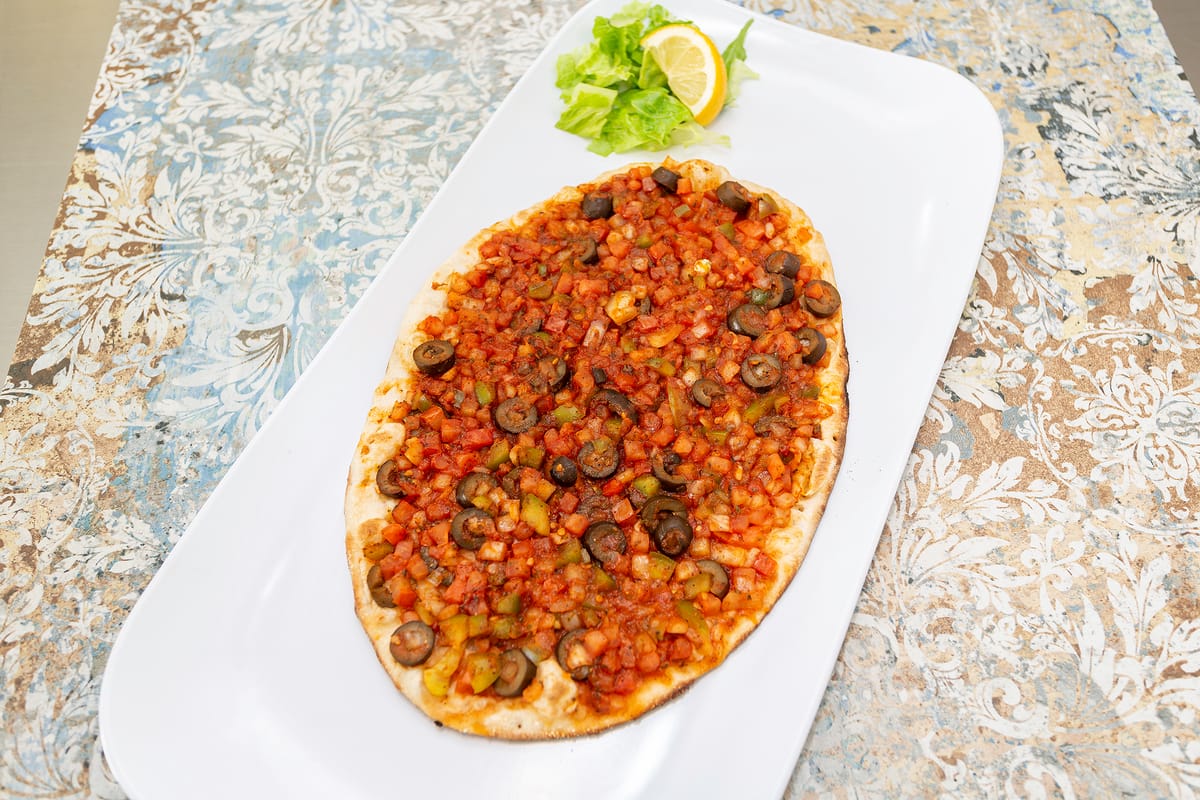
Manaeesh vs Pizza: What's the Difference?
People call it 'Lebanese pizza,' but manaeesh is its own tradition with its own dough, its own toppings, and its own centuries of history. Here's what separates the two -- and why you should try both.
4.8 stars on Yelp (92 reviews) -- Open 11:00 AM - 12:00 AM
Is Manaeesh the Same as Pizza?
A question asked by nearly everyone who encounters Lebanese flatbread for the first time.
Manaeesh is a Lebanese flatbread topped with zaatar, cheese, or seasoned meat and baked in a stone oven. It is not pizza.
While both are oven-baked flatbreads with toppings, manaeesh uses different dough, has no tomato sauce, features Middle Eastern toppings like zaatar and akkawi cheese, and is traditionally eaten at breakfast. The nickname "Lebanese pizza" is a shorthand that helps English speakers picture the format, but it does not capture the flavor, texture, or cultural role of manaeesh.
The comparison between manaeesh and pizza is understandable. Stand in front of a bakery window in Beirut and watch a baker pull a round of dough from the stone oven, golden and blistered, with toppings bubbling across its surface, and your first thought is going to be "that looks like pizza." The shape is similar. The concept -- dough plus toppings plus oven -- is the same. But the moment you take a bite of zaatar manaeesh, the comparison falls apart. There is no tomato sauce. The dough is thinner, softer, more bread-like. The topping is a fragrant paste of dried thyme, sesame seeds, sumac, and olive oil that tastes herbal, earthy, and slightly tangy. Nothing about the flavor reminds you of pizza.
The comparison also misses the cultural context. In Lebanon, Syria, and across the Levant, manaeesh is a morning food. Bakers open before dawn. Families stop at the neighborhood bakery on the way to work and school. Children eat zaatar manaeesh the way American children eat cereal -- it is a daily routine, not a special occasion. Pizza, by contrast, is a lunch, dinner, or late-night food in both Italian and American traditions. The meal occasions are fundamentally different.
That said, the "Lebanese pizza" label has done useful work. It gave millions of people outside the Middle East a starting reference point for a food they had never encountered. When someone hears "Lebanese pizza," they immediately understand the general format: round, flat, topped, baked. That is enough to get them through the door. What happens next -- the first bite of zaatar manaeesh fresh from a stone oven -- does the rest. At Taza in Falls Church, we bake every manaeesh to order in our stone oven, starting at $6.95.
The Key Differences Between Manaeesh and Pizza
Five core areas where these two flatbreads diverge.
The Dough
Manaeesh dough is a straightforward mixture of flour, water, yeast, salt, and a touch of olive oil. It is mixed, portioned, and hand-stretched to order -- never tossed in the air like Neapolitan pizza dough, never rolled through a sheeter like New York slices. Each round of manaeesh dough is pressed and pulled by the baker's hands into a thin, even disc, then topped immediately and slid into the oven. The result is a soft, slightly chewy flatbread with a clean, bread-like flavor. Pizza dough, depending on the style, may include sugar, more olive oil, milk, or eggs. Neapolitan pizza dough undergoes a long cold fermentation (24-72 hours) that develops a slightly sour, complex flavor. New York-style dough uses oil and sugar for a chewier, sweeter crust. The dough is the foundation of both foods, and it is where the differences begin.
The Toppings
Pizza starts with a tomato sauce base, followed by mozzarella cheese, then additional toppings. Manaeesh has no sauce. The topping goes directly on the raw dough. Zaatar manaeesh is a paste of dried thyme, sesame seeds, sumac, and olive oil -- a combination that exists nowhere in the pizza tradition. Cheese manaeesh uses Middle Eastern cheese varieties (akkawi, nabulsi) rather than mozzarella. Lahm bil ajin features a thin layer of seasoned ground meat with onions, parsley, and tomatoes -- closer to Turkish lahmacun than to any meat pizza. Spinach manaeesh uses sauteed spinach with caramelized onions and pine nuts. The topping vocabulary of manaeesh and pizza barely overlaps.
The Oven
Manaeesh is baked in a stone oven at very high heat for 3-5 minutes. The intense bottom heat creates slight blistering on the underside while the top topping caramelizes quickly. The short bake time is part of what keeps manaeesh dough soft and pliable rather than crispy. Pizza ovens vary dramatically by style. Neapolitan pizzas bake at 800-900 degrees for 60-90 seconds. New York-style pizzas bake in deck ovens at 550-600 degrees for 8-12 minutes. Chain pizzas use conveyor ovens at lower temperatures for 5-7 minutes. At Taza, our stone oven produces the traditional blistered, slightly charred finish that marks properly made manaeesh.
The Size and Serving
A single manaeesh is an individual portion -- typically 8-10 inches across, enough for one person. It is served whole and eaten folded, rolled, or flat. A pizza, in most traditions, is larger (12-18 inches) and intended to be shared or sliced. This difference shapes the entire eating experience. Manaeesh is grab-and-go: fold it, walk out of the bakery, eat it on the way to work. Pizza requires plates, napkins, and usually a table. The portability of manaeesh is part of its identity as a street food and daily staple.
The Eating Occasion
In Lebanon, manaeesh is breakfast. Full stop. The bakeries that produce manaeesh open in the early morning and sell most of their output before noon. Zaatar manaeesh with tea is to Beirut what a bagel with cream cheese is to New York -- the default morning meal for millions. Pizza, in both its Italian and American forms, is almost never a breakfast food (with rare exceptions). It occupies the lunch, dinner, and late-night slots. In the Northern Virginia diaspora, this distinction has softened -- Taza serves manaeesh during all operating hours (11:00 AM - 12:00 AM) -- but the traditional breakfast identity remains core to the food's culture.
Manaeesh vs Pizza: Complete Comparison
Twelve dimensions where these two flatbreads differ -- from dough to dining occasion.
| Feature | Manaeesh | Pizza |
|---|---|---|
| Dough Style | Hand-stretched per order, thin, soft, slightly chewy -- closer to pita dough | Tossed or rolled, varies by style (Neapolitan, New York, deep dish), often uses sugar and oil |
| Sauce | No sauce -- toppings go directly on the dough, sometimes olive oil as a base | Tomato sauce (marinara) is the standard base layer |
| Cheese | Akkawi, nabulsi, or a regional Middle Eastern blend -- used as a standalone topping, not a base | Mozzarella as a base layer, sometimes with provolone, parmesan, or cheddar blends |
| Signature Topping | Zaatar (dried thyme, sesame, sumac) with olive oil -- no equivalent in pizza | Pepperoni, sausage, mushrooms -- wide variety of meat and vegetable toppings |
| Cooking Method | Stone oven at very high heat, baked in 3-5 minutes until lightly blistered | Conventional, conveyor, or wood-fired oven, 8-15 minutes depending on style |
| Shape | Round or oval, typically 8-10 inches, individual serving size | Round (10-18 inches), rectangular, or square -- often feeds 2-4 people per pie |
| Eating Style | Folded, rolled, or eaten flat by hand -- portable and self-contained | Sliced into triangles or squares, eaten by hand or with utensils |
| Calories (Typical) | 250-400 per flatbread depending on topping choice | 250-350 per slice, with 2-3 slices being a typical serving (500-1050 total) |
| Price Range | From $6.95 to $8.95 per flatbread at Taza | $12-25+ for a whole pizza, or $2-5 per slice depending on location |
| Origin | Lebanon, Syria, and the broader Levant -- centuries of baking tradition | Naples, Italy -- modern pizza dates to the 18th century |
| Traditional Meal | Breakfast and morning snack, now eaten at all hours in the diaspora | Lunch, dinner, or late-night meal |
| Eaten With Hands? | Always -- folded or rolled for portability | Usually, though some styles (deep dish, knife-and-fork) differ |
Bottom line: Manaeesh and pizza share a basic format (flatbread + toppings + oven) but diverge in almost every detail. The dough is different. The toppings are different. The cheese is different. The sauce (or lack thereof) is different. The meal occasion is different. Trying manaeesh because you love pizza is a fine starting point -- just be ready for a completely new flavor experience.
The Dough: Simpler, Lighter, Made to Order
Manaeesh dough is built on restraint. Fewer ingredients, shorter fermentation, hand-stretched per order.
What Goes Into Manaeesh Dough
The ingredient list for traditional manaeesh dough is short enough to memorize: flour, water, yeast, salt, olive oil. That is it. No sugar to feed the yeast faster. No milk or eggs to enrich the crumb. No malt or diastatic enzymes to enhance browning. The simplicity is deliberate. Manaeesh dough is meant to be a canvas for the topping, not a flavor event in itself. The dough should taste like good bread -- clean, faintly wheaty, with the slight tang of fermentation -- and then step aside.
The fermentation is also shorter than most pizza traditions. Where Neapolitan pizza dough might cold-ferment for 24, 48, or 72 hours to develop complex flavor and improved texture, manaeesh dough is typically mixed in the morning and used within hours. The shorter fermentation means the dough is softer and more pliable, but it also means the flavor stays neutral. This is a feature, not a bug. When your topping is a bold, aromatic zaatar paste, you want the dough to support it, not compete with it.
At Taza, each portion of manaeesh dough is hand-stretched to order. There is no machine sheeting, no proofing in trays of pre-formed rounds. The baker takes a ball of dough, presses it flat, stretches it with their hands, tops it, and slides it into the stone oven. The entire process takes less than a minute from dough ball to oven. That immediacy is part of what keeps the bread fresh, soft, and alive -- qualities that disappear when dough sits in pre-formed rounds for hours under plastic wrap.
How Pizza Dough Differs
Pizza dough is a broader category with more variation. Neapolitan dough (tipo 00 flour, water, salt, yeast) is actually close to manaeesh dough in composition, but the long cold fermentation produces a distinctly different texture: more open crumb, more chew, more flavor complexity. New York-style dough adds olive oil and sometimes sugar, producing a chewier, slightly sweeter crust that holds up to heavy toppings. Detroit-style uses a high-hydration dough pressed into oiled pans. Chicago deep dish uses a butter-enriched dough closer to pastry.
The key distinction is that pizza dough is often prepared in large batches by a dough team, portioned, and cold-stored for use over several days. This batch approach works for pizzerias that need consistency across hundreds of pies per shift. Manaeesh bakeries tend to work with fresh dough made that day, stretched and baked in a continuous flow. The production model shapes the product: pizza dough is optimized for consistency and flavor development through time; manaeesh dough is optimized for freshness and speed.
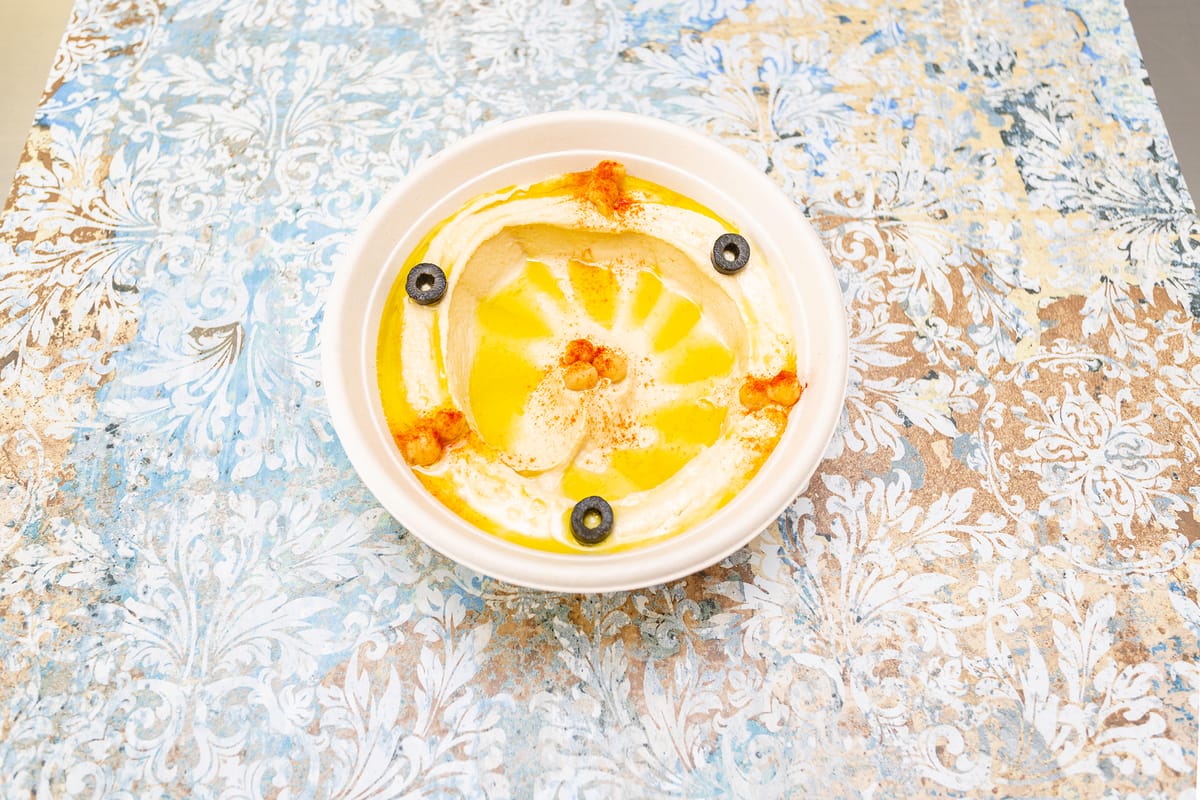
Baked Fresh in Our Stone Oven
Every manaeesh at Taza is hand-stretched, topped to order, and baked in our stone oven until perfectly blistered. No heat lamps. No holding trays. Straight from oven to plate.
The Toppings That Make Manaeesh Different
Manaeesh toppings have almost no overlap with the pizza topping vocabulary.
Zaatar: The Signature
$6.95The topping that defines manaeesh and has no equivalent in the pizza world. Zaatar is a paste made from dried thyme (Origanum syriacum -- different from the thyme in your spice rack), toasted sesame seeds, ground sumac, salt, and extra-virgin olive oil. The mixture is spread in a thick, even layer across the raw dough and baked until the edges of the zaatar paste darken slightly and the olive oil pools in fragrant rivulets. The taste is herbal, earthy, slightly tart from the sumac, and rich from the olive oil. No pizza topping produces anything close to this flavor profile. Zaatar has been cultivated in the Levant for centuries, and manaeesh is its most iconic vehicle.
Learn more about zaatarCheese: Familiar, But Different
$7.95Cheese manaeesh is the variety that most closely resembles pizza in concept -- melted cheese on bread -- but the cheese itself is different. Traditional manaeesh uses akkawi cheese, a semi-hard, brined, mildly salty cheese from the Levant. It melts into a smooth, stretchy layer that is less rich and less oily than mozzarella. Many bakeries blend akkawi with other regional cheeses or with mozzarella for a more familiar texture. At Taza, our cheese blend melts into a golden, bubbly layer that pulls in long strings when you tear the bread. The flavor is milder and saltier than pizza cheese, with none of the sweetness that comes from mozzarella made with cow's milk.
Spinach, Onion, and Pine Nut
$7.95Fresh spinach sauteed with caramelized onions, toasted pine nuts, and a squeeze of lemon, spread over the dough before baking. This topping produces a completely different texture from the other varieties -- the spinach becomes tender and slightly caramelized, the onions add sweetness, and the pine nuts provide a subtle crunch. It is the lightest of the manaeesh options and the most vegetable-forward. Spinach as a pizza topping is typically raw leaves added after baking, or frozen spinach mixed into a white sauce. On manaeesh, the spinach is the main event, not an accent.
Lahm Bil Ajin: The Meat Flatbread
$8.95Seasoned ground beef mixed with finely diced onions, fresh parsley, tomatoes, and a blend of Middle Eastern spices (allspice, cinnamon, cumin), spread thin over the dough so every bite has both bread and meat. Lahm bil ajin -- literally 'meat on dough' in Arabic -- is the variety most often called 'Lebanese pizza' because the open-face meat topping looks the most pizza-like. But the spice profile is completely different from any meat pizza. The allspice and cinnamon give the meat a warm, slightly sweet depth that Italian seasoning (oregano, basil, garlic) does not produce.
Explore our meat pie guideWhen to Choose Manaeesh Over Pizza
Five situations where manaeesh is the better call.
When You Want Something Lighter
A single zaatar manaeesh at Taza is $6.95 and typically 250-300 calories. A comparable meal of two pizza slices runs 500-700 calories with significantly more saturated fat and sodium. Manaeesh fills you up without the heaviness that often follows a pizza meal. The olive oil in zaatar manaeesh provides healthy fats rather than the saturated fat in mozzarella. If you want a satisfying flatbread experience without the food coma, manaeesh is the move.
When You Want Breakfast That Isn't Sweet
The American breakfast landscape is dominated by sweet options: pancakes, waffles, muffins, sweetened yogurt, cereal. Savory breakfast options exist (eggs, bacon, bagels) but they are limited. Zaatar manaeesh offers a savory, herbal, olive-oil-rich breakfast that pairs perfectly with tea. It is substantial enough to carry you through the morning, light enough that you do not feel sluggish. In Lebanon, millions of people eat zaatar manaeesh for breakfast every day. At Taza, we serve manaeesh from 11:00 AM - 12:00 AM, which means you can start your day with it.
When You Want Something Genuinely Different
Pizza is available on every block, in every food court, through every delivery app. It is delicious but it is not novel. Manaeesh offers a genuinely unfamiliar flavor experience for anyone who has not grown up eating it. The zaatar blend -- the herbal, earthy, slightly tart flavor -- is unlike anything in the typical American palate. Ordering manaeesh instead of pizza is a low-risk way to try something new: the format (flatbread with toppings) is familiar enough to feel safe, but the flavors are different enough to feel like discovery.
When You Want Better Value
A single manaeesh at Taza ranges from $6.95 for zaatar to $8.95 for lahm bil ajin (ground meat). That is a complete, satisfying flatbread for less than the price of two pizza slices at most sit-down pizzerias. If you are feeding a group, ordering a variety of manaeesh (a few zaatar, a few cheese, a couple lahm bil ajin) gives everyone a selection of flavors for significantly less than the equivalent number of pizzas.
When You Want to Eat with Your Hands, No Mess
Manaeesh is designed for portability. Fold a zaatar manaeesh in half and eat it while walking -- no grease dripping down your forearm, no sauce staining your shirt, no cheese strings connecting your face to the plate. The toppings are absorbed into the dough during baking, and the folded format keeps everything contained. Pizza, despite being a hand food in theory, is frequently messy: the point of the slice droops, the cheese slides, the oil pools. Manaeesh is a cleaner eating experience.
Taza's Stone-Oven Manaeesh
Four varieties of hand-stretched, stone-oven-baked Lebanese flatbread, available every day from 11 AM to midnight.
Zaatar Manaeesh
The quintessential Lebanese flatbread. Our zaatar blend -- dried thyme, toasted sesame seeds, ground sumac, salt -- is mixed with extra-virgin olive oil into a thick paste and spread generously across fresh dough. Baked in our stone oven until the edges blister and the zaatar turns fragrant and slightly crispy. The olive oil pools in small rivulets across the surface, glistening under the light. This is the variety that Lebanese families eat every morning, and the one we recommend to first-time visitors. Fold it in half, eat it with your hands, and you will understand immediately why people have been making this for centuries.
Cheese Manaeesh
Soft, pillowy dough topped with our signature cheese blend and baked until the cheese turns bubbly, golden-brown, and stretchy. The cheese melts into the dough during baking, creating a layer where bread and topping become one. Pull it apart and the cheese stretches in long, satisfying strings. This is the variety that children gravitate toward and adults keep ordering. It is the closest to pizza in concept, but the cheese is different -- milder, saltier, less oily than mozzarella -- and there is no tomato sauce to cut through. Just warm bread and melted cheese, simple and comforting.
Spinach Manaeesh
Fresh spinach sauteed with caramelized onions, toasted pine nuts, and a bright squeeze of lemon, spread over our hand-stretched dough and baked until the crust turns golden and the spinach filling becomes tender and fragrant. The caramelized onions add a layer of sweetness that balances the earthy spinach. The pine nuts provide a subtle, buttery crunch in every other bite. This is the lightest of our manaeesh options -- nutrient-dense, vegetable-forward, and deeply satisfying for anyone looking for a bread-based meal that does not lean on cheese or meat.
Lahm Bi Ajin Manaeesh
Thin, crispy flatbread topped with a savory mixture of seasoned ground beef, finely diced onions, fresh parsley, tomatoes, and a blend of Middle Eastern spices including allspice and cinnamon. The meat is spread thin across the entire surface so every bite delivers both bread and topping. Baked in our stone oven until the edges curl slightly and the meat mixture browns and caramelizes. This is the manaeesh variety most often called 'Lebanese pizza' because the open-face meat topping looks the most familiar. Squeeze fresh lemon over the top before eating for the traditional finish.
The "Lebanese Pizza" Myth
Why the comparison helps newcomers but ultimately misleads them.
Why the Label Exists
When Lebanese immigrants opened bakeries in the United States, Australia, Brazil, and West Africa, they needed a way to describe manaeesh to people who had never seen it. "It's like Lebanese pizza" became the default elevator pitch. The comparison worked. Customers who might have walked past an unfamiliar word on a menu would stop and try something that sounded like a familiar comfort food. The "Lebanese pizza" label brought manaeesh to millions of people who would not have ordered it otherwise.
But the label has a cost. When people expect pizza and receive manaeesh, there is a moment of confusion. Where is the tomato sauce? Why is there a green herb paste instead of mozzarella? Why is the dough so thin and soft? The "Lebanese pizza" frame sets up expectations that manaeesh does not fulfill, because it is not trying to be pizza. It is its own food with its own thousands-year-old tradition. The zaatar paste, the stone oven, the hand-stretched dough, the breakfast context -- these are not variations on a pizza theme. They are the core of a distinct culinary tradition that predates modern pizza by centuries.
A Better Way to Think About It
Rather than "Lebanese pizza," a more accurate description would be: "a hand-stretched flatbread from the Levant, topped with traditional ingredients and baked in a stone oven." That is not as catchy, but it sets the right expectations. The dough is bread-like, not pizza-like. The toppings are Middle Eastern, not Italian. The oven is stone, not conveyor. The portion is individual, not shared.
At Taza, we encourage first-time visitors to approach manaeesh on its own terms. Order a zaatar manaeesh ($6.95) and a cheese manaeesh ($7.95) and taste both. The zaatar version will taste like nothing you have eaten before -- herbal, earthy, olive-oil-rich, with a slight tang from the sumac. The cheese version will feel more familiar, but the cheese is different and there is no sauce. Both will be warm, fresh, and made to order. That is the manaeesh experience, and it stands on its own. Read our complete manakish guide for the full story behind this remarkable food.
Calorie Comparison: Manaeesh vs Pizza
How the two stack up when you look at a typical serving.
Manaeesh (One Flatbread)
- Zaatar Manaeesh250-300 cal
- Cheese Manaeesh350-400 cal
- Spinach Manaeesh280-330 cal
- Lahm Bil Ajin350-400 cal
One flatbread = one serving. Most people eat one.
Pizza (Typical Serving: 2-3 Slices)
- Cheese Pizza (2 slices)500-570 cal
- Pepperoni Pizza (2 slices)570-680 cal
- Meat Lovers (2 slices)680-820 cal
- Veggie Pizza (2 slices)480-560 cal
Most people eat 2-3 slices. Three slices = 750-1050+ cal.
The calorie difference becomes significant when you compare typical servings rather than abstract per-unit numbers. One manaeesh is a complete, satisfying meal. Most people do not eat two. A typical pizza meal, on the other hand, is 2-3 slices, which can easily reach 600-900 calories before you add a drink or side. The difference is not just calories -- it is also fat composition. The fat in zaatar manaeesh comes primarily from olive oil, which is rich in monounsaturated fatty acids and polyphenols. The fat in cheese pizza comes primarily from mozzarella, which is higher in saturated fat.
None of this means pizza is unhealthy or that manaeesh is a health food. Both are bread-based dishes that can fit into a balanced diet. But for anyone comparing the two and considering caloric impact, manaeesh -- particularly zaatar manaeesh -- is the lighter option by a meaningful margin. Pair a zaatar manaeesh with a side of hummus and you have a meal that is satisfying, nutritious, and under 500 calories total.
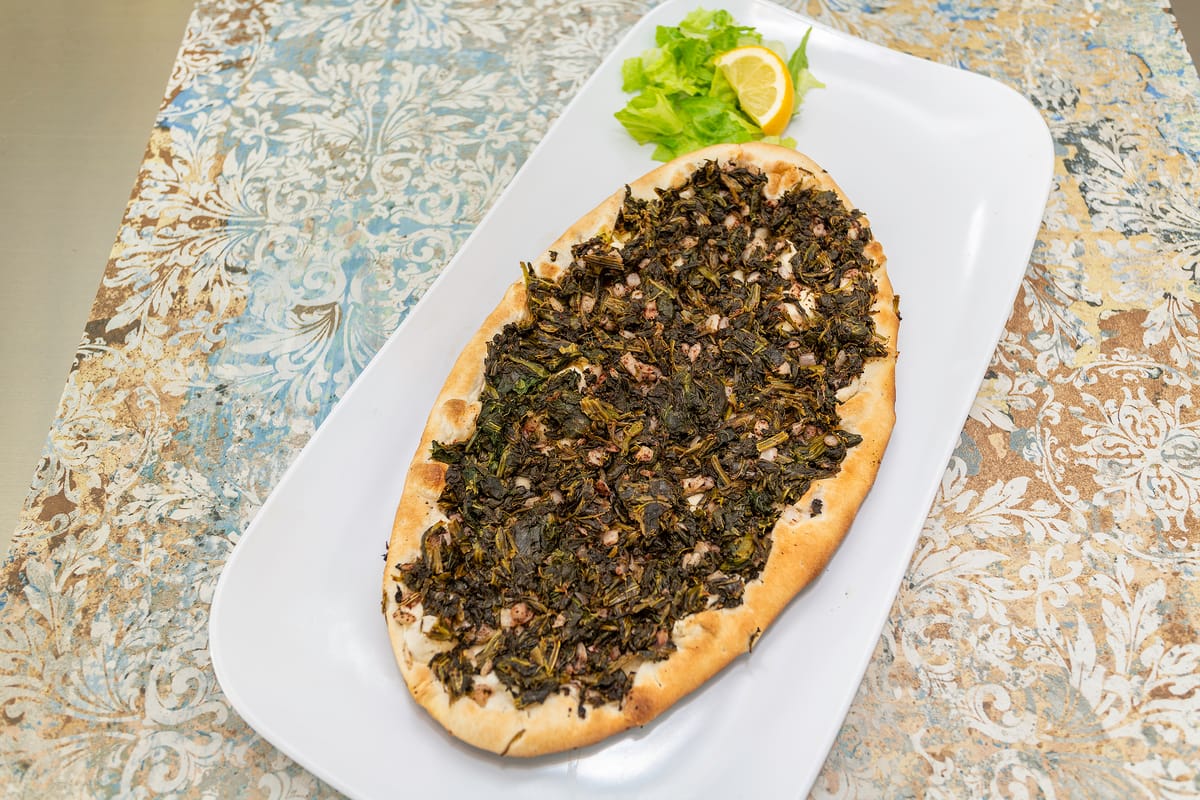
Fresh Ingredients, Every Day
Our manaeesh dough is mixed daily. Our zaatar blend is made in-house. Our stone oven stays hot from open to close.
Manaeesh vs Pizza: Common Questions
No. Manaeesh and pizza are both flatbread-based foods baked in ovens, but they differ in dough preparation, toppings, cooking method, and cultural origin. Manaeesh uses a simpler, hand-stretched dough without sauce, topped with zaatar, cheese, or meat. Pizza uses a tomato sauce base with mozzarella and a wide range of toppings. The comparison is useful because both are oven-baked flatbreads, but the flavors, textures, and eating experience are distinct. At Taza in Falls Church, our manaeesh starts at $6.95 and is baked fresh in a stone oven.
The nickname 'Lebanese pizza' emerged because English speakers needed a quick way to describe an unfamiliar food. Manaeesh is a round flatbread with toppings baked on top -- which sounds like pizza in broad strokes. The label helps newcomers understand the general concept, but it undersells the differences. Manaeesh has no tomato sauce, uses completely different toppings (zaatar, akkawi cheese, ground meat with parsley), and is traditionally eaten at breakfast. The comparison is a useful starting point, not the full picture.
Zaatar manaeesh has an herbal, earthy, slightly tangy flavor from the dried thyme, sumac, and sesame seeds, finished with the richness of olive oil. It tastes nothing like any pizza variety. Cheese manaeesh is the closest in flavor profile to pizza -- warm, melted cheese on bread -- but the cheese blend is different (akkawi instead of mozzarella) and there is no tomato sauce underneath. Lahm bil ajin has a savory, spiced ground meat topping that is more reminiscent of a Turkish lahmacun than an Italian pizza. The overall flavor experience of manaeesh is lighter, more aromatic, and less rich than typical pizza.
Generally, yes. A single manaeesh typically contains 250-400 calories depending on the topping, compared to 250-350 calories per pizza slice -- and most people eat 2-3 slices. Zaatar manaeesh is particularly nutritious: the zaatar blend provides antioxidants and anti-inflammatory compounds, the olive oil contributes heart-healthy fats, and the simpler dough has fewer additives. Manaeesh also tends to have less saturated fat than cheese-heavy pizza because it uses less cheese overall and the cheese varieties used are lighter. However, both can be part of a balanced diet depending on portion size and topping choices.
Yes. Taza Shawarma and Falafel at 5820 Seminary Rd Ste O, Falls Church, VA 22041 serves four varieties of manaeesh: zaatar manaeesh ($6.95), cheese manaeesh ($7.95), spinach manaeesh ($7.95), and lahm bil ajin ($8.95). All are baked fresh in our stone oven and available during all operating hours (11:00 AM - 12:00 AM, Open 7 Days a Week). You can order online for pickup or visit us in person.
Zaatar manaeesh is the most popular variety worldwide. The combination of dried thyme, toasted sesame seeds, sumac, and extra-virgin olive oil on warm flatbread is the version that Lebanese families eat most often, particularly at breakfast. At Taza in Falls Church, zaatar manaeesh and lahm bil ajin (ground meat flatbread) are the top sellers. First-time visitors who are accustomed to pizza tend to start with cheese manaeesh because the concept is most familiar, then branch out to zaatar once they try it.
No, though both are yeast-leavened. Manaeesh dough is simpler -- typically just flour, water, yeast, salt, and a small amount of olive oil. It is mixed and hand-stretched to order, producing a thin, soft, slightly chewy flatbread. Pizza dough often includes sugar, more oil, and sometimes milk or eggs depending on the style. Pizza dough is also typically prepared in larger batches and allowed to cold-ferment for longer periods. The result is that manaeesh dough has a cleaner, more bread-like flavor, while pizza dough (especially Neapolitan style) develops more complex, slightly sour notes from extended fermentation.
Taza Shawarma and Falafel at 5820 Seminary Rd Ste O, Falls Church, VA 22041 serves fresh stone-oven-baked manaeesh in four varieties starting at $6.95. We are open 11:00 AM - 12:00 AM, Open 7 Days a Week. Taza is conveniently located near the intersection of Seminary Road and Skyline, making it accessible from Bailey's Crossroads, Annandale, Seven Corners, and the broader Falls Church area. Call (703) 340-1014 or order online for pickup.
Try Manaeesh at Taza in Falls Church
Open 11:00 AM - 12:00 AM, Open 7 Days a Week. Four varieties of stone-oven-baked manaeesh starting at $6.95.
Address
5820 Seminary Rd Ste O, Falls Church, VA 22041
Hours
11:00 AM - 12:00 AM -- Open 7 Days a Week
Phone
Try Manaeesh Today
Four varieties of hand-stretched, stone-oven-baked Lebanese flatbread, starting at $6.95. Order online for pickup or visit us at 5820 Seminary Rd in Falls Church.