Sfiha & Lebanese Meat Pies: The Complete Guide
Golden dough, seasoned meat, centuries of tradition. From the bakeries of Beirut to Taza's stone oven in Falls Church -- everything you need to know about the savory pie that feeds the Middle East.
4.8 stars on Yelp (92 reviews) -- Open 11:00 AM - 12:00 AM
What Is Sfiha?
The original handheld savory pie of the Levant -- centuries old and still baked fresh every morning.
Sfiha is a traditional Lebanese and Syrian meat pie made with soft, yeasted bread dough that is shaped by hand, filled with a seasoned mixture of ground beef or lamb, and baked at high heat until the crust turns golden and the filling bubbles with fragrant juices. The classic sfiha is open-faced and boat-shaped -- the baker pinches the edges of a small round of dough upward to form a shallow vessel that cradles the meat filling, leaving the top exposed so it caramelizes in the oven. When you break one open, steam rises carrying the scent of allspice, cinnamon, and cooked onion. The dough is soft and yielding. The meat is savory and just slightly sweet from the tomato and the warm spices. It is one of the oldest prepared foods in the eastern Mediterranean, and one of the most satisfying.
The name sfiha (sometimes spelled sfeeha, sfeha, or sahfiha) comes from the Arabic word for a thin piece of dough, which tells you everything about the original concept: bread, stretched thin, topped with something good, and baked fast. The open-face design is not an accident of convenience -- it serves a purpose. By leaving the meat filling exposed to the direct heat of the oven, the top layer of the filling develops a light crust that concentrates flavor while the meat underneath stays moist and juicy. The dough edges, pinched into their boat shape, catch any juices that would otherwise run off, creating small pockets of flavor where bread meets meat. Every element of the design has been refined by generations of bakers.
In Lebanon and Syria, sfiha is not special-occasion food. It is daily food. Bakeries across Beirut, Tripoli, Sidon, Damascus, and Aleppo produce trays of sfiha starting before dawn, and they sell out before lunch. Workers grab a few on the way to the office. Families order them by the dozen for home meals. Students eat them between classes. The pies are priced to be affordable and sized to be eaten in two or three bites, which makes them the original street food of the Levant -- portable, satisfying, and inexpensive enough that everyone eats them regularly.
At Taza Shawarma & Falafel in Falls Church, our sfiha pie ($2.95) follows the traditional Lebanese method: hand-folded dough, a filling of ground beef and lamb with onion, tomato, and our house spice blend, baked in our oven until golden. We make them fresh throughout the day, so they arrive at your table hot, fragrant, and exactly as they would taste in a bakery along the Corniche in Beirut. Sfiha is also the foundation of our full specialty pie menu -- eight varieties that cover meat, cheese, vegetable, and herb fillings, all made with the same handmade dough.
How Sfiha Is Made
From raw dough to golden, fragrant pie in four deliberate steps.
The Dough
Sfiha dough is a simple, yeasted bread dough: flour, water, yeast, a touch of sugar to feed the yeast, salt, and a small amount of olive oil or vegetable oil for pliability. The dough is mixed until smooth and elastic, then left to rise until it doubles in volume. Unlike pie crust or puff pastry, sfiha dough is meant to be soft and bread-like -- it should stretch without tearing and bake into a tender shell that yields easily when you bite into it. The quality of the dough determines the quality of the pie. Too thick, and the bread overwhelms the filling. Too thin, and it tears under the weight of the meat. The right thickness is about a quarter inch at the base, thinning slightly toward the pinched edges. At Taza, our dough is made fresh daily, never frozen, and portioned into individual rounds by hand before each pie is shaped and filled.
The Filling
The filling is where sfiha reveals its character. Ground beef and lamb are combined -- the beef provides structure and a clean, meaty flavor, while the lamb adds the richness and depth that defines Levantine meat cookery. Finely diced onion is mixed in raw; it will soften and sweeten during baking, releasing moisture that keeps the filling juicy. Chopped tomato adds acidity and color, preventing the filling from becoming dense or one-note. Then come the spices: allspice is the foundation, providing warm, peppery, clove-like notes that are the signature of Lebanese meat dishes. Cinnamon rounds out the warmth without adding sweetness. Black pepper delivers clean heat. A pinch of sumac adds a tangy brightness that keeps every bite lively. The filling is mixed by hand until the spices are evenly distributed and the texture is uniform but not over-worked -- the meat should hold together on the dough without being compacted into a dense puck.
Shaping
Shaping sfiha is the step that separates a home cook from a practiced baker. Each portion of dough is flattened into a small round, approximately four inches across. A spoonful of the meat filling is placed in the center. Then the baker pinches the edges of the dough upward at two opposing points, creating the characteristic boat shape -- an open vessel that exposes the meat to direct oven heat while containing the juices that the filling releases during baking. The pinched points must be firm enough to hold their shape in the oven but thin enough that they bake through completely, becoming slightly crispy at the tips. Some bakers fold the dough into a diamond shape, pressing four corners together at the top to partially enclose the filling. Both shapes are traditional. The boat shape gives you more caramelized meat surface; the diamond shape traps more steam, keeping the interior filling softer. At Taza, our pies are hand-shaped to order, which means each one has the slight irregularity that tells you a person made it, not a machine.
Baking
Sfiha bakes fast and hot. The oven temperature needs to be high enough to brown the dough quickly while cooking the meat filling through without drying it out. Traditional Lebanese bakeries use deck ovens or stone-hearth ovens that hold steady, intense heat. The pies go in on flat trays or directly on the oven floor, and they emerge in minutes -- the dough golden on the bottom and at the pinched edges, the meat filling cooked through with a thin layer of caramelization on top. The speed of baking is critical. A slow oven dries out the dough and turns the meat filling tough. A properly hot oven creates contrast: the exterior is golden and slightly crispy, the interior is soft and steaming. When you pick up a freshly baked sfiha, the first sensation is warmth radiating through the dough. Then the aroma hits -- allspice, cinnamon, caramelized onion, and roasted meat. The first bite delivers the crunch of the golden crust yielding to the soft, spiced, juicy filling inside. That progression from crunch to softness, from bread to meat, is what makes sfiha one of the most satisfying foods in the Levantine repertoire.
All 8 Specialty Pies at Taza
From the classic sfiha meat pie to cheese, spinach, zaatar, veggie, and three hearty cheese-and-protein combinations. All hand-folded, all baked fresh.
Sfiha Pie
$2.95The original Lebanese meat pie -- open-faced, boat-shaped, seasoned with allspice and cinnamon.
Spinach Pie
$2.95Fresh spinach, lemon, and onion wrapped in flaky pastry. The vegetarian staple of every Lebanese bakery.
Cheese Pie
$2.95A blend of melted cheeses inside golden, hand-folded dough. Simple, gooey, and crowd-approved.
Zaatar Pie
$2.95Fragrant zaatar, toasted sesame, and olive oil sealed inside pastry. Herbaceous and aromatic.
Veggie Pie
$2.95Diced mixed vegetables and mozzarella in flaky dough. A colorful, nutritious handheld meal.
Steak & Cheese Pie
$6.95Our largest pie -- tender steak with melted cheese, roasted peppers, tomatoes, and onion.
Beef and Cheese Pie
$3.95Beef shawarma meets mozzarella cheese in a golden pastry shell, finished with olive oil.
Chicken & Cheese Pie
$3.95Tender chicken and melted mozzarella wrapped in crispy pastry. A perfect snack or light meal.
Sfiha vs. Other Savory Pastries
How the Lebanese meat pie stacks up against its closest relatives from around the world.
| Feature | Sfiha | Fatayer / Kibbeh / Empanada / Samosa |
|---|---|---|
| Origin | Lebanon / Syria (Levant region) | Various -- Turkey, Middle East, South Asia, South America |
| Shape | Open-faced boat or diamond shape, sometimes folded | Fatayer: triangle; Kibbeh: torpedo; Empanada: half-moon; Samosa: triangle |
| Dough | Soft, yeasted bread dough, thin and pliable | Fatayer: same dough; Kibbeh: bulgur-meat shell; Empanada: pastry; Samosa: wheat pastry |
| Filling | Ground beef or lamb, onion, tomato, allspice, cinnamon | Fatayer: spinach or meat; Kibbeh: spiced lamb/pine nuts; Empanada: varies; Samosa: potato/peas |
| Cooking Method | Baked in a stone or deck oven at high heat | Fatayer: baked; Kibbeh: fried or baked; Empanada: baked or fried; Samosa: deep-fried |
| Typical Size | Small, 3-4 inches -- designed as a one or two-bite snack | Fatayer: similar; Kibbeh: 3-4 inches; Empanada: 5-6 inches; Samosa: 3-5 inches |
| Best Pairing | Yogurt, fattoush salad, mint tea, or alongside hummus | Fatayer: same; Kibbeh: tahini; Empanada: chimichurri; Samosa: chutney |
Baked Fresh, Served Hot
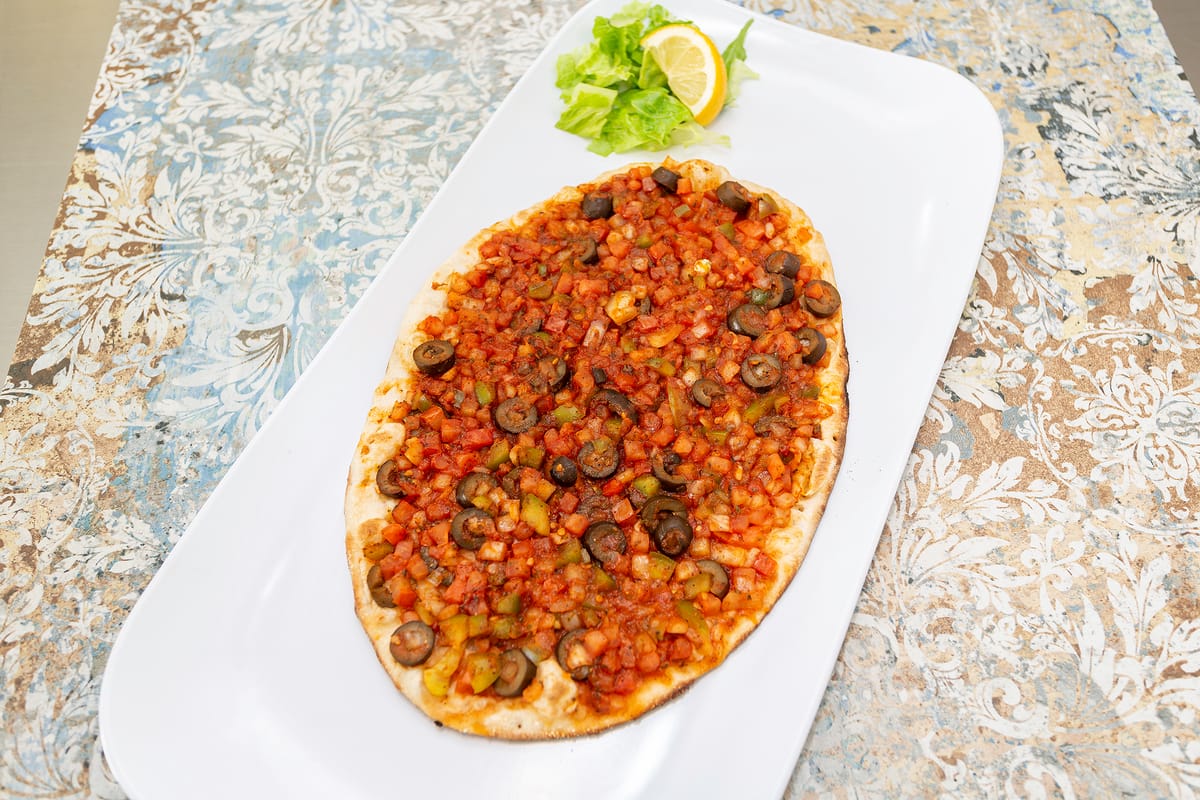
Every pie at Taza is hand-folded and baked to order in our oven. No heat lamps. No holding trays. Just dough, filling, and fire.
Sfiha Around the World
From Lebanese bakeries to Brazilian fast-food chains -- how the meat pie traveled the globe.
The Birthplace of Sfiha
In Lebanon, sfiha is foundational to the bakery tradition. Every neighborhood bakery in Beirut, Tripoli, and the Bekaa Valley produces trays of sfiha alongside spinach pies and cheese manakish each morning. Lebanese sfiha is typically small, open-faced, and boat-shaped, with the edges of the dough pinched upward to cradle the meat filling. The filling is kept simple: finely ground beef or lamb mixed with diced onion, chopped tomato, and a spice blend built on allspice, cinnamon, and black pepper. Some bakers add a squeeze of lemon juice or a spoonful of pomegranate molasses to brighten the meat. The pies are baked quickly in a very hot oven so the dough stays soft while the edges turn golden and the meat filling caramelizes slightly on top. Lebanese sfiha is eaten at breakfast, packed in school lunches, served at gatherings, and sold by the dozen from bakery windows. It is as much a part of daily life as bread itself.
Aleppo's Refined Approach
Syrian sfiha reflects the refined culinary traditions of Aleppo and Damascus, two cities with centuries-old reputations for pastry and savory dough work. In Aleppo, the meat filling tends to be more finely ground and seasoned with a wider palette of spices, sometimes including a touch of Aleppo pepper that adds a fruity, moderate heat without overwhelming the lamb. Syrian bakers are known for their precision with dough thickness -- the base should be thin enough to be supple but sturdy enough to hold the filling without tearing. Some Syrian preparations close the sfiha completely, folding the dough into a triangle or diamond shape over the meat, creating a sealed pie that keeps the filling moist and concentrated. The Aleppine tradition also emphasizes pine nuts toasted in clarified butter as a garnish, adding a rich, nutty crunch that contrasts with the soft meat filling.
Esfiha and the Lebanese Diaspora
Brazil is home to the largest Lebanese diaspora in the world, and the sfiha made the journey across the Atlantic in the late nineteenth and early twentieth centuries. In Brazil, the pie is called esfiha (sometimes esfirra), and it has become a national snack food found in bakeries, fast-food chains, and street carts from Sao Paulo to Salvador. Brazilian esfiha evolved in its new home: the pies are often fully enclosed rather than open-faced, the filling sometimes incorporates local ingredients like catupiry cream cheese, and the dough is slightly richer than traditional Lebanese versions. Major Brazilian food chains sell millions of esfihas per year, and the snack has become so embedded in Brazilian culture that many Brazilians do not realize its Lebanese origins. The Brazilian esfiha is a testament to how food travels with people and adapts to new environments while retaining its core identity as a portable, savory, affordable meat pie.
Lahmajun and Its Cousins
Armenian culinary tradition includes lahmajun, a thin flatbread topped with seasoned ground meat that shares a family tree with sfiha. While lahmajun is typically larger, thinner, and crispier than sfiha -- more like a meat pizza rolled up for eating -- the underlying concept is the same: bread dough meets spiced meat in a hot oven. Armenian lahmajun uses a finer meat paste that is spread thinly across the entire surface of the dough, while sfiha concentrates the filling in the center. The Armenian version often includes finely diced green pepper and a more assertive use of tomato paste in the topping. Both sfiha and lahmajun belong to the broader family of Levantine and Anatolian flatbread-and-meat preparations that have fed people across the region for centuries. At Taza, our sfiha follows the Lebanese tradition, but guests familiar with Armenian lahmajun will recognize the shared flavor profile of spiced ground meat, warm bread, and the satisfying simplicity of a well-made savory pie.
Inside the Sfiha Spice Blend
Four spices that transform ground meat and dough into something worth crossing town for.
The filling of a sfiha is only as good as its spice blend. Take away the spices and you have ground meat on bread -- functional, but forgettable. Add the right spices in the right proportions and you have something that fills a room with fragrance the moment the oven door opens. The traditional sfiha spice blend is not complicated -- it relies on four ingredients, each with a specific role. The art is in the balance. Too much of any one spice and the filling loses its harmony. The right balance and every component -- the meat, the onion, the tomato, the dough -- comes alive.
Allspice (Bahar Hilu)
The backbone of the sfiha spice blend. Allspice delivers warm, peppery, clove-like notes that define the character of the meat filling. In Lebanese cooking, allspice is used more generously than in Western kitchens, and it is the single spice most responsible for the 'this tastes like my grandmother made it' reaction among Lebanese diners. A proper sfiha without allspice is not a proper sfiha.
Cinnamon (Qirfe)
Cinnamon in savory meat dishes surprises Western palates, but in Levantine cooking it is standard practice. A small amount of ground cinnamon in the sfiha filling rounds out the allspice, adds sweetness without sugar, and creates a warm, aromatic quality that makes the filling fragrant even before it reaches your mouth. The cinnamon should be detectable in the background, never dominant.
Black Pepper
Black pepper provides the clean, sharp heat that balances the warmth of allspice and cinnamon. It cuts through the richness of the ground meat and the sweetness of the cooked onions, keeping each bite lively. The amount varies by baker -- some prefer a heavier hand for a more assertive pie, while others keep it restrained to let the allspice lead.
Sumac
Sumac is the secret ingredient that many home cooks leave out but professional bakers include. It adds a tangy, lemony acidity to the meat filling without the moisture that actual lemon juice would introduce. Sumac keeps the filling bright and prevents it from tasting flat or heavy. A dusting of sumac on top of the filled pie before baking is a finishing touch that separates a good sfiha from a great one.
At Taza, our spice blend for sfiha follows this traditional four-spice foundation. The proportions have been calibrated to complement our specific meat blend and our oven's baking characteristics. The result is a meat pie that smells as good as it tastes -- and that smells good enough to draw people across the restaurant when a fresh batch comes out of the oven. For more on the spices behind Mediterranean cooking, see our guide to shawarma, which covers many of the same spice traditions applied to slow-roasted meats.
Savory Pies for Every Diet
Meat-lovers, vegetarians, and everyone in between -- Taza's pie menu has the whole table covered.
Halal Meat Pies
Every meat pie at Taza is made with halal-certified meat. Our sfiha pie ($2.95) uses a traditional blend of ground beef and lamb. The beef and cheese pie ($3.95) pairs our signature beef shawarma with melted mozzarella. The chicken and cheese pie ($3.95) offers tender chicken with mozzarella in golden pastry. And our largest pie, the steak and cheese ($6.95), is a hearty combination of steak, cheese, roasted peppers, tomatoes, and onion. For guests who follow halal dietary guidelines, the entire meat pie section of our menu is available without qualification or compromise.
Vegetarian Pies
Four of Taza's eight specialty pies are completely vegetarian. The spinach pie ($2.95) is the classic Levantine fatayer -- fresh spinach with lemon and onion in flaky pastry. The cheese pie ($2.95) is filled with a melted cheese blend that stretches with every bite. The zaatar pie ($2.95) wraps the herbaceous, sesame-rich flavor of zaatar and olive oil inside golden dough. And the veggie pie ($2.95) combines diced mixed vegetables with mozzarella for a colorful, nutritious option. All four are made with the same handmade dough as our meat pies and baked to the same golden standard. Vegetarian guests, kosher-keeping diners, and anyone who simply loves cheese and bread will find something on this side of the menu.
The practical advantage of a pie menu this diverse is that mixed groups can order together without anyone being left out. A family with both meat-eaters and vegetarians can build a tray of assorted pies where everyone finds something they want. A group of friends with different dietary needs can share a dozen pies and try several varieties without anyone having to settle. This is how pies function in Lebanese culture -- they are communal food, ordered in quantity, shared across a table, and enjoyed as part of a spread that might also include manakish, hummus, fattoush, and warm pita bread.
Sfiha as Party Food and Catering
Affordable, portable, and universally crowd-pleasing. The perfect party food starts at $2.95 per pie.
There is a reason sfiha has been the default party food in Lebanese homes for generations: nothing else delivers this much flavor at this low a price with this little logistical effort. A tray of sfiha does not need plates, forks, warming trays, or serving utensils. The pies are finger food by design. They are pre-portioned into individual servings. They taste great at room temperature if the party runs long. And they cost less than almost any other catering option you can find in Falls Church or Northern Virginia. At $2.95 per pie, you can feed twenty people for under seventy dollars -- and that is before you mix in the even more affordable spinach, cheese, zaatar, and veggie pies at the same price point.
For a dinner party or house gathering, a mixed tray of Taza's specialty pies works as an appetizer course that keeps guests occupied while you prepare the rest of the meal. For a birthday party, a graduation, or a game day spread, the pies can serve as the main event alongside a bowl of hummus and a fattoush salad. For office lunches, team meetings, and corporate events, the combination of low per-unit cost and zero setup requirement makes pies the practical choice. No one needs to heat anything, portion anything, or clean up anything more than a napkin.
Taza's pie menu is built for large orders. We can prepare dozens or hundreds of pies with advance notice, mixed across all eight varieties to accommodate different dietary needs within a single order. The sfiha and beef-and-cheese pies cover meat-eaters. The spinach and zaatar pies cover vegetarians. The cheese and veggie pies are family-friendly options that children gravitate toward. And the steak and cheese pie, at $6.95, serves as a premium option for guests who want something more substantial.
To place a catering or large pie order, call Taza at (703) 340-1014. We recommend ordering at least 24 hours in advance for orders of five dozen pies or more. For smaller orders, same-day preparation is typically available. We are located at 5820 Seminary Rd Ste O, Falls Church, VA 22041 and are open 11:00 AM - 12:00 AM, Open 7 Days a Week. Pickup is the fastest option, but you can also order online for standard quantities.
Pies for Every Occasion
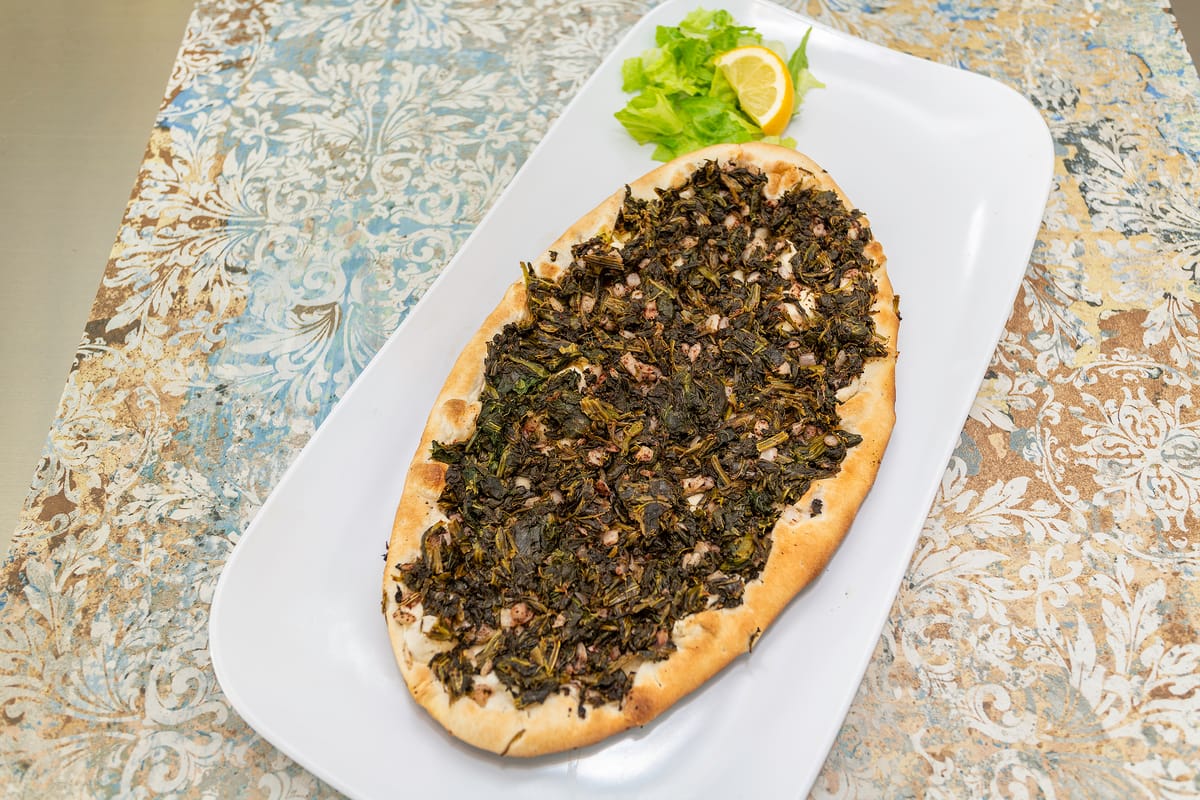
From a quick snack to a full catering spread -- 8 varieties, all hand-folded daily
Sfiha & Meat Pie: Common Questions
Sfiha is a traditional Lebanese and Syrian meat pie made with soft, yeasted bread dough topped or filled with a mixture of ground beef or lamb, diced onion, chopped tomato, and a warm spice blend of allspice, cinnamon, black pepper, and sumac. The classic shape is open-faced and boat-shaped, with the dough edges pinched upward to cradle the filling. Sfiha is baked at high heat until the dough is golden and the meat is cooked through. It is one of the oldest and most widespread savory pastries in Middle Eastern cuisine.
Sfiha is pronounced 'SFEE-ha' with the emphasis on the first syllable. The 's' and 'f' blend together at the start. In Brazilian Portuguese, where the pie is extremely popular, it is spelled esfiha and pronounced 'es-FEE-ha.' You may also see it written as sfeeha, sfeha, or lahm bi ajeen (which technically refers to a related but distinct flatbread preparation). At Taza, our staff is happy to help with pronunciation -- just ask for the meat pie if you prefer.
Sfiha and fatayer are closely related but not identical. Both are Lebanese pastries made with the same type of yeasted dough, but they differ in shape and filling convention. Sfiha is traditionally open-faced and filled with a meat mixture. Fatayer is typically closed and folded into a triangle, and it is most commonly filled with spinach (fatayer bi sabanikh) or cheese. At Taza, our spinach pie and cheese pie are in the fatayer tradition, while our sfiha pie follows the classic open-faced meat pie format. Think of them as siblings in the same pastry family.
Taza's sfiha pie uses a blend of ground beef and lamb, seasoned with traditional Lebanese spices including allspice, cinnamon, and black pepper. All our meat is halal-certified. The filling also includes diced onion and tomato, which add moisture and sweetness during baking. The result is a savory, aromatic meat pie that stays juicy inside while the dough bakes to a golden finish.
Yes. All meat served at Taza Shawarma & Falafel is halal-certified, including the ground beef and lamb in our sfiha pie, the beef shawarma in our beef and cheese pie, the chicken in our chicken and cheese pie, and the steak in our steak and cheese pie. Our vegetarian pies -- spinach, cheese, zaatar, and veggie -- contain no meat at all. Taza is committed to serving the halal community in Falls Church and Northern Virginia.
For a party or gathering, plan on three to four pies per person if the pies are served as appetizers alongside other food, or six to eight pies per person if the pies are the main course. Taza's specialty pies start at just $2.95 each, making them one of the most affordable catering options in Falls Church. For large orders, call us at (703) 340-1014 to arrange your order in advance. We can prepare mixed trays with a selection of sfiha, spinach, cheese, zaatar, and veggie pies.
Yes. You can order Taza's sfiha pie and all eight of our specialty pie varieties online for pickup through our ordering system. Visit our online menu or call (703) 340-1014 to place your order. We are located at 5820 Seminary Rd Ste O, Falls Church, VA 22041 and are open 11:00 AM - 12:00 AM, Open 7 Days a Week. Pies are baked fresh to order, so they arrive hot from the oven.
Sfiha and lahmajun are both meat-topped bread preparations from the Levant and Anatolia, but they differ in several ways. Sfiha uses thicker, softer yeasted dough shaped into small individual pies (usually 3-4 inches), with the meat filling concentrated in the center. Lahmajun uses a thinner, crispier base (more like a very thin pizza), with the meat spread across the entire surface in a thin layer. Lahmajun is typically larger and rolled up for eating, while sfiha is eaten as a handheld individual pie. Both are delicious, and both are part of the broader tradition of combining ground meat, spices, and bread dough in the Middle East.
Try Taza's Savory Pies in Falls Church
Open 11:00 AM - 12:00 AM, Open 7 Days a Week at 5820 Seminary Rd Ste O, Falls Church, VA 22041.
Address
5820 Seminary Rd Ste O, Falls Church, VA 22041
Hours
11:00 AM - 12:00 AM -- Open 7 Days a Week
Phone
Golden Crust, Savory Filling, Made by Hand
Eight specialty pie varieties, all hand-folded daily from fresh dough and premium fillings. From classic sfiha to spinach, cheese, zaatar, and beyond -- starting at just $2.95. Order online or visit us in Falls Church.