What Is Fatayer? The Levantine Stuffed Pastry Tradition
Fatayer are hand-folded, oven-baked pastries filled with spinach, meat, or cheese. A cornerstone of Levantine bakery culture for centuries, and now baked fresh daily at Taza in Falls Church.
4.8 stars on Yelp (92 reviews) -- Open 11:00 AM - 12:00 AM
What Is Fatayer?
Everything you need to know about the Levantine pastry that has fed families for generations.
Fatayer are hand-folded stuffed pastries made from yeast-leavened bread dough, filled with one of several traditional fillings, and baked in a hot oven until golden. The word "fatayer" (also spelled fatayir or ftayer) is the Arabic plural of "fatira," meaning a single pie or pastry. The dough is a straightforward mixture of flour, water, yeast, salt, sugar, and olive oil -- rolled thin, wrapped around a filling, and sealed by hand before baking. The result is a portable pastry with a soft, bread-like exterior and a concentrated filling inside.
The three classic fillings define the main varieties: spinach with lemon and sumac (fatayer bi sabanekh), seasoned ground meat with onion and tomato (fatayer bi lahm, closely related to sfiha), and cheese -- typically akkawi or a regional blend (fatayer bi jibneh). Each filling produces a different shape: spinach fatayer are folded into tight triangles, meat fatayer are shaped into open boats, and cheese fatayer are formed into half-moons or sealed rounds. The shapes are functional, not decorative -- each is designed to contain its filling without splitting or leaking during baking.
At Taza Shawarma & Falafel in Falls Church, VA, we bake a full range of fatayer and specialty pies fresh in our stone oven throughout the day. Spinach pie, sfiha meat pie, cheese pie, veggie pie, and zaatar pie all start at $2.95, with larger specialty pies like steak & cheese at $6.95. Each one is folded by hand and baked to order.
Hand-Folded. Stone-Oven Baked. Made Fresh Daily.
Every fatayer at Taza is assembled and baked to order using dough made in-house each morning.
The History of Fatayer
A bakery tradition rooted in Levantine communal culture.
Fatayer have been a fixture of Levantine baking for at least five centuries, though the underlying concept -- wrapping dough around a filling and baking it -- is far older. Historical references to stuffed pastries appear in medieval Arabic cookbooks from Baghdad, Damascus, and Cairo, where similar preparations were served at court feasts and sold in market stalls. The specific tradition of fatayer as we know it today -- triangular spinach pies, open-topped sfiha, cheese-filled crescents -- solidified in the bakeries of Lebanon, Syria, and Jordan during the Ottoman period, when communal ovens (called "furn" in Arabic) became the center of neighborhood life.
In traditional Levantine villages, baking day was a communal event. Families prepared dough and fillings at home, then carried trays to the neighborhood bakery -- the "furn" -- where the baker slid them into the wood-fired oven. Every household had its own filling recipe, and the resulting variety gave each bakery its character. As Levantine communities migrated globally in the 20th century -- to West Africa, South America, Australia, Europe, and North America -- fatayer traveled with them. In Northern Virginia, the substantial Lebanese, Syrian, and Jordanian communities have kept the tradition alive. At Taza in Falls Church, we bake fatayer using the same stone-oven method that Levantine bakers have relied on for generations.
Regional variations reflect the Levant's agricultural landscape. Coastal towns favored spinach fatayer; mountain communities preferred meat fatayer using local lamb; dairy regions produced cheese fatayer with akkawi and halloumi. These preferences still shape how fatayer are made today, even thousands of miles away.
Types of Fatayer
Five classic fillings, each with its own shape, flavor profile, and place in Levantine cuisine.
Spinach Fatayer (Fatayer bi Sabanekh)
Filling: Fresh spinach, onion, lemon juice, sumac, pine nuts, olive oil
The most recognized variety worldwide. Fresh spinach is chopped and mixed with diced onion, a generous squeeze of lemon juice, ground sumac for tang, toasted pine nuts for crunch, and olive oil to bind everything together. The filling is wrapped in triangular parcels of yeast dough and baked until the crust turns golden and the spinach becomes tender. The lemon-sumac combination gives spinach fatayer a bright, tart flavor that sets them apart from Western spinach pastries. At Taza, our spinach pie is $2.95.
Meat Fatayer (Sfiha / Lahm bi Ajin)
Filling: Seasoned ground beef, tomato, onion, parsley, allspice, pine nuts
The meat version takes two forms: sfiha (open-topped or partially folded) and fully sealed fatayer. Both use seasoned ground beef or lamb mixed with diced tomato, finely chopped onion, fresh parsley, allspice, and sometimes toasted pine nuts. Sfiha is typically shaped into small open boats where the meat topping remains visible, while sealed meat fatayer are folded into triangles or crescents. The spice profile is distinctly Levantine -- allspice, black pepper, and a touch of cinnamon. At Taza, our sfiha pie starts at $2.95 and lahm bil ajin at $8.95.
Cheese Fatayer (Fatayer bi Jibneh)
Filling: Akkawi cheese, mozzarella, halloumi, or mixed cheese blend
Cheese fatayer use a blend of Middle Eastern cheeses -- typically akkawi (a semi-soft, mildly salty brine cheese), mozzarella for stretch, and sometimes halloumi or kashkaval. The cheese is placed inside the dough, sealed, and baked until the exterior crisps and the interior becomes molten. Unlike Western cheese pastries that rely on heavy cream or butter, cheese fatayer let the cheese itself carry the flavor, with the olive-oil-enriched dough providing a light, bread-like wrapper. Taza cheese pies are $2.95 each.
Zaatar Fatayer
Filling: Dried thyme, sesame seeds, sumac, olive oil
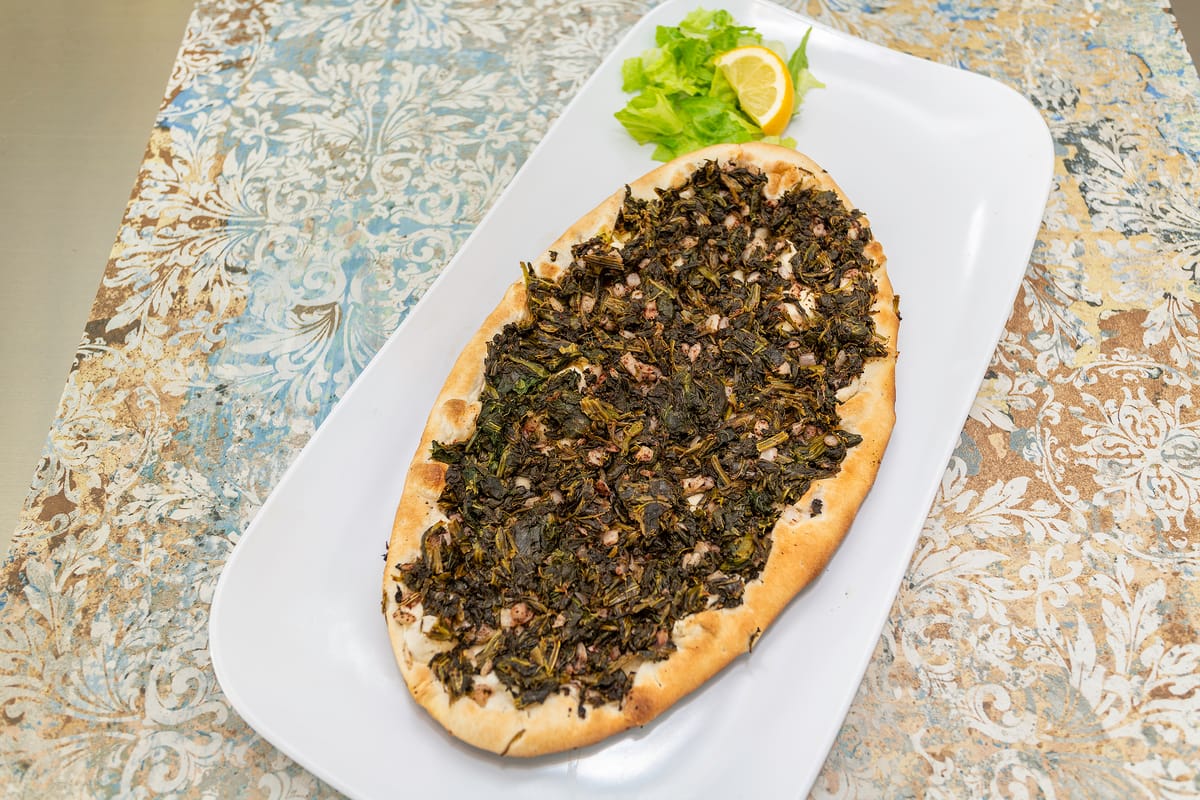
A simpler variation where the dough is filled or topped with a zaatar paste -- the same blend of dried thyme, sesame seeds, sumac, and olive oil used on manakish flatbreads, but folded into pie form instead of served open-faced. Zaatar fatayer are fragrant, herbaceous, and lighter than cheese or meat versions. They are a popular breakfast option and pair well with fresh vegetables or a side of labneh. At Taza, zaatar pies are $2.95.
Veggie Fatayer
Filling: Tomatoes, onion, black olive, green and red pepper, olive oil
A garden-forward variation filled with diced tomatoes, onion, black olives, green and red bell peppers, and a drizzle of olive oil. This style showcases the vegetable abundance of Levantine cuisine without relying on cheese or meat. The peppers soften during baking and release their juices into the dough, creating a moist, flavorful interior. A nutritious, kid-friendly option that holds up well at room temperature -- making it a natural choice for packed lunches and picnics. Taza veggie pies are $2.95.
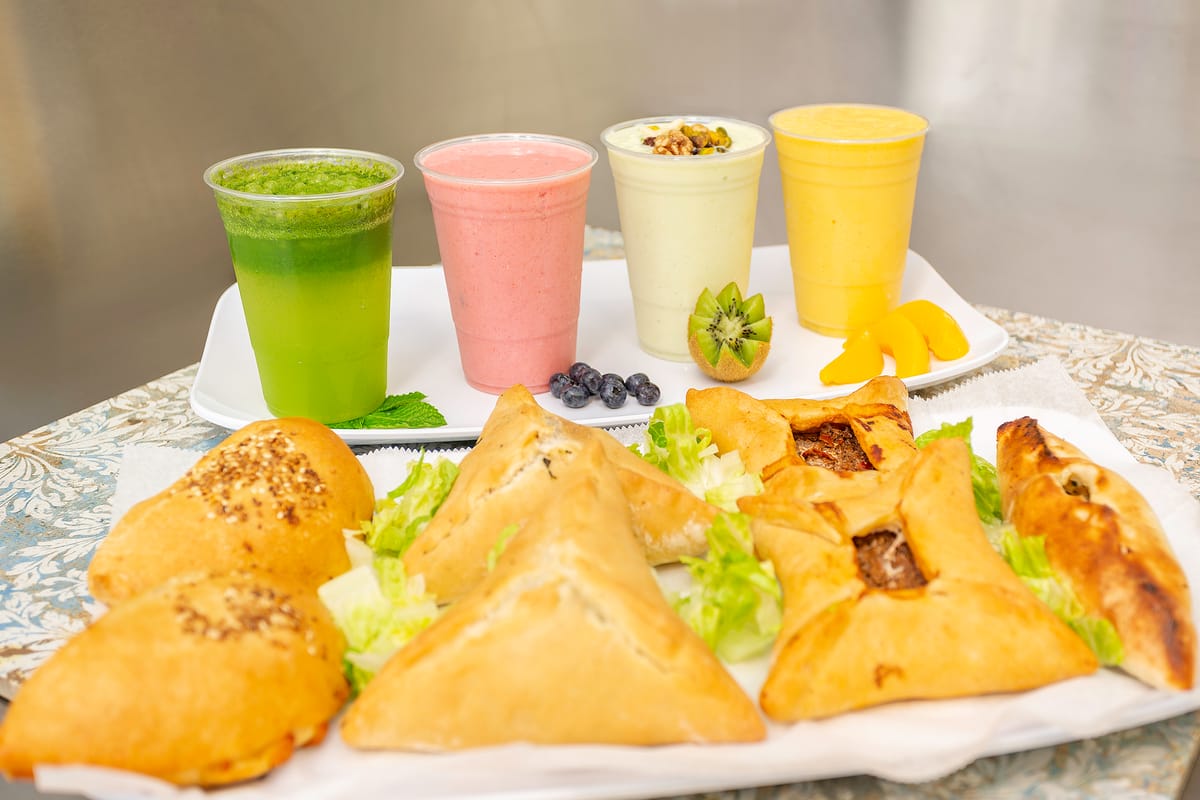
Five Fillings. Three Shapes. One Tradition.
Spinach triangles, open meat boats, sealed cheese crescents -- every shape serves a purpose.
How Fatayer Is Made
From dough preparation to folding to baking: the process behind every pastry.
Dough Preparation
The dough begins with bread flour, warm water, active yeast, a pinch of sugar, salt, and olive oil. The ingredients are mixed until a smooth, elastic ball forms, then covered and left to rise for 60 to 90 minutes until doubled. The risen dough is punched down, divided into small portions (60-80 grams each), and rolled into balls. Each ball is rolled flat into a thin circle or oval, ready to receive its filling -- thin enough to fold easily but thick enough to hold the filling without tearing.
Filling Preparation
Each filling is prepared separately. For spinach fatayer, fresh spinach is chopped, salted to draw out moisture, squeezed dry, and mixed with diced onion, lemon juice, sumac, olive oil, and pine nuts. For meat fatayer, ground beef is mixed raw with diced onion, chopped tomato, parsley, allspice, and black pepper. Cheese fatayer use cubed akkawi cheese (soaked to reduce saltiness), often blended with mozzarella for stretch. The filling must be concentrated -- excess moisture makes the dough soggy during baking.
Folding Techniques
The folding technique varies by filling type, and experienced bakers can fold dozens of fatayer per minute with consistent shape and seal:
Triangle (Spinach)
Place filling in the center. Lift three edges and pinch them together at the top, forming a three-sided pyramid. Press seams firmly. This shape locks in moist spinach and prevents leaking.
Open Boat (Meat Sfiha)
Spread meat across the dough, leaving a narrow border. Fold two opposite edges slightly, pinching the ends into an open boat. The meat remains exposed and browns directly in the oven heat.
Half-Moon / Round (Cheese)
Place cheese on one half, fold the other over, and crimp the curved edge. Some bakers gather all edges to center for a sealed round. The seal must be tight so melting cheese cannot escape.
Baking
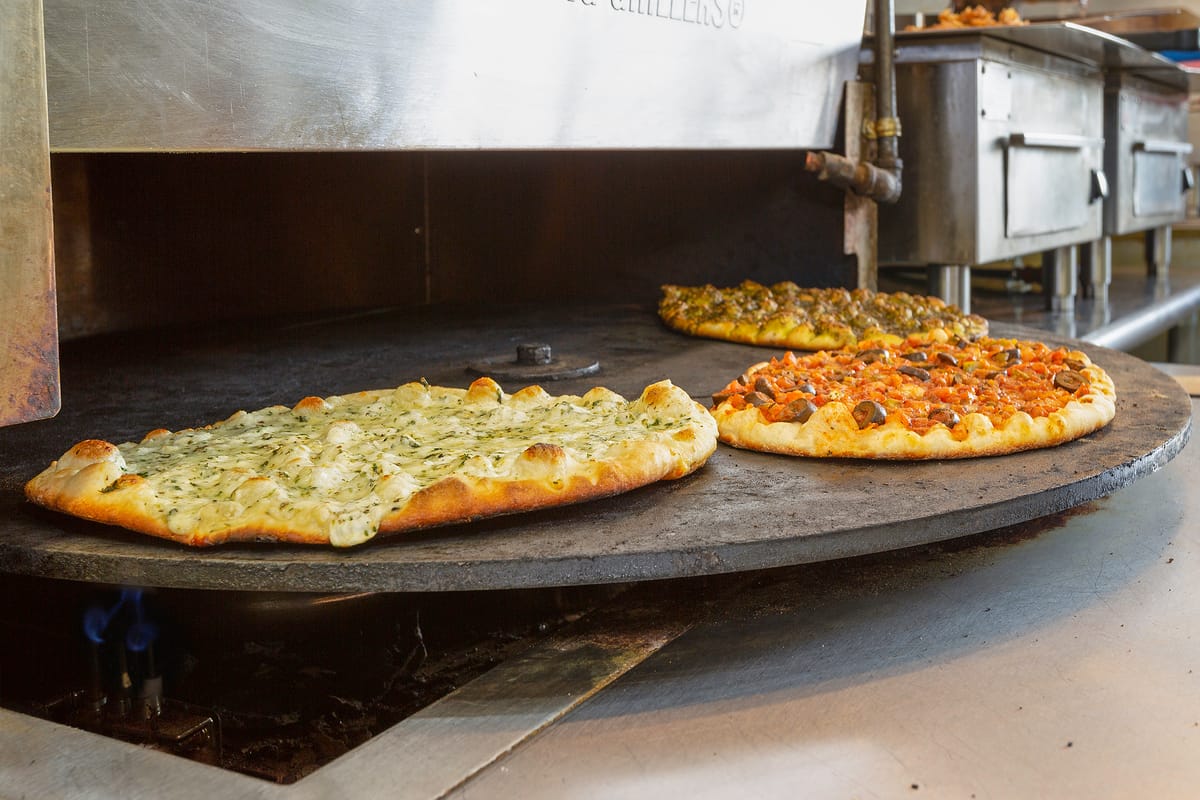
Assembled fatayer are placed on oiled baking trays and slid into a preheated stone oven at 400-450 degrees Fahrenheit for 12 to 18 minutes. Spinach fatayer are done when the seams turn golden. Meat sfiha are done when the edges crisp and the topping darkens. Cheese fatayer are removed just as the dough colors -- overbaking toughens the cheese. At Taza, our stone oven gives every fatayer a light char on the bottom and a soft top.
Fatayer vs Empanada vs Samosa
Three stuffed pastry traditions from three continents. How do they compare?
| Feature | Fatayer (Levantine) | Empanada & Samosa |
|---|---|---|
| Origin | Levant (Lebanon, Syria, Jordan) -- centuries-old bakery staple | Empanada: Spain/Latin America; Samosa: South/Central Asia |
| Dough Type | Yeast-leavened bread dough with olive oil, soft and pliable | Empanada: unleavened pastry (lard/butter); Samosa: thin maida/flour crust |
| Shape | Triangle (spinach), open boat (meat sfiha), round sealed (cheese) | Empanada: half-moon, crimped; Samosa: pyramid / cone |
| Cooking Method | Baked in a stone oven at high heat | Empanada: baked or fried; Samosa: deep-fried (sometimes baked) |
| Classic Fillings | Spinach-lemon-onion, spiced ground beef, akkawi cheese, zaatar | Empanada: beef/chicken/cheese; Samosa: spiced potato, peas, lamb |
| Portion Size | Individual hand-sized pastry, 2-4 oz each | Empanada: 4-8 oz; Samosa: 2-4 oz |
| Meal Role | Snack, appetizer, breakfast item, or light lunch | Empanada: meal or snack; Samosa: appetizer or street food |
| Typical Seasoning | Sumac, allspice, lemon juice, pine nuts, olive oil | Empanada: cumin, paprika; Samosa: turmeric, cumin, coriander, garam masala |
| Dipping Sauce | Lemon juice squeeze, yogurt, or eaten plain | Empanada: chimichurri, aji; Samosa: tamarind or mint chutney |
All three share the same idea -- dough wrapped around filling -- but diverge in dough type, cooking method, and seasoning. Fatayer stand out for their olive-oil bread dough and always-baked preparation.
Fatayer Dough: What Makes It Special
The olive-oil yeast dough that sets Levantine pastries apart.
The dough is the foundation of every fatayer, and its character separates Levantine pastries from their counterparts around the world. Fatayer dough is a yeast-leavened bread dough, not a pastry dough. Pastry doughs (like those used in empanadas or puff pastry) rely on cold fat -- butter, lard, or shortening -- to create flakiness. Fatayer dough uses olive oil instead, mixed directly into the flour with warm water and yeast. The result is softer, chewier, and more bread-like than any laminated or short-crust pastry.
The olive oil coats the gluten strands, creating a tender crumb that tears easily rather than shattering. This makes fatayer comfortable to eat by hand -- the dough bends without crumbling. The oil also extends shelf life: a well-made fatayer stays soft for hours after baking. The yeast fermentation contributes a subtle depth of flavor that unleavened doughs lack. During the rise, the yeast produces carbon dioxide for lift along with trace organic acids that add complexity. A properly fermented fatayer dough tastes faintly tangy and wheaty, complementing rather than competing with whatever filling is inside.
At Taza, we prepare our pie dough fresh each morning using bread flour, filtered water, active yeast, sea salt, a pinch of sugar, and extra-virgin olive oil. The dough rests and rises in-house before being portioned and rolled to order. This daily preparation ensures that every fatayer has the soft, pliable texture and fresh-baked aroma that define the tradition.
Fresh Ingredients, Traditional Recipes
Spinach, onions, sumac, pine nuts, akkawi cheese -- the building blocks of every fatayer we bake.
Fatayer Nutrition by Filling Type
Approximate values per individual fatayer. Actual nutrition varies by size and recipe.
| Filling | Calories | Protein | Fiber | Fat | Notes |
|---|---|---|---|---|---|
| Spinach Fatayer | 180-220 | 5-7g | 3-4g | 8-10g | Lowest calorie option. Rich in iron, vitamin K, and folate from the spinach. The lemon juice aids iron absorption. |
| Meat Fatayer (Sfiha) | 240-300 | 12-15g | 1-2g | 12-16g | Highest protein content. Ground beef provides B12, zinc, and iron. Allspice has anti-inflammatory properties. |
| Cheese Fatayer | 220-280 | 9-12g | 1g | 11-14g | Good calcium source from akkawi and mozzarella. Moderate calories with satisfying richness. |
| Zaatar Fatayer | 190-230 | 4-6g | 2-3g | 9-12g | Healthy fats from olive oil. Thymol in zaatar has antimicrobial properties. Low in saturated fat. |
| Veggie Fatayer | 170-210 | 3-5g | 3-4g | 7-9g | Highest fiber alongside spinach. Bell peppers provide vitamin C. Olives add healthy monounsaturated fats. |
All fatayer at Taza are baked in our stone oven -- never fried -- which keeps total fat content lower than many stuffed pastry traditions that rely on deep frying.
Fatayer & Specialty Pies at Taza
Eight baked pies on our menu -- from traditional spinach triangles to hearty steak and cheese. All made fresh.
Spinach Pie
$2.95
Large Mediterranean flat bread with fresh spinach, onion, and pine nuts.
Order NowVeggie Pie
$2.95
Pastry dough with tomatoes, onion, black olive, green and red pepper, and olive oil.
Order NowSteak & Cheese Pie
$6.95
Large pastry dough with steak, cheese, peppers, tomatoes, and onion.
Order NowBeef and Cheese Pie
$3.95
Pastry dough with beef shawarma, mozzarella cheese, and olive oil.
Order NowChicken & Cheese Pie
$3.95
Pastry dough with chicken, mozzarella cheese, and olive oil.
Order NowAll pies at Taza are baked fresh in our stone oven using dough made daily in-house. Pair any pie with a side of hummus ($4.95) or a lemon mint drink for the full Levantine pastry experience.
How to Eat Fatayer
Pairing suggestions, serving traditions, and the best beverages to enjoy alongside your pastries.
Sauces and Accompaniments
Fatayer are traditionally eaten with minimal accompaniment. A squeeze of fresh lemon juice over spinach fatayer amplifies the sumac in the filling. Plain yogurt or labneh provides a cool contrast to meat fatayer. Cheese fatayer pair well with sliced tomatoes, cucumbers, and olives on the side.
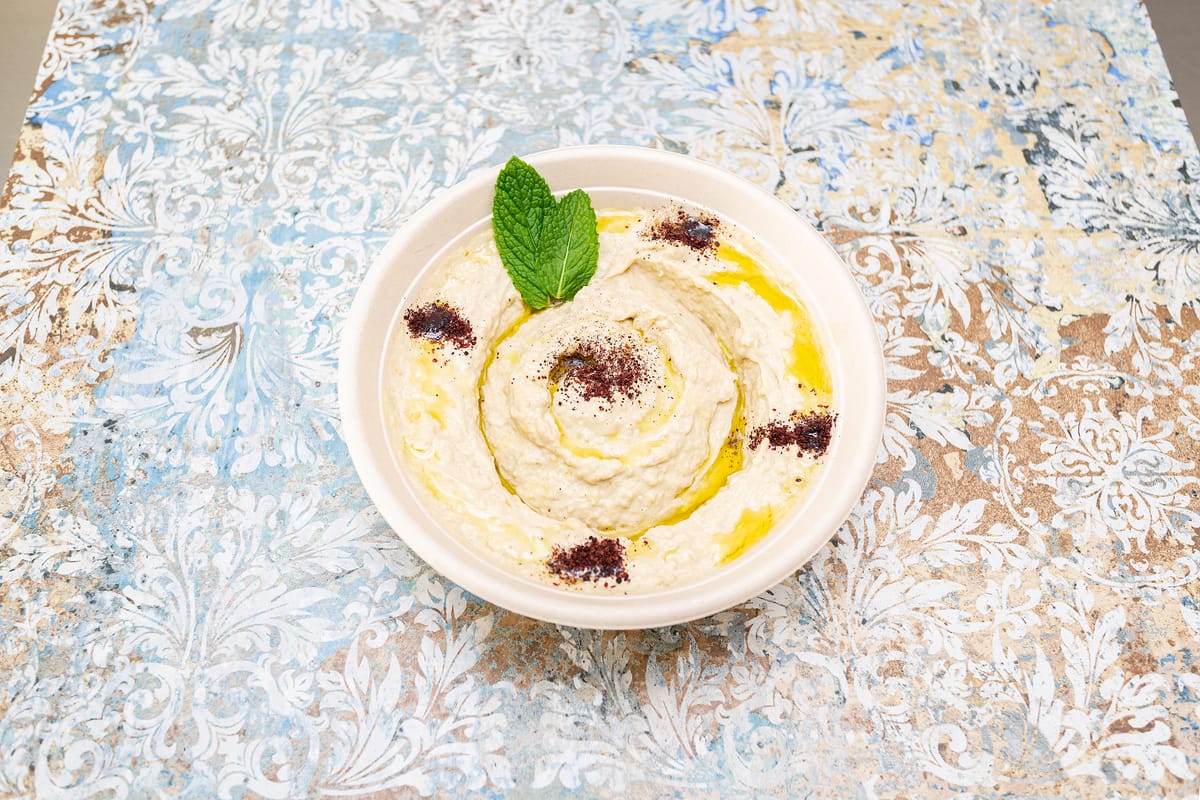
For a fuller spread, serve fatayer alongside hummus, baba ghanouj, tabbouleh, and pickled turnips -- a mezze-style presentation common at Levantine gatherings. At Taza, our hummus ($4.95) and baba ghanouj make ideal companions to any of our pies.
Serving Traditions
In Levantine households, fatayer are baked in large batches -- often 50 to 100 at a time -- and arranged on platters for the entire family. Baking days are social events, with multiple generations assembling, folding, and baking together. The finished fatayer are served warm or at room temperature, and it is common to make several filling types so everyone can choose.
Fatayer are a staple at Levantine celebrations, religious holidays, and family gatherings. During Ramadan, they are prepared for iftar. For Sunday lunches and neighborhood potlucks, a platter of mixed fatayer is as expected as bread on the table. This communal quality makes them a natural fit for catering and group orders.
Best Beverages with Fatayer
The traditional pairing is hot black tea with fresh mint and a touch of sugar. The warmth and brightness of mint tea cut through the richness of the dough and complement every filling type. This is the standard breakfast combination across Lebanon, Syria, and Jordan: mixed fatayer, mint tea, and fresh vegetables.
For a cold alternative, lemon mint juice is the definitive Levantine refreshment -- its tart, herbal flavor pairs well with spinach and zaatar fatayer. At Taza, our lemon mint drink is a customer favorite alongside any of our baked pies. Ayran (a salted yogurt drink) also complements meat fatayer with its cool, tangy character.
From Our Kitchen to Your Table
Sumac, allspice, pine nuts, fresh spinach -- the flavors that define Levantine baking.
Fatayer: Common Questions Answered
Fatayer (also spelled fatayir or ftayer) comes from Arabic meaning 'pies' or 'pastries.' It is the plural of 'fatira,' a single hand-folded stuffed pastry. The word shares a root with 'fatur' (breakfast) in several Arabic dialects, reflecting the role these pastries play as a morning food. In everyday use, fatayer refers to the triangular or boat-shaped baked pastries filled with spinach, meat, or cheese found in Lebanese, Syrian, and Jordanian bakeries.
Both are Levantine pastries made from the same yeast dough, but they differ in shape and construction. Fatayer are fully sealed -- the dough is folded around the filling and pinched closed, typically into a triangle (for spinach) or a crescent (for cheese). Sfiha are open-topped or only partially folded -- the filling sits exposed on top of the dough, shaped into small boats or rounds. At Taza, our sfiha pie ($2.95) has an open meat topping, while our spinach pie ($2.95) is folded and sealed in the traditional fatayer style.
Fatayer can be nutritious depending on the filling. Spinach fatayer are approximately 180-220 calories each, with iron from spinach, vitamin C from lemon juice, and healthy fats from olive oil. The yeast-leavened dough keeps saturated fat lower than butter-heavy pastries. Meat fatayer provide 12-15 grams of protein per piece. Cheese fatayer are moderate at 220-280 calories. All fatayer at Taza are baked rather than fried, reducing total fat content.
No, though both are savory spinach pastries. Spanakopita is Greek and uses phyllo dough -- thin, layered sheets brushed with butter -- while fatayer uses yeast-leavened bread dough enriched with olive oil. Spanakopita filling includes feta and dill; fatayer bi sabanekh uses lemon juice, sumac, and pine nuts without cheese. Spanakopita is flaky from layered phyllo; fatayer has a soft, bread-like chew. Both are good, but they come from distinct culinary traditions.
Yes. Fatayer freeze well before and after baking. To freeze unbaked fatayer, assemble on a parchment-lined sheet, freeze solid, then bag. Bake directly from frozen, adding 5-7 minutes. Already-baked fatayer reheat in a 350F oven for 10-12 minutes. For the best texture, though, nothing compares to fresh-from-the-oven fatayer. At Taza in Falls Church, all our pies are baked to order throughout the day.
Fatayer are often eaten alone as a snack or breakfast item. Common accompaniments include lemon juice over spinach fatayer, yogurt or labneh, fresh mint, sliced vegetables, pickled turnips, or mint tea. At Taza, pair fatayer with hummus ($4.95) or a lemon mint drink. They also work well as part of a mezze spread with baba ghanouj and tabbouleh.
The triangular shape is both practical and traditional. Pinching three corners creates a strong seal that keeps the wet spinach from leaking. Triangles also tessellate on baking trays, fitting together without wasted space. Not all fatayer are triangular: cheese fatayer are often half-moon or round, sfiha are open boats, and some regional variations use rectangular shapes.
Taza Shawarma & Falafel at 5820 Seminary Rd Ste O, Falls Church, VA 22041 offers a full range of baked fatayer and specialty pies. Our spinach pie is $2.95, sfiha meat pie is $2.95, cheese pie is $2.95, veggie pie is $2.95, and zaatar pie is $2.95. We also offer larger specialty pies including steak & cheese ($6.95), beef & cheese ($3.95), and chicken & cheese ($3.95). All baked fresh in our stone oven. Open 11:00 AM - 12:00 AM, Open 7 Days a Week. Order online or call (703) 340-1014.
Get Fresh Fatayer at Taza Today
Open 11:00 AM - 12:00 AM, Open 7 Days a Week at 5820 Seminary Rd Ste O, Falls Church, VA 22041.
Address
5820 Seminary Rd Ste O, Falls Church, VA 22041
Hours
11:00 AM - 12:00 AM -- Open 7 Days a Week
Phone
Taste Fresh-Baked Fatayer at Taza
Spinach, meat, cheese, veggie, zaatar -- all hand-folded and baked to order in our stone oven. Starting at $2.95. Order online or visit us on Seminary Road.