Toum: The Complete Guide to Lebanese Garlic Sauce
Raw garlic, lemon juice, oil, salt -- four ingredients, zero dairy, and a flavor so intense it rewrites your definition of garlic sauce. This is everything you need to know about toum.
4.8 stars on Yelp (92 reviews) -- Open 11:00 AM - 12:00 AM
What Is Toum and Why Does It Taste Like That?
A garlic emulsion with no eggs, no dairy, and no compromise.
Toum is a traditional Lebanese condiment built from raw garlic cloves, neutral oil, fresh lemon juice, and salt. The name comes from the Arabic word for garlic, and the sauce delivers on that name with absolute conviction. A single batch of toum can use an entire head of garlic -- sometimes two -- crushed into a fine paste and then whipped with oil until the mixture transforms into a thick, snow-white cream that holds stiff peaks like a meringue. There are no eggs in toum. There is no dairy. There is no cream cheese, no yogurt, no butter. The white color and fluffy texture come entirely from emulsification, the same physics that make mayonnaise opaque. The lemon juice provides acidity to stabilize the emulsion and a bright citrus note that tempers the raw garlic burn. The finished product is sharp, pungent, and deeply savory on the first bite, then coats the palate with a creamy richness that lingers for minutes.
In Lebanon and across the Levant, toum is as fundamental as salt and pepper. It accompanies grilled chicken, roasted lamb, kebabs, falafel, and flatbreads. It is the white stripe down the center of every chicken shawarma wrap and the sauce pooled beside every plate of charcoal-grilled meat. Lebanese families pass down their toum ratios the way Italian families guard pasta dough recipes. Getting it right produces a sauce so addictive that people eat it by the spoonful. Getting it wrong produces a greasy, broken mess that smells like a garlic farm but tastes like failure. The margin between those two outcomes is narrow, which is why fresh restaurant toum made by practiced hands often tastes better than home attempts.
At Taza Shawarma and Falafel in Falls Church, our garlic sauce is made fresh in-house following the traditional Lebanese method. We use firm, fresh garlic, neutral oil, lemon juice, and a pinch of salt. Nothing else goes into the bowl. The result is a toum that is thick enough to hold its shape on a spoon, fluffy enough to spread on flatbread without tearing it, and garlicky enough to remind you what you ate for the rest of the afternoon. It appears on every shawarma sandwich, every wrap, and every bowl we serve, because nothing else we have tried pairs as well with slow-roasted meat.
How Does Garlic Turn Oil Into a Fluffy White Cream?
The emulsion science behind toum, explained without a chemistry degree.
Oil and water do not mix under normal circumstances. Pour lemon juice into oil and the two liquids separate within seconds. Toum breaks that rule through emulsification -- forcing one liquid into microscopic droplets suspended inside another. In mayonnaise, egg yolk provides the emulsifier: lecithin, a molecule with one end attracted to water and the other to fat. Lecithin sits at the boundary between each oil droplet and the surrounding water, preventing the droplets from merging. Toum accomplishes the same feat without eggs. Raw garlic contains its own emulsifying agents -- starches, proteins, and sulfur compounds released when cell walls rupture during crushing. These garlic-derived molecules wrap around oil droplets and stabilize them in the aqueous phase created by lemon juice and the garlic's own moisture.
The white color is a direct consequence of emulsification. When oil exists as a pool, light passes through and it appears clear. When broken into millions of microscopic droplets, light bounces off each droplet's surface instead of passing through. This scattering makes the emulsion opaque and white -- the same optical principle that makes clouds white even though water vapor is transparent. The more thoroughly you process the toum, the smaller the droplets and the whiter the sauce. Under- processed toum looks translucent or yellowish. Properly made toum is blindingly white and stiff enough to hold its shape.
The mechanical energy that drives the emulsion matters as much as the ingredients. Traditional toum was made with a large wooden mortar and pestle, the kind you could anchor on a kitchen floor and pound with both arms. Modern food processors accomplish the same result faster, but the principle is identical: sustained mechanical force applied while oil is added slowly and steadily. The lemon juice is added in alternating increments with the oil to maintain the balance between the aqueous and fat phases. Too much oil added too quickly overwhelms the garlic's emulsifying capacity and the sauce breaks -- oil pools out, garlic clumps, and you are left with an oily slurry instead of a fluffy cream.
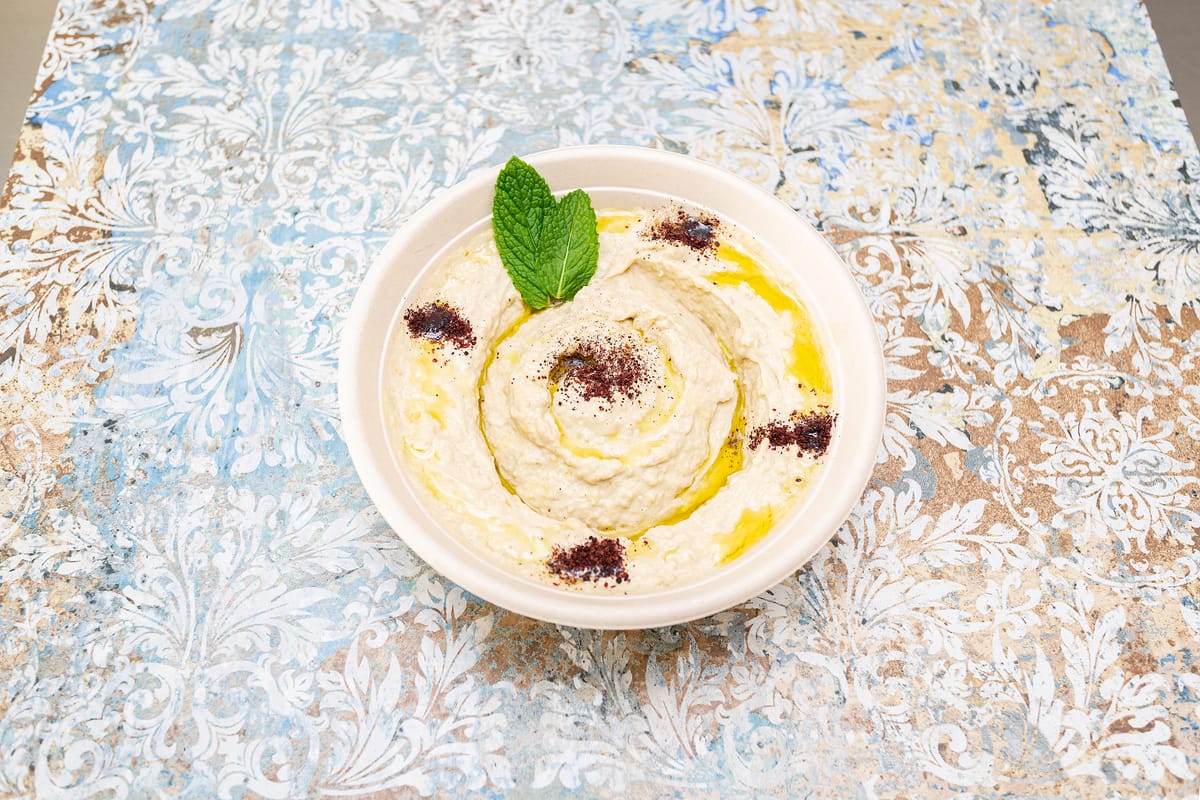
Fresh Garlic. Real Lemon. No Shortcuts.
Our toum is made in-house daily with four ingredients and zero preservatives.
What Is the Difference Between Toum, Aioli, and Garlic Mayo?
Three garlic sauces that look similar but taste and perform very differently.
Walk into three different restaurants and order a garlic sauce, and you might receive toum, aioli, or garlic mayo. All three are white, all three contain garlic and oil, and all three are served alongside bread and protein. But they are not the same product. Toum uses no eggs and no dairy -- the emulsion holds together through garlic's natural starches and proteins. Traditional French aioli uses egg yolk as the emulsifier along with garlic and olive oil. Garlic mayo is the most casual: mayo with minced garlic stirred in. Each sauce has its place, but they are not interchangeable in flavor, texture, or function.
The garlic intensity is where toum separates itself. In aioli and garlic mayo, garlic is a flavoring -- a gentle warmth in an egg-based sauce. In toum, garlic is the structural foundation. A cup of toum may contain two dozen cloves of raw garlic, which means the garlic flavor is the dominant, front-and-center taste. People who say they love garlic but have only eaten aioli are in for a recalibration. The texture differs too: toum is lighter and fluffier because it lacks egg yolk's weight. It sits on top of food rather than sinking in, which is why it works so well on shawarma and grilled meats.
| Feature | Toum (Lebanese) | Aioli / Garlic Mayo |
|---|---|---|
| Base Ingredients | Garlic, oil, lemon juice -- no eggs, no dairy | Egg yolk, garlic, oil -- garlic-flavored mayonnaise |
| Emulsifier | Natural lecithin and starch from raw garlic cloves | Lecithin from egg yolk -- same mechanism as mayo |
| Garlic Intensity | Extreme -- garlic is the primary ingredient by volume | Moderate -- garlic is a flavoring agent, not the base |
| Texture | Light, fluffy, whipped -- holds stiff peaks like meringue | Dense, creamy, thick -- heavier mouthfeel similar to mayo |
| Vegan | Yes -- completely plant-based, no animal products | No -- contains egg yolk |
| Shelf Life (Refrigerated) | 3-4 weeks -- garlic and lemon act as natural preservatives | 1-2 weeks -- egg content limits storage time |
| Cultural Origin | Lebanon and the Levant -- centuries-old condiment tradition | Provence, France (aioli); American diner culture (garlic mayo) |
| Best Pairing | Shawarma, falafel, grilled meats, flatbreads, kebabs | Seafood, french fries, sandwiches, burgers |
How Is Toum Made? The Step-by-Step Process
Four ingredients, one food processor, and about fifteen minutes of patience.
For a standard batch you need roughly one cup of peeled garlic cloves (three to four heads), three to four cups of neutral oil such as canola or sunflower, a quarter cup of fresh lemon juice, and a teaspoon of salt. The garlic must be fresh -- firm cloves with no green sprout, no soft spots, no dryness. Sprouted garlic tastes bitter and lacks the moisture to anchor the emulsion. Every ingredient should be at room temperature, since cold garlic resists emulsification.
Step 1: Crush the Garlic
Add the garlic cloves and salt to a food processor and run for about two minutes until you have a smooth, wet paste with no visible chunks. The salt draws moisture from the garlic cells through osmosis, creating the aqueous base the oil will emulsify into. Scrape down the sides at least once. At this stage the paste smells sharp and aggressive -- allicin is pouring out of ruptured garlic cells and hitting your sinuses.
Step 2: Begin the Oil Drizzle
With the food processor running, begin adding oil one drop at a time through the feed tube. This is the most critical phase. The garlic paste can only absorb a tiny amount of oil before the emulsion saturates and breaks. One drop at a time for the first two tablespoons. Then a very thin, steady stream for the next quarter cup. You are watching for the paste to begin thickening and whitening -- that visual shift means the emulsion has taken hold. If you rush this step and pour too much oil at once, the garlic cannot encapsulate the droplets fast enough and the mixture separates into a greasy slick. Patience here is not optional. It is the difference between toum and a garlic oil puddle.
Step 3: Alternate Oil and Lemon Juice
Once the initial emulsion has formed and the mixture looks white and creamy, you alternate between adding oil in a thin stream and adding a tablespoon of lemon juice. The lemon juice serves two purposes at this stage: it thins the emulsion slightly to make room for more oil, and it adds acidity that strengthens the emulsifying bonds. The pattern is roughly half a cup of oil, then a tablespoon of lemon, then another half cup of oil, then another tablespoon of lemon. Continue until all the oil and lemon juice have been incorporated. The mixture should be growing progressively whiter, fluffier, and stiffer with each addition. The food processor should be running continuously throughout this entire process.
Step 4: Finish and Rest
When all the oil and lemon juice have been incorporated, let the food processor run for another 30 seconds to fully homogenize the emulsion. The finished toum should be bright white, stiff enough to hold peaks when you lift a spoon from it, and voluminous -- it will have roughly doubled in size from the raw ingredients. Transfer it to a clean glass jar with a tight- fitting lid and refrigerate immediately. The flavor will be extremely sharp and raw for the first few hours. After 24 to 48 hours in the fridge, the garlic mellows significantly and the sauce develops a smoother, rounder flavor profile. Most Lebanese cooks will tell you that toum on day two is better than toum on day one. At Taza, we time our batches so the sauce has rested overnight before it goes on the line.
Why Does Homemade Toum Keep Failing?
The five most common mistakes and how to avoid them.
Mistake 1: Adding Oil Too Fast
This is the most frequent cause of broken toum. The garlic paste has a limited capacity to encapsulate oil droplets, and that capacity is smallest at the beginning of the process when the emulsion has not yet formed. If you pour a stream of oil into fresh garlic paste, the oil overwhelms the garlic's emulsifying agents and pools at the bottom of the processor as a free liquid. The fix is simple but requires discipline: add oil one drop at a time for the first two tablespoons, then graduate to the thinnest possible stream only after the mixture has visibly thickened and turned white. Once the emulsion is established, it can handle a slightly faster flow, but never a heavy pour. Think of it like starting a fire -- you need kindling before logs. The garlic paste is the kindling. The first drops of oil are the spark. Rush it and everything falls apart.
Mistake 2: Wrong Garlic-to-Oil Ratio
The standard ratio is roughly one part garlic to three to four parts oil by volume. Too little garlic means insufficient emulsifying agents to hold the sauce together. Too much garlic produces a sauce so pungent it becomes unpleasant, and the excess moisture makes the texture runny. A cup of peeled cloves to three cups of oil is a reliable starting point. Measure carefully before you begin.
Mistake 3: Using Old or Sprouted Garlic
Fresh garlic is firm, heavy, and shows no green shoot from the tip. Old garlic is lighter, softer, and often has a bitter green sprout running through the center. That sprout means the clove has diverted its starches and moisture into germination -- less starch and moisture means a weaker emulsion that breaks more easily. Always buy the freshest garlic available and remove any green germ from the center of each clove before processing.
Mistake 4: Temperature Mismatch
Emulsification works best when all ingredients are at the same temperature. Cold garlic straight from the refrigerator paired with room-temperature oil creates an uneven reaction. The garlic's starches and proteins are less active when cold, which reduces their emulsifying power. Let garlic, oil, and lemon juice all reach room temperature before you start processing.
Mistake 5: Underpowered Equipment
A small blender or immersion blender may not generate enough shear force to break oil into sufficiently fine droplets. A full-size food processor with a sharp blade is the best tool. If you only have a blender, use the smallest jar attachment to maximize blade contact. A whisk will not produce true toum unless you have the arm endurance of a Lebanese grandmother and a mortar and pestle the size of a tree stump.

Toum Goes on Everything
Shawarma, falafel, bowls, flatbreads -- garlic sauce makes them all better.
What Does Toum Actually Taste Like?
From the first sharp bite to the creamy finish that stays with you.
The first thing you notice when you taste toum is the garlic. Not the mellow, caramelized sweetness of roasted garlic or the gentle warmth of sauteed garlic in olive oil. This is raw garlic at full volume -- a sharp, stinging bite that hits the front of the tongue and then climbs into the sinuses. Allicin, the sulfur compound responsible for garlic's pungency, is released in massive quantities when the cloves are pulverized during processing. That allicin creates a sensation that sits somewhere between heat and flavor -- not capsaicin heat, but a tingling, almost electric burn that is unique to raw allium vegetables. If you have ever bitten into a raw garlic clove, multiply that intensity by the volume of garlic in a batch of toum and you begin to understand the impact.
Behind the garlic wallop comes the texture. Toum coats the mouth like a dense, cool cream -- silky and rich without the heaviness of dairy. The oil provides body and carries the garlic flavor across every surface of your palate. The lemon juice arrives next: a bright, clean acidity that cuts through the fat and balances the garlic's aggression. The citrus does not dominate, but it prevents the sauce from feeling one-dimensional. Without the lemon, toum would be a garlic-and-oil sledgehammer. With it, the sauce has structure: a beginning (garlic hit), a middle (creamy richness), and an end (citrus brightness). The salt threads through all three phases, amplifying every flavor without announcing itself.
Here is the remarkable thing about toum's flavor: it changes over time. Freshly made toum on day one is aggressive, raw, and confrontational. The garlic burns. The lemon is sharp. The sauce dares you to eat more. After 24 hours in the refrigerator, the allicin begins to break down into more stable sulfur compounds with mellower flavor profiles. The raw edge softens. The lemon integrates. The overall impression shifts from "intense" to "rich." By day two or three, the toum has reached what most people consider its peak -- still undeniably garlicky, still creamy and bright, but smoother and more balanced than the fresh batch. This aging process is why the best shawarma toppings at serious Lebanese restaurants taste different from home attempts eaten the same day they are made.
How Many Calories Are in Toum? Nutritional Breakdown
Macros, micronutrients, and the health benefits of raw garlic.
Toum is calorie-dense because oil is its primary ingredient by volume. A tablespoon contains approximately 90 to 100 calories, nearly all from fat. If the base oil is canola or sunflower, that fat is predominantly monounsaturated and polyunsaturated. There is minimal protein (under half a gram from garlic) and about one gram of carbohydrate. Cholesterol is zero -- no animal products. The practical takeaway: toum delivers enormous flavor per calorie, so a tablespoon or two is enough to flavor an entire shawarma pita or bowl.
Allicin: The Garlic Compound That Matters
Raw garlic contains allicin, a sulfur compound that forms when cloves are crushed or chopped. Allicin is responsible for garlic's pungency and has been studied for its antimicrobial, antioxidant, and anti-inflammatory properties. Cooking destroys most allicin, which is why roasted garlic tastes sweet compared to raw garlic's aggressive bite. Toum preserves allicin at high concentrations because the garlic is raw and finely processed. Research has explored allicin's role in supporting cardiovascular health, immune function, and healthy blood pressure. Toum is one of the most concentrated dietary sources of allicin available.
Vitamins, Minerals, and Dietary Compatibility
The garlic in toum provides manganese, vitamin B6, and small amounts of vitamin C, selenium, and fiber. Lemon juice adds additional vitamin C. The oil contributes vitamin E. None of these nutrients appear in blockbuster quantities per tablespoon, but toum's role as a regular condiment means they accumulate. Toum is vegan, dairy-free, egg-free, gluten-free, nut-free, and soy-free -- one of the most allergen-friendly condiments on any table. For diners navigating food allergies or elimination diets, toum provides bold flavor without compromise.
| Nutrient (per tbsp) | Toum (Lebanese) | Aioli / Garlic Mayo |
|---|---|---|
| Calories (1 tbsp) | 90-100 cal -- nearly all from unsaturated fat | 100-110 cal -- contains saturated fat from egg yolk |
| Total Fat | ~10g -- predominantly monounsaturated (canola/sunflower) | ~11g -- mix of saturated and unsaturated fats |
| Protein | <0.5g -- trace amounts from garlic | <1g -- small contribution from egg yolk |
| Carbohydrates | ~1g -- from garlic sugars and lemon juice | <1g -- minimal carbs from egg and garlic |
| Cholesterol | 0mg -- no animal products whatsoever | 5-10mg -- from egg yolk content |
| Notable Nutrients | Allicin, manganese, vitamin B6, vitamin C (from lemon) | Vitamin E, small amounts of iron from egg yolk |
What Do You Eat Toum With? Eight Essential Uses
From shawarma wraps to grain bowls, toum belongs on everything.
On Shawarma
The classic pairing. Toum cuts through the richness of slow-roasted chicken or beef shawarma with its sharp garlic bite and bright acidity. Every Taza shawarma comes with a generous drizzle of house-made toum.
With Falafel
Crispy falafel balls dipped in toum create a contrast between the crunchy chickpea exterior and the cool, creamy garlic sauce. The lemon in the toum mirrors the herbs in the falafel for a natural harmony.
Spread on Pita & Flatbread
Use toum the way you would use butter on bread -- spread it directly on warm pita or shrak flatbread. The heat of the bread softens the garlic edge and releases the aroma. A thin layer is all you need.
On Manaeesh
Manaeesh topped with zaatar or cheese pairs beautifully with a side of toum. The earthy thyme and sesame of zaatar meet the raw garlic punch of toum in a combination that has been a breakfast staple across the Levant.
In Grain Bowls
Stir toum into rice bowls, quinoa bowls, or any grain base for an instant flavor boost. It emulsifies into the warm grains and distributes garlic flavor evenly through every bite without pooling at the bottom.
As a Dipping Sauce
Serve toum as a standalone dip alongside crudites, roasted vegetables, or french fries. Its thick, fluffy texture clings to whatever you dip into it, and the garlic intensity holds up against bold flavors.
As a Marinade Base
Thin toum with a splash of olive oil and use it to marinate chicken thighs, lamb chops, or vegetables before grilling. The raw garlic penetrates the protein during the soak and caramelizes on the grill.
Mixed with Hummus
Swirl a spoonful of toum into hummus for a garlic-forward variation that takes the chickpea spread to a different intensity level. The toum adds fluffiness and sharpness that plain hummus lacks on its own.
The versatility of toum extends well beyond traditional Lebanese pairings -- people use it on roasted potatoes, stir it into pasta, spread it on burger buns, and dollop it on pizza. At Taza, our garlic sauce comes standard on every shawarma order, and we offer extra toum for customers who want it on their falafel pita (from $8.95), hummus plate ($4.95), or any other item on the menu.
How Long Does Toum Last? Storage and Shelf Life
Refrigeration tips, freezing warnings, and signs of spoilage.
Fresh Ingredients, Finite Window
Toum is a living emulsion made from raw ingredients -- treat it accordingly.
How Should You Store Toum?
Transfer freshly made toum to a clean glass jar with a tight- fitting lid and refrigerate immediately. Glass is preferred over plastic because garlic's sulfur compounds permeate plastic and leave a permanent smell. Fill the jar close to the top to minimize the air gap, which slows oxidation. Keep it in the coldest part of your refrigerator -- back of the middle shelf -- and always use a clean spoon when scooping. Properly stored, homemade toum lasts three to four weeks. At Taza, our batches cycle through faster because demand keeps the supply moving.
Can You Freeze Toum?
Freezing toum is not recommended. Water molecules in the garlic moisture and lemon juice expand into ice crystals that puncture the thin emulsifying film around each oil droplet. When thawed, frozen toum separates into a grainy mess with free oil on the surface. Re-emulsifying rarely works because the freeze-thaw cycle structurally damages garlic's emulsifying agents. If you need toum to last longer, make smaller batches more frequently.
When Should You Discard Toum?
Fresh toum is bright white with a strong but clean garlic smell. Discard it if you notice a yellow or grayish tint, a sour or fermented smell beyond normal garlic pungency, visible mold, or a fizzy texture when stirred. The lemon juice and garlic create a naturally acidic environment that resists bacteria, but they do not make the sauce immortal. When in doubt, discard and make a fresh batch -- the ingredients cost little, the process takes fifteen minutes, and there is no reason to risk spoiled toum.
Made Fresh. Served Daily. No Preservatives.
How We Make and Serve Toum at Taza Falls Church
Fresh garlic sauce on every shawarma, every day, no exceptions.
At Taza Shawarma and Falafel on Seminary Road in Falls Church, our toum is made in-house following the traditional Lebanese method. Fresh garlic, neutral oil, lemon juice, and a pinch of salt -- no preservatives, no stabilizers, no shortcuts. We process each batch until it reaches the proper consistency: stiff, white, and fluffy enough to hold a peak on a spoon. The batch rests overnight in the cooler to let the garlic mellow before it goes on the line. This overnight rest is what separates restaurant toum from a freshly made home batch.
Our garlic sauce appears on every shawarma we serve. The chicken shawarma pita at from $9.95 gets a generous stripe of toum down the center before the meat goes in. The beef shawarma pita at from $9.95 receives the same treatment. Our shawarma wraps -- chicken shrak at from $11.45 and beef shrak at from $11.45 -- get toum spread across the entire surface of the shrak flatbread before rolling. The chicken shawarma bowl at from $12.45 and beef shawarma bowl at from $12.45 come with toum drizzled over the rice and meat. It is the default sauce because it is the best sauce for the job -- nothing else complements slow-roasted, spiced meat the way raw garlic emulsion does.
You can also request extra toum on the side with any order. Regulars at our Falls Church location know to ask for it, and we always have it ready. Some customers use it as a dip for their falafel pita (from $8.95). Others mix it into their hummus ($4.95) for an extra garlic kick. A few dedicated garlic enthusiasts spread it on everything on the tray, including the pickled turnips and the salad. We do not judge. If you love garlic, you are our kind of customer. Order online for pickup, call us at (703) 340-1014, or visit us at 5820 Seminary Rd Ste O, Falls Church, VA 22041. We are open 11:00 AM - 12:00 AM, Open 7 Days a Week.
Continue Exploring Lebanese Cuisine
Toum FAQ: Your Lebanese Garlic Sauce Questions Answered
Toum is made from exactly four ingredients: raw garlic cloves, neutral oil (canola or sunflower), fresh lemon juice, and a pinch of salt. There are no eggs, no dairy, no cream, and no thickeners. The emulsion forms naturally when oil is slowly incorporated into crushed garlic paste while alternating with small additions of lemon juice. The garlic provides natural lecithin and starch that act as emulsifying agents, binding the oil and water-based liquids into a stable, fluffy white cream.
A tablespoon of toum contains approximately 90 to 100 calories. Nearly all of those calories come from fat, since oil is the primary ingredient by volume. The fat is predominantly unsaturated when canola or sunflower oil is used. There is minimal protein (less than half a gram from garlic) and about 1 gram of carbohydrate from garlic sugars and lemon juice. A tablespoon or two is enough to flavor an entire shawarma wrap or bowl, so the calorie impact per meal is manageable.
No. Toum and aioli are different sauces with different ingredients and different cultural origins. Toum is a Lebanese emulsion made from garlic, oil, and lemon juice without any eggs. Aioli is a French Provencal sauce that uses egg yolk as the primary emulsifier along with garlic and oil. Modern American restaurants often label any garlic-flavored mayonnaise as aioli, which adds confusion. The key distinction: toum relies on garlic's natural starches and moisture to hold the emulsion, while aioli and garlic mayo rely on the lecithin in egg yolk. Toum is vegan; aioli is not.
Toum breaks when the emulsion fails, and this usually happens for one of three reasons. First, adding oil too fast. You must drizzle the oil in drop by drop at the start, then graduate to a thin stream only after the emulsion has clearly begun to hold. Second, using old or dried-out garlic. Fresh, firm, juicy garlic cloves contain more moisture and natural starch, which are the emulsifying agents. Third, temperature mismatch -- cold garlic and room-temperature oil resist bonding. Keep everything at room temperature. If your toum breaks, you can rescue it by starting fresh with two crushed cloves and slowly drizzling the broken mixture back in.
Homemade toum stored in a clean, sealed glass jar in the refrigerator lasts three to four weeks. The high garlic concentration and lemon juice acidity create a naturally hostile environment for bacteria. Over time the garlic flavor will mellow and the texture may thicken slightly. If the toum turns yellow, smells sour beyond the normal garlic pungency, or shows any mold, discard it. Commercial toum with added preservatives may last longer, but fresh toum has a finite window. At Taza in Falls Church, we make our garlic sauce in small batches to keep it at peak freshness.
Freezing toum is not recommended. The emulsion is a delicate balance of oil droplets suspended in garlic moisture and lemon juice. Freezing causes the water molecules to expand into ice crystals, which rupture the emulsion structure. When thawed, frozen toum typically separates into a grainy, oily mess that cannot be re-emulsified. The best preservation method is refrigeration in a sealed glass container, where it will hold its texture and flavor for three to four weeks. If you need toum to last longer, make smaller batches more frequently.
Toum is not spicy in the chili-pepper sense. It contains no capsaicin. However, raw garlic has a sharp, biting heat of its own -- a pungent burn that hits the back of the throat and the sinuses, caused by allicin and other sulfur compounds released when garlic cells are ruptured. This garlic heat is most intense immediately after the toum is made. Over the next 24 to 48 hours in the refrigerator, the raw edge mellows considerably, and the sauce becomes smoother and more rounded. Freshly made toum can feel aggressive; day-old toum is noticeably gentler.
Taza Shawarma & Falafel at 5820 Seminary Rd Ste O, Falls Church, VA 22041 makes our garlic sauce fresh in-house every day. It comes on every chicken shawarma pita (from $9.95), beef shawarma pita (from $9.95), shawarma bowl, and shawarma wrap. You can also request a side of toum with any order. We are open 11:00 AM - 12:00 AM, Open 7 Days a Week. Call (703) 340-1014 or order online for pickup and enjoy our house-made Lebanese garlic sauce on your next meal.
Get Fresh Toum at Taza Falls Church
House-made garlic sauce on every shawarma, every bowl, every wrap.
Address
5820 Seminary Rd Ste O, Falls Church, VA 22041
Hours
11:00 AM - 12:00 AM -- Open 7 Days a Week
Phone
Ready to Taste Real Toum?
Order chicken or beef shawarma with our house-made Lebanese garlic sauce. Made fresh daily at Taza Shawarma & Falafel in Falls Church, VA.