Shawarma vs Tacos: Two Street Food Icons Compared
One rotates on a vertical spit in the Levant. The other folds inside a tortilla in Mexico. Both conquered the world as hand-held, customizable street food -- but they taste nothing alike.
4.8 stars on Yelp (92 reviews) -- Open 11:00 AM - 12:00 AM
Shawarma and Tacos: Two Street Food Legends
They are the undisputed kings of hand-held, street-corner eating in their respective regions. Both traveled the world. Both inspire fierce loyalty.
Shawarma and tacos sit at the top of the global street food hierarchy. Both are built on the same principle: take seasoned protein, put it in bread, add toppings and sauce, and eat with your hands. Both cost a few dollars. Both can be eaten while standing on a sidewalk or sitting at a counter. Both have spawned regional variations, heated arguments about the "best" version, and loyal followings that span continents.
But the similarities are structural, not culinary. A chicken shawarma pita at Taza (from $9.95) and a plate of tacos al pastor share a common ancestor in the vertical spit, yet they taste completely different. The bread is different. The spices are different. The sauces are different. The way the meat is seasoned, cooked, and served is different. Even the portions are structured differently -- one large wrap versus multiple small, open-faced tortillas.
This guide compares shawarma and tacos across every dimension that matters -- origins, bread, protein, cooking method, toppings, spices, nutrition, and price. We are not picking a winner. Both are extraordinary. The goal is to help you understand what makes each one distinct, and to make a case that if you love one, you owe it to yourself to try the other.
What Is Shawarma?
Levantine spit-roasted meat, shaved to order, wrapped in pita or shrak bread with tahini, garlic sauce, and fresh vegetables.
Origin and Technique
Shawarma traces its roots to the Ottoman Empire, where cooks stacked seasoned meat -- lamb, chicken, or beef -- onto a vertical spit and slow-roasted it in front of an open flame. The word comes from the Turkish "cevirme," meaning "turning." The technique spread across the Levant: Lebanon, Syria, Jordan, and surrounding regions each added their own spice blends, bread styles, and condiments. By the 20th century, shawarma had become the default street food of the Middle East and a global export carried by Levantine immigrants to every continent.
How It Is Served
At Taza in Falls Church, shawarma is served three ways. In a fresh-baked pita pocket -- thick, yeasted bread with a natural interior pouch that holds the meat and toppings. In a shrak wrap -- thin, dome-baked flatbread rolled tightly around the filling. Or in a bowl over rice, mixed greens, or hummus. The standard toppings include tahini, garlic sauce (toum), pickled turnips, lettuce, tomato, cucumber, and onion. Fourteen toppings, customized to your taste. The meat is shaved fresh from the spit for every single order.
The defining feature of shawarma is the vertical spit. Thin slices of marinated meat are stacked in a cone shape and rotate slowly for four to six hours. As the outer layer caramelizes and crisps, the cook shaves off paper-thin slices with a long knife. Each slice has crispy, browned edges and a juicy, tender center. The slow rotation bastes the meat in its own rendered fat, producing a layered texture that no grill, oven, or flat-top can replicate. That spit is the reason shawarma tastes the way it does -- and, as it turns out, the reason one of Mexico's most beloved tacos exists.
Shaved Fresh, Every Order
Our shawarma spit runs for hours daily. Each order is sliced on the spot -- no heat lamp, no holding tray, just the spit and the knife.
What Are Tacos?
Seasoned filling in a folded tortilla -- Mexico's most versatile and enduring street food.
Origin and History
The tortilla predates European contact by thousands of years -- Mesoamerican peoples ground maize into masa and cooked it on flat stone griddles. The modern taco as a named street food emerged in 18th and 19th century Mexico, where miners, field workers, and market vendors wrapped whatever protein and salsa were available into small tortillas for portable eating. By the mid-20th century, tacos had crossed the US-Mexico border and become a fixture of Mexican-American cuisine. Today, tacos are served on every continent and in styles ranging from Oaxacan tlayudas to Korean-Mexican fusion in Los Angeles.
Regional Styles
The diversity within taco culture is staggering. Tacos al pastor feature pork shaved from a vertical spit with pineapple. Tacos de birria use slow-braised, chile-stewed beef or goat. Tacos de carnitas are pork braised in its own fat until the edges crisp. Fish tacos from Baja California pair battered, fried fish with cabbage and crema. Tacos de canasta ("basket tacos") are steamed in a cloth-lined container. Each region of Mexico has its own signature style, its own tortilla thickness, and its own salsa. No single taco represents the category the way a shawarma wrap represents shawarma.
Tacos are smaller, open-faced, and built for variety. You order two, three, or four at a time, often mixing fillings. The tortilla -- corn or flour -- is a thin vessel, not a sealed wrapper. Toppings are minimal but sharp: a sprinkle of cilantro, diced onion, a wedge of lime, and a spoonful of salsa. The focus is on the filling, the salsa, and the interplay between the two. Where shawarma is a single, complete, fully wrapped meal, tacos are a modular eating experience.
Shawarma vs Tacos: The Full Comparison
Fourteen dimensions, side by side. Origin, bread, protein, spices, nutrition, and price.
| Category | Shawarma | Tacos |
|---|---|---|
| Origin | Levant / Ottoman Empire (18th-19th century) | Mesoamerica / Mexico (pre-Columbian tortillas, modern taco 19th c.) |
| Bread / Shell | Pita pocket or thin shrak flatbread | Corn or flour tortilla (soft or crispy) |
| Primary Protein | Chicken or beef (whole cuts, spit-roasted) | Pork, beef, chicken, fish, or offal (grilled, braised, fried) |
| Cooking Method | Vertical spit, slow-roasted 4-6 hours, shaved to order | Flat grill, spit (al pastor), braised, fried -- varies by style |
| Toppings | Pickled turnips, tomato, cucumber, lettuce, onion | Cilantro, onion, lime, salsa, cabbage, radish, avocado |
| Signature Sauces | Tahini, toum (garlic sauce), hummus | Salsa verde, salsa roja, crema, guacamole, hot sauce |
| Spice Profile | Warm: cumin, cinnamon, cardamom, turmeric, sumac | Bold: dried chiles, cumin, oregano, coriander, lime |
| Calories (typical) | ~450-550 (chicken pita with tahini and vegetables) | ~250-400 per taco (varies heavily by filling and size) |
| Protein per Serving | ~30-40g per pita | ~12-20g per taco (usually eat 2-3 tacos) |
| Serving Style | Single large wrap, eaten with hands | Small individual portions, order multiple tacos |
| Dietary Flexibility | Falafel (vegan), bowls (gluten-free base option) | Fish, shrimp, bean, mushroom, cactus, and hundreds more |
| Price Range | from $9.95 for a fully loaded pita | $3-6 per taco, $9-18 for a full meal of 3 |
| Portability | Highly portable -- one wrapped piece, no utensils | Portable but messy -- open top, dripping sauces |
| Customization | 14 toppings, 3 bread styles, bowl option | Dozens of regional styles, near-infinite filling combos |
Shawarma values based on chicken pita with tahini and vegetables (Taza). Taco values based on standard street-style tacos with protein, cilantro, onion, and salsa. Values vary by portion and preparation.
The Spit: Shared Technology
The vertical spit that defines shawarma also gave birth to tacos al pastor -- proof that great technique crosses borders.
The Surprising Connection: Tacos Al Pastor
How Lebanese immigrants to Mexico turned shawarma into one of the most beloved tacos on earth.
The most direct link between shawarma and tacos is not a metaphor -- it is a documented historical migration. In the late 19th and early 20th centuries, waves of Lebanese and Syrian immigrants arrived in Mexico, particularly in Puebla, Mexico City, and the Yucatan Peninsula. They brought their culinary traditions, including the vertical spit and the technique of stacking seasoned meat in a cone shape and shaving it as it roasted.
Mexican cooks saw the technique and adapted it. They replaced lamb with pork, the standard meat in Mexican cooking. They swapped Middle Eastern spice blends -- cumin, cinnamon, cardamom, allspice -- for dried guajillo and ancho chiles blended with achiote paste. They placed a whole pineapple on top of the spit so its juices would drip down and caramelize the pork. And they served the shaved meat not in pita but in small corn tortillas with cilantro, onion, and a squeeze of lime.
The result was tacos al pastor -- "shepherd-style tacos" -- a name that echoes the pastoral origins of the spit-roasting technique. Today, al pastor is among the most popular taco fillings in Mexico and across the United States. The spit is identical in design to a shawarma spit. The shaving technique is the same. If you have eaten tacos al pastor, you have already tasted a piece of shawarma's heritage -- filtered through Mexican ingredients and Mexican ingenuity.
Shawarma (The Original)
- Vertical spit, rotating slowly for 4-6 hours
- Chicken or beef marinated in warm spices
- Served in pita or shrak bread
- Tahini, garlic sauce, pickled turnips
- Cumin, cinnamon, cardamom, allspice, turmeric
Tacos Al Pastor (The Descendant)
- Vertical spit (trompo), same rotation technique
- Pork marinated in dried chiles and achiote
- Served in small corn tortillas
- Pineapple, cilantro, onion, salsa verde
- Guajillo, ancho, achiote, cumin, oregano
Flavor Profiles Compared
Middle Eastern warm spices vs Mexican chiles -- the heart of what makes these foods taste different.
Shawarma Spice Profile
Warm, aromatic, and layered. Cumin provides an earthy foundation. Cinnamon and allspice add a subtle sweetness that plays against the savory meat. Cardamom brings floral complexity. Turmeric adds color and a mild bitterness. Sumac provides tartness. Garlic -- raw in toum, cooked into the marinade -- anchors everything. The overall impression builds gradually: the more you chew, the more flavors emerge.
Taco Spice Profile
Bold, bright, and direct. Dried chile peppers -- guajillo, ancho, chipotle, arbol -- provide both flavor and heat. Cumin plays a supporting role rather than leading. Fresh lime juice cuts through the richness of grilled or braised meat. Cilantro adds a fresh, polarizing herbal note. Oregano (Mexican, not Mediterranean) contributes earthiness. The flavors hit on the first bite rather than building slowly, and pepper heat lingers on the tongue.
The spice difference is the most important distinction for anyone trying to decide between the two. If your palate leans toward warmth and aroma -- the kind of spicing found in Indian, Persian, and Turkish food -- shawarma will feel like home. If your palate leans toward brightness, acid, and pepper heat -- the kind of spicing found in Thai, Korean, and Cajun food -- tacos will feel more familiar. But the best eaters appreciate both. Read our guide to shawarma spices for the full breakdown of what goes into the marinade.
14 Fresh Toppings, Your Way
Every shawarma at Taza is built to order with your choice from our full toppings selection -- pickled turnips, tahini, garlic sauce, and more.
Nutrition Comparison
Protein, carbs, fat, and fiber -- how shawarma and tacos stack up by the numbers.
Comparing the nutrition of a single shawarma pita to a single taco is misleading because of the portion difference. A chicken shawarma pita is a complete meal. A single taco is a partial serving -- most people eat two to three. The fair comparison is one shawarma pita versus a full taco meal.
Nutritional Snapshot
Chicken Shawarma Pita (Taza) -- 1 pita
Street Tacos (3x Chicken) -- full meal
A shawarma pita is slightly lower in total calories than a three-taco meal because it skips the calorie-dense additions that some taco builds include -- cheese, sour cream, refried beans on the side. Tacos on plain corn tortillas with just meat, cilantro, onion, and salsa are among the leanest street foods on earth. The calorie gap widens with loaded taco preparations: crispy shell tacos with cheese, lettuce, sour cream, and ground beef push past 300 calories per taco.
For protein-per-calorie ratio, both perform well. Spit-roasting renders excess fat from the shawarma, keeping the protein dense per calorie. Street tacos on corn tortillas are similarly lean. Neither is inherently "healthier" -- the preparation method and what you add on top drive the final numbers. Read our shawarma nutrition guide for detailed calorie breakdowns by menu item.
Why Shawarma Lovers Should Try Tacos (and Vice Versa)
If you love one, you are already predisposed to love the other. Here is why.
If You Love Tacos, Try Shawarma Because...
- You already love hand-held, customizable street food -- shawarma is the same format with different flavors
- If you enjoy al pastor, you are eating shawarma's descendant -- try the original technique
- Tahini and garlic sauce (toum) will open a new sauce vocabulary that salsa cannot touch
- The spit-roasted meat texture -- crispy edges, juicy center -- is familiar from al pastor but with warm Middle Eastern spices
- A chicken shawarma pita at from $9.95 is a complete, filling meal at taco-level pricing
If You Love Shawarma, Try Tacos Because...
- You already appreciate the vertical spit -- tacos al pastor use the same technique with different seasonings
- The variety is unmatched: birria, carnitas, fish, barbacoa, and dozens more, each with unique textures
- Corn tortillas have a depth of flavor that flour-based breads cannot replicate -- earthy, nutty, and slightly sweet
- Salsa verde and salsa roja are as nuanced as tahini and toum, just in a different register
- The modular format -- ordering three or four different tacos -- lets you explore more flavors in one meal
Northern Virginia is one of the rare places where you can eat world-class shawarma and world-class tacos within a short drive. Falls Church, Arlington, Alexandria, and the broader DMV have deep Middle Eastern and Latin American food cultures. Eating both does not make you disloyal to either cuisine. It makes you a more complete eater. Start with a chicken shawarma pita at Taza (from $9.95), then grab tacos al pastor from your favorite taqueria later in the week. Pay attention to the spit, the spices, and the sauces. You will taste the shared heritage and the divergent paths in every bite.
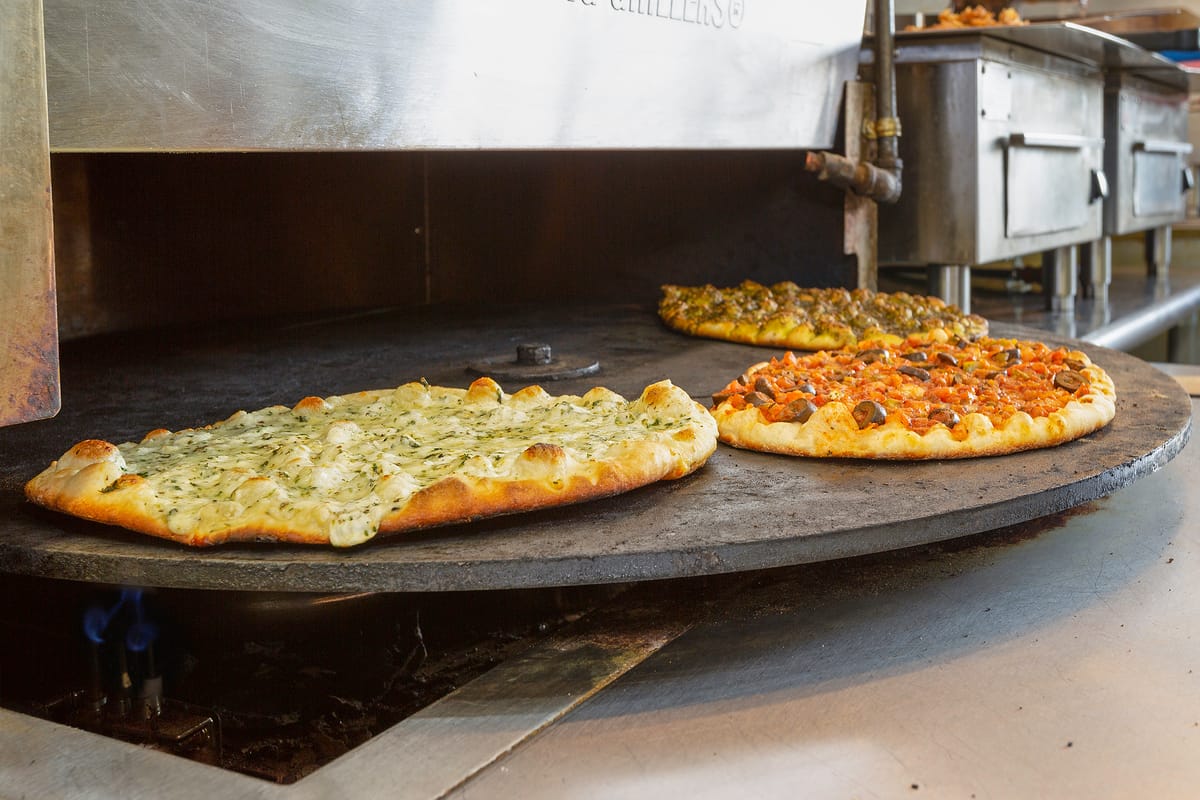
House-Made Everything
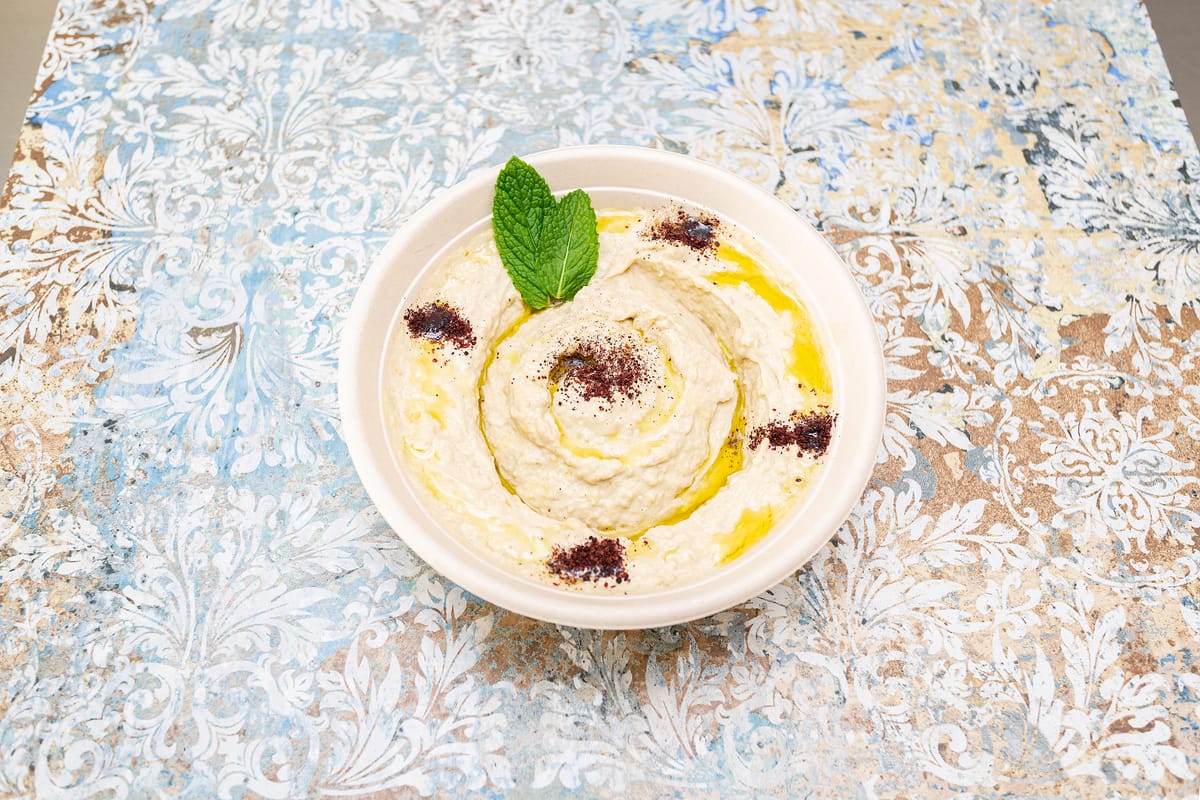
Our hummus, tahini, garlic sauce, and pickled turnips are all made fresh in-house daily. Fourteen toppings, zero shortcuts.
Shawarma at Taza
Spit-roasted daily in Falls Church, VA. Served in pita, shrak, or as a bowl -- with 14 fresh toppings and house-made sauces.
At Taza Shawarma & Falafel in Falls Church, we use the same vertical spit technique that has defined shawarma for over two centuries. Our chicken and beef are marinated in-house each morning, stacked on the spit, and roasted for hours before the first order is sliced. Every shawarma is shaved fresh -- no pre-cut holding trays, no microwaving, no shortcuts.
Whether you prefer your shawarma in a thick pita pocket, a thin shrak wrap, or deconstructed in a bowl over rice or greens, Taza builds it to order with your choice from 14 fresh toppings. For taco lovers making the crossover, we recommend starting with a chicken shawarma pita -- it is the closest in size and format to the taco experience, just fully wrapped and sealed.
Popular Shawarma Options at Taza
Chicken Shawarma Pita
from $9.95Our most popular -- spit-roasted chicken in fresh pita
Beef Shawarma Pita
from $9.95Tender beef shaved from the spit, tahini and fresh vegetables
Chicken Shawarma Bowl
from $12.45Shawarma over rice or greens -- no bread, maximum customization
Beef Shawarma Bowl
from $12.45Beef shawarma bowl with hummus, pickles, and garlic sauce
Hummus
$4.95House-made chickpea dip -- the perfect shawarma companion
Falafel Pita
from $8.95Crispy chickpea falafel in pita -- the vegetarian option
Shawarma vs Tacos: Frequently Asked Questions
The shape is similar -- protein in bread, eaten with hands -- but the construction differs. A taco is an open vessel where a small tortilla holds a few bites of filling. A shawarma wrap is a sealed, rolled package with the bread enclosing the meat on all sides. The cooking method is also fundamentally different: shawarma meat rotates on a vertical spit for hours while taco fillings are prepared through grilling, braising, frying, or stewing. Calling shawarma a Middle Eastern taco captures the casual, street-food spirit of both dishes but overlooks the distinct techniques behind each one.
Tacos al pastor are a direct descendant of shawarma. In the early 20th century, Lebanese and Syrian immigrants arrived in Mexico and brought the vertical spit technique with them. Mexican cooks adopted the spit but replaced lamb with pork, swapped Middle Eastern spices for dried chiles and achiote, and added pineapple on top of the spit for sweetness. The vertical spit and shaving method are identical. Al pastor is living proof that shawarma and taco culture already merged once -- and produced one of Mexico's most celebrated street foods.
A single chicken shawarma pita from Taza (from $9.95) delivers 30-40 grams of protein from spit-roasted meat alone. A single street taco delivers 12-20 grams because it is a smaller portion. However, most people eat two to three tacos per meal, bringing the total to 24-60 grams. The protein-per-dollar math depends on how many tacos you order and what filling you choose. For a single, complete, handheld meal, a shawarma pita is the more protein-dense option.
It depends entirely on preparation. A chicken shawarma pita has roughly 450-550 calories, 30-40 grams of protein, and 15-22 grams of fat. Two standard chicken tacos on corn tortillas run about 350-500 calories total with similar protein. Tacos can be lighter because individual portions are smaller, but they can also be heavier if fried, loaded with cheese, or served with sour cream. Spit-roasting renders excess fat from shawarma, keeping it lean for a slow-cooked meat. Neither is inherently healthier -- portion size and preparation drive the numbers.
Shawarma came first. The vertical spit originated in the Ottoman Empire and spread throughout the Levant. When Lebanese immigrants arrived in Mexico, they brought this technique, and Mexican cooks transformed it into al pastor. The spit is shared technology: both cuisines use it because slow rotation in front of a heat source produces a layered texture of crispy edges and juicy centers that no flat grill can replicate. At Taza, our spit runs for hours daily, shaving each order fresh.
Yes. At Taza, our chicken shawarma bowl (from $12.45) and beef shawarma bowl (from $12.45) serve spit-roasted meat over your choice of rice, mixed greens, or hummus with all the standard toppings. It is similar in concept to a taco bowl but with tahini, garlic sauce, and pickled turnips instead of salsa, cheese, and sour cream. If you enjoy deconstructed tacos, you will feel at home with a shawarma bowl.
Shawarma sauces center on tahini (ground sesame paste with lemon), toum (emulsified raw garlic and oil), and hummus (chickpea puree). Taco sauces center on salsas (tomato or tomatillo with chiles), crema (Mexican sour cream), guacamole, and hot sauces made from dried or fresh peppers. The flavor profiles are entirely different: shawarma sauces are nutty, garlicky, and creamy. Taco sauces are bright, acidic, and often spicy. Both are made fresh and essential to the experience.
No. Taza specializes in Levantine cuisine -- spit-roasted shawarma, freshly fried falafel, house-made hummus, and oven-baked flatbreads. We do not serve tacos, burritos, or Mexican dishes. But if you love tacos for their casual, customizable, hand-held format, shawarma scratches the same itch with a different flavor vocabulary. A chicken shawarma pita (from $9.95) or a falafel pita (from $8.95) are the easiest entry points for taco lovers exploring Middle Eastern food.
Try Shawarma at Taza in Falls Church
5820 Seminary Rd Ste O, Falls Church, VA 22041 -- Open 11:00 AM - 12:00 AM, Open 7 Days a Week
Address
5820 Seminary Rd Ste O, Falls Church, VA 22041
Hours
11:00 AM - 12:00 AM -- Open 7 Days a Week
Phone
The Spit-Roasted Original Is Waiting
If tacos al pastor are your go-to, try the dish that started it all. Spit-roasted chicken or beef, fourteen toppings, house-made sauces, and two centuries of Levantine tradition in every bite.