Shawarma vs Souvlaki: How These Mediterranean Meats Compare
One turns on a vertical spit in the Levant, shaved to order in thin ribbons. The other sizzles on skewers over Greek charcoal, cubed and char-grilled. Both claim Mediterranean heritage. The technique, spicing, and flavor tell two very different stories.
4.8 stars on Yelp (92 reviews) -- Open 11:00 AM - 12:00 AM
Two Mediterranean Meats, Two Distinct Traditions
Shawarma and souvlaki both come from the Eastern Mediterranean. Both use quality meat, simple seasoning, and direct heat. But the techniques produced two fundamentally different eating experiences.
Walk into a shawarma shop and the first thing you see is the spit -- a tall, rotating cone of stacked meat turning slowly in front of radiant heat. The cook shaves thin slices from the caramelized outer layer, and the aroma of cumin, cinnamon, and rendered fat fills the room. Walk into a Greek souvlaki stand and you see something different: small cubes of meat threaded onto skewers, lined up on a charcoal grill, turning by hand until each piece carries dark grill marks and a bright oregano-lemon scent. Both are fast, casual, affordable meals built around seasoned meat and bread. Both have ancient roots in the Eastern Mediterranean. But the cooking method, seasoning, sauces, and flavor architecture set them apart.
This guide breaks down shawarma and souvlaki across every dimension that counts. Origin, cooking method, meat cuts, spices, serving style, bread, sauces, sides, protein, calories, and price. The goal is not to declare one better than the other. It is to explain what makes each tradition distinctive, and to help you decide which one to order when the craving hits for Mediterranean meat done right.
What Is Shawarma?
Levantine spit-roasted meat, marinated in warm spices, shaved to order, and served in pita, shrak wrap, or a bowl with fresh toppings.
The Vertical Rotisserie
Shawarma traces its roots to the Ottoman Empire, where cooks stacked thin slices of seasoned meat onto a vertical spit and slow-roasted them in front of an open flame. The word derives from the Turkish "cevirme," meaning "turning." As the outer layer caramelizes, the cook shaves it off with a long knife, exposing the next layer to the heat. Each slice carries crispy, browned edges and a juicy, tender center. The spit runs continuously through service, so every order is freshly shaved -- no holding trays, no heat lamps, no reheating. This continuous roasting-and-shaving cycle is what gives shawarma its layered texture and depth.
The Spice Marinade
Before the meat reaches the spit, it sits in a wet marinade for hours. The classic blend varies by region and kitchen, but the backbone is consistent: cumin, cinnamon, cardamom, allspice, turmeric, garlic, lemon juice, yogurt, and olive oil. This warm-spice foundation sets shawarma apart from every other grilled meat in the Mediterranean. The marinade penetrates the thin slices of chicken or beef, infusing flavor deep into the protein before the spit adds its own layer of caramelization and rendered-fat richness. The result is a multi-dimensional flavor that unfolds as you chew -- spice, char, tang, and richness in every bite.
At Taza in Falls Church, our shawarma is marinated fresh each morning, stacked on the vertical spit, and roasted for hours. Each order is shaved on the spot and served in a pita pocket, a shrak flatbread wrap, or a bowl over basmati rice or mixed greens. You choose from 14 fresh toppings -- tahini, garlic sauce, pickled turnips, lettuce, tomato, cucumber, and more -- so every shawarma is built to your preference. The vertical spit renders excess fat away as the meat turns, keeping chicken lean and giving beef a concentrated, deeply savory flavor.
Shaved Fresh, Every Order
Our shawarma spit runs for hours daily. Each order is sliced on the spot -- no heat lamp, no holding tray, just the spit and the knife.
What Is Souvlaki?
Greek grilled meat skewers -- cubed pork, chicken, or lamb marinated in oregano, lemon, and olive oil, then char-grilled over hot coals.
Ancient Grilling Tradition
Souvlaki is one of the oldest documented meat preparations in the Mediterranean. The word comes from the Greek "souvla," meaning skewer. References to skewered grilled meat appear in Homer's Iliad, where warriors roast cubes of meat over open fires during feasts. Archaeological evidence from Akrotiri includes stone hearths with grooves designed to hold skewers, dating back over 3,000 years. Modern souvlaki preserves this tradition: cube the meat, thread it on a stick, season it simply, grill it over coals.
How Souvlaki Is Served
In Greece, souvlaki comes two ways. "Souvlaki kalamaki" is the skewer itself -- grilled meat on a plate with lemon wedges, bread, Greek salad, and lemon potatoes. "Souvlaki pita" strips the meat off the skewer and wraps it in flat, round Greek pita (no pocket) with sliced tomato, raw onion, and a generous pour of tzatziki. Some shops add French fries inside the wrap, a modern addition now standard in Athens street food. The emphasis is on simplicity: good meat, direct heat, minimal seasoning, and fresh accompaniments that let the char-grilled flavor lead.
The defining characteristic of souvlaki is direct flame contact. Souvlaki skewers sit directly over charcoal. Fat drips onto the coals and flares up, charring the exterior. This produces a flavor profile built on three notes: char from the grill, herbs from the marinade (oregano and lemon dominate), and the natural flavor of the meat itself. Where shawarma uses spice complexity to build depth, souvlaki uses restraint -- the seasoning steps aside and lets the grilled meat and fresh accompaniments carry the meal.
Shawarma vs Souvlaki: The Full Comparison
Thirteen dimensions, side by side. Origin, cooking method, meat cuts, spices, bread, sauces, sides, protein, calories, and more.
| Category | Shawarma | Souvlaki |
|---|---|---|
| Origin Region | Levant (Lebanon, Syria, Jordan) and broader Ottoman Empire -- 18th-19th century vertical spit tradition | Greece -- ancient grilled meat tradition dating to Homer's Iliad, where skewered meat roasted over coals |
| Cooking Method | Vertical rotisserie -- meat stacked on a tall spit, slow-roasted in front of radiant heat, shaved to order | Grilled skewers -- small cubes of meat threaded onto sticks, cooked over hot charcoal or open flame |
| Meat Cuts | Thin-sliced chicken thigh/breast layered on the spit, or beef round and sirloin stacked in a cone | Cubed pork shoulder or loin (traditional), also chicken thigh or lamb leg cut into 1-inch pieces |
| Primary Protein | Chicken and beef are the two standard options at most Levantine shawarma restaurants | Pork is the classic souvlaki meat in Greece; chicken and lamb are common alternatives |
| Spice Profile | Warm, layered wet marinade: cumin, cinnamon, cardamom, allspice, turmeric, garlic, lemon, yogurt, olive oil | Bright, herb-driven marinade: dried oregano, lemon juice, olive oil, garlic, salt, black pepper, red wine vinegar |
| Serving Style | Shaved meat in pita pocket, shrak wrap, or rice/greens bowl -- built to order with toppings and sauces | Skewers on a plate with sides, or meat stripped off the skewer into a pita wrap with tomato, onion, and tzatziki |
| Bread Type | Pocket pita (round, hollow) or shrak (thin, dome-baked flatbread rolled tightly around the filling) | Greek pita (flat, no pocket, slightly thicker and chewier) or served plateless on the skewer |
| Signature Sauce | Tahini (sesame paste + lemon), toum (emulsified garlic), hummus -- nutty, garlicky, tangy flavors | Tzatziki (yogurt + cucumber + garlic + dill) -- cool, creamy, herbaceous, and refreshing |
| Standard Sides | Hummus, baba ghanoush, tabbouleh, fattoush, pickled turnips, basmati rice, pita bread | Greek salad (tomato, cucumber, onion, feta, olives), lemon potatoes, pita bread, rice pilaf |
| Protein per Serving | ~30-40g per chicken pita; ~35-45g per beef bowl -- generous portions of spit-roasted meat | ~25-35g per skewer wrap; ~30-45g per plated souvlaki with two skewers |
| Calories (typical) | ~450-550 per chicken shawarma pita with tahini, vegetables, and pickled turnips | ~400-550 per souvlaki pita wrap with tzatziki, tomato, onion, and fries |
| Best For | Warm-spice cravings, customizable toppings, quick counter service with maximum flavor depth | Herb-and-citrus cravings, char-grilled taste, summer grilling, simple and direct seasoning |
| Price Range | from $9.95 for a fully loaded chicken shawarma pita at Taza in Falls Church | $10-15 per souvlaki wrap or plate at a dedicated Greek restaurant in the DMV area |
Shawarma values based on chicken pita with tahini and vegetables (Taza, Falls Church). Souvlaki values based on typical chicken or pork souvlaki at a dedicated Greek restaurant. Values vary by portion, meat choice, and preparation.
Rotisserie vs Charcoal Grill
Two different heat sources, two different seasoning traditions, two distinct Mediterranean flavor profiles -- both producing exceptional street food.
How Each Tradition Builds Flavor
Shawarma relies on warm spices and the Maillard reaction on the spit. Souvlaki relies on herbs, citrus, and the direct kiss of charcoal flame.
Shawarma Flavor Profile
Warm, aromatic, and layered. The wet marinade -- olive oil, lemon juice, yogurt, garlic, cumin, cinnamon, cardamom, allspice, and turmeric -- penetrates the meat for hours before it hits the spit. During cooking, the Maillard reaction creates hundreds of new flavor compounds on the caramelized surface. Rendered fat drips down the cone, basting the lower layers. The result unfolds as you eat: crispy, charred exterior first, then the spice-soaked interior, then the tang of tahini and the crunch of pickled turnips. The flavor is warm-spice-forward, with garlic and rendered fat providing backbone.
Souvlaki Flavor Profile
Bright, herbal, and direct. The marinade is simple -- dried oregano, fresh lemon juice, extra-virgin olive oil, minced garlic, salt, and cracked black pepper. Some cooks add red wine vinegar or a splash of white wine. The seasoning does not try to build spice complexity; it aims to enhance the grilled meat rather than transform it. When the skewer hits the charcoal, fat drips onto the coals and flares back up, depositing smoke compounds on the surface. The result is char-grilled meat with a bright herbal finish, complemented by the cool creaminess of tzatziki and the crunch of raw onion and tomato.
Shawarma builds complexity through a multi-spice marinade amplified by slow caramelization on the spit. Souvlaki builds it through direct charcoal contact -- herbs and citrus brighten the meat, and the cubed shape maximizes charred surface area. If your palate leans toward warm, aromatic complexity, shawarma is the natural fit. If you prefer clean, herbal, char-grilled flavors, souvlaki is for you. Read our guide to shawarma spices for the full breakdown of what goes into the marinade.
The Gyro Connection
Shawarma, souvlaki, gyro, and doner kebab all belong to the same family of Eastern Mediterranean and Ottoman-era meat traditions. Here is how they connect.
All three show up on Mediterranean menus, sometimes with overlapping descriptions. The key is recognizing two distinct cooking techniques. Shawarma (Levant) and doner kebab (Turkey) are vertical spit preparations -- meat stacked on a tall spit, slow-roasted for hours, shaved as orders come in. The technique spread across the Ottoman Empire under different names. Greek cooks adopted it in the 20th century as the gyro: a vertical spit with seasoned meat shaved into pita with tzatziki.
Souvlaki is the outlier. It predates the vertical spit by centuries. Grilled skewered meat appears in Greek records going back to the Bronze Age. Souvlaki never adopted the rotisserie method -- it remained a direct-grilling tradition: cube the meat, skewer it, grill it over coals, serve it fast. When a Greek menu lists both souvlaki and gyro, you are choosing between the ancient grill tradition and the Ottoman-era spit tradition. Shawarma is the Levantine cousin of gyro, not of souvlaki. For a deeper comparison, read our shawarma vs gyro guide.
Shawarma & Doner
Vertical spit, shaved meat, warm spice marinade. Shawarma is the Levantine name; doner is the Turkish name. Same fundamental technique with regional spice and sauce variations. Both use tahini or garlic-based sauces.
Greek Gyro
Vertical spit, shaved meat, Greek seasoning. The gyro adopted the Ottoman rotisserie method but uses Greek spicing (oregano, garlic) and Greek accompaniments (tzatziki, tomato, onion, flat pita). A direct descendant of the shawarma/doner tradition.
Souvlaki
Skewered cubes, direct charcoal grill, herb-and-citrus marinade. The older tradition -- predates the vertical spit by centuries. No rotisserie, no shaving. Individual cubes grilled over flame, served on a plate or stripped into pita with tzatziki.
14 Fresh Toppings, Your Way
Every shawarma at Taza is built to order with your choice from our full toppings selection -- pickled turnips, tahini, garlic sauce, and more.
Nutrition Comparison
Protein, carbs, fat, and calories -- how shawarma and souvlaki stack up when you look at the actual numbers.
Both rely on lean or moderately lean meats cooked at high heat and served in bread with fresh vegetables. The differences come down to sauce, add-ins, and the fat-rendering properties of each cooking method.
Nutritional Snapshot
Chicken Shawarma Pita (Taza) -- 1 pita
Chicken Souvlaki Pita -- 1 wrap
The calorie ranges overlap substantially. The main variables are sauce and extras. Tahini adds healthy fats from sesame but runs roughly 90 calories per tablespoon. Tzatziki is lower at about 30-40 calories per tablespoon. However, many Greek souvlaki shops stuff French fries inside the pita wrap, adding 150-250 calories. Taza does not add fries to the pita.
Shawarma's vertical spit gives it a fat advantage. As the cone rotates, rendered fat drips away rather than pooling. This keeps chicken shawarma in the 15-22g fat range per pita. Souvlaki cubes sit directly over coals, so dripping fat can flare up and redeposit. Neither method is unhealthy -- both are among the leanest ways to prepare seasoned meat. For detailed breakdowns by menu item, see our shawarma nutrition guide.
Why Souvlaki Lovers Should Try Shawarma
If you already love Greek grilled meat, the Levantine spit-roasted version offers a new dimension of the same Mediterranean tradition.
If You Love Souvlaki, Try Shawarma Because...
- You already appreciate well-seasoned Mediterranean meat -- shawarma adds a warm-spice dimension that oregano-and-lemon does not cover
- The spit-roasting technique produces a texture souvlaki cannot: crispy shaved edges layered with self-basted, tender interior
- Tahini and toum (garlic sauce) open a new sauce vocabulary beyond tzatziki -- nuttier, punchier, and richer on the palate
- Shawarma's customizable toppings selection lets you build each order to your exact preference -- 14 options at Taza
- A chicken shawarma pita at from $9.95 is a complete, filling meal that takes under three minutes to build
If You Love Shawarma, Try Souvlaki Because...
- You already appreciate Mediterranean flavors -- souvlaki shows the Greek branch of the same culinary family tree
- Direct charcoal grilling adds a smoky char that the vertical spit does not produce -- a different texture worth experiencing
- The simplicity of oregano-lemon-olive oil seasoning highlights the meat itself in a way that warm-spice marinades approach differently
- Tzatziki's cool, cucumber-yogurt creaminess is a refreshing contrast to the nuttiness of tahini
- Souvlaki platters with Greek salad and lemon potatoes make an excellent shared meal for the table
Northern Virginia has one of the highest concentrations of Mediterranean restaurants in the country. Falls Church, Arlington, Alexandria, and the broader DMV area offer authentic options from both traditions within a short drive. If you eat souvlaki regularly but have not tried shawarma from a dedicated Levantine kitchen, start with a chicken shawarma pita at Taza (from $9.95). The format -- seasoned meat in bread with sauce and fresh vegetables -- will feel familiar. The warm-spice marinade and tahini will show you the other side of the Mediterranean flavor spectrum.
House-Made Everything
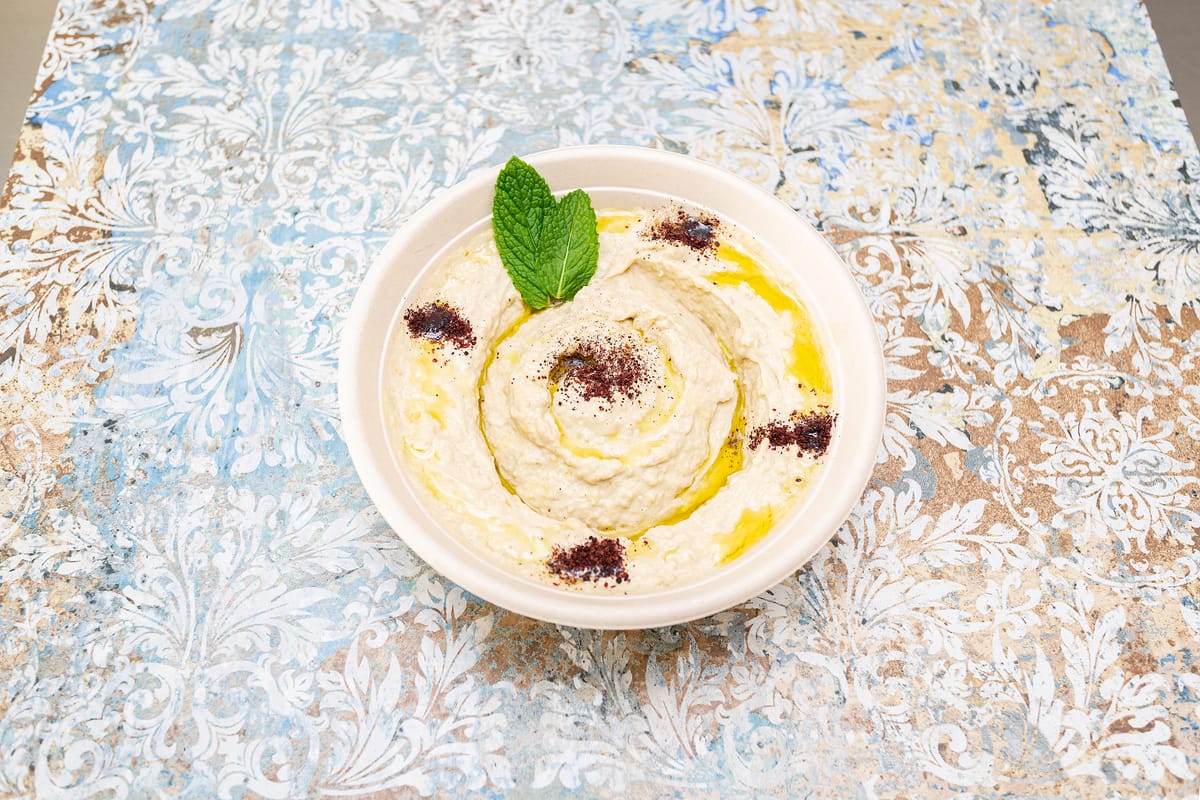
Our hummus, tahini, garlic sauce, and pickled turnips are all made fresh in-house daily. Fourteen toppings, zero shortcuts.
Shawarma at Taza
Spit-roasted daily in Falls Church, VA. Served in pita, shrak, or as a bowl -- with 14 fresh toppings and house-made sauces.
At Taza Shawarma & Falafel in Falls Church, we follow the same vertical spit technique that has defined shawarma for over two centuries. Our chicken and beef are marinated in-house each morning with a traditional Levantine spice blend, stacked on the spit, and roasted for hours before the first order is sliced. Every shawarma is shaved fresh from the rotating cone -- no pre-cut holding trays, no microwaving, no shortcuts.
If you normally eat souvlaki and want to explore shawarma, the chicken shawarma pita is the natural starting point. The format is familiar -- seasoned meat in bread with sauce and fresh toppings -- but the warm-spice marinade, the spit-roasted texture, and the tahini sauce will introduce a new set of flavors. For a bigger meal, try the chicken shawarma bowl over rice with hummus on the side. You get the full Levantine experience without bread, and the combination of spit-roasted chicken, creamy hummus, and pickled turnips is as satisfying as any souvlaki platter.
Popular Shawarma Options at Taza
Chicken Shawarma Pita
from $9.95Our most popular -- spit-roasted chicken in fresh pita with garlic sauce
Beef Shawarma Pita
from $9.95Rich, beefy flavor with warm spice -- deep and savory
Chicken Shawarma Bowl
from $12.45Shawarma over rice or greens -- no bread, maximum customization
Hummus
$4.95House-made chickpea dip -- the perfect shawarma companion
Falafel Pita
from $8.95Crispy chickpea falafel in pita -- the vegetarian option
Shawarma vs Souvlaki: Frequently Asked Questions
The cooking method is the core difference. Shawarma uses a vertical rotisserie -- meat is stacked in a tall cone on a spit, slow-roasted for hours, and shaved off in thin slices as orders come in. Souvlaki uses skewers -- small cubes of meat are threaded onto sticks and grilled over charcoal for 8-12 minutes. Shawarma produces layered, self-basted meat with crispy edges. Souvlaki produces distinct char-grilled cubes with smoky grill marks. The seasonings also differ: shawarma leans on warm spices (cumin, cinnamon, cardamom) while souvlaki leans on herbs and citrus (oregano, lemon, olive oil).
No. Souvlaki is grilled meat on skewers -- individual cubes cooked directly over flame. A gyro (also spelled gyros) is a vertical rotisserie preparation closer to shawarma, where seasoned ground or sliced meat rotates on a spit and is shaved off. The gyro technique was influenced by the same Ottoman-era spit-roasting tradition that produced shawarma and Turkish doner kebab. In Greek restaurants, souvlaki and gyro are two distinct menu categories: souvlaki is skewered and char-grilled, gyro is spit-roasted and shaved.
They share some common ground -- both are well-seasoned Mediterranean meats served with bread and fresh accompaniments -- but the flavor profiles differ noticeably. Shawarma tastes warm, aromatic, and complex: cumin, cinnamon, cardamom, allspice, and garlic create a layered spice depth. Souvlaki tastes bright, herbal, and direct: oregano, lemon, and olive oil let the grilled meat flavor come through with less spice complexity. Shawarma is richer from the self-basting on the spit. Souvlaki has more char-grilled smokiness from direct flame contact.
Both can be healthy choices depending on preparation and portion size. A chicken shawarma pita from Taza (from $9.95) runs roughly 450-550 calories with 30-40 grams of protein. A chicken souvlaki pita wrap runs a similar 400-550 calories, though the calorie count climbs if fries are stuffed inside (a common Greek practice). Shawarma's vertical spit renders excess fat away during cooking. Souvlaki's direct grilling also keeps fat low on lean cuts. The sauces matter: tahini adds healthy fats from sesame, while tzatziki is lower in calories but higher in dairy.
Taza specializes in Levantine cuisine -- spit-roasted shawarma, freshly fried falafel, house-made hummus, and oven-baked flatbreads. We do not serve Greek souvlaki. However, if you enjoy souvlaki for its grilled, well-seasoned meat in pita bread, you will find a parallel experience in our chicken or beef shawarma pita. The format is similar (seasoned meat plus bread plus fresh toppings plus sauce), but the seasoning profile and cooking method give shawarma its own distinct character. A chicken shawarma pita (from $9.95) is a natural starting point for souvlaki fans.
All four belong to the same family tree of spit-roasted and grilled meats that spread across the Eastern Mediterranean and Ottoman Empire. Doner kebab (Turkey) and shawarma (Levant) are both vertical rotisserie preparations -- meat stacked on a spit and shaved. The Greek gyro adapted this technique from Turkish doner in the 20th century. Souvlaki predates all three as a grilled skewer tradition stretching back to ancient Greece. The key split: shawarma, doner, and gyro are rotisserie methods (vertical spit, shaved meat). Souvlaki is a grill method (skewered cubes, direct flame).
Geography and trade routes shaped the seasoning profiles. The Levant sat at the crossroads of spice routes from South Asia, Central Asia, and East Africa, giving cooks access to cumin, cinnamon, cardamom, and allspice for centuries. Greek cuisine developed around the Mediterranean herb garden -- oregano, thyme, dill, and rosemary grew locally and became the backbone of seasoning. Olive oil and lemon were abundant in both regions, which is why both traditions use them. The spice distinction is a reflection of what was locally available and culturally prized in each region's cooking tradition.
Start with a chicken shawarma pita (from $9.95) -- the format of seasoned meat in pita with vegetables and sauce will feel familiar, but the warm spice marinade and tahini sauce will introduce new flavors. Add a side of hummus ($4.95) -- it occupies the same appetizer role as tzatziki but delivers a nuttier, earthier taste from chickpeas and sesame. For a larger meal, try the chicken shawarma bowl (from $12.45) over rice with all the toppings. If you eat vegetarian sometimes, the falafel pita (from $8.95) is a crispy, herb-filled alternative with no equivalent in Greek cuisine.
Try Shawarma at Taza in Falls Church
5820 Seminary Rd Ste O, Falls Church, VA 22041 -- Open 11:00 AM - 12:00 AM, Open 7 Days a Week
Address
5820 Seminary Rd Ste O, Falls Church, VA 22041
Hours
11:00 AM - 12:00 AM -- Open 7 Days a Week
Phone
The Levantine Original Is Waiting
If you love Mediterranean meat done right, shawarma belongs in your rotation. Spit-roasted chicken or beef, fourteen toppings, house-made sauces, and two centuries of Levantine tradition in every bite.