How Baba Ghanoush Is Made: The Fire-Roasted Eggplant Guide
Five ingredients, one open flame, and a technique that has not changed in centuries. Here is how the smoky eggplant dip that defines Levantine cooking comes together.
4.8 stars on Yelp (92 reviews) -- Open 11:00 AM - 12:00 AM
The Smoky Eggplant Dip That Defines Levantine Cooking
A dish built on fire, simplicity, and patience.
Baba ghanoush is one of those dishes that reveals its quality in the first bite. The smoky aroma hits before the flavor does -- a deep, woodsy char that signals the eggplant met real fire, not an oven element. Behind the smoke comes the silky flesh of the eggplant itself, mashed with tahini into a texture that falls somewhere between a dip and a spread. Lemon juice adds brightness. Raw garlic adds a sharp edge that fades into warmth. Olive oil rounds it all out. The result is a dish that manages to be rich and light at the same time, earthy and bright, simple and layered. It is one of the oldest preparations in Levantine cooking, and it endures because nothing improves on it.
The difference between good baba ghanoush and forgettable baba ghanoush comes down to a single variable: fire. Every step of the process matters, but nothing matters as much as how the eggplant is roasted. Direct flame contact -- a gas burner, a charcoal grill, a wood fire -- chars the skin and transforms the flesh into something that oven baking cannot replicate. The sugars in the eggplant caramelize. The cellular structure breaks down completely. The smoke penetrates into the meat of the vegetable. This is why restaurant baba ghanoush from a kitchen that fire-roasts its eggplants tastes fundamentally different from the containers you find on grocery store shelves in Falls Church, Arlington, or anywhere else in Northern Virginia.
At Taza Shawarma & Falafel in Falls Church, we serve fire-roasted baba ghanoush for $4.95 with warm pita bread ($0.95). Every batch starts with whole eggplants charred over a direct flame until the skin is blackened on all sides. The flesh is scooped, drained, and hand-mashed with tahini, lemon, garlic, and a finish of olive oil. No food processor. No liquid smoke. No shortcuts. This guide walks through the process from raw eggplant to finished dip, explains why each step matters, and shows you what to look for when ordering baba ghanoush at a restaurant near Seven Corners, Bailey's Crossroads, or anywhere in the NoVA area.
What Is Baba Ghanoush?
Fire-roasted eggplant, tahini, lemon, garlic, and olive oil -- five ingredients, one open flame.
Baba ghanoush is a Levantine dip or spread made from eggplant that has been roasted over an open flame, then mashed with tahini, fresh lemon juice, garlic, and olive oil. The name comes from Arabic -- "baba" means father and "ghanoush" translates roughly to "spoiled" or "pampered." The dish has been part of Middle Eastern cuisine for centuries, with the Levant region (modern-day Lebanon, Syria, and Jordan) considered its homeland. The eggplant itself has been cultivated in the eastern Mediterranean since antiquity, and the practice of charring it over coals predates written recipes by generations. Baba ghanoush is also commonly spelled baba ganoush, baba ganouj, or baba ghanouj -- all refer to the same dish.
What sets baba ghanoush apart from other eggplant dips is the fire-roasting. The eggplant is not baked, not steamed, and not sauteed. It is placed directly on a flame -- whether gas, charcoal, or wood -- and turned slowly until every surface is blackened and the interior has collapsed into a soft, smoky mass. This technique is the defining element of the dish. Without direct flame contact, you can make an eggplant dip with tahini and lemon, but you cannot make baba ghanoush. The smoke is not an optional garnish or a background note. It is the primary flavor, the reason the dish exists, and the thing that has kept people making it the same way for hundreds of years across Lebanon, Syria, Jordan, Turkey, and Egypt.
The ingredient list is short enough to memorize: eggplant, tahini, lemon juice, garlic, olive oil, salt. Some preparations add a pinch of cumin or garnish with pomegranate seeds, chopped parsley, or paprika. But the core recipe has not changed because it does not need to. Five ingredients and a flame produce a dip that is smoky, creamy, earthy, and bright all at once. At Taza in Falls Church, our baba ghanoush follows this traditional Levantine recipe. It is vegan, gluten-free, and served with warm pita for $4.95.
The Key Technique: Fire-Roasting
Why direct flame matters more than any other variable in baba ghanoush.
Fire-roasting is the single most important step in making baba ghanoush. The eggplant is placed directly on an open flame -- a gas burner, a charcoal grill, or a wood fire -- and turned slowly with tongs over 15 to 20 minutes. The goal is total skin char. Every inch of the outer surface should be blackened, blistered, and cracked. Underneath the charred skin, the flesh steams in its own moisture, breaking down from firm and spongy to soft and almost liquid. The direct heat triggers Maillard reactions and caramelization in the eggplant's natural sugars, creating a spectrum of smoky, sweet, and slightly bitter flavors that cannot be produced any other way. This is chemistry that requires temperatures above what a standard oven can deliver to the eggplant's surface.
The reason oven-roasting fails to produce the same result is straightforward: an oven heats the eggplant evenly and gently from all sides, which softens the flesh but never chars the skin. The char is where the smoke flavor lives. When the eggplant skin meets direct flame at temperatures exceeding 500 degrees Fahrenheit, the sugars and amino acids on the surface undergo rapid pyrolysis -- they break down and recombine into hundreds of volatile aromatic compounds. These compounds are absorbed into the flesh through the thin layer just beneath the skin. An oven-roasted eggplant tastes like cooked eggplant. A flame-roasted eggplant tastes like smoke, caramel, and earth. The distinction is not subtle. Anyone who has tasted both can tell the difference immediately.
At Taza Shawarma & Falafel in Falls Church, we char our eggplants over a direct flame for every batch of baba ghanoush. The kitchen fills with the aroma of burning eggplant skin -- a sharp, woody smell that signals the process is working. Each eggplant is turned by hand until the skin is uniformly blackened. We do not rush this step. Undercharring leads to uneven smokiness, and overcharring burns through to the flesh and introduces bitterness. The window is specific: black skin, collapsed interior, intact flesh. Getting this right is why our baba ghanoush at $4.95 tastes the way restaurant baba ghanoush should taste -- deeply smoky from the first bite through the last. Diners visiting from Arlington, Bailey's Crossroads, and across Northern Virginia tell us the smokiness is what brings them back.
What Fire-Roasting Achieves
What Oven-Roasting Misses
How Baba Ghanoush Is Made: The Full Process
From raw eggplant to finished dip in five steps.
Select and Pierce the Eggplant
Start with large, firm globe eggplants. Each one should feel heavy for its size with smooth, taut skin and a bright green stem. Heavier eggplants contain more flesh and less seed, which produces a creamier final product. Before roasting, pierce the eggplant in 3-4 places with a fork or the tip of a knife. This allows steam to escape during charring and prevents the eggplant from bursting on the flame. Do not peel the eggplant -- the skin stays on throughout the roasting process and is what chars to create the smoky flavor. At Taza in Falls Church, we select our eggplants fresh from our suppliers and inspect each one before it goes on the flame.
Char Over Direct Flame
Place the whole, pierced eggplant directly on a gas burner set to medium-high, on a charcoal grill, or over a wood fire. Using tongs, turn the eggplant every 3-4 minutes so that each side of the skin comes into direct contact with the flame. Continue for 15-20 minutes until the skin is completely blackened and blistered on all surfaces. The eggplant should look collapsed and deflated -- when you press it gently with tongs, the interior should feel very soft, almost liquid. If any portion of the skin remains uncharred, the smokiness will be uneven in the finished dish. The charcoal or wood-fire method produces even deeper smoke flavor than gas because the eggplant absorbs aromatic compounds from the burning fuel.
Cool and Drain the Flesh
Transfer the charred eggplant to a plate and let it cool for 10-15 minutes until you can handle it. Cut it open lengthwise and use a spoon to scoop out the soft, smoky interior flesh, leaving the blackened skin behind. A few flecks of char mixed into the flesh are fine -- they add flavor -- but large pieces of burned skin will taste acrid. Place the scooped flesh in a colander or on a stack of paper towels and let it drain for 15-20 minutes. Eggplant is roughly 92 percent water by weight, and the excess liquid must be removed or the final dip will be thin and runny instead of thick and scoopable. Some cooks gently press the flesh to speed up drainage.
Mash and Season
Transfer the drained eggplant flesh to a wide bowl. Using a fork, mash the flesh to your desired consistency -- traditionally, baba ghanoush retains some texture and is not blended into a perfectly smooth puree. Add 2 tablespoons of tahini per large eggplant and stir until combined. Squeeze in the juice of half a fresh lemon and add 1 finely minced raw garlic clove. Season with salt and stir everything together. Taste and adjust: more lemon for brightness, more garlic for bite, more tahini for richness and nuttiness. The balance between these four flavoring agents -- tahini, lemon, garlic, and salt -- is what gives each batch its character. At Taza, our kitchen team adjusts the seasoning by taste for every batch.
Finish and Serve
Transfer the mashed baba ghanoush to a shallow plate or bowl and use the back of a spoon to create a shallow well in the center. Fill the well with a generous drizzle of extra-virgin olive oil. Garnish with a dusting of paprika, a sprinkle of sumac, chopped parsley, or a few pomegranate seeds -- all traditional options. Serve at room temperature with warm pita bread, raw vegetables, or alongside grilled meats. Baba ghanoush is best eaten within a few hours of preparation, when the smokiness is most pronounced. At Taza in Falls Church, our baba ghanoush ($4.95) is served with fresh-baked pita and is also available as a free topping inside any pita sandwich, shrak wrap, or bowl from our menu.
Baba Ghanoush vs Hummus vs Mutabal
Three Middle Eastern dips with different base ingredients, textures, and flavor profiles.
Baba ghanoush, hummus, and mutabal are the three eggplant- and chickpea-based dips most commonly found on Middle Eastern mezze platters. All three use tahini and lemon juice, but they differ in their base ingredient and resulting flavor. Baba ghanoush is built on fire-roasted eggplant and gets its character from smokiness. Hummus is built on cooked chickpeas and is prized for its mild, nutty creaminess. Mutabal also uses fire-roasted eggplant but adds yogurt for a tangier, richer result. The confusion between baba ghanoush and mutabal is common because both start with charred eggplant -- the key difference is that mutabal includes yogurt while baba ghanoush does not.
A third dip -- mutabal -- also uses fire-roasted eggplant but adds yogurt for a tangier, richer texture. Mutabal is creamier and thicker than baba ghanoush, with roughly 55 calories per 2-tablespoon serving. Unlike baba ghanoush and hummus, mutabal is not vegan because of the yogurt component. It pairs well with grilled kebabs and flatbread. Some menus use "baba ghanoush" and "mutabal" interchangeably, but they are distinct preparations -- baba ghanoush is vegan and tahini-forward, while mutabal is dairy-based and tangier.
At Taza Shawarma & Falafel in Falls Church, we serve both baba ghanoush and hummus -- each for $4.95 with warm pita. Both are made in-house daily. The table below breaks down the differences across ingredients, flavor, texture, nutrition, and pairing recommendations. Whether you are a regular at our Falls Church location or visiting from Arlington, Seven Corners, or anywhere in Northern Virginia, knowing these differences helps you order with confidence.
| Feature | Baba Ghanoush | Hummus |
|---|---|---|
| Base Ingredient | Fire-roasted eggplant | Cooked chickpeas |
| Key Binding Agent | Tahini (sesame paste) | Tahini (sesame paste) |
| Dominant Flavor | Smoky, earthy, slightly bitter | Nutty, mild, creamy |
| Texture | Light, slightly chunky or silky | Dense, smooth, heavy |
| Calories (2 tbsp) | ~50 calories | ~70 calories |
| Protein per Serving | ~1g | ~2g |
| Vegan | Yes (traditional recipe) | Yes (traditional recipe) |
| Best Pairing | Grilled meats, pita, raw vegetables | Falafel, pita, shawarma, everything |
Not sure which to order? Get both baba ghanoush and hummus at Taza for the full mezze spread. Each is $4.95, or add either as a free topping inside any pita, wrap, or bowl.
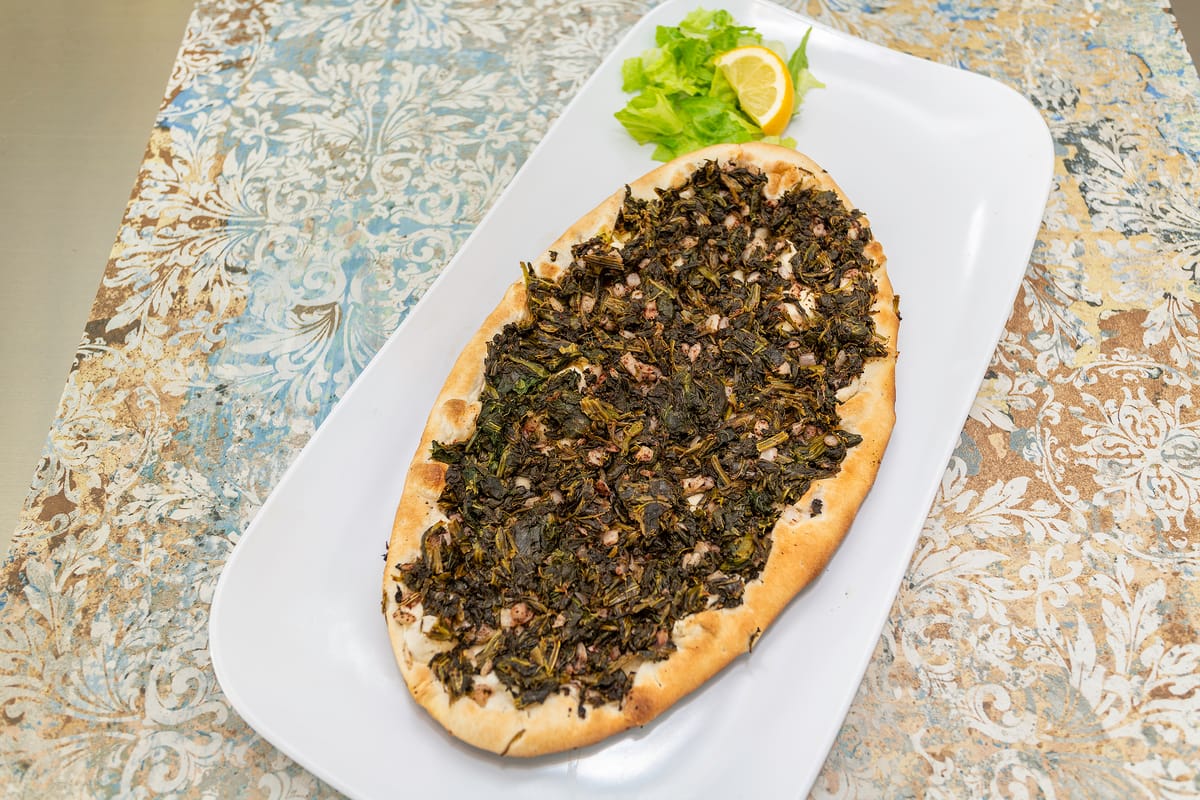
Fire-Roasted Daily
Every batch of Taza's baba ghanoush starts with whole eggplants charred over direct flame until the skin is completely blackened.
Regional Variations of Baba Ghanoush
The same foundation adapted across four culinary traditions.
Lebanese Style
The Levantine Original
Lebanese baba ghanoush is the version most widely recognized in the United States and the tradition that Taza follows. The eggplant is charred over an open flame, and the flesh is hand-mashed rather than blended for a slightly chunky texture. Tahini is used generously -- typically 2-3 tablespoons per eggplant -- making it the dominant secondary flavor after the smoke. The dish is finished with fresh lemon juice, raw garlic, salt, and a generous pour of olive oil. Pomegranate seeds or chopped parsley are common garnishes. Lebanese preparation prioritizes the balance between smoky eggplant and nutty tahini, and the texture is meant to be scooped with pita rather than spread.
Syrian Style
Chunkier, More Textured
Syrian baba ghanoush tends toward a chunkier consistency than the Lebanese version. The eggplant flesh is roughly chopped rather than mashed, resulting in visible pieces of eggplant throughout the dip. Some Syrian preparations fold in diced tomatoes, chopped walnuts, or minced onion for additional layers of texture and flavor. The tahini content is often lower than in Lebanese recipes, allowing the eggplant's natural flavor to take center stage. Pomegranate molasses sometimes appears as a finishing drizzle, adding a tart sweetness that contrasts with the smokiness. The result is closer to a salad than a dip -- something you might eat with a fork as much as with bread.
Turkish Style (Patlican Salatasi)
Lighter, Tangier, Less Tahini
In Turkey, a closely related dish called patlican salatasi -- literally eggplant salad -- takes a different approach. Tahini is reduced or eliminated entirely, replaced by yogurt, diced tomatoes, and roasted peppers. The texture is chunkier, with the eggplant chopped rather than mashed. Lemon juice or pomegranate molasses provides acidity. Some Turkish variations add walnuts for crunch or roasted red pepper for sweetness. The smokiness is present from the charring but less dominant than in Lebanese versions, with the tangy yogurt and fresh vegetables sharing center stage. The overall impression is lighter and more salad-forward.
Egyptian Style
Bolder Spices, More Garlic
Egyptian baba ghanoush, sometimes called salata tahina bel batingan, leans into garlic and spice more aggressively than other regional versions. Cumin is a standard addition, and the garlic quantity is often doubled compared to Lebanese recipes. Larger amounts of lemon juice give it a more assertive acidity. Some Egyptian preparations fold in diced tomatoes and onions, creating a chunky, salad-like texture. The tahini is present but takes a supporting role rather than leading. Egyptian street vendors serve baba ghanoush alongside grilled kebabs and fresh bread, positioning it as a condiment for grilled meats rather than a standalone appetizer.
At Taza, our baba ghanoush follows the Lebanese tradition: fire-roasted, tahini-forward, hand-mashed, and finished with olive oil. It is the style most familiar to diners in Falls Church, Arlington, and across Northern Virginia.
What Makes Taza's Baba Ghanoush Different
Proper fire-roasting, quality tahini, and daily preparation.
The baba ghanoush at Taza Shawarma & Falafel in Falls Church stands apart for three reasons. The first is technique: we fire-roast every eggplant over a direct flame. There are no shortcuts involving oven roasting or liquid smoke. Each eggplant is charred by hand until the skin is uniformly blackened and the interior has fully collapsed. This takes time and attention -- turning each eggplant with tongs, monitoring the char, pulling it off the flame at the exact right moment. The result is a depth of smokiness that defines every spoonful. Diners who have tried grocery-store baba ghanoush and found it bland are often surprised by how much flavor our version carries. The fire is the reason.
The second factor is ingredient quality. Our tahini is made from 100 percent sesame seeds with no added oils, sugar, or fillers. Cheap tahini -- the kind used in mass-produced dips -- contains soybean oil or canola oil that dilutes the nutty sesame flavor and changes the texture. Good tahini is thick, slightly bitter, and deeply nutty. It is the foundation that holds the baba ghanoush together and gives it body. We use fresh lemon juice squeezed to order, never bottled concentrate. Fresh garlic is minced for each batch, not scooped from a jar of pre-minced garlic preserved in citric acid. These details sound small, but they compound.
The third reason is freshness. We prepare our baba ghanoush daily in our kitchen at 5820 Seminary Rd Ste O, Falls Church, VA 22041. It is not made in a factory, shipped in a truck, and stored for weeks before you eat it. Baba ghanoush is at its best within hours of preparation, when the smoky aroma is strongest and the flavors are most pronounced. Our baba ghanoush is $4.95 as a side with warm pita, or free as a topping inside any shawarma pita, shrak wrap, or bowl. Whether you are coming from down the street or driving over from Bailey's Crossroads, Seven Corners, or Arlington, the freshness is something you taste in every bite.
How to Enjoy Baba Ghanoush
Four ways to eat baba ghanoush -- from the traditional pita dip to a sandwich spread.
As a Dip with Warm Pita
The classic way to eat baba ghanoush is as a dip with warm, fresh-baked pita bread. Spread the baba ghanoush on a shallow plate, use the back of a spoon to create a well in the center, and fill the well with extra-virgin olive oil. Dust with paprika or sumac. Tear off a piece of warm pita, drag it through the dip, and eat. The contrast between the warm bread and the cool, smoky dip is the foundation of a traditional mezze spread. At Taza, our baba ghanoush ($4.95) comes with fresh-baked pita ($0.95). For the complete spread, add hummus ($4.95) and labneh ($4.95) to the table. This combination of dips is how meals begin across Falls Church, Arlington, and the broader NoVA dining scene.
As a Bowl Base
Baba ghanoush works as a flavorful foundation layer in a grain bowl. Spread a generous amount across the bottom of the bowl, then add rice, your choice of protein, fresh vegetables, and sauce on top. The smokiness of the baba ghanoush permeates the other ingredients as you eat, adding depth to every bite. At Taza, you can add baba ghanoush as a free topping to any of our bowls -- the chicken shawarma bowl (from from $12.45) and falafel bowl (from from $10.45) both benefit from the smoky eggplant layer underneath. It works especially well under beef shawarma, where the smokiness of the charred eggplant and the caramelized spit-roasted meat reinforce each other.
As a Sandwich Spread
Inside a pita or wrap, baba ghanoush functions as a smoky spread that adds creaminess and flavor without the heaviness of cheese or mayo. At Taza, baba ghanoush is one of our toppings available at no extra charge inside any pita sandwich or shrak wrap. Ask for it in your chicken shawarma pita (from from $9.95) or beef shawarma shrak (from from $9.95). The combination of smoky eggplant dip with spit-roasted meat, pickled turnips, garlic sauce, and fresh vegetables creates one of the most layered flavor profiles on our menu. It adds a dimension that tahini and garlic sauce alone cannot provide.
Alongside Shawarma and Falafel
Baba ghanoush is a natural side dish for grilled and roasted meats. The smoky, creamy dip contrasts with the caramelized exterior and tender interior of spit-roasted shawarma. It also pairs well with crispy falafel -- the earthy eggplant and the herbaceous chickpea fritter share a flavor language that makes them natural companions. At Taza, ordering a side of baba ghanoush ($4.95) alongside a falafel pita (from from $8.95) gives you a fully vegan meal with contrasting textures and flavors. Visitors from Seven Corners, Bailey's Crossroads, and across Northern Virginia often order baba ghanoush as a shared appetizer before their main course arrives.
Nutrition and Health Benefits of Baba Ghanoush
Low calorie, high fiber, and packed with heart-healthy fats.
Per 2-Tablespoon Serving (~30g)
Key Health Benefits
Low Calorie Density
At roughly 50 calories per serving, baba ghanoush is one of the lightest dips available. For comparison, ranch dressing runs over 130 calories per serving and cheese dip exceeds 100. As a dip or sandwich spread, baba ghanoush delivers flavor without the caloric load.
Eggplant Fiber
Each serving provides about 2 grams of dietary fiber from the eggplant. Fiber supports digestive health, promotes satiety, and helps regulate blood sugar levels. Most Americans fall short of the recommended 25-30 grams of daily fiber, and baba ghanoush contributes meaningfully toward that target.
Antioxidants from Eggplant
Eggplant skin contains nasunin, an anthocyanin antioxidant that research suggests may help protect cell membranes from oxidative damage. Eggplant also contains chlorogenic acid, one of the most potent free-radical scavengers found in plant tissue. The charring process concentrates certain beneficial phenolic compounds.
Heart-Healthy Fats from Tahini and Olive Oil
The fat content in baba ghanoush comes primarily from tahini (sesame paste) and olive oil -- both sources of monounsaturated and polyunsaturated fats associated with cardiovascular health. Sesame seeds also provide lignans, plant compounds with antioxidant properties. The fat profile supports nutrient absorption and sustained energy.
Baba ghanoush is one of the healthiest dips you can choose: low in calories, high in fiber, rich in antioxidants, and naturally vegan and gluten-free. At Taza in Falls Church, it is $4.95 as a side or free as a topping inside any sandwich, wrap, or bowl.
Frequently Asked Questions About How Baba Ghanoush Is Made
Traditional baba ghanoush is made by charring whole eggplants directly over an open flame until the skin is completely blackened and the flesh collapses. The charred eggplant is cooled, the flesh is scooped out and drained of excess liquid, then mashed by hand with tahini, fresh lemon juice, raw garlic, and salt. A generous drizzle of extra-virgin olive oil finishes the dish. The entire process relies on direct fire contact -- oven roasting produces a different, inferior result because the eggplant never develops the deep smokiness that defines the dish. At Taza Shawarma & Falafel in Falls Church, we follow this traditional fire-roasting method for our baba ghanoush ($4.95).
Baba ghanoush has five core ingredients: eggplant, tahini (ground sesame paste), fresh lemon juice, garlic, and olive oil. Salt is added to taste. Some recipes include a pinch of cumin or a garnish of pomegranate seeds, chopped parsley, or paprika, but the base recipe is remarkably simple. The quality of each ingredient matters because there are so few of them -- fresh lemon juice rather than bottled, good tahini made from 100% sesame seeds without fillers, and raw garlic rather than pre-minced. At Taza in Falls Church, our baba ghanoush uses all fresh ingredients and is prepared daily.
The main difference is the base ingredient. Baba ghanoush is made from fire-roasted eggplant, while hummus is made from cooked chickpeas. This gives them completely different flavor profiles: baba ghanoush is smoky, earthy, and lighter, while hummus is nutty, mild, and denser. Baba ghanoush has roughly 50 calories per 2-tablespoon serving compared to about 70 for hummus. Both use tahini, lemon, and garlic as secondary ingredients. At Taza, both are $4.95 and are served with warm pita bread. You can also add either as a free topping inside any sandwich, wrap, or bowl.
Traditional baba ghanoush is both vegan and gluten-free. The standard ingredients -- eggplant, tahini, lemon juice, garlic, olive oil, and salt -- contain no animal products, dairy, or gluten. Some modern variations add yogurt or cream for extra richness, which would make them non-vegan. At Taza Shawarma & Falafel, our baba ghanoush follows the traditional recipe with no dairy additions. Pair it with our falafel pita (from from $8.95) for a fully vegan meal, or enjoy it with our falafel bowl (from from $10.45) for a gluten-free option.
The difference comes down to one technique: fire-roasting. Mass-produced baba ghanoush from grocery stores typically uses oven-baked or steamed eggplant because open-flame charring is difficult to scale in a factory setting. Without direct flame contact, the eggplant never develops the deep, complex smokiness that defines real baba ghanoush. Some commercial brands add liquid smoke as a shortcut, but it produces an artificial, one-dimensional flavor. Restaurant kitchens like Taza's in Falls Church char each eggplant over a direct flame, which creates layers of smoky flavor that permeate the flesh. The other factor is freshness -- our baba ghanoush is made daily, while store-bought containers may sit for weeks.
Yes. Place a whole eggplant directly on a gas burner flame (medium-high heat) and turn it with tongs every 3-4 minutes until the skin is completely blackened and the interior is collapsed and soft -- about 15-20 minutes total. Let it cool for 10 minutes, then cut it open and scoop out the flesh. Drain the flesh in a colander for 15 minutes to remove excess water. Mash with a fork (do not use a food processor), then stir in 2 tablespoons of tahini, the juice of half a lemon, 1 minced garlic clove, and salt to taste. Drizzle with olive oil and serve with warm pita. If you do not have a gas stove, a charcoal grill works even better. Broiling in an oven works as a last resort but will not produce the same smokiness.
Taza Shawarma & Falafel serves fire-roasted baba ghanoush at 5820 Seminary Rd Ste O, Falls Church, VA 22041 for $4.95. Our baba ghanoush is made in-house from eggplant roasted over a direct flame, blended with tahini, fresh lemon juice, and garlic. It is served with warm pita bread. We are open 11:00 AM - 12:00 AM, Open 7 Days a Week. You can order online for pickup at our website or call (703) 340-1014. We serve the Falls Church, Arlington, Bailey's Crossroads, Seven Corners, and broader Northern Virginia area.
Homemade baba ghanoush keeps for about 4-5 days in an airtight container in the refrigerator. The flavor actually improves after a day as the ingredients meld together. Before serving leftovers, let it come to room temperature for 15-20 minutes and stir well -- the olive oil may separate slightly during refrigeration. If the surface looks dry, drizzle a thin layer of olive oil on top before storing. Baba ghanoush does not freeze well because the eggplant flesh becomes watery and grainy when thawed. For the freshest version, visit Taza in Falls Church where our baba ghanoush is prepared daily.
Try Authentic Baba Ghanoush in Falls Church, VA
Fire-roasted eggplant, made in-house daily, served the traditional Lebanese way.
Taza Shawarma & Falafel is located at 5820 Seminary Rd Ste O, Falls Church, VA 22041, serving the Falls Church, Arlington, Bailey's Crossroads, Seven Corners, and greater Northern Virginia community. We are open 11:00 AM - 12:00 AM, Open 7 Days a Week. Our fire-roasted baba ghanoush is prepared fresh every day using whole eggplants charred over a direct flame, mashed by hand with tahini, lemon, garlic, and olive oil. It is served with warm pita bread for $4.95 or added free inside any pita sandwich, shrak wrap, or bowl.
You can order online for pickup or call us at (703) 340-1014 to place your order by phone. If you are building a meal, pair the baba ghanoush with a chicken shawarma pita (from from $9.95), a falafel pita (from from $8.95), and a side of hummus ($4.95) for the complete Mediterranean spread.
Address
5820 Seminary Rd Ste O, Falls Church, VA 22041
Hours
11:00 AM - 12:00 AM -- Open 7 Days a Week
Phone
Learn More About Mediterranean Dips and Ingredients
Ready to Taste Real Fire-Roasted Baba Ghanoush?
Five ingredients, one open flame, and centuries of tradition. Baba ghanoush at Taza is $4.95, served with warm pita. Order online or visit us at 5820 Seminary Rd Ste O, Falls Church, VA 22041.