Shawarma vs Rotisserie Chicken
Both use rotating heat and a spit. Both produce juicy, roasted meat. But the marinade, the spit direction, the slicing technique, and the final flavor are worlds apart. Here is the full breakdown.
4.8 stars on Yelp (92 reviews) -- Open 11:00 AM - 12:00 AM
Same Heat Source, Completely Different Results
Shawarma and rotisserie chicken both rotate on a spit. But the spit direction, the seasoning approach, the meat preparation, and the serving style produce two entirely different eating experiences.
Shawarma
Vertical spit, layered meat, complex marinade
- Thinly sliced meat stacked and compressed onto a vertical spit
- Marinated overnight in 12+ spices, olive oil, lemon, and garlic
- Slow-roasted 3-4 hours — outer layer caramelizes while inner layers stay juicy
- Shaved thin to order with a long knife — never batch-carved
- Served in pita, shrak wrap, or bowl with fresh toppings and sauces
- Every slice delivers charred exterior and moist interior in one bite
Rotisserie Chicken
Horizontal spit, whole bird, simple seasoning
- Whole chicken trussed and mounted on a horizontal rotating spit
- Seasoned with salt, pepper, paprika, and garlic powder on the surface
- Cooked 1-2 hours — skin crisps, interior steams from the bone out
- Carved at the table or counter — breast, thigh, and leg portions
- Served as whole or half bird with sides on the plate separately
- Flavor concentrated in crispy skin — interior breast meat is relatively plain
Rotisserie chicken is a solid, comforting meal that deserves its popularity. But when you compare the depth of flavor per bite, the marinade penetration, and the range of serving formats, shawarma operates on a different level of culinary intention.
What Makes Shawarma Different from Any Rotisserie?
Shawarma is a Levantine and Eastern Mediterranean street food tradition built around a vertical spit. Thinly sliced chicken, beef, or lamb is marinated overnight in a complex blend of cumin, turmeric, coriander, cinnamon, cardamom, allspice, sumac, paprika, garlic, olive oil, and lemon juice. The marinated slices are then stacked and compressed onto a tall vertical skewer, forming a dense cone of seasoned protein that rotates slowly in front of a radiant heat source for three to four hours. The vertical orientation means that rendered fat and spiced juices travel downward through every layer, continuously basting the meat below. This self-basting physics is the core reason shawarma achieves a depth of flavor that no horizontal rotisserie preparation can replicate.
When the outer surface caramelizes and chars, the cook shaves off thin slices with a long blade, capturing both the crisp charred exterior and the moist, spice-saturated interior in every single serving. Each shaving is done live, per order. There is no batch carving, no holding tray under a heat lamp. The knife hits the rotating spit at the exact moment your order is placed. At Taza Shawarma and Falafel in Falls Church, this is not a marketing claim but the operational standard: every pita, every wrap, every bowl starts with fresh shavings from a spit that has been turning for hours. The result is a sandwich or bowl where the protein alone delivers twelve or more distinct flavor notes before any sauce or topping is added.
Overnight Marinade
Crushed garlic, olive oil, lemon juice, and a dozen spices penetrate every layer of the stack before a single hour of roasting begins
Garlic Toum Sauce
Every Taza shawarma order is finished with house-made Lebanese garlic sauce — a fluffy, pungent emulsion unlike anything that comes with a rotisserie bird
Three Serving Formats
Pita (from $9.95), shrak wrap (from $11.45), or bowl (from $12.45) — all from the same spit, shaved fresh
Complete Meal Assembly
Basmati rice ($2.95), pickled turnips, fresh vegetables, hummus ($4.95), and tahini — every order is a full meal, not just a protein
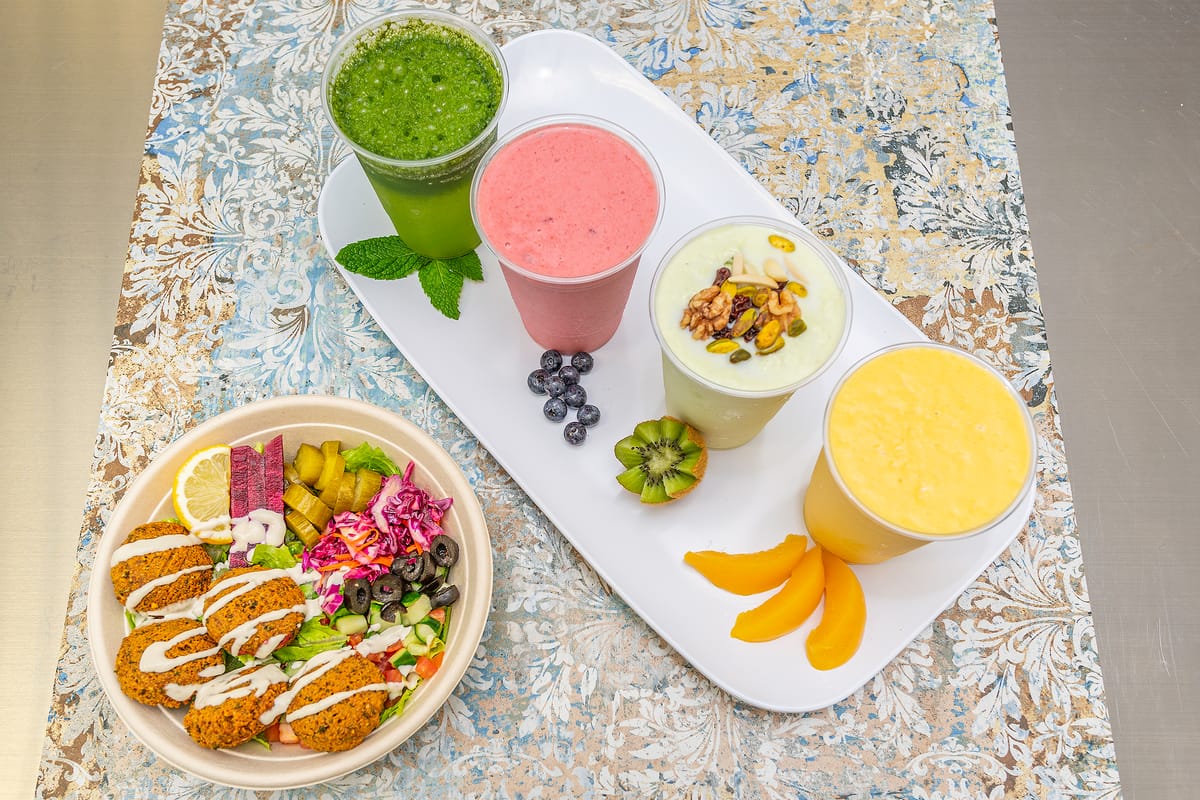
Shaved to order. Every single time.
The knife hits the spit when your order is placed — no pre-carved batches, no warming trays.
The Case for Rotisserie Chicken
Rotisserie chicken became a household staple for excellent reasons. A whole bird, lightly seasoned and roasted on a horizontal spit, delivers reliable juicy meat with minimal effort. The rotating motion ensures even cooking and self-basting from the bird's own rendered fat. The skin crisps beautifully, the thigh meat stays moist, and the price point is among the lowest per pound of any cooked protein available. It is the default family dinner for millions of households, and for good reason: it is inexpensive, consistent, and universally inoffensive.
The limitation becomes apparent when you compare the flavor of the interior meat to the skin. Rotisserie seasoning sits on the surface and does not penetrate the muscle fibers the way an overnight spice marinade does. The breast meat, in particular, is often quite bland once the skin is removed. The bird is also a single format — you get chicken on a plate, and the meal experience depends entirely on what sides you serve alongside it. There is no wrapping, no sauce assembly, no fresh vegetable and pickle contrast built into the protein itself.
How Does Rotisserie Chicken Actually Work?
The rotisserie method dates back centuries in European cooking. A whole chicken is trussed, seasoned on the outside with salt, pepper, paprika, and perhaps garlic powder or dried herbs, then mounted on a horizontal spit that rotates slowly over or beside a heat source. The rotation ensures that every surface of the bird spends equal time facing the flame, and the continuous turning prevents drippings from pooling on any single side. Cook time typically runs one to two hours depending on the size of the bird and the heat intensity.
The result is a uniformly cooked whole chicken with crispy golden skin, moist thigh meat, and tender but relatively plain breast meat. The drippings collect in a tray below and are often used to make a pan gravy. The eating experience is fundamentally different from shawarma because you are carving large portions off the bone rather than receiving thin, spice-saturated shavings from a compressed stack of marinated meat. Rotisserie chicken is comfort food at its most accessible. Shawarma is street food at its most intentional.
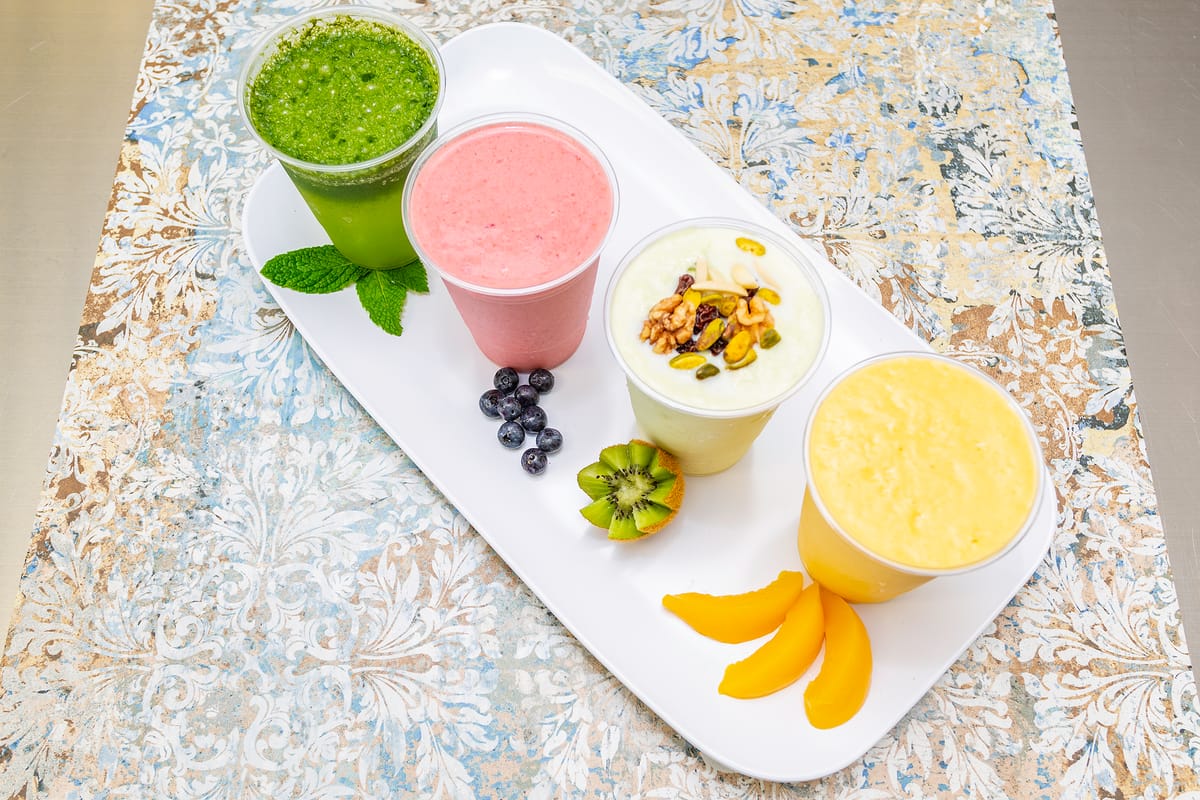
Twelve spices. One spit. Zero shortcuts.
Every layer of the shawarma cone is marinated overnight — the flavor goes all the way through.
Shawarma vs Rotisserie Chicken: Full Comparison
Twelve metrics, side by side. From marinade depth to spit orientation to price.
| Feature | Shawarma (Taza) | Rotisserie Chicken |
|---|---|---|
| Marinade | 12+ spice blend: cumin, turmeric, coriander, cinnamon, cardamom, allspice, sumac, paprika, garlic, lemon juice, olive oil | Basic rub: salt, pepper, paprika, garlic powder, sometimes herbs and butter baste |
| Cooking Method | Slow-roasted on a vertical spit — radiant heat source rotates or meat rotates in front of flame for 3-4 hours | Whole bird trussed on a horizontal spit or rotisserie basket, rotating over or next to heat for 1-2 hours |
| Spit Orientation | Vertical — stacked meat layers drip juices downward through the entire cone of protein | Horizontal — bird rotates on a lateral axis; drippings fall into a catch tray below |
| Meat Type | Thinly sliced chicken thighs and breasts (or beef/lamb), stacked and compressed on the spit | Whole chicken — bone-in, skin-on, cooked as a single intact bird |
| Seasoning Depth | Multi-layered: spices marinate into raw meat for hours before cooking; flavors penetrate every fiber | Surface-level: seasoning sits on the skin and outer surface; interior meat remains plain |
| Slicing Technique | Shaved thin off the vertical spit with a long knife — each slice captures charred exterior and moist interior | Carved in whole pieces — breast, thigh, drumstick portions separated at the joint |
| Serving Format | Pita sandwich, shrak wrap, or grain bowl — assembled with sauces, pickles, and vegetables to order | Whole or half bird on a plate — sides are separate, typically potatoes and gravy |
| Signature Sauces | Garlic toum, tahini, amba, hot sauce, sumac onion relish — complex condiment ecosystem | Pan gravy from drippings, occasionally barbecue or honey mustard — fewer, simpler options |
| Traditional Sides | Hummus, tabbouleh, pickled turnips, fattoush, baba ghanouj, basmati rice, pita bread | Mashed potatoes, coleslaw, cornbread, green beans, macaroni and cheese |
| Cultural Origin | Levantine and Eastern Mediterranean — developed in Ottoman-era street food culture as a vertical spit tradition | European origin — French rotisserie technique adopted globally; American grocery-store staple since the 1990s |
| Nutrition (per serving) | 420-520 cal, 35-45g protein, 14-20g fat — anti-inflammatory spice compounds from turmeric, cumin, coriander | 350-500 cal, 30-40g protein, 15-25g fat — higher skin-fat ratio; less micronutrient diversity from seasoning |
| Price at Taza | from $9.95 (pita) / from $12.45 (bowl) / from $9.95 (beef pita) | Not on the menu — Taza specializes in vertical-spit shawarma, not horizontal rotisserie |
Why Does Spit Orientation Matter So Much?
The direction of the spit changes how gravity, fat, and heat interact — and that changes everything about the final product.
Gravity-Fed Basting
On a vertical spit, rendered fat and spiced juices travel downward through every layer of stacked meat below. This means the bottom layers are continuously basted by the cooking layers above. The entire cone of protein is self-basting in a way that a horizontal rotisserie simply cannot replicate. A horizontal bird drips its fat into a tray underneath — that flavor leaves the meat permanently. On a vertical shawarma spit, that flavor travels through more meat before it exits. The physics are fundamentally different, and you can taste the difference in every bite.
Surface Area & Caramelization
Shawarma is built from thin slices stacked on the spit, which means the total surface area exposed to the marinade is vastly greater than the surface area of a whole chicken. More surface area means more Maillard reaction, more caramelization, and more of the complex browning compounds that create deep, layered flavor. A whole rotisserie chicken has exactly one exterior surface — the skin. Everything underneath is insulated from direct heat by that skin layer. Shawarma has dozens of thin layers, each developing its own charred edge as the cook shaves them off.
Shaving vs Carving
The slicing technique matters as much as the cooking method. Shawarma is shaved in thin ribbons off the rotating spit, and each ribbon captures both the crispy caramelized exterior and the moist, spice-saturated interior. You get textural contrast in every single piece. Rotisserie chicken is carved in large sections along the bone — a whole breast, a whole thigh. The exterior skin and the interior meat are experienced separately rather than in each bite. Shaving creates a fundamentally different eating experience from carving, and that difference is one of the key reasons shawarma feels more complex.
The assembly is half the meal.
Pickled turnips, fresh greens, garlic toum, tahini — shawarma is never just the meat.
Why Does Shawarma Marinade Create Deeper Flavor?
Rotisserie chicken uses a surface rub. Shawarma uses an overnight penetrating marinade. The difference is not subtle.
Shawarma: Overnight Penetrating Marinade
The shawarma marinade is a liquid suspension of olive oil, lemon juice, crushed garlic, and over twelve ground spices. Because the meat is sliced thin before marinating, every piece has maximum surface area in contact with this blend. The acid from lemon juice and the enzymatic action of garlic break down surface proteins, allowing the spice compounds to travel deep into the muscle fibers during an overnight soak. By the time the meat reaches the spit, the flavor is not merely on the surface — it is distributed throughout the entire thickness of every slice.
This is why shawarma meat tastes intensely spiced even in the center. The turmeric gives a golden color and earthy depth. Cumin provides the savory backbone. Coriander adds a subtle citrus note. Cinnamon and cardamom create a warm, aromatic quality that no rotisserie seasoning can approach. Sumac contributes a tart, fruity top note that brightens every other flavor. These compounds interact during the slow roast, creating new flavor molecules through the Maillard reaction that did not exist in the raw marinade.
Rotisserie: Surface Rub Seasoning
Standard rotisserie chicken seasoning is a dry rub applied to the outside of a whole bird shortly before cooking. Salt, black pepper, paprika, garlic powder, and sometimes dried thyme or rosemary are rubbed onto the skin. Some preparations add a butter baste during cooking for additional browning and moisture. The seasoning stays almost entirely on the skin and the outermost layer of meat, because a whole bird does not have the surface area to absorb a marinade the way thin slices do.
This means the crispy skin of a rotisserie chicken is genuinely flavorful — salty, slightly peppery, golden, and satisfying. But once you remove the skin and eat the breast meat underneath, the flavor drops off dramatically. The interior of a rotisserie chicken breast is mild, moist, and essentially unseasoned. This is perfectly fine for people who want a neutral protein to pair with other flavors, but it is a fundamentally different experience from biting into a thin shawarma shaving where every millimeter carries the full marinade.
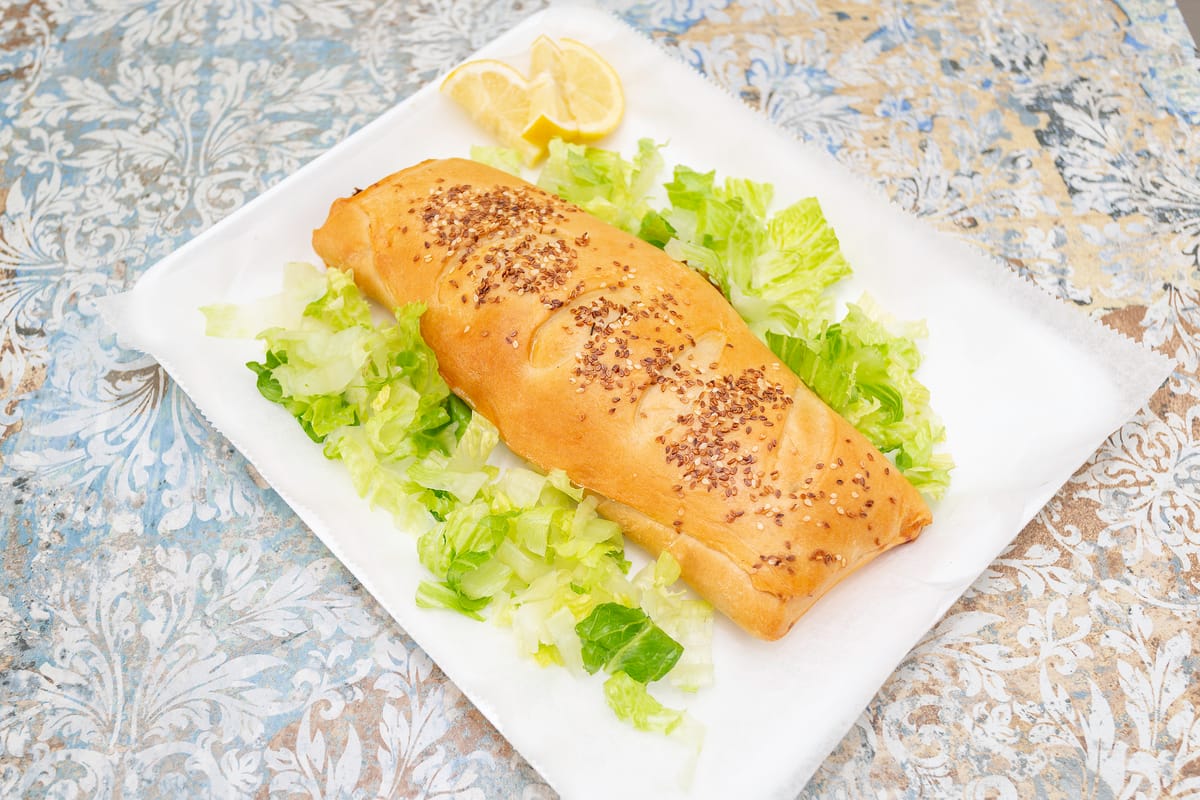
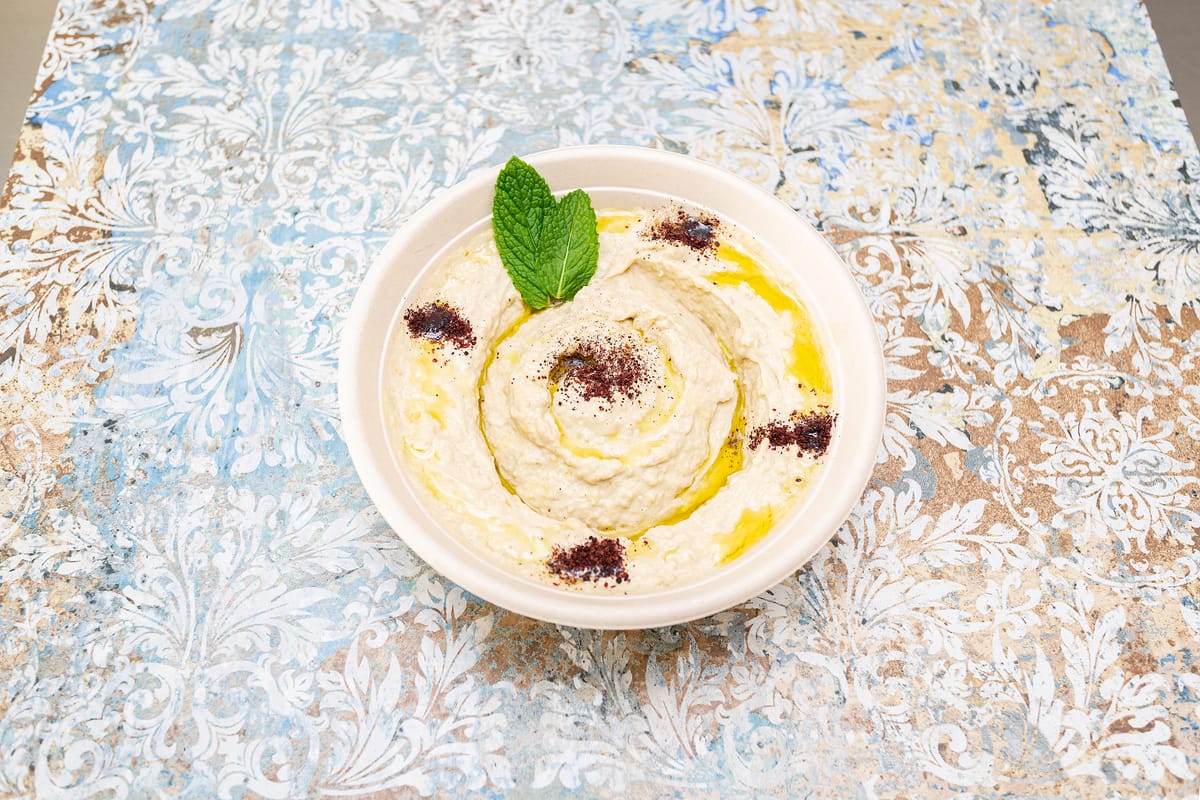
Sides that complete the experience.
House-made hummus ($4.95), fluffy basmati rice, warm pita — every shawarma order is a full meal.
How Are Shawarma and Rotisserie Chicken Served Differently?
Shawarma offers multiple serving formats with built-in sauce and vegetable assembly. Rotisserie chicken comes as a whole bird with sides on the plate.
Shawarma Pita Sandwich
from $9.95
Fresh-baked pita stuffed with thin shawarma shavings, garlic sauce, pickled turnips, tomatoes, cucumbers, and lettuce. The sandwich is a self-contained meal where every bite delivers protein, vegetables, sauce, and bread together. Nothing requires a fork, nothing needs a side dish, nothing is missing.
Shawarma Shrak Wrap
from $11.45
Paper-thin traditional shrak flatbread rolled around the same shawarma shavings and toppings. The shrak wrapper is lighter and chewier than pita, creating a different textural experience from the same spit-roasted meat. Popular for anyone who prefers a thinner bread-to-meat ratio.
Shawarma Bowl
from $12.45
Shawarma shavings served over basmati rice or mixed greens with full toppings and sauce. The bowl format is the most customizable and the most popular choice for anyone tracking macros or avoiding bread. Same spit-roasted meat, same sauces, different base.
How Rotisserie Chicken Is Typically Served
A rotisserie chicken arrives as a whole or half bird on a plate or in a takeout container. Sides — mashed potatoes, coleslaw, cornbread, green beans — are separate items purchased or prepared independently. The chicken itself has no sauce, no vegetable assembly, and no bread integration. It is a standalone protein that requires you to build the rest of the meal around it. This flexibility is a strength for home cooks who want to use the meat in multiple dishes throughout the week, but it means the per-meal experience is less complete than what a single shawarma order delivers.
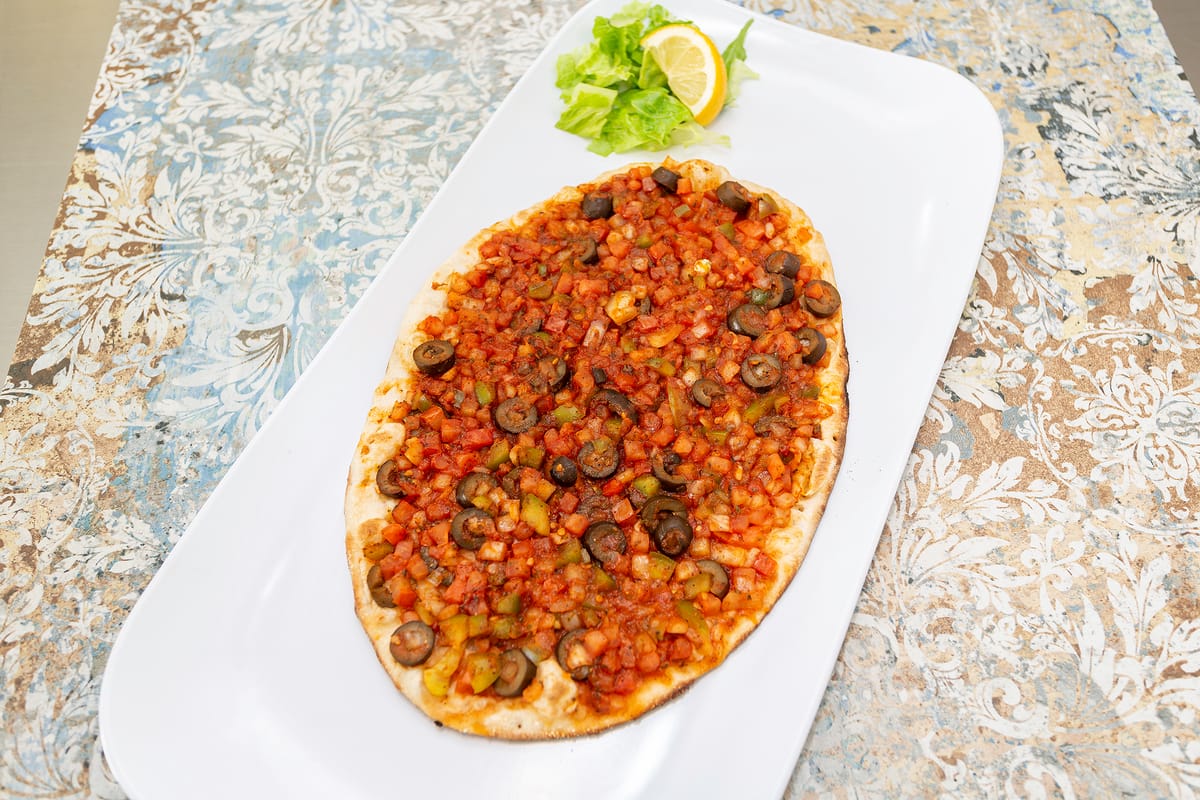
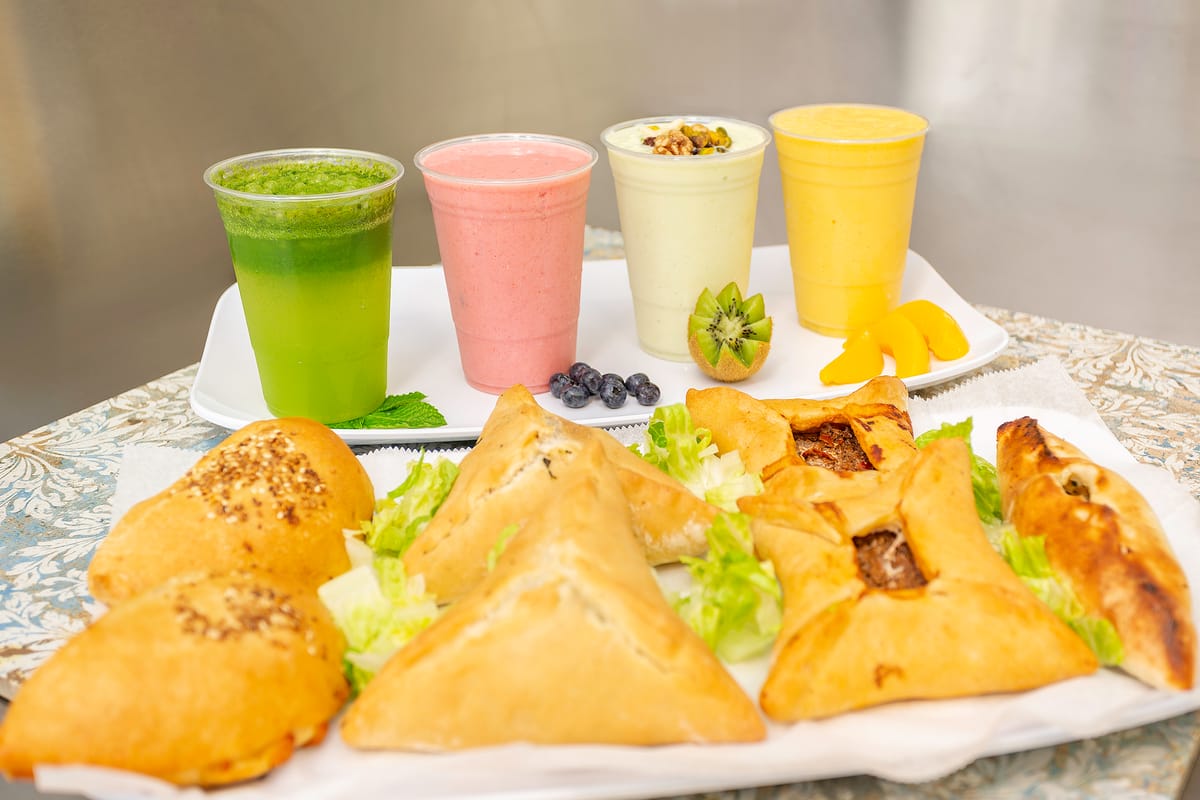
More than just shawarma.
Pair your meal with zaatar manaeesh ($6.95) or falafel pita (from $8.95).
What Should You Order at Taza Instead of Rotisserie?
Whether you typically buy a rotisserie chicken for dinner or meal prep, here is how to translate that into a Taza order.
Replacing a Family Rotisserie Dinner
Instead of a whole rotisserie bird with separate sides, order a combination of chicken shawarma bowls and pitas for the table. Add a large hummus ($4.95) and a side of basmati rice ($2.95) to share. The total cost is comparable to a rotisserie chicken dinner once you factor in the sides you would need to buy separately, and every person at the table gets a customized, complete meal rather than a carved piece of chicken on an empty plate.
- +Chicken Shawarma Pita — from $9.95
- +Beef Shawarma Bowl — from $12.45
- +Falafel Pita (vegetarian option) — from $8.95
- +Hummus to share — $4.95
Replacing Rotisserie for Meal Prep
Many people buy a rotisserie chicken to shred and portion into meal-prep containers for the week. Shawarma bowls accomplish the same goal with far more flavor variety. Order multiple chicken or beef shawarma bowls over rice, and you have three to four meals ready to go. The spice marinade in shawarma actually develops more flavor over two to three days in the refrigerator, unlike rotisserie chicken which tends to dry out and lose its mild appeal as it sits. Shawarma is genuinely better as a leftover than rotisserie.
- +Chicken Shawarma Bowl x2 — from $12.45 each
- +Beef Shawarma Bowl x1 — from $12.45
- +Extra Rice — $2.95
- +Zaatar Manaeesh (snack) — $6.95
What Does Shawarma Taste Like Compared to Rotisserie?
The flavor gap between these two preparations is one of the widest in all of spit-roasted cooking.
Shawarma Flavor Notes
The first thing you notice when biting into a well-made shawarma is the charred exterior giving way to intensely spiced, moist meat. Cumin provides a deep, earthy warmth that anchors the entire flavor. Turmeric adds a subtle bitterness and golden color. Coriander contributes a light citrus note that lifts the heavier spices. Cinnamon and cardamom create an aromatic sweetness that balances the savory elements. Allspice ties everything together with a rounded warmth. Sumac delivers a tart, almost berry-like brightness on the finish that no other spice can replicate. And underneath all of this, the olive oil marinade carries a fruity richness that coats the palate and makes each bite feel substantial and complete.
Then you add the garlic toum — a creamy, pungent emulsion of garlic and oil that hits with a sharp bite and mellows into a rich finish. The pickled turnips contribute a tangy, slightly fermented crunch. Fresh tomatoes and cucumbers add coolness and moisture. The pita or shrak bread provides a soft, starchy wrapper that absorbs all the juices. Every bite is different because every component contributes a distinct texture and flavor.
Rotisserie Flavor Notes
Rotisserie chicken at its best delivers a satisfying, clean chicken flavor with a crispy, salty skin and moist, tender meat. The skin is the star — golden, slightly crackly, seasoned with salt and pepper, and rendered of most of its fat during the slow rotation. The thigh and leg meat retain good moisture and have a richer, more pronounced chicken flavor than the breast. The breast itself is the mildest part, often requiring salt or a dipping sauce to feel fully seasoned. The overall flavor profile is simple and approachable, and it works well as a neutral base for other preparations like salads, sandwiches, or grain bowls.
The limitation is that rotisserie chicken is a one-note experience once the skin is consumed. There is no spice complexity to discover on the second or third bite. There is no contrast between charred and moist within the same thin slice. The sides exist on the plate next to the chicken, not integrated into every bite the way shawarma toppings are built into the sandwich or bowl. For people who value simplicity and a clean chicken taste, this is perfectly adequate. For anyone who eats chicken multiple times per week and wants genuine variety, the flavor ceiling of rotisserie is much lower than the floor of a well-made shawarma.
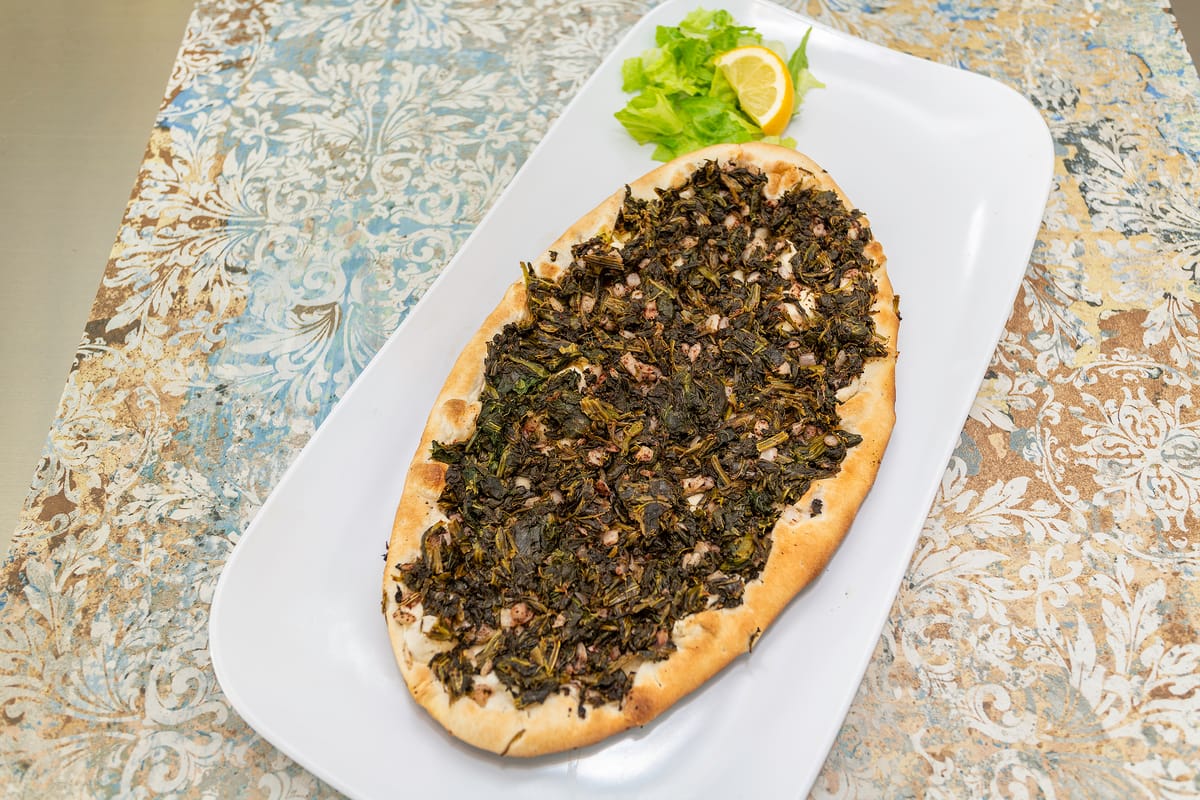
Fresh toppings. Every order.
Lettuce, tomatoes, cucumbers, pickled turnips — built into the meal, not served on the side.
When Should You Choose Shawarma Over Rotisserie?
Both are legitimate dinner options. Here is when each one makes the most sense.
Choose Shawarma When...
- +You want a complete, assembled meal in one order — protein, sauce, vegetables, and bread together
- +You are eating out and want the highest flavor return per dollar spent
- +You cook chicken at home often and want something that tastes fundamentally different from what you make
- +You are feeding a group and want everyone to customize their own pita, wrap, or bowl
- +You appreciate complex spice profiles and want twelve or more distinct flavor notes in every bite
- +You are ordering for lunch or dinner and want a satisfying meal that keeps you full for hours
Choose Rotisserie When...
- +You need a large quantity of neutral protein to use across multiple different recipes during the week
- +You are cooking at home for young children who prefer mild, unseasoned chicken without strong spices
- +You want the most affordable per-pound price on cooked chicken and will season it yourself
- +You are making chicken salad, chicken soup, or another dish where the chicken is a background ingredient
- +You prefer a simple, clean chicken flavor without the complexity of a twelve-spice marinade
- +You are on a very strict low-sodium diet and need to control every gram of salt yourself
How Does Shawarma Nutrition Compare to Rotisserie?
A per-serving breakdown of what you are actually eating in each meal.
Shawarma Pita
420-520 cal
35-45g protein, 14-20g fat
Beef Shawarma Bowl
from $12.45
40-50g protein over rice
Falafel Pita
from $8.95
Plant protein + fiber
Hummus Side
$4.95
8g protein, healthy fats
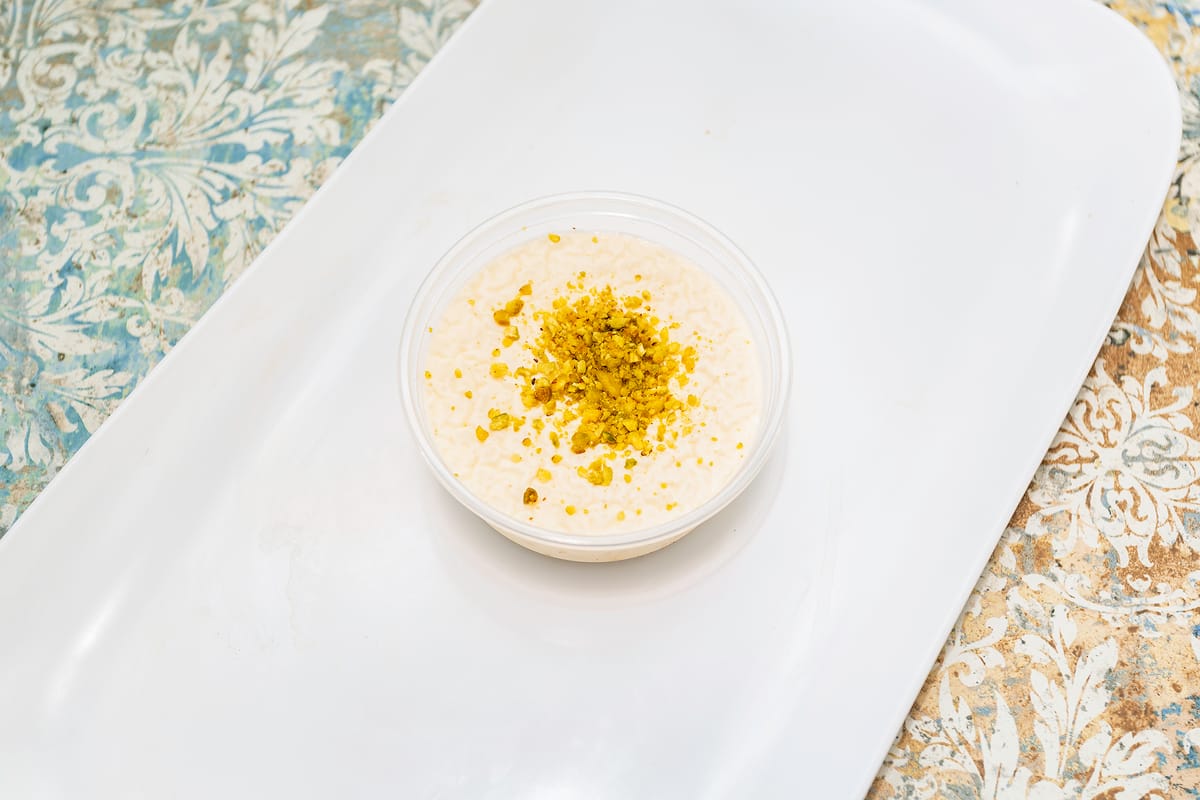
A complete Mediterranean spread.
Shawarma, falafel, hummus, tabbouleh — every meal is a feast, not just a protein.
Where Did Shawarma and Rotisserie Each Come From?
Two spit-roasting traditions with completely different histories, geographies, and culinary philosophies.
Shawarma: Levantine and Eastern Mediterranean Roots
Shawarma emerged from the Ottoman-era Levantine food tradition, likely evolving from the Turkish doner kebab during the eighteenth and nineteenth centuries. The technique of stacking marinated meat on a vertical spit spread throughout Lebanon, Jordan, Syria, and the broader Eastern Mediterranean region, with each area developing its own spice blend and serving style. Lebanese shawarma tends toward garlic toum and pickled turnips. Jordanian preparations often feature amba sauce and more cumin. Syrian versions may include pomegranate molasses for sweetness. The vertical spit became the defining symbol of Levantine street food culture, visible in the front window of shawarma shops across the region and now around the world.
At Taza Shawarma and Falafel in Falls Church, the preparation follows the Lebanese tradition with a proprietary spice blend, house-made garlic toum, and fresh-baked pita. Every element is made on site, and the spit turns continuously from opening to close.
Rotisserie: European and American Tradition
The horizontal rotisserie has deep roots in European cooking, particularly French cuisine, where the rotisseur was a specialized cook in the brigade system responsible solely for spit-roasted meats. The technique crossed the Atlantic and became a staple of American home cooking and restaurant service. In the 1990s, grocery-store rotisserie chicken became a mass-market phenomenon, with chains selling whole roasted birds as affordable, convenient meals. The simplicity of the preparation — minimal seasoning, whole-bird format, one to two hours of cooking — made it the default easy dinner for millions of American families.
Today, rotisserie chicken is one of the most ubiquitous prepared proteins in the United States. It is available at virtually every grocery store, at a price point designed to drive foot traffic rather than maximize margin. The cultural role of rotisserie chicken is fundamentally different from shawarma: it is a convenience product and a household utility, while shawarma is a destination food and a culinary experience.
Get Authentic Shawarma in Falls Church, VA
Taza Shawarma & Falafel is open 7 days a week on Seminary Road. Order online or walk in.
Address
5820 Seminary Rd Ste O, Falls Church, VA 22041
Hours
11:00 AM - 12:00 AM -- Open 7 Days a Week
Phone
Shawarma vs Rotisserie Chicken: Questions Answered
No. Shawarma and rotisserie chicken are fundamentally different preparations despite both using rotating heat. Shawarma uses a vertical spit with thinly sliced, heavily marinated meat stacked in layers. Rotisserie chicken cooks a whole, lightly seasoned bird on a horizontal spit. The marinade complexity, spit orientation, slicing method, and serving format are all distinct. Shawarma delivers multi-layered spice flavor in every thin shaving, while rotisserie chicken offers mild, juicy meat with most of the flavor concentrated in the skin.
A vertical spit holds stacked meat upright, with a heat source to one side. Gravity pulls rendered fat and juices downward through all the layers, continuously basting the meat below. The cook shaves thin slices off the outer charred surface as it finishes. A horizontal spit suspends a whole bird laterally, rotating it over or beside a heat source. Drippings fall into a tray below rather than basting through more meat. This fundamental difference in physics is why shawarma and rotisserie taste so different despite both technically being spit-roasted.
Three reasons. First, the marinade: shawarma meat soaks in a blend of twelve or more spices, olive oil, lemon juice, and garlic for hours before cooking, so the flavor penetrates deep into the protein fibers. Second, the stacking: thin slices layered on the spit mean every single piece has maximum surface area exposed to spices. Third, the shaving technique: each thin slice off the spit captures both the charred, caramelized exterior and the moist interior. Rotisserie chicken, by contrast, relies mostly on skin seasoning, and the interior breast meat is often quite plain.
It depends on how you define healthy. Rotisserie chicken with the skin removed is very lean, around 165 calories per 4 oz of breast meat. But the skin is where most of the flavor and fat reside. A Taza chicken shawarma pita with vegetables runs approximately 420-520 calories but includes anti-inflammatory compounds from turmeric, cumin, and coriander, healthy unsaturated fat from olive oil, fiber from vegetables, and a complete meal assembly. For overall nutritional diversity and satisfaction per meal, shawarma often comes out ahead.
Traditional shawarma is never made from a whole bird. The technique requires thin slices of marinated meat stacked and compressed onto a vertical spit, which creates the characteristic layered texture. A whole chicken cannot produce the thin, shaved slices that define shawarma. At Taza, chicken thighs and breasts are hand-sliced, marinated overnight, and carefully stacked on the spit so that every shaving delivers the full flavor of the marinade and the caramelized exterior.
Shawarma's spice profile is significantly more complex. Key spices include cumin, turmeric, coriander, cinnamon, cardamom, allspice, sumac, paprika, and black pepper — often over twelve individual spices in total. Many of these have documented anti-inflammatory and metabolic benefits. Standard rotisserie chicken typically uses salt, black pepper, paprika, garlic powder, and occasionally dried herbs like thyme or rosemary. The depth of flavor is not comparable, which is why shawarma tastes distinctly different from any rotisserie preparation.
Taza Shawarma and Falafel at 5820 Seminary Rd in Falls Church, VA serves authentic Levantine shawarma made on a vertical spit, shaved fresh to order for every customer. The restaurant is open seven days a week from 11 AM to midnight. All proteins are 100 percent halal certified. You can order chicken shawarma or beef shawarma in a pita, shrak wrap, or bowl, with your choice of fresh toppings and house-made sauces.
Yes. Every protein at Taza Shawarma and Falafel is 100 percent halal certified — including the chicken shawarma, beef shawarma, and chicken tenders. The marinades, sauces, and sides are all prepared in accordance with halal standards. This is a core commitment of the restaurant, not an afterthought. Halal certification is maintained across all suppliers and verified regularly.
Ready for the Vertical Spit Difference?
Visit Taza Shawarma & Falafel at 5820 Seminary Rd, Falls Church — open every day until midnight. Order online or call us.