If you want to understand Lebanese cooking — really understand it — you need to understand zaatar. Not just the dried herb called zaatar (a wild thyme native to the Levant), but the spice blend that carries the same name: a mixture of dried thyme, sumac, sesame seeds, and salt that has been ground and blended and eaten in the Levant for longer than recorded history. This blend is not merely a condiment. It is a cultural artifact, a daily ritual, and a flavor so deeply embedded in Lebanese identity that generations of emigrants have carried it with them across the world in their luggage — because no substitution will do.
What Exactly Is Zaatar?
The word "zaatar" in Arabic refers to a specific herb — Origanum syriacum, a wild variety of oregano-thyme native to the mountains of Lebanon, Syria, and Palestine. It grows in rocky hillsides at elevation, and its flavor is more intense and slightly more astringent than common thyme, with notes of oregano and marjoram. For centuries, Levantine cooks harvested it wild in summer, dried it in the sun, and stored it through winter.
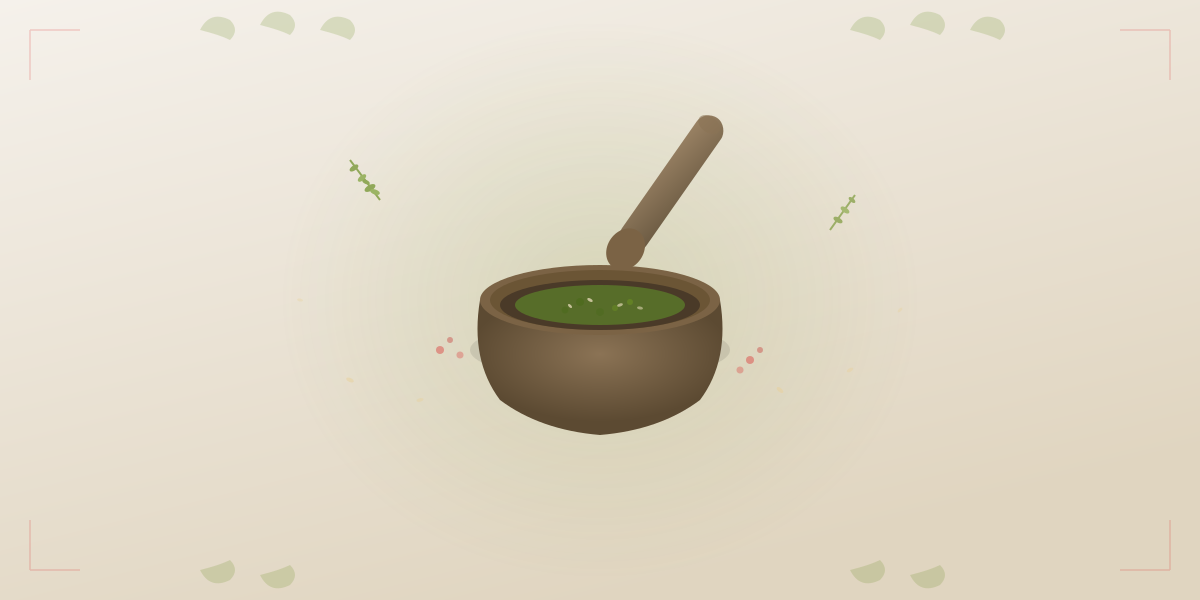
The spice blend called zaatar is built on this dried herb, but it is the combination of ingredients that makes it extraordinary. Dried zaatar herb forms the base; sumac — the tart, dark red powder ground from the dried berries of the Rhus coriaria plant — adds a fruity acidity; toasted sesame seeds provide fat, nuttiness, and textural richness; and salt ties everything together. The proportions vary by family, by region, and by personal taste. A Lebanese zaatar from the Bekaa Valley may be heavier on the herb, more sharply tangy. A Palestinian blend might include more sesame, making it richer and more paste-like when mixed with olive oil. A Syrian version might include dried herbs like marjoram and oregano in the mix.
- Dried zaatar herb (Origanum syriacum) — the foundation; earthy, slightly bitter, intensely aromatic
- Sumac powder — bright tartness, fruity acidity that makes the blend sing
- Toasted sesame seeds — nutty richness, slight crunch, holds the blend together
- Sea salt — enhances and balances all other flavors
- Some blends add: dried marjoram, dried oregano, fennel seeds, or cumin
Every Lebanese grandmother has her own zaatar recipe, and she will not share the exact proportions with anyone outside the family. The recipe is inheritance. It is memory. You don't just sell that.
— Chef Anissa Helou
Zaatar Through the Ages: An Ancient Pantry Staple
Zaatar's history stretches back to antiquity. The ancient Egyptians used the wild thyme plant medicinally and culinarily, and it appears in texts from the classical period describing the flora of the Levant. The Roman naturalist Pliny the Elder wrote about the value of Syrian thyme. Crusader-era manuscripts mention an herb blend used by the populations of the Levant that matches the profile of what we call zaatar today.
In the medieval Islamic world, zaatar was not just eaten but prescribed. The great physician Ibn Sina (Avicenna) wrote in the 11th century that zaatar sharpened the mind, improved memory, and strengthened the body — claims that have since found some support in modern research on the antioxidant and antimicrobial properties of thyme and sumac. Whether or not it truly boosts cognition, the belief that zaatar is brain food is so deeply embedded in Lebanese culture that it is still common to hear parents insisting their children eat a zaatar breakfast before an exam.
Did You Know?
The medieval Arab saying goes: "He who eats zaatar in the morning will not forget anything all day." Whether this is scientifically valid or not, it has been sufficient to make zaatar bread the traditional Lebanese breakfast for at least a thousand years.
Manaeesh: Zaatar's Greatest Vehicle
If zaatar is the king of Lebanese spice blends, manaeesh (also spelled manakish) is its throne. The word refers to a flatbread, usually made from a simple yeasted dough, that is stretched thin and spread generously with a paste of zaatar and olive oil before being baked in a hot oven or on a griddle. The result is extraordinary: the bread blisters and chars slightly at the edges; the zaatar-oil paste soaks into the dough and becomes almost fused with it; the kitchen fills with an aroma that is simultaneously herbal, yeasty, and toasty.
In Lebanon, manaeesh is the breakfast. It is the food that grandmothers make while everyone is still half-asleep, the smell that pulls children out of bed, the meal that anchors the morning before school or work. It is eaten plain, folded around sliced tomato and cucumber, topped with a drizzle of extra olive oil, or in combination with cheese (specifically Lebanese white cheese called akkawi, which melts beautifully). For Lebanese people living abroad, a proper manaeesh made with good zaatar and real olive oil is often the taste of home they miss most acutely.
Pro Tip
The key to great manaeesh is a generous hand with the zaatar-oil paste and a very hot cooking surface. The bread should be thin enough that it cooks quickly and gets some char at the edges. Roll the dough thin, spread the paste all the way to the edge, and don't be stingy — the paste should cover the bread completely, not just the center.
Zaatar Beyond Bread: A Versatile Flavor Maker
As essential as manaeesh is, zaatar has a much broader range of applications in Lebanese and Levantine cooking. Understanding how to use it opens up an entire dimension of flavor that is uniquely Mediterranean and distinctly Lebanese.
- Mixed with olive oil as a dip for bread — the simplest and most satisfying application
- Rubbed onto chicken before roasting — creates a fragrant, slightly tangy crust
- Folded into labneh (strained yogurt) with olive oil for a quick dip or spread
- Sprinkled over fried or soft-boiled eggs — transforms a simple breakfast
- Mixed into salad dressings — adds herbal complexity and a hint of tartness
- Dusted over hummus as a finishing garnish
- Stuffed inside bread dough before baking for a savory swirl bread
- Combined with olive oil and drizzled over roasted vegetables
- Used as a dry rub for lamb chops or kofta
One of the most elegant zaatar preparations is something Lebanese home cooks do almost without thinking: they pour a generous pool of good olive oil onto a plate, heap a mound of zaatar beside it, and serve it with fresh bread for tearing and dipping. The bread goes first into the oil, then into the zaatar, coating itself with both at once. The result — fresh bread, fruity olive oil, tangy herbal zaatar — is one of the greatest breakfast combinations on earth, requiring almost no effort and no cooking.
Sourcing Zaatar: What to Look For
Not all zaatar blends are created equal, and the difference between a good one and a mediocre one is significant. The color is the first indicator: a good zaatar blend should be a bright, vivid olive-green, indicating that the herbs are fresh and well-preserved. A blend that has faded to a dull brown-gray has been sitting too long and the essential oils that carry the flavor have largely evaporated.
The aroma test is definitive. Open the container and breathe deeply — you should smell something intensely herbal, like fresh thyme but more complex, with a distinct tartness from the sumac cutting through. If it smells faintly of nothing in particular, the blend is past its prime. Good zaatar, properly stored in an airtight container away from heat and light, should last up to a year without significant flavor loss.
Did You Know?
In Northern Virginia and the greater DC area, you can find excellent zaatar at Middle Eastern grocery stores along the Route 7 corridor in Falls Church and beyond. Look for brands that import directly from Lebanon or Palestine, or ask at the counter — the staff usually know which blends are freshest.
Zaatar at Taza and in Our Community
At Taza Shawarma & Falafel in Falls Church, zaatar appears throughout our menu — not just as a named item, but as an ingredient woven into the fabric of how we season and prepare food. Our manaeesh is a point of pride: the dough is made fresh, the zaatar paste is generous, and we use olive oil of a quality that honors what it's mixed with.
The Lebanese and Arab community in Falls Church has kept the zaatar tradition alive in Northern Virginia for decades, and we feel the responsibility of that continuity. When a Lebanese grandmother comes in and orders manaeesh, she is not just ordering breakfast. She is checking whether we are doing it correctly, whether we respect the tradition, whether the flavor matches what she carries in her memory. That is the highest standard there is, and we take it seriously.
Zaatar is more than a spice blend. It is a connection to a landscape — the rocky hills of Lebanon, the wild herbs that grow there, the families that have harvested and blended and eaten this mixture for generations beyond counting. Every time you open a bag of zaatar and breathe in its sharp, herbal, slightly tart aroma, you are catching a scent that has been familiar to people in the Levant for more than a thousand years. That kind of continuity, in food as in culture, is worth savoring.