If you've ever walked into a Mediterranean or Middle Eastern restaurant as a vegetarian and felt the particular joy of realizing that nearly half the menu was made for you — not just tolerated by you — you already understand what this article is about. Mediterranean cuisine is, in many respects, the original plant-based cuisine. Not because the tradition is meat-free, but because centuries of cooking wisdom have produced such a deep repertoire of plant-based dishes that vegetarians and vegans can eat with complete satisfaction, zero compromise, and frankly more variety than they'd find at many restaurants with dedicated plant-based menus.
A Historical Plant-Based Tradition
Long before veganism was a word, the economics and ecology of the Mediterranean region made plant-heavy eating the norm. Meat was expensive and reserved for celebrations. Legumes — chickpeas, lentils, fava beans, white beans — were the daily protein. Vegetables grew abundantly around the sea, from the eggplants of the eastern Mediterranean to the leafy greens of North Africa. The Islamic and Orthodox Christian fasting traditions, which both call for abstaining from animal products on certain days or periods, further developed a rich vocabulary of plant-based dishes across the region. The result is that vegetarian and vegan food in Mediterranean cuisine isn't an adaptation or a substitution — it's original, foundational, and deeply developed.
In Lebanon, a traditional meze spread might include fifteen dishes. At least ten of them are naturally vegan. This wasn't a design choice — it's the result of a thousand years of cooking with what the land provided.
— Anissa Helou, Lebanese food writer and cookbook author
The Plant-Based Stars of the Mediterranean Menu
Falafel: The Original Plant-Based Protein
Falafel is so central to the vegetarian and vegan Mediterranean experience that it deserves its own extended discussion. These small, crispy-on-the-outside, fluffy-on-the-inside orbs of ground chickpeas, herbs, and spices are one of the most satisfying plant-based foods in existence. There's nothing apologetic about them — no pretending to be something else, no mimicking meat. Falafel is fully itself: crunchy, herbaceous, savory, substantial, and filling. At Taza Shawarma & Falafel in Falls Church, the falafel is made fresh and fried to order, which is the only way it should be done. The difference between fresh-fried falafel and the pre-made frozen variety is like the difference between a freshly baked croissant and a gas station pastry. If you've only had the latter, you haven't had falafel.
Pro Tip
When ordering falafel, always ask if it's made from dried chickpeas or canned. Dried chickpeas make a far superior falafel — lighter, crispier, and with better flavor. Restaurants that take falafel seriously use dried chickpeas soaked overnight, not canned. The texture is immediately apparent.
Hummus: So Much More Than a Dip
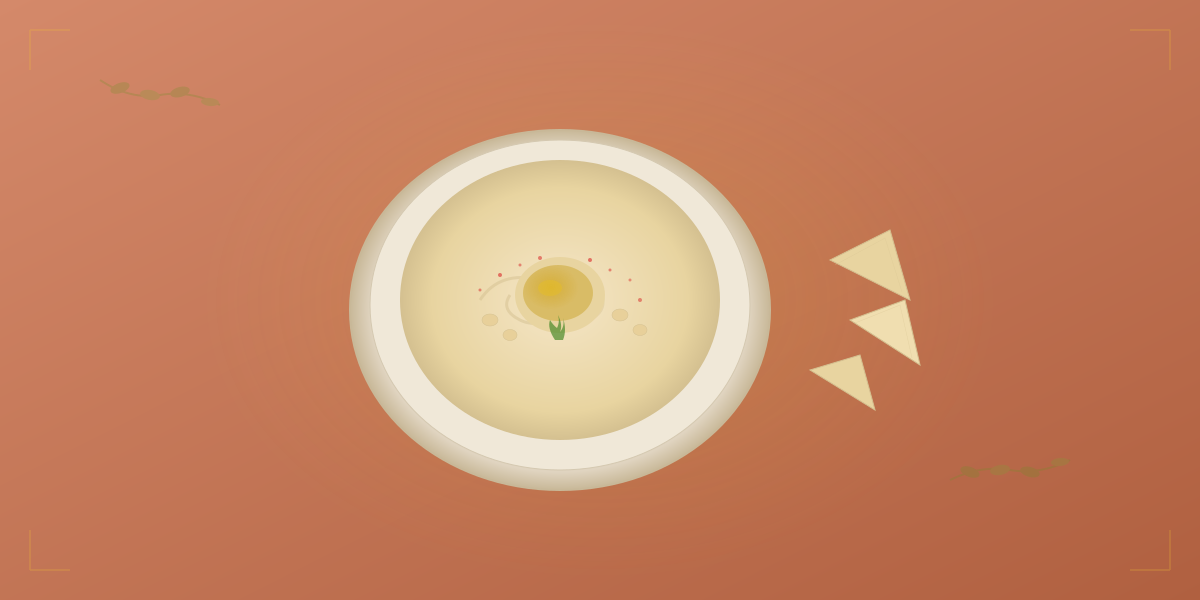
Americans have a tendency to think of hummus as a vegetable dip, but that's a significant undersell of what it can be. In its home regions — Lebanon, Israel, Palestine, Jordan, Syria — hummus is a meal. A bowl of fresh hummus, warm and silky, drizzled with olive oil, dusted with paprika, studded with a few whole chickpeas, accompanied by warm pita — that's lunch. The chickpea base provides protein and fiber. The tahini adds healthy fats and additional protein. The olive oil contributes monounsaturated fats and polyphenols. It is, genuinely, a nutritionally complete meal. And it is completely vegan. If you're plant-based and you haven't explored hummus as a main course rather than a condiment, you're leaving one of the great food experiences on the table.
Tabbouleh: The World's Most Virtuous Salad
Tabbouleh is a Lebanese parsley salad that contains more fresh herb than almost any other dish in world cuisine. The classic recipe is mostly flat-leaf parsley — finely chopped, almost minced — with a smaller amount of fresh mint, a bit of soaked bulgur wheat, diced tomatoes, green onion, lemon juice, and olive oil. It's bright, sharp, herbaceous, and refreshing in a way that very few foods are. It's also entirely vegan and extraordinarily nutritious. Parsley is one of the most vitamin-rich herbs available: high in vitamins K, C, and A, and containing meaningful amounts of folate and iron. Real tabbouleh is a health food and a flavor revelation in one.
Did You Know?
Real Lebanese tabbouleh is about 80% parsley by volume, not bulgur. If you've had a version that was mostly grain with a little green flecked in, you've had an Americanized interpretation. The authentic version is verdant, bright, and intensely herby — and it's one of the most nutritious salads in the world.
Baba Ganoush and Roasted Vegetable Spreads
The eggplant is the great vegetable of the Mediterranean world. It absorbs flavors, takes on a silky texture when roasted, and forms the base of countless dishes. Baba ganoush — roasted eggplant blended with tahini, garlic, lemon, and olive oil — is the smoky, complex cousin of hummus. The eggplant is charred directly over a flame or under a broiler until the skin is blackened and the inside is completely soft, which imparts a deep, almost meaty smokiness that makes the finished dip extraordinarily satisfying. It's completely vegan and a testament to how much flavor can be coaxed from a single humble vegetable with the right technique.
Za'atar: The Vegan Flavor Bomb
If falafel is the heart of the plant-based Mediterranean kitchen, za'atar is the soul. This dried herb blend — typically wild thyme, sumac, sesame seeds, and salt — has been used across the Levant for centuries and is one of the most flavor-dense condiments in any food tradition. Mixed with olive oil and spread on flatbread before baking, it becomes manaeesh, one of the most popular street foods in Lebanon and Syria. Sprinkled over hummus or labneh, it adds a layer of herby, tangy complexity. Used as a seasoning for roasted vegetables, it elevates the simplest dish into something memorable. Za'atar is inherently vegan, inexpensive, and capable of transforming plant-based cooking in a way that few other ingredients can.
What to Order at Taza as a Vegan or Vegetarian
At Taza Shawarma & Falafel in Falls Church, plant-based eaters have genuine options, not just garnish. The falafel bowl is the flagship vegan order: crispy falafel balls over a bed of your choice, topped with hummus, tabbouleh, pickled turnips, and tahini sauce. Every component in that bowl is vegan. The manaeesh with za'atar is another excellent choice — the flatbread is baked with the herb blend and olive oil, emerging from the oven fragrant and perfectly browned. Add a side of hummus and you have a simple, soul-satisfying plant-based meal.
- Falafel bowl or plate: Fully vegan, high in plant protein, endlessly customizable with toppings
- Za'atar manaeesh: Vegan flatbread baked with herb blend and olive oil — a perfect plant-based snack or light meal
- Hummus: Order it as a side, a dip, or as the base of a meze-style meal with pita and vegetables
- Tabbouleh: Fresh, vegan, nutrient-dense — a great side for any plant-based order
- Pickled vegetables: Turnips, cucumbers, and other pickled accompaniments are always vegan and add crunch and brightness
- Falafel pita or wrap: A convenient handheld version of the falafel plate, with all the same toppings in a more portable format
Nutritional Completeness for Plant-Based Eaters
One concern that vegetarians and especially vegans navigate is nutritional completeness — getting enough protein, iron, zinc, calcium, and B vitamins without animal products. The Mediterranean plant-based approach handles this remarkably well. Chickpeas (falafel, hummus) and lentils provide substantial plant protein and iron. Tahini (sesame paste) adds zinc, calcium, and additional protein. Olive oil contributes vitamin E and healthy fats that aid absorption of fat-soluble vitamins. Fresh herbs and vegetables supply vitamin C, which dramatically enhances iron absorption from plant sources. The traditional pairing of legumes with tahini and lemon isn't just good flavor — it's a nutritional system refined over centuries of plant-based eating.
Pro Tip
Pair your plant-based Mediterranean meal with a source of vitamin C — fresh lemon squeezed over falafel, tomatoes in tabbouleh, or pickled vegetables on the side. Vitamin C enhances the absorption of non-heme iron from plant sources by up to 300%, which is crucial for vegetarians and vegans getting their iron from chickpeas and lentils rather than meat.
Mediterranean plant-based eating isn't a trend or a compromise — it's one of the most sophisticated and satisfying ways to eat that human civilization has produced. Whether you're fully vegan, vegetarian, flexitarian, or simply someone who wants to eat less meat without feeling deprived, the Mediterranean table welcomes you with open arms and extraordinary flavor. Pull up a chair. There's more than enough here for everyone.