Mediterranean cuisine has a sauce for every occasion, every protein, every mood. This is not accidental. The cuisines of Lebanon, Palestine, Syria, Turkey, Greece, and North Africa evolved over thousands of years in environments where clever seasoning and condiment-making were essential arts — ways of making simple, often humble ingredients sing. The result is a collection of sauces that are, individually, some of the most flavor-packed things you can put in your mouth. Combined with grilled meats, roasted vegetables, or fresh flatbread, they transform a plain meal into something that lingers in memory.
At Taza Shawarma & Falafel in Falls Church, VA, sauces are not afterthoughts. They're part of how we build flavor at every stage. We're sharing five of the most essential Mediterranean sauces — what they are, how to make them, and how to think about using them beyond the obvious.
Sauce #1: Toum — The Legendary Lebanese Garlic Sauce
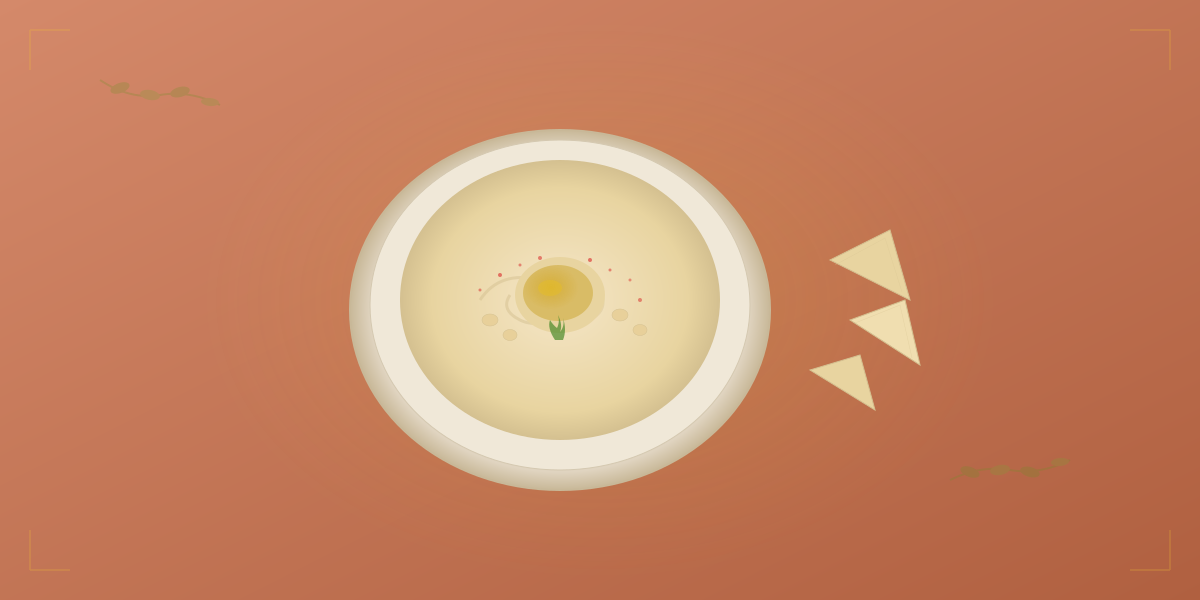
If you've eaten at a Lebanese restaurant and found yourself reaching for that white, fluffy sauce that looks like mayonnaise but tastes powerfully of garlic, you've had toum (pronounced 'toom'). Toum is an emulsified garlic sauce — technically a garlic aioli made without eggs, using the natural emulsifiers in garlic itself. When made properly, it has the texture of whipped cream: light, billowy, and spreadable. The flavor is intensely garlicky, with a clean, bright kick that doesn't leave you with the harsh garlic burn that raw minced garlic does.
Pro Tip
The key to toum is patience and temperature control. Your garlic needs to be at room temperature. Your oil needs to go in drop by slow drop at first — an actual trickle, not a pour. The emulsion is fragile in the first few minutes. Once it starts to hold, you can speed up slightly, but never rush it. The moment you pour oil in too fast, the emulsion breaks and you have garlic-flavored oil instead of sauce. If it breaks, you can often rescue it by starting with fresh garlic and slowly adding the broken mixture instead of fresh oil.
Basic Toum Recipe
- 1 full head of garlic, peeled (about 40g of cloves)
- 1 tsp kosher salt
- Juice of 1 lemon (about 3 tbsp)
- 1 cup neutral oil (vegetable, canola, or light olive oil — not extra virgin)
- 2-3 tbsp ice water
- Process: blend garlic and salt to a fine paste, then alternate adding oil and lemon juice very slowly, blending continuously, adding ice water at the end to lighten
Uses for toum go far beyond shawarma, though shawarma is its natural home. Spread it on warm pita before adding any filling. Use it as a dip for roasted potatoes (it turns french fries into an extraordinary thing). Stir a spoonful into pasta with lemon and herbs. Spread under roasted chicken in the last 20 minutes of cooking. Use it wherever you'd use garlic butter — it has more complexity and less richness.
Sauce #2: Tahini Sauce — The Versatile Workhorse
Tahini sauce — diluted sesame paste with lemon and garlic — is perhaps the most versatile Mediterranean condiment of all. Unlike straight tahini, which is thick and intense, tahini sauce is silky and pourable, with a nutty, savory-tangy flavor profile that complements almost everything. It's the default sauce for falafel, the drizzle on shawarma, the dressing for roasted cauliflower, the finishing touch on grilled eggplant, the dip for raw vegetables. Understanding tahini sauce is understanding a whole dimension of Mediterranean cooking.
Tahini sauce is the Mediterranean world's equivalent of a great vinaigrette. Once you know the base formula — tahini, lemon, garlic, water — you can adapt it endlessly. Add miso for umami depth. Add herbs for freshness. Add harissa for heat. The structure stays the same; only the personality changes.
— Taza Kitchen, Falls Church
Tahini Sauce Formula
- 1/2 cup good tahini (stirred well before measuring)
- Juice of 1-2 lemons (start with one, taste)
- 1-2 garlic cloves, minced or grated
- 1/2 tsp salt
- Cold water, added gradually until desired consistency (3-6 tbsp)
- Optional: cumin, fresh parsley, a pinch of cayenne
- Note: tahini will seize and thicken when lemon first hits it — keep stirring and adding water, it will loosen into a smooth sauce
Sauce #3: Harissa — North Africa's Gift to Heat Lovers
Harissa is a Tunisian chili paste that has migrated across the Mediterranean and into kitchens worldwide — for good reason. It's not just heat; it's layered, complex heat, built from a base of dried and fresh chilies (usually a mix of mild and hot varieties), roasted red peppers, garlic, caraway, cumin, coriander, and olive oil. The result is a paste that's smoky, deeply savory, aromatic, and has a warmth that builds rather than bites. It's fundamentally different from hot sauces built on vinegar and cayenne.
Store-bought harissa ranges from acceptable to excellent — the Tunisian brands in tubes or cans tend to be far better than supermarket jarred versions. But homemade harissa made with a mix of dried Guajillo, ancho, and fresh red chilies, roasted until softened and then blended with toasted spices and good olive oil, is in a completely different category. Make a batch and refrigerate it — it keeps for two weeks under a thin layer of olive oil and improves as the flavors meld.
Did You Know?
Harissa is a marinade, not just a condiment. Mix it with Greek yogurt for a schug-style chicken marinade. Stir it into hummus for a harissa hummus that has heat and complexity. Toss with roasted vegetables in the last five minutes of roasting. Dollop it into soups and stews. It's one of the most versatile condiments in any Mediterranean kitchen.
Sauce #4: Tzatziki — The Cooling Counterpoint
Tzatziki comes to us from Greece, and its genius is in its cooling function — it's specifically designed to balance the heat and intensity of grilled meats. The base is thick strained yogurt (Greek yogurt is ideal; the thicker the better), grated cucumber that has been salted and squeezed very dry, garlic, fresh dill or mint, lemon, and olive oil. The result is cool, creamy, refreshing, and subtly complex. It's nothing like the watery, under-seasoned tzatziki that comes in plastic supermarket containers.
Pro Tip
The critical step most recipes underemphasize: after grating your cucumber, salt it generously and let it sit in a colander for at least 20 minutes. Then squeeze it in a kitchen towel until virtually no water comes out. This step removes the water that would otherwise make your tzatziki runny within an hour. Properly squeezed cucumber means tzatziki that holds its texture for days in the refrigerator.
- Use whole-milk Greek yogurt — low fat tzatziki tastes thin and sad
- Grate cucumber on the large holes of a box grater, not fine
- Always use fresh garlic, never garlic powder
- Fresh dill is the traditional choice; mint is also excellent
- A tiny drizzle of olive oil on top of the finished sauce adds richness
- Tzatziki improves overnight — make it a day ahead when possible
Sauce #5: Amba — The Secret Weapon Most Americans Haven't Tried
Amba is less well-known in the US than the other sauces on this list, but it's one of the most addictive things on the Mediterranean condiment spectrum. Originating in Iraq and popularized in Israeli street food, amba is a pickled mango sauce — tangy, slightly fermented, sweet-sour, and deeply savory from the addition of fenugreek, turmeric, and chili. It has a funky, complex flavor that's unlike anything most Western palates are used to, and once you try it, it becomes difficult to imagine certain foods without it.
Amba is the signature sauce of sabich (the Iraqi-Jewish pita sandwich with fried eggplant and eggs), but its applications extend far beyond that. It's extraordinary with falafel, where the pickled mango tartness cuts through the earthy, fried chickpea flavor in a way that tahini alone doesn't. It's brilliant drizzled over roasted cauliflower. It's a remarkable dipping sauce for grilled lamb kebabs. Look for it at Middle Eastern grocery stores or specialty food shops — and once you have a jar, experiment freely.
Building a Mediterranean Sauce Pantry
The practical takeaway from this list is not that you need to make all five sauces every week. It's that having even two or three of these on hand at any time transforms your everyday cooking in ways that feel disproportionate to the effort. Toum in the fridge means every sandwich, every piece of chicken, every roasted vegetable is potentially extraordinary. Tahini sauce means grain bowls, salads, and falafel are always one drizzle away from tasting restaurant-quality. Harissa means any dish that needs heat and depth has it instantly.
Did You Know?
When you visit Taza Shawarma & Falafel in Falls Church, VA, pay attention to how the sauces are used together — not just as individual condiments but as complements to each other. Garlic sauce and tahini on the same wrap create a flavor dynamic that neither achieves alone. That interplay is a fundamental insight of Mediterranean cooking.
Mediterranean sauces are not accessories — they're architecture. They determine flavor, texture, moisture, and the way ingredients relate to each other. Master these five and you'll understand a fundamental truth about why Mediterranean food tastes so alive: it's layered from the bottom up, with every element contributing to a whole that's more than the sum of its parts. Start with one sauce this week. Build your pantry over time. Your meals will never be the same.