If you've ever sat near the front of our restaurant on Seminary Road and watched the spit turn, you know the feeling — there's something almost meditative about that slow rotation, the outer layer of meat deepening in color, the glistening surface reflecting the heat element, the occasional sizzle when a fat pocket hits the drip tray. It looks effortless from the dining room. In the kitchen, it's anything but. Making great shawarma is a multi-day process that begins long before we open our doors, and we think our regulars deserve to know exactly what goes into that pita.
The Marinade: Where It All Begins
Great shawarma lives or dies by its marinade, and ours was developed over years of testing, tasting, and adjusting. We marinate our chicken at least 18 hours before it ever goes near the spit — and often 24. This isn't just about flavor penetration, though that matters. A long marinade also begins to break down the protein structure in the chicken thighs, which is why our shawarma has that silky, tender quality that you can't get from a quick marinade or a dry rub.
Our chicken marinade uses seven core spices: cumin for earthiness, coriander for a citrus-adjacent brightness, turmeric for color and mild bitterness, paprika for sweetness and depth, cinnamon for warmth, cardamom for its distinctive floral quality, and black pepper for heat. These are combined with olive oil, fresh lemon juice, garlic, and a small amount of yogurt — the yogurt's lactic acid acts as a tenderizer and helps create that characteristic slightly tangy undertone in the finished meat. The beef marinade is a different blend, leaning heavier on allspice, sumac, and a touch of nutmeg, which gives our beef shawarma a darker, richer flavor profile that stands up to the stronger flavor of the meat.
"The marinade is the soul of the shawarma. Anyone can buy a spit. The spice blend is what separates a memorable shawarma from a forgettable one."
— — Taza kitchen team
Pro Tip
At home, the closest you can get to spit-roasted shawarma is using a very hot oven (450°F or higher) on a roasting rack so hot air circulates around the meat. Marinate your chicken thighs overnight and roast them until the edges are deeply caramelized. It's not the same, but it's the best approximation.
Building the Spit: A Study in Layering
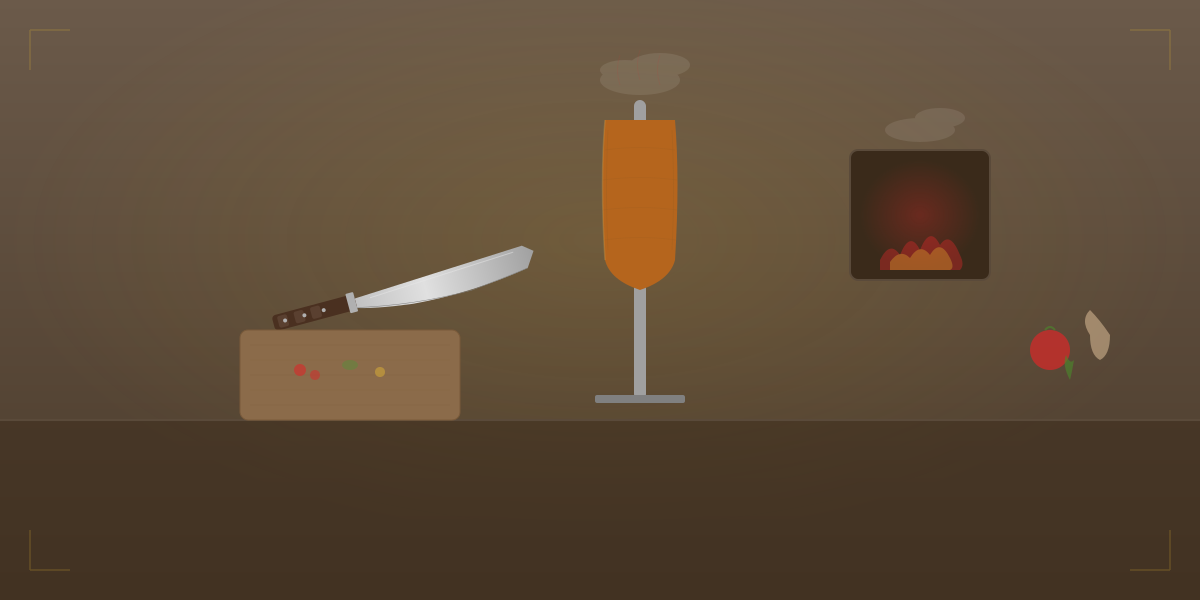
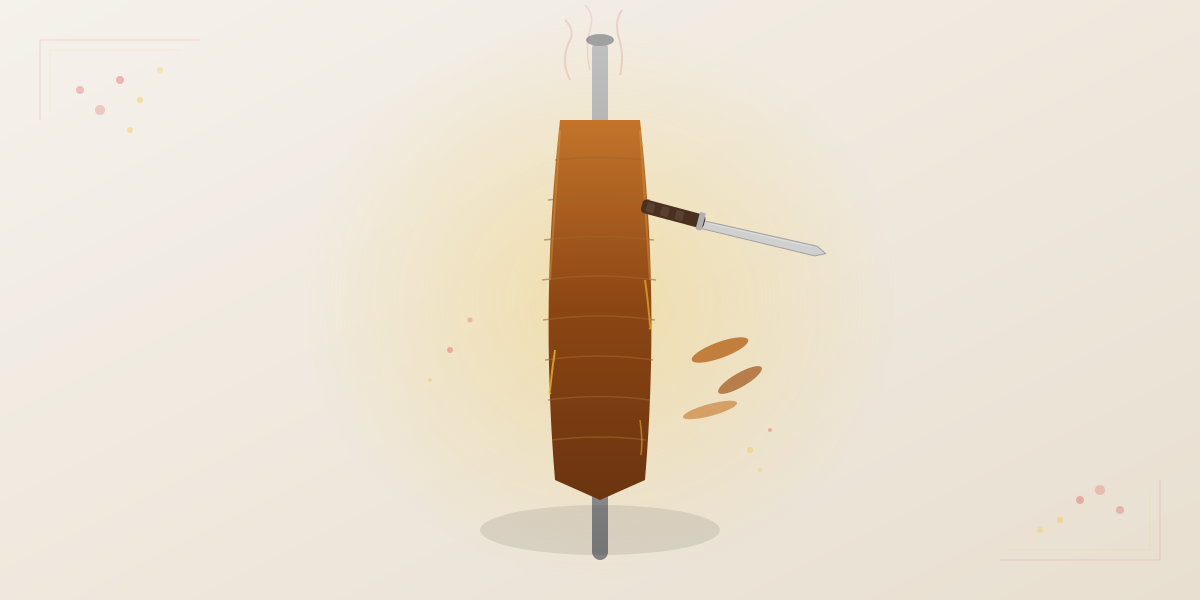
Loading the spit is a skill that looks simple and isn't. Each morning, we begin assembling the spit from the bottom up, layering marinated chicken thighs in a specific pattern that ensures even cooking and the right fat-to-lean ratio throughout the cone. The thighs are pressed firmly against each other as we layer, eliminating air pockets that would cause uneven cooking. The shape we're building toward is a slightly convex cone — wider in the middle than at the top or bottom — which allows the heat element to cook the outer surface evenly across the entire length of the spit.
Between certain layers, we add thin slices of onion, which caramelize as the spit rotates and add sweetness to the drippings that bastes the layers below. Some traditional shawarma recipes also include thin slices of tomato or bell pepper for the same reason — they break down slowly and add flavor complexity to the meat they're in contact with. The total weight of a fully loaded spit in our kitchen is typically between twelve and sixteen pounds. At full capacity, that represents somewhere between 80 and 100 individual servings.
Did You Know?
The vertical spit (called a "doner" in Turkish, "shawarma" in Arabic, and "gyros" in Greek) was developed in the Ottoman Empire in the 19th century as a way to cook large quantities of meat evenly over consistent heat. The same basic principle — meat rotating on a vertical axis in front of a heat source — has been used for over 150 years.
The Cooking Process: Patience and Heat
Once loaded, the spit begins rotating at a slow, steady speed in front of our heat element. The outer surface of the meat reaches temperatures around 350–375°F, which is hot enough to caramelize the sugars in the marinade and render the fat without drying out the interior. The interior of the cone stays much cooler — effectively braising in the fat and juices that drip down from the outer layer as it cooks. This is the secret to shawarma's distinctive texture: the outer layer is crispy and caramelized, while the interior meat beneath it remains almost impossibly moist.
Carving is the final skill in the process, and it's one we take seriously. The carved slices should be thin — no more than 3–4mm — and taken from the outermost layer only, so that each portion includes that caramelized crust. Carving too thick produces chunks that are uneven in texture; carving too thin produces shavings that dry out quickly. The right thickness means every bite has the full textural experience: the slightly crisp exterior giving way to the tender, juicy interior. After each carving, the new outer surface begins its own caramelization cycle, which means the very last portion served from a spit can be just as good as the first.
- Marinate the meat: minimum 18 hours for chicken, 24 hours ideal
- Build the spit: layer by layer, creating a dense, evenly shaped cone
- Load and balance: check that the spit turns smoothly without wobbling
- Initial cooking: 45–60 minutes before the outer layer is ready for first carve
- Ongoing carving: thin slices taken consistently throughout service hours
- Monitor and rotate: the heat element position matters; adjust for even cooking
- Final carve: the last portions from the spit are often the most intensely flavored
Assembly: The Last Three Minutes
Once the shawarma is carved, speed matters. The caramelized crust begins to soften the moment it leaves the heat, so we move quickly. The pita is warmed on the griddle simultaneously — we want the bread warm and pliable when it meets the meat, not cold and brittle. The shawarma goes in first, then the pickled turnips (their bright acidity is non-negotiable — it cuts through the richness of the meat and resets your palate between bites), then fresh tomato and cucumber, and finally the sauces. The garlic toum goes on last, not first, so it doesn't get lost in the layers.
We always wrap the pita the same way — tucked rather than rolled — so that every bite from the first to the last includes some of everything. A poorly wrapped shawarma pita falls apart on the first bite and delivers uneven ingredient distribution throughout. A well-wrapped one holds together, maintains its structure, and gives you a consistent experience from start to finish. It's a small detail, but it matters more than most people realize until they compare a well-wrapped shawarma to a sloppy one.
Pro Tip
When you pick up your order to go, keep the pita horizontal (not on its end) until you're ready to eat. This prevents the liquids from pooling at one end and softening the bread before you get to it.
Why We Still Do It This Way
We get asked sometimes why we don't simplify the process — pre-marinate smaller batches, use oven-roasted chicken instead of the spit, cut a few corners here and there. The answer is that we can taste the difference, and we know our customers can too. The spit-roasted shawarma we serve at 5769 Seminary Road is the same shawarma we'd want to eat ourselves, made the same way it's been made across the Levant for generations. Shortcuts are easy to take. They're also easy to taste. And we're not interested in that bargain.