Before there were food trucks, before there were wrap joints on every corner, before the word "shawarma" became a punchline in a Marvel film, there was the rotating spit. It turned slowly over open flame in the markets of Damascus and Beirut and Istanbul, layered with seasoned meat, dripping with fat and spice, filling entire city blocks with a scent so intoxicating that even the most disciplined traveler stopped in their tracks. The story of shawarma is, in many ways, the story of the Levant itself — a region defined by its crossroads of civilizations, trade routes, and the generosity of its table.
A Dish Born From Empire
Most food historians trace the modern shawarma to the Ottoman Empire, specifically to the 19th-century Anatolian technique known as "çevirme" — the Turkish word for "turning." Cooks in what is now Turkey developed the brilliant idea of stacking seasoned meat on a vertical spit, then slicing it off as it cooked — a method that allowed a continuous supply of hot, perfectly cooked meat without having to roast whole animals at once. It was, for its time, a revolutionary piece of food engineering.
But calling shawarma purely Turkish undersells the story. As Ottoman influence spread across the Levant — through modern-day Lebanon, Syria, Jordan, and Palestine — local cooks adopted the technique and made it their own. They added their own spice traditions, their own preferred cuts, their own accompaniments. The result was something entirely new: the shawarma as we know it today, a product of cultural collision and culinary evolution.
Food is the most democratic form of cultural exchange. When the Ottoman spice routes met Levantine kitchens, the result was shawarma — a dish that belongs to no single people and to everyone at once.
— A Lebanese food historian
The Spice Is the Secret
Ask ten different shawarma cooks what goes into their marinade, and you will get ten different answers — often delivered with passionate defensiveness, as if the recipe were a state secret. That variation is not a bug; it is the feature. Shawarma's genius lies in how a common technique produces wildly different results depending on the hand of the cook.
Traditional Lebanese shawarma marinades typically include a backbone of warm spices — cumin, coriander, turmeric, cinnamon, allspice — balanced with acid from lemon juice or vinegar and aromatics like garlic. Some cooks add cardamom for floral warmth. Others reach for sumac, the tangy, brick-red berry ground into powder, which gives the finished meat a brightness that cuts through the richness of the fat. Syrian-style shawarma may lean heavier on black pepper and clove. Palestinian preparations often include more paprika and a longer marinade time.
- Cumin — earthy, warm, the base note of the blend
- Turmeric — for color and a mild, slightly bitter earthiness
- Allspice — the quintessential Levantine spice, bridging sweet and savory
- Cinnamon — a whisper of sweetness that amplifies the meat's savoriness
- Coriander — citrusy, floral, brightening the blend
- Cardamom — used sparingly, adds an almost perfumed depth
- Sumac — tart, fruity, indispensable in finishing
- Garlic — always, always garlic
Building the Spit: A Study in Patience
The construction of a proper shawarma spit is itself an art form. The process begins the night before — sometimes two nights before — when thin-sliced or whole cuts of chicken, beef, or lamb are submerged in their spiced marinade and left to steep in the refrigerator. The acid in the marinade begins breaking down the muscle fibers; the fat carries the fat-soluble spice compounds deep into the meat. By the time the meat reaches the spit, it has already been transformed.
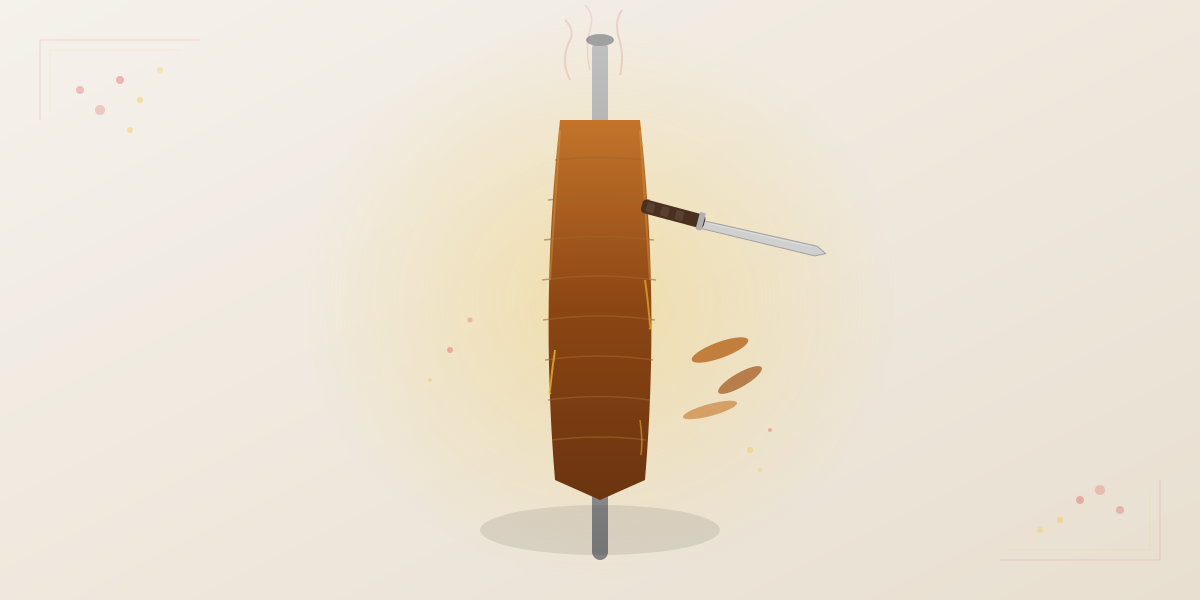
Assembling the spit is a layered process, almost architectural in its precision. Chicken thighs (preferred over breasts for their higher fat content and resilience to the heat of the grill) are stacked one atop another on a vertical skewer, sometimes interspersed with layers of fat to baste the meat from within as it cooks. A well-built spit can hold 50 to 100 pounds of meat, forming a column that slowly tapers toward a rounded top. The outermost layer will cook first, yielding to the long knife of the cook who shaves it off in thin, irregular strips — each piece a mix of caramelized crust and tender interior.
Did You Know?
The vertical spit changed everything. Before it, feeding large crowds meant roasting whole animals — time-consuming, wasteful, and inconsistent. The spit meant continuous, controlled cooking with minimal waste. It was the fast food revolution of the ancient world.
The Accompaniments: Where Shawarma Becomes a Meal
A shawarma is never just meat. The meat is the canvas — the accompaniments are the painting. In Lebanon, the classic chicken shawarma sandwich is tucked into freshly baked flatbread with garlic sauce (toum), pickled vegetables, and sometimes a scattering of fries. The garlic sauce is critical: a Lebanese-style toum is not merely garlic-flavored mayo. It is an emulsion of raw garlic, lemon juice, and neutral oil whipped to a near-white, intensely flavored cream that coats your mouth and stays with you pleasantly for hours.
Pickles play an equally important role. The bright pink of pickled turnips, the sour crunch of pickled cucumbers, the tang of pickled peppers — these are not garnishes. They are functional components that cut the richness of the meat and the fat of the sauce, resetting your palate with every bite so the next one tastes as good as the first.
Pro Tip
When ordering shawarma, ask for it "on the plate" rather than in a wrap if you want to fully appreciate each component separately before combining them. At Taza, our shawarma plate gives you the full experience — meat, garlic sauce, pickles, fresh salad, and warm bread, all arranged so you can eat it however you like.
Shawarma Meets the World
The diaspora of Levantine communities in the 20th century carried shawarma to every corner of the globe, and every destination left its mark on the dish. In Mexico, Lebanese immigrants introduced the vertical spit to local cooks, who adapted it with pork, chili, and pineapple — creating al pastor, now an iconic Mexican street food. In Germany, Turkish immigrants developed the döner kebab, a shawarma cousin served in flatbread with yogurt sauce and salad, now consumed in millions per day across Europe. In Greece, the gyro emerged — a pork or chicken variant with tzatziki and pita.
What these global cousins share with the original is not just the technique but the philosophy: affordable, satisfying, endlessly customizable food for everyone. Street food democracy. No dress code, no reservation required, no hierarchy at the counter — just the hunger and the spit and the knife.
When Lebanese immigrants left the Levant and planted shawarma spits in Mexico City, São Paulo, and Detroit, they didn't just bring a recipe. They brought a way of feeding people. Al pastor is shawarma's Mexican grandchild, and that's one of the most beautiful accidents in culinary history.
— Food writer Diana Henry
Shawarma in Falls Church: Why This Community Gets It Right
Falls Church, Virginia sits in the center of one of the most culinarily diverse regions in the United States. The Northern Virginia corridor is home to one of the largest Arab-American and South Asian communities on the East Coast, which means that the expectations for Middle Eastern food here are high. People in Falls Church know shawarma. They grew up with it. They've had the real thing in Beirut or Amman or Ramallah, or their grandmothers made it at home, or they've spent years eating their way through the excellent restaurants that have served this community for decades.
At Taza Shawarma & Falafel on Seminary Road, we take that responsibility seriously. Our chicken and beef shawarma are marinated using recipes that honor the Levantine tradition — heavy on the warm spices, balanced with acid, long-marinated to allow the flavors to fully penetrate the meat. The spit turns every day, and the meat that comes off it carries the accumulated heat and flavor of hours of slow cooking. We serve it the traditional way: tucked into warm bread with toum and pickles, or plated with all the accompaniments for a more composed meal.
Did You Know?
Taza's shawarma is halal-certified, which matters to our community not just for religious reasons but because halal standards ensure that animals are raised and processed humanely, and that the meat is handled with care from farm to spit.
How to Eat Shawarma Like You Mean It
There is no wrong way to eat shawarma, but there are ways that honor the dish more than others. The shawarma wrap should be eaten immediately — never let it sit. The bread softens, the pickles lose their crunch, the meat cools. Shawarma is a living food, meant to be consumed at the moment of its making. The plate is more forgiving, but even there, speed is rewarded.
- Eat it fresh — shawarma does not improve with time, so order and eat immediately
- Don't skip the toum — it is not optional; it is structural to the flavor
- Add the pickles — they are there for balance, not decoration
- Try it plated before you try it in a wrap, so you can taste each component individually
- Ask for extra sumac if the restaurant offers it — a pinch over the top transforms everything
- Pair it with a side of hummus, which serves as a counterpoint to the intensity of the spiced meat
Shawarma has traveled centuries and thousands of miles to reach your plate. It has been transformed by every culture it has touched, and yet its essential character remains: warm spice, turning meat, flatbread, and the generosity of a cuisine that was always meant to feed many from a single source. The next time you unwrap a shawarma sandwich, take a moment to appreciate what you're holding. It is the culmination of Ottoman ingenuity, Levantine flavor, and generations of cooks who understood that the best food is always the kind you share.