
The History and Tradition of Kebab
Kebab is one of the oldest and most widespread culinary traditions in the world. The word itself traces back to the Akkadian language and has roots in Arabic, Persian, and Turkish cultures -- all of which developed their own regional variations over centuries. At its core, kebab means meat cooked over or near open flame, but the techniques and seasonings vary dramatically from region to region. Turkish doner kebab, Lebanese shawarma, Persian koobideh, Pakistani seekh kebab, and Greek gyros are all members of the same culinary family.
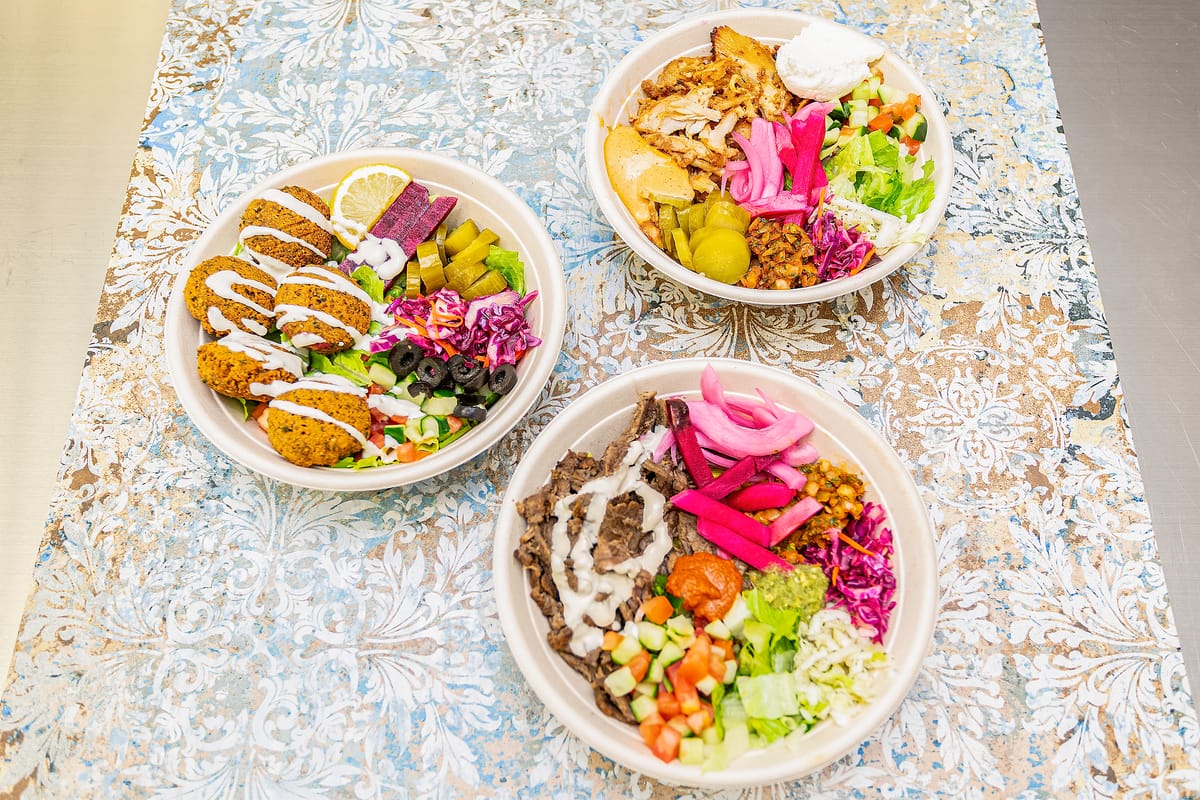
What unites these traditions is a respect for the raw ingredients and the transformative power of fire. Whether meat is threaded onto skewers over charcoal, pressed onto a vertical spit, or formed around a metal rod and grilled, the goal is the same: to create a charred exterior that locks in moisture and concentrates flavor. The marinades -- yogurt, citrus, garlic, cumin, sumac, coriander, turmeric -- serve as both tenderizer and flavor vehicle. At Taza, we honor the Lebanese branch of this tradition with our shawarma-style kebab, slow-roasted on vertical spits using techniques passed down through generations.