Grape Leaves Near Me: A Guide from Taza
You searched for stuffed grape leaves near you. Here is what warak enab is and how it is made. Taza does not serve grape leaves, but we serve the hummus, baba ghanouj, labneh and falafel that go with them. Falls Church, VA.
The Levantine Tradition
Stuffed Grape Leaves: Warak Enab and the Art of Dolma
Stuffed grape leaves are one of the oldest and most widespread dishes in Mediterranean and Middle Eastern cooking. The concept is straightforward: a tender grape vine leaf, blanched until pliable, wrapped around a filling of seasoned rice and fresh herbs, then slow-cooked in a bath of lemon juice and olive oil until everything melds into a single, concentrated bite.
In Arabic, they are called warak enab (literally "grape leaves") or warak dawali (vine leaves). In Turkish and Iraqi kitchens, the broader category is dolma -- "stuffed" -- which covers any vegetable or leaf filled with rice or meat. The Greek version, dolmades, follows a similar principle. The Armenian tolma predates many of these regional variations. Regardless of the name, the technique is the same: fold, tuck, roll, cook slowly.
What separates a mediocre stuffed grape leaf from an exceptional one is the quality of the leaf, the balance of the filling, the amount of lemon and olive oil, and the patience of the cook. The Levantine method calls for a vegetarian filling, generous lemon, good olive oil, and enough time on low heat for the leaves to become silky without losing their structure.
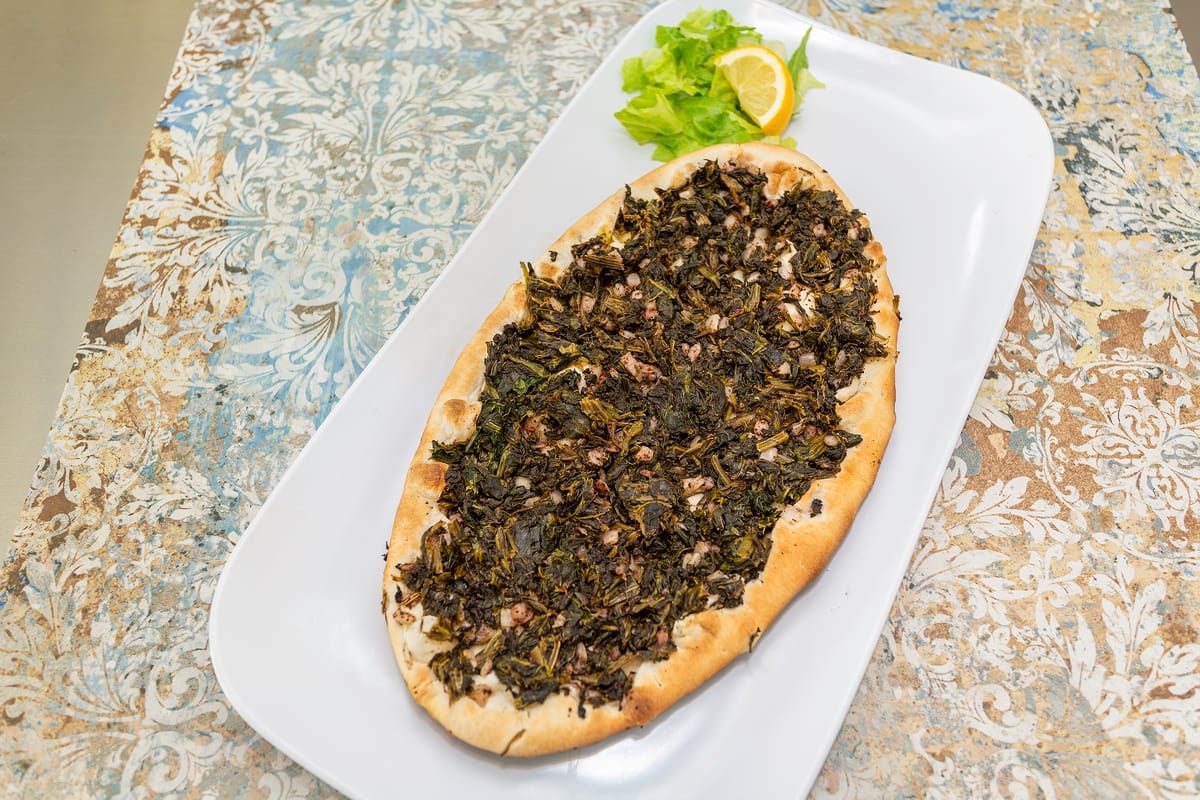
Warak Enab
Levantine Tradition
What Sets Good Grape Leaves Apart
How to Find Good Stuffed Grape Leaves Near You
Many restaurants buy grape leaves pre-made from a jar or a wholesale supplier. Here is what to look for, plus an honest note about what Taza serves.
Hand-Rolled vs. Machine-Formed
Traditionally, each grape leaf is rolled individually by hand. Hand-rolled grape leaves vary slightly in size, the way they do when a person shapes each one. Machine-formed rolls from a jar or can are more uniform. When you shop for grape leaves near you, ask which kind a place serves.
Slow-Cooked in Lemon and Olive Oil
In the classic method, grape leaves are arranged tightly in the pot, layered with sliced lemon and drizzled with olive oil before they go on the heat. They cook low and slow until the leaves are tender and the rice filling absorbs the citrus and oil. Time does the work.
100% Halal, Always Vegetarian
Levantine grape leaves served cold are usually filled with seasoned rice, herbs, and lemon -- no meat in the filling -- which makes them vegetarian and often vegan. Warm versions are sometimes filled with meat. If you need halal or vegetarian, ask about the filling before you order anywhere.
An Honest Note from Taza
Taza does not serve grape leaves. Our menu is shawarma carved off the vertical spit, falafel fried to order, manaeesh and pies baked in the oven, and dips like hummus, baba ghanouj and labneh. If you are building a mezze spread, those dips and a falafel pita pair naturally with grape leaves from a Lebanese bakery or market.
From Vine to Table
How Stuffed Grape Leaves Are Made
Four steps, no shortcuts. This is the traditional process, passed down through Levantine families for centuries.
Selecting the Leaves
The quality of a stuffed grape leaf starts with the leaf itself. Grape leaves must be young, tender, and pliable enough to fold without cracking. The best leaves come from grapevines in late spring -- thin enough to become silky when cooked, but sturdy enough to hold the filling without tearing. Too thick and the roll is chewy. Too thin and it falls apart. The difference between a good grape leaf and a great one starts before the filling is even prepared.
Preparing the Rice Filling
The filling is deceptively simple: short-grain rice, fresh parsley, mint, diced tomato, onion, lemon juice, olive oil, salt, and a measured blend of allspice and black pepper. Every ingredient has a purpose. The rice absorbs liquid as it cooks, expanding inside the leaf and creating a tender, cohesive bite. The herbs cut through the richness of the olive oil. The lemon provides acidity that balances the earthiness of the grape leaf. Nothing in this filling is filler.
Rolling by Hand
A spoonful of filling is placed near the stem end of each leaf. The bottom is folded up, the sides are tucked in, and the leaf is rolled tightly toward the tip -- firm enough to hold together during cooking, loose enough to let the rice expand. This technique is taught hand-to-hand in Levantine kitchens. It takes practice to get the tension right.
Slow-Cooking Until Tender
The rolled grape leaves are packed tightly into the pot in concentric circles, layered with sliced lemon and sometimes potato rounds on the bottom to prevent sticking. Olive oil and lemon juice are poured over the top. A weighted plate holds everything in place. Then the pot goes on low heat for an hour or more, until the leaves are soft, the rice is fully cooked, and the lemon-olive oil broth has been absorbed into every layer. The result is a grape leaf that melts on contact.
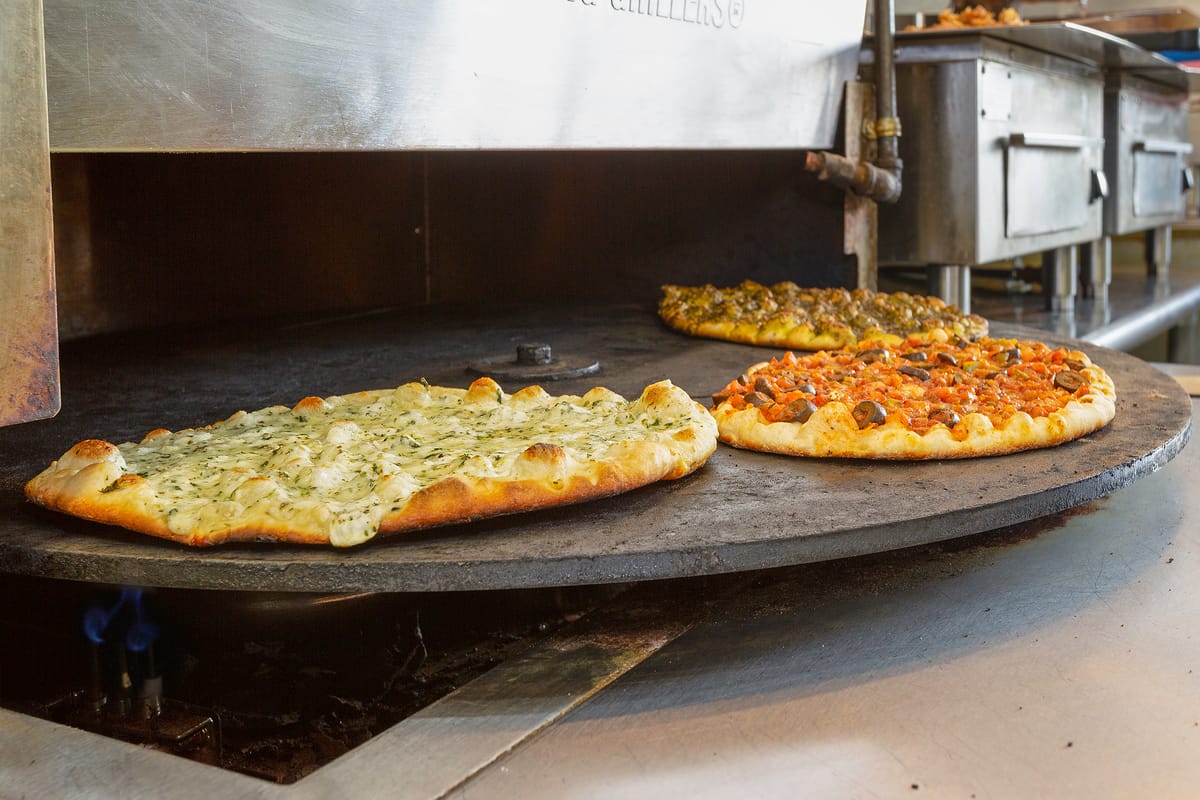
Slow-Cooked
Low Heat, Full Flavor
History and Culture
The Story Behind Stuffed Grape Leaves
Grape leaves are not just food. They are a thread that connects kitchens across the Mediterranean, the Middle East, and the Caucasus. Understanding where they come from makes eating them a richer experience.
Warak Enab, Dolma, Sarma -- One Dish, Many Names
In Lebanon, Syria, and Palestine, they are warak enab or warak dawali -- literally 'grape leaves.' In Turkey, Iraq, and the broader Ottoman culinary tradition, they are dolma (stuffed) or sarma (wrapped). In Greece, dolmades. In Armenia, tolma. The concept is the same everywhere: tender grape leaves wrapped around a seasoned rice filling, slow-cooked until everything melds into a single cohesive bite. The name changes with the border, but the technique is universal across the Eastern Mediterranean, the Caucasus, and the Levant.
A Communal Kitchen Tradition
In Levantine households, rolling grape leaves is rarely a solo task. It is communal work -- a family gathers around the table, a large bowl of filling in the center, a stack of blanched leaves to one side. Hands move in rhythm. Conversations happen over the repetitive fold-tuck-roll motion. The act of making grape leaves is as much about the gathering as it is about the food. That communal spirit is a big part of why grape leaves show up at family gatherings across the Levant.
The Mezze Table Anchor
On a traditional Levantine mezze table, grape leaves occupy a specific role. They are the cold, acidic, herbal counterpoint to rich dips like hummus and baba ghanouj. A proper mezze spread balances creamy, crunchy, tangy, and savory. Grape leaves deliver the tangy and herbal notes that tie the rest of the table together. At Taza you can build the rest of that table: hummus, baba ghanouj, labneh, falafel, and warm pita bread. Taza does not serve grape leaves themselves.
Build Your Mezze Spread
What to Order at Taza with Grape Leaves
Grape leaves are the anchor of any Levantine mezze table. Pair them with hummus, baba ghanouj, falafel, and warm bread from Taza for a spread that covers every flavor and texture.
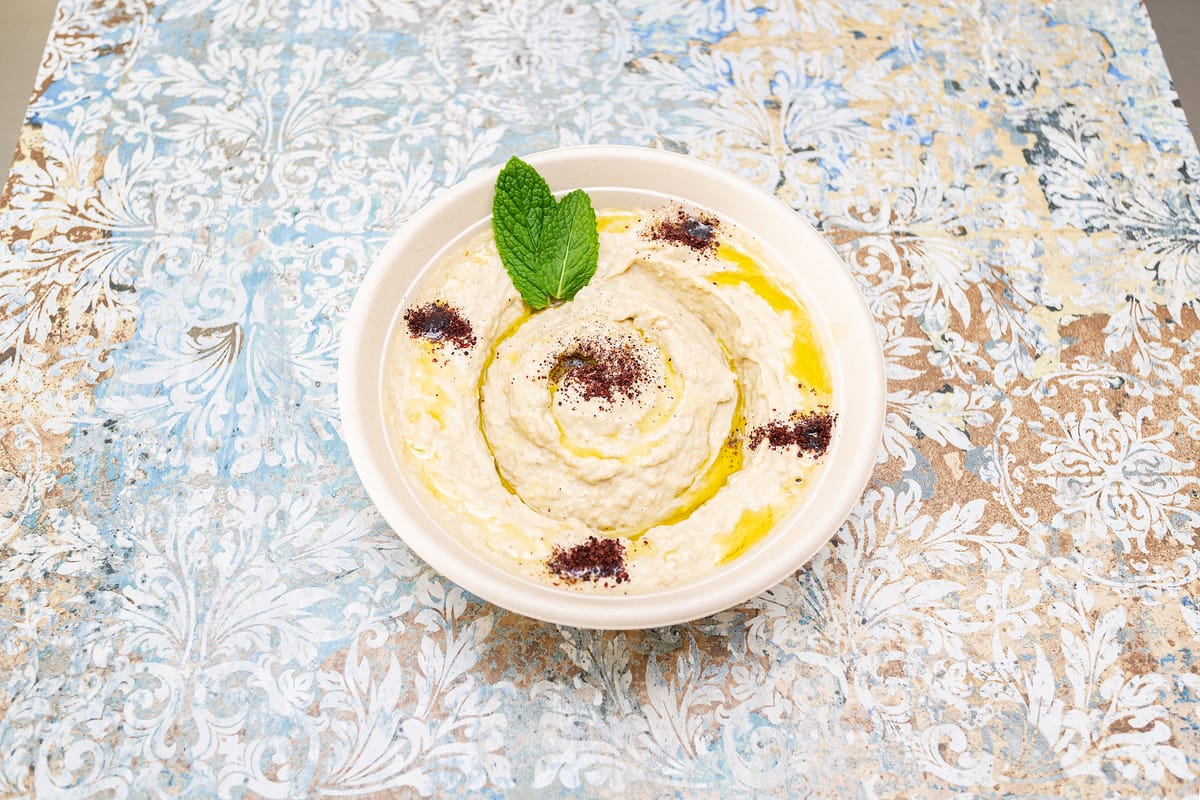
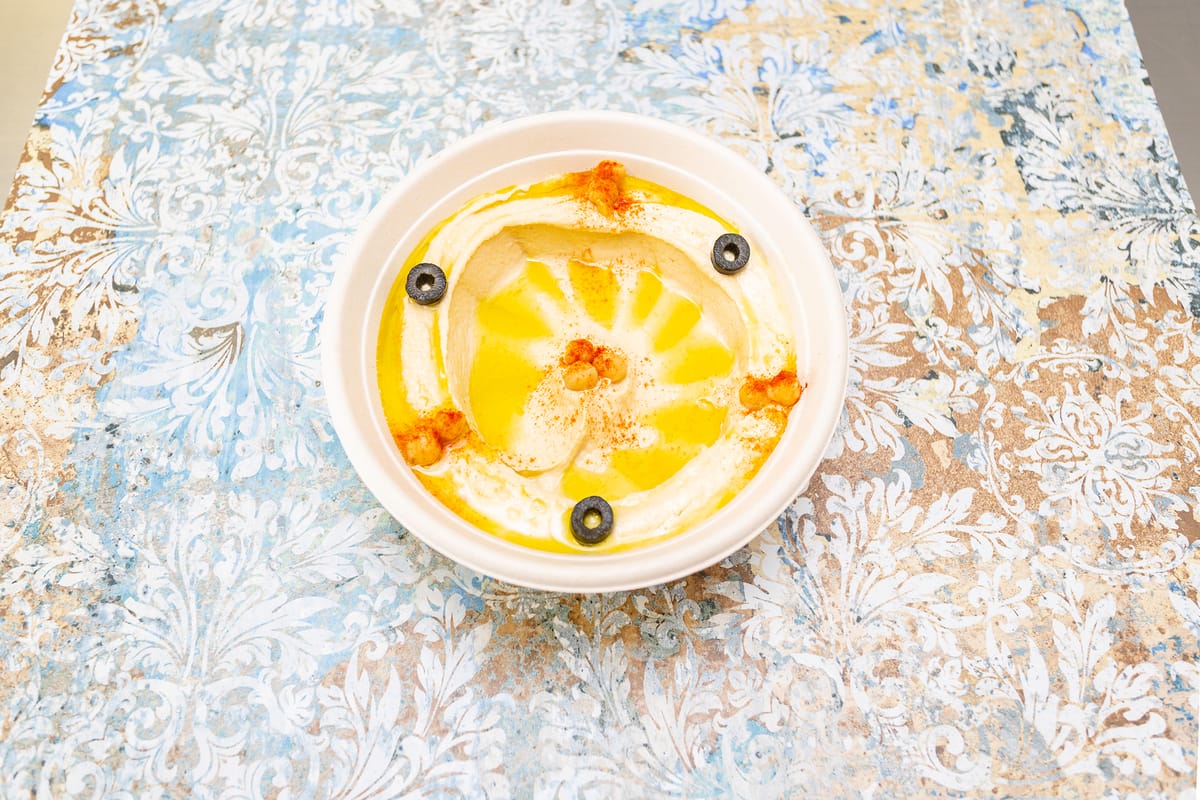
Hummus
Velvety chickpea dip blended with tahini, lemon juice, and garlic. Finished with olive oil and paprika. The natural pairing for grape leaves on a Levantine table.
Baba Ghanouj
Fire-roasted eggplant blended with tahini, lemon, and garlic until smooth and smoky. The char from the open flame gives baba ghanouj its smoky depth. Pair it alongside grape leaves for a mezze spread that covers every texture and flavor note.
Falafel Pita
Crispy chickpea falafel, herb-green inside, tucked into warm oven-baked pita with tahini and fresh vegetables. Falafel and grape leaves together form the backbone of any vegetarian Middle Eastern meal. Both are plant-based, protein-rich, and deeply satisfying.
Labneh
Thick strained yogurt drizzled with olive oil and dried mint. The tangy coolness of labneh contrasts perfectly with the lemon-bright acidity of grape leaves. Together they create a balanced plate that alternates between rich and refreshing.
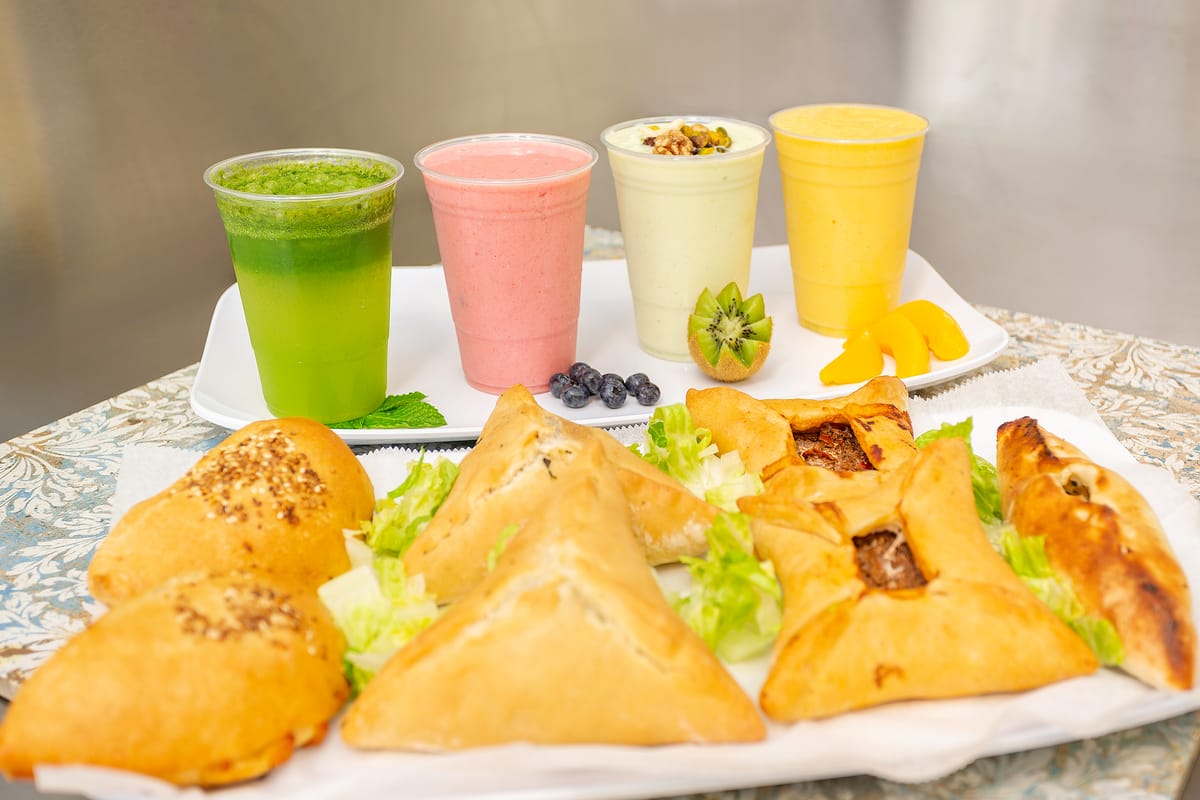
Spinach Pie
Pastry filled with spinach, onion, and lemon, baked in our oven. Another Levantine staple that pairs naturally with grape leaves on a shared appetizer plate.
Zaatar Manaeesh
Flatbread brushed with zaatar, sesame, and olive oil, baked in our oven. Tear a piece of warm manaeesh and eat it alongside a plate of grape leaves for a Levantine breakfast or lunch spread.
Mezze Delivered to Your Area
Areas We Serve Across Northern Virginia
Taza is located at 5820 Seminary Rd in Falls Church, VA. We are centrally positioned to serve all of Northern Virginia. Here is how far you are from our hummus, falafel, and shawarma.
Falls Church
We are right here on Seminary Rd
Bailey's Crossroads
Just down the road
Annandale
Quick drive on Columbia Pike
Arlington
Straight shot via I-395
Alexandria
South on Seminary Rd to 395
Fairfax City
West on Rt 50
Tysons Corner
North on Rt 7
Springfield
South via I-395
Merrifield
East on Rt 50
Pentagon City
Via I-395 North
McLean
North on Rt 7 past Tysons
Burke / Fairfax Station
South via Braddock Rd
Get It Your Way
Mezze Delivery & Pickup
Three ways to get Taza's dips, falafel, and shawarma: order online for pickup through Clover, dine in at the counter, or book catering for 10 to 200+ guests with delivery available. Free parking at the door. Open seven days a week, 11 AM to midnight.
Order Online for Pickup
Place your order online through Clover and skip the line. Your hummus, baba ghanouj, falafel and pies will be ready when you arrive. Free parking at the door at our Seminary Road location.
Catering Delivery
Catering for 10 to 200+ guests comes with delivery available: dips, falafel, shawarma, manaeesh and pies. Call (703) 340-1014 for a quote.
Dine In
Drive over to Bailey's Crossroads, on Seminary Road. Free parking at the door, counter service, and open 7 days, 11 AM to midnight.
Visit Taza
Address
5820 Seminary Rd Ste O, Falls Church, VA 22041
Hours
11:00 AM - 12:00 AM -- Open 7 Days a Week
Phone
(703) 340-1014Order Online
Order for Pickup or Delivery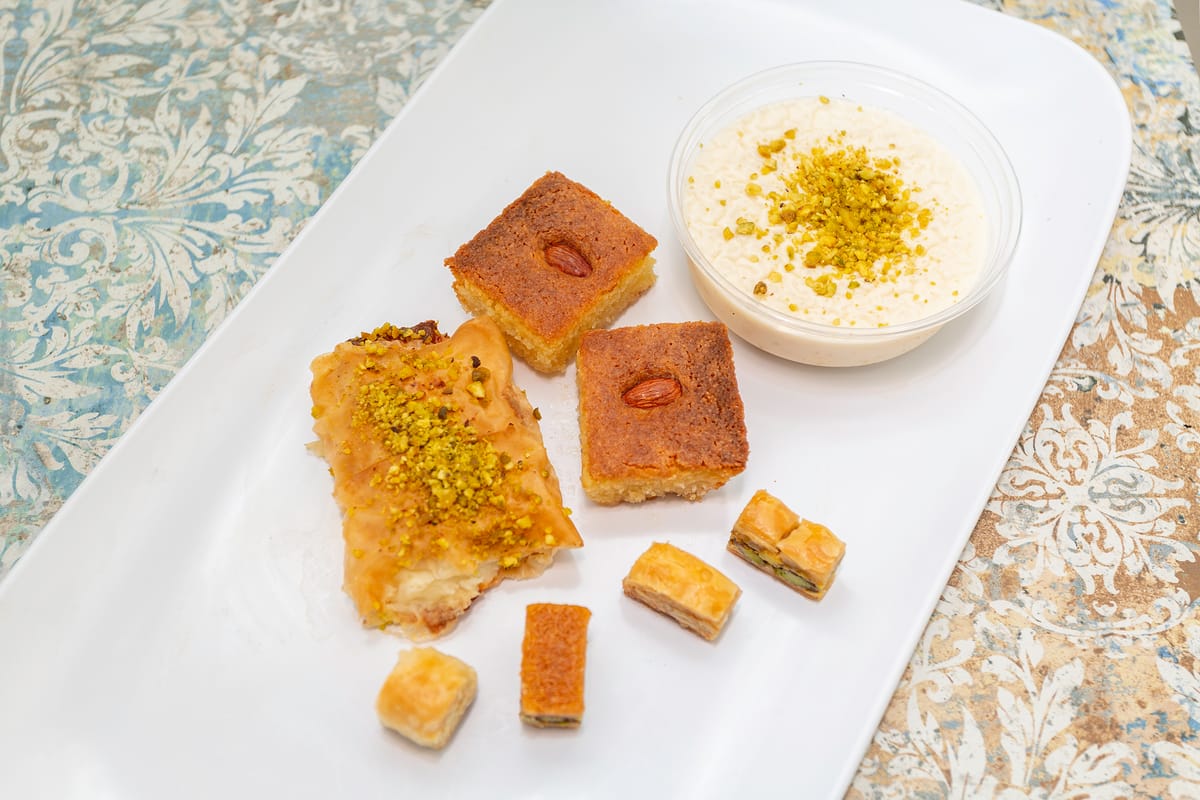
Beyond Grape Leaves
More From the Taza Kitchen
Taza does not serve grape leaves. Our menu spans shawarma carved from the vertical spit, crispy falafel fried to order, oven-baked manaeesh, savory pies, and desserts. Here is what else to explore.
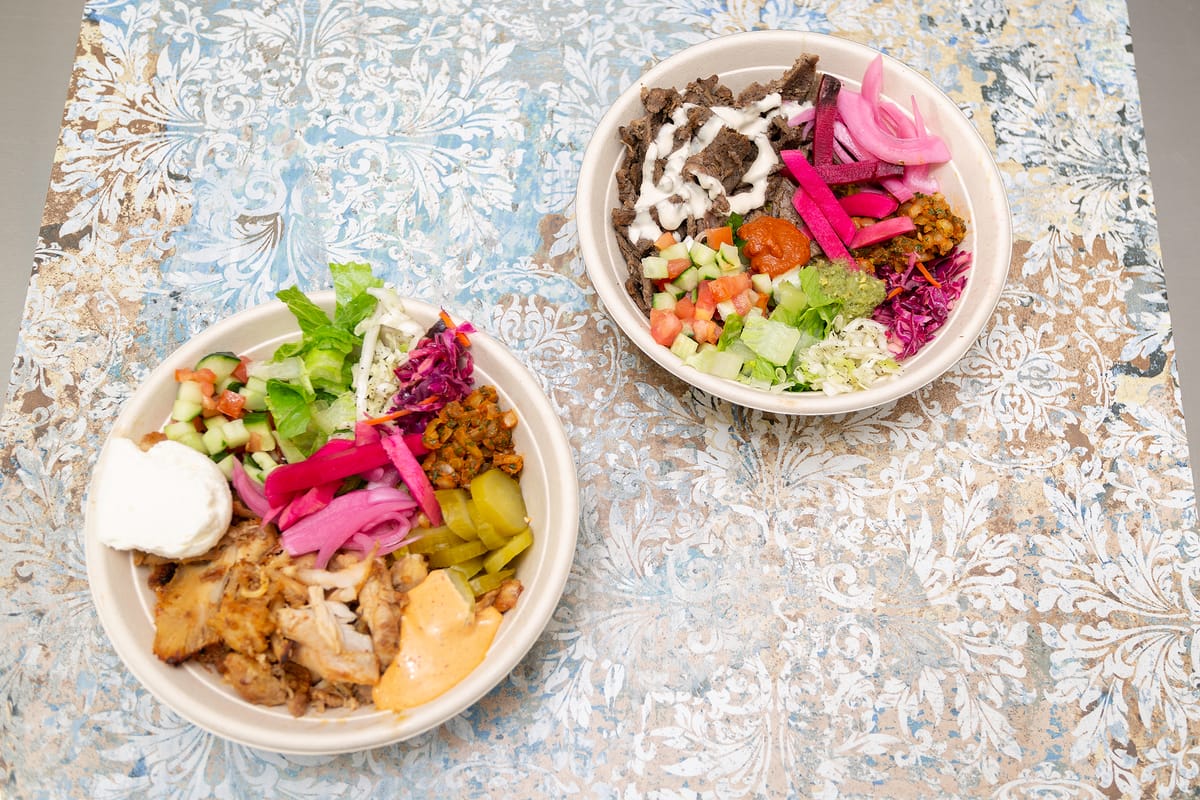
Chicken Shawarma Pita
Marinated chicken, roasted on the vertical spit and carved to order. Stuffed into warm pita with garlic sauce, pickled turnips, and fresh vegetables. A warm follow-up to a cold mezze plate.
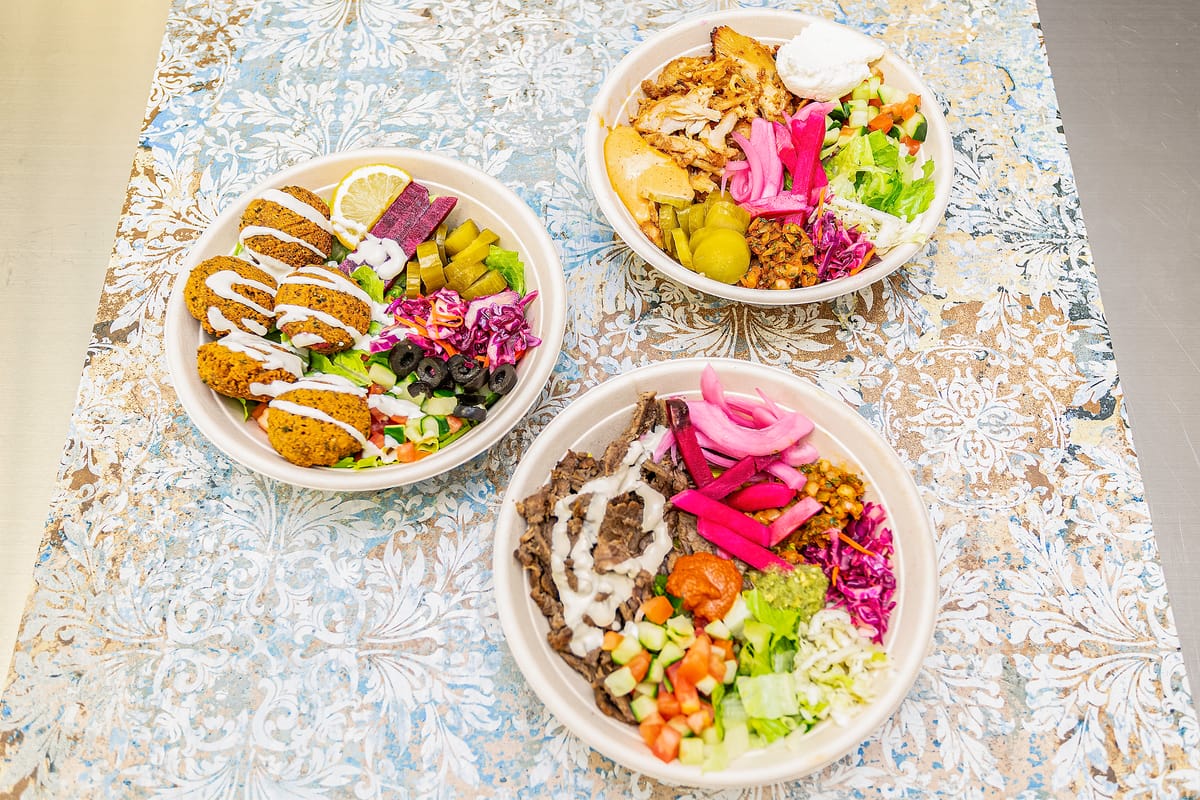
Beef Shawarma Pita
Thinly stacked beef, pressed onto the spit with fat ribbons between each layer. Sliced thin, piled into oven-baked pita with tahini, garlic sauce, and pickled turnip. A heavier complement to the light, citrusy grape leaves.
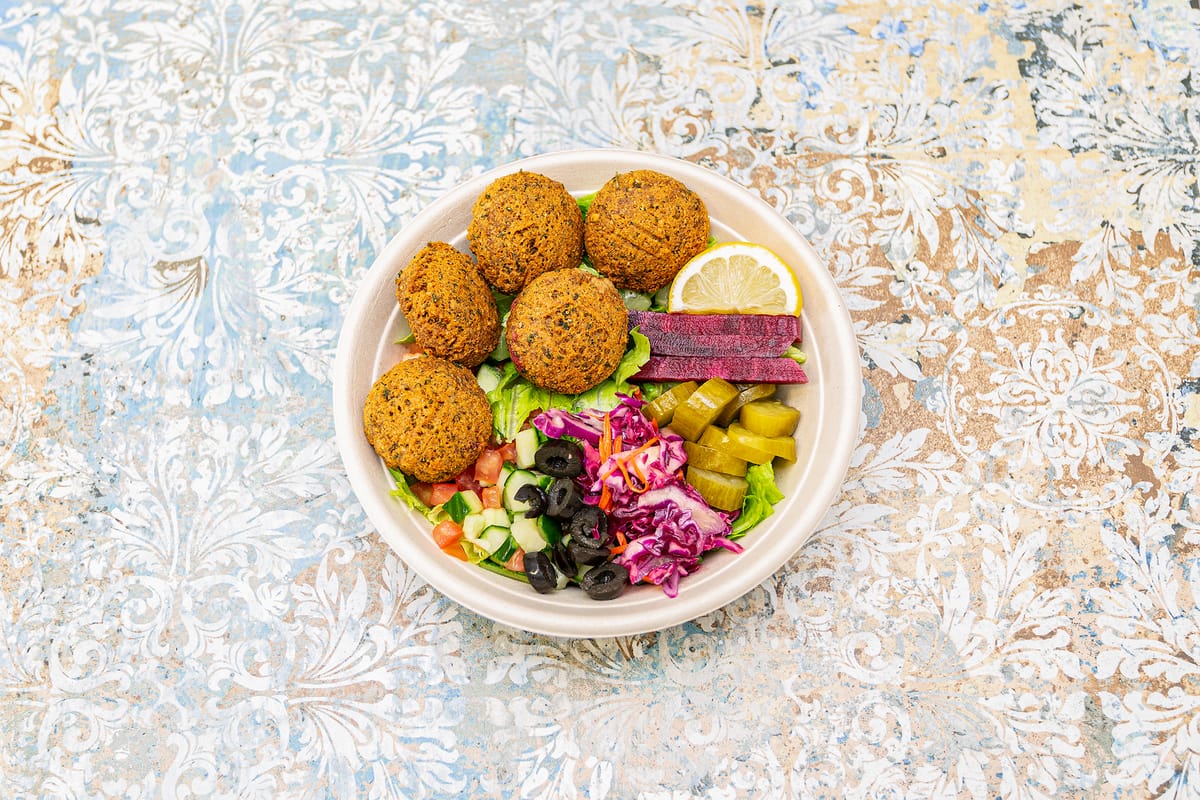
Falafel Bowl
Crispy falafel over your choice of rice or mixed greens, topped with Arabic salad, tahini, and olive oil. Another fully vegetarian option that pairs naturally with grape leaves for a plant-based Mediterranean feast.
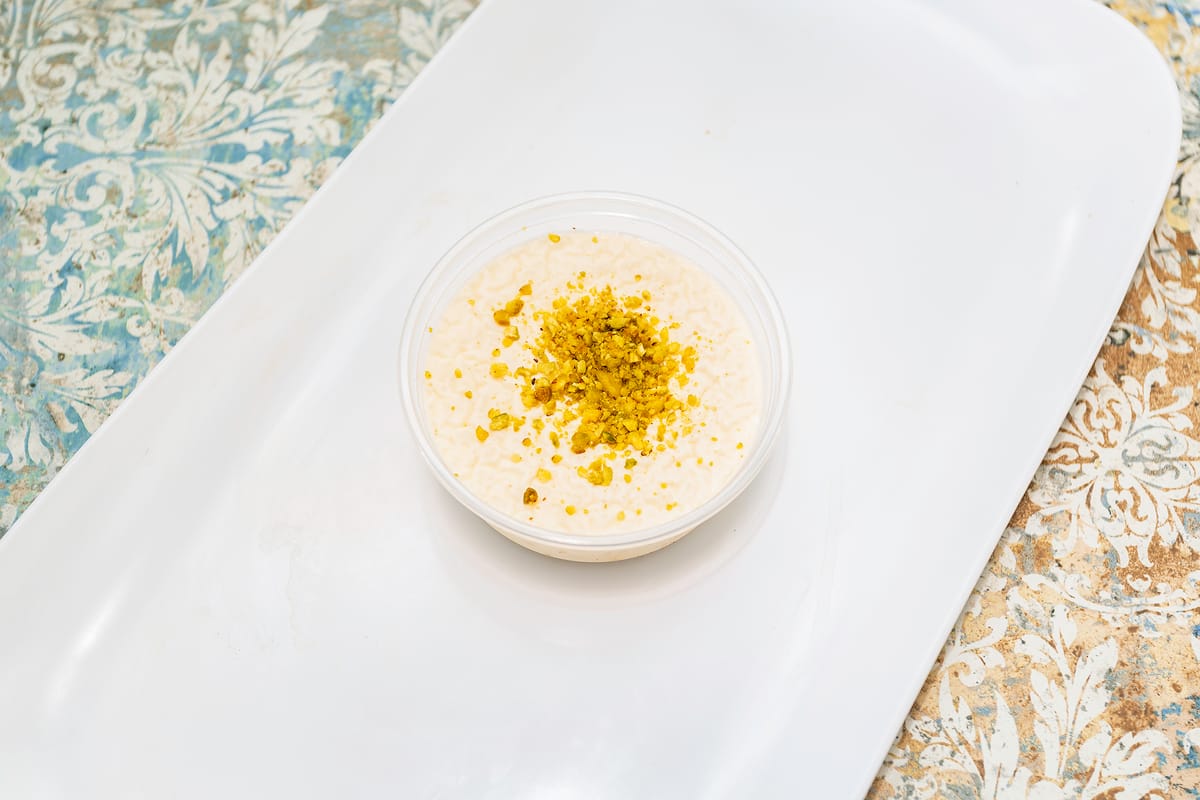
Rice Pudding
Creamy rice pudding finished with pistachio. A traditional, light ending to a Levantine meal that starts with mezze.
Common Questions
Grape Leaves Near Me: Your Questions Answered
Where can I find grape leaves near me in Northern Virginia?
Lebanese bakeries, Middle Eastern markets, and mezze restaurants across Northern Virginia are the places to look for stuffed grape leaves. Taza Shawarma & Falafel at 5820 Seminary Rd in Falls Church, VA does not serve grape leaves, but it does serve the dips and falafel that go with them: hummus, baba ghanouj, labneh, and falafel fried to order. We are open 7 days a week from 11 AM to midnight.
What is the difference between dolma and grape leaves?
Dolma is a Turkish and Arabic word meaning 'stuffed.' It refers to any vegetable or leaf that is filled with a rice or meat mixture. Stuffed grape leaves are one specific type of dolma. In Levantine Arabic, they are called warak enab (grape leaves) or warak dawali. In Greek cuisine, they are dolmades. The Levantine tradition is rice, herbs, lemon, and olive oil, rolled by hand and slow-cooked until tender.
Does Taza serve grape leaves, and are grape leaves vegetarian?
Taza does not serve grape leaves. Traditional cold Levantine grape leaves are usually filled with seasoned rice, parsley, mint, tomato, onion, lemon juice, and olive oil, which makes them vegetarian and often vegan. At Taza, the vegetarian picks are falafel, hummus, baba ghanouj, labneh, manaeesh, and the cheese, spinach, veggie and zaatar pies, and the whole menu is halal.
Can I order stuffed grape leaves for delivery near me?
Taza does not serve grape leaves, so check a Lebanese bakery or mezze restaurant for those. For Taza's dips, falafel, and shawarma, order online for pickup through Clover; catering for 10 to 200+ guests includes delivery. Grape leaves in general travel well since they are served cold or at room temperature.
What should I order with grape leaves at Taza?
Taza does not serve grape leaves, but they pair naturally with our hummus ($4.95), baba ghanouj ($4.95), and labneh ($4.95). Add a falafel pita ($8.95) or a zaatar manaeesh ($6.95) for a mezze meal. For a larger spread, include our chicken or beef shawarma. Cold grape leaves with warm shawarma and creamy dips is a traditional Levantine way to eat.
Does Taza cater grape leaves and mezze for events near me?
Taza caters for 10 to 200+ guests with delivery available: hummus and dip spreads, falafel, shawarma, manaeesh and pies. Grape leaves are not on our menu, so plan to source those separately. Call us at (703) 340-1014 to discuss your event.
How are grape leaves traditionally made?
Traditional Levantine grape leaves (warak enab) are made by blanching tender grape vine leaves, filling each one with a mixture of short-grain rice, chopped parsley, mint, tomato, onion, lemon juice, and olive oil. Each leaf is hand-rolled, packed tightly into a pot, layered with lemon slices, and slow-cooked on low heat until the leaves are silky and the rice is fully cooked.
What time is Taza open if I want grape leaves late at night?
Taza is open from 11:00 AM to 12:00 AM (midnight), seven days a week. We do not serve grape leaves, but hummus, falafel, shawarma, and a full Mediterranean menu are available late into the evening. We are located at 5820 Seminary Rd, Falls Church, VA 22041.
Are grape leaves halal, and is Taza halal?
Taza does not serve grape leaves. Every item that Taza does serve is halal -- the whole menu is 100% halal -- so for the Muslim community across Northern Virginia, the dips, falafel, and shawarma that go with grape leaves are all halal.
Finding Grape Leaves Near You in Northern Virginia
Northern Virginia has a dense concentration of Mediterranean and Middle Eastern restaurants. Annandale, Bailey's Crossroads, Arlington, and Falls Church each have their own clusters of halal kitchens, Lebanese bakeries, and Mediterranean grills. Within that landscape, finding grape leaves that are actually hand-rolled and slow-cooked -- rather than pulled from a commercial jar or a wholesale frozen case -- narrows the options significantly.
Taza Shawarma & Falafel does not serve grape leaves, but it is a useful stop for the rest of a mezze spread. It operates from Falls Church, VA, on Seminary Road between I-395 and Route 7. The location sits at the geographic center of Northern Virginia's most populated corridors: 3 minutes from Bailey's Crossroads, 7 minutes from Annandale, 10 minutes from Arlington, 12 minutes from Alexandria, 15 minutes from Fairfax and Tysons Corner. For anyone searching "grape leaves near me" or "dolma near me" from anywhere in the NoVA region, Bailey's Crossroads and Annandale are good places to start looking.
Good grape leaves follow Levantine technique. The leaves are blanched until pliable but not mushy. The filling is a measured combination of short-grain rice, fresh parsley, mint, diced tomato, onion, lemon juice, olive oil, allspice, and black pepper. Each leaf is rolled by hand -- folded, tucked, and wrapped with enough tension to hold together during cooking but enough give for the rice to expand. The rolls are packed tightly into the pot, layered with sliced lemon, doused in olive oil and lemon juice, then cooked on low heat until the leaves are silky and the rice is tender.
The result is a grape leaf that holds its shape when picked up but yields immediately on the first bite. The lemon comes through cleanly. The olive oil provides richness without heaviness. The herbs -- parsley and mint -- cut through the starch of the rice. This is what separates hand-made grape leaves from commercial jarred alternatives: the balance of acid, fat, herb, and starch in every single roll.
Taza serves a Levantine and Mediterranean menu without grape leaves. Hummus, baba ghanouj, and labneh are on the menu. Falafel is fried to order. Shawarma rotates on a vertical spit and is carved for each serving. Manaeesh and savory pies come from the oven. Desserts include rice pudding and harissa (semolina cake). The whole menu is 100% halal.
Everyday orders are pickup: order online for pickup through Clover and collect your food at the counter on Seminary Road. For catering, we serve 10 to 200+ guests with delivery available: mezze spreads, falafel, shawarma, manaeesh and pies for offices, homes, and events. Call (703) 340-1014 or order online at tazava.com.
Grape Leaves Near Me: Build the Rest of the Spread at Taza
Hummus, baba ghanouj, labneh, and falafel fried to order. 100% halal. Taza Shawarma & Falafel, 5820 Seminary Rd, Falls Church, VA. Open until midnight, seven days a week.