Baklava Near Me: Authentic Lebanese Baklava at Taza
You searched for baklava near you. Taza in Falls Church serves authentic Levantine baklava -- layers of butter-brushed phyllo, pistachios, walnuts, and rose-water honey syrup. Halal. Vegetarian. $2.95 per serving. Open until midnight.
What Is Baklava? The Layered Pastry Explained
Baklava is not a modern creation. It is a pastry with roots stretching back to the ancient empires of the Mediterranean and the Middle East -- refined over centuries into the layered, syrup-drenched confection served today.
Baklava: Paper-Thin Phyllo, Nuts, and Honey Syrup
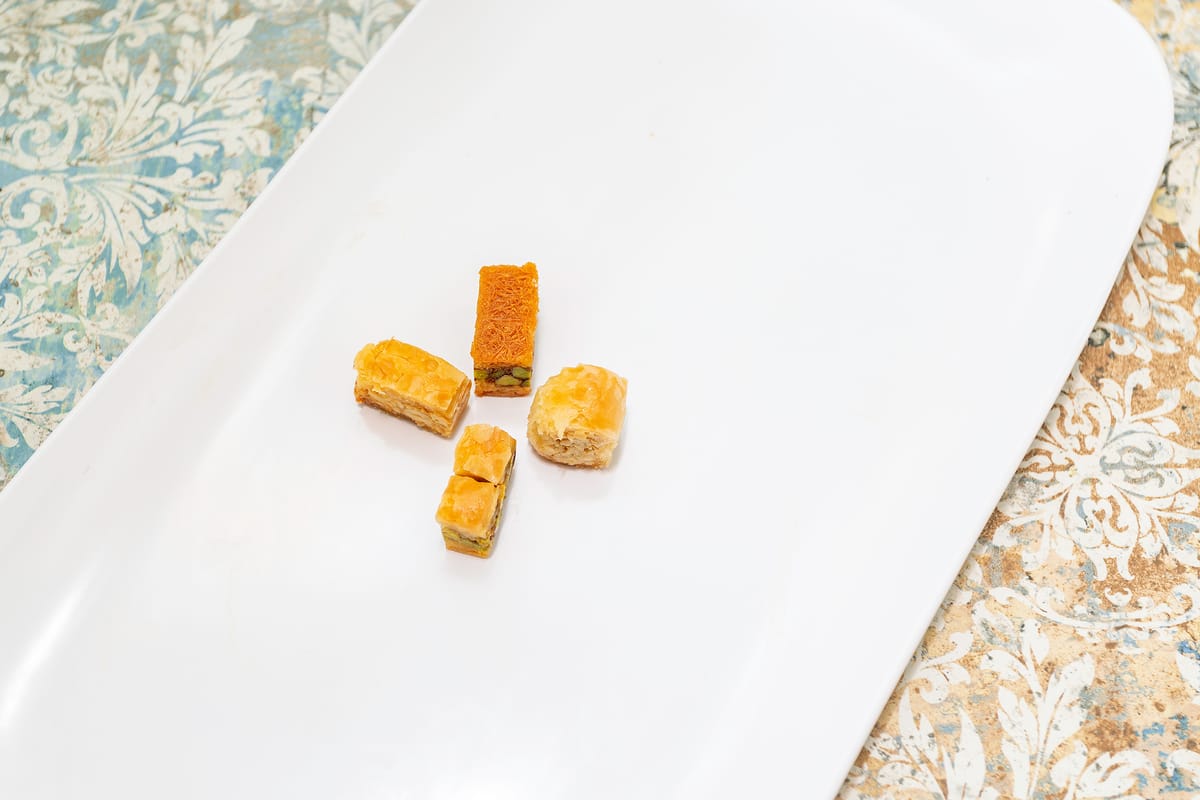
Baklava is a layered pastry made from sheets of phyllo dough, each brushed with clarified butter, stacked in dozens of layers, filled with a mixture of finely chopped nuts -- pistachios, walnuts, or both -- then baked until deep golden and drenched in a fragrant syrup made from sugar, water, honey, and rose water or orange blossom water. The result is a pastry that shatters on the first bite, gives way to a dense, nutty core, and finishes with the floral sweetness of the syrup. It is one of the most recognized desserts in the world, and one of the oldest still made by hand.
The Baking Process: Heat, Timing, and Butter
Making baklava correctly requires precision at every stage. The phyllo sheets must be thin enough to shatter but strong enough not to tear during assembly. Each sheet is brushed with melted butter -- not margarine, not oil. The nut filling must be chopped to the right coarseness: too fine and it turns to paste when baked, too coarse and the layers separate. The oven temperature must be high enough to crisp every layer without burning the top. And the syrup must be poured while the baklava is still hot from the oven, so it absorbs into every layer and sets as the pastry cools. Skip any step and the result is soggy, greasy, or dry.
A Dessert Claimed by Every Mediterranean Culture
Baklava exists in some form across every country that borders the eastern Mediterranean and beyond. Lebanon, Syria, Turkey, Greece, Iran, Armenia, Egypt, Palestine, Jordan -- each has its own version, its own preferred nuts, its own syrup recipe, and its own claim to having invented it. The Ottoman Empire spread baklava across its territories for centuries, and the dessert evolved differently in each region. Lebanese and Syrian baklava tends to emphasize pistachios and rose-water syrup. Turkish baklava often uses walnuts and a heavier simple syrup. Greek baklava typically features walnuts, cinnamon, and honey. The version at Taza follows the Levantine tradition: pistachios, walnuts, rose-water honey syrup, and butter-brushed phyllo.
Baklava vs. Other Middle Eastern Sweets
The Middle Eastern dessert tradition includes dozens of pastries, many of which look similar to baklava at first glance. Knafeh is a cheese-filled pastry soaked in syrup. Burma (or borma) is rolled phyllo with a nut filling. Maamoul is a shortbread cookie filled with dates or nuts. Halawet el jibn is a sweet cheese roll. Each is distinct in technique, texture, and taste. Baklava stands apart because of its defining characteristic: the sheer number of individual phyllo layers, each one buttered, that create the shattering, flaky texture no other pastry replicates. At Taza, baklava is $2.95 -- a complete dessert in itself.
What Makes Taza's Baklava Stand Out
Real butter. Real pistachios. Real rose-water syrup. Six reasons to stop searching for baklava near me and start ordering from Seminary Road.
Real Phyllo, Layered and Buttered
The defining texture of baklava comes from its phyllo layers. Each sheet must be paper-thin and brushed with real clarified butter before the next layer goes on top. This is what creates the shattering, flaky bite that makes baklava distinct from every other pastry. Cheap substitutes -- margarine, vegetable oil, thick dough sheets -- produce a greasy, dense result that lacks the crispness and fragrance of the real thing. Taza's baklava is made with genuine butter-brushed phyllo.
Pistachios and Walnuts -- Not Filler
The nut filling is the core of baklava. Taza uses a mixture of finely chopped pistachios and walnuts -- two of the most expensive nuts available. Pistachios give baklava its distinctive green color and a sweet, slightly earthy flavor. Walnuts add a deeper, more robust nuttiness and a satisfying texture. Some producers cut costs by replacing pistachios with cheaper nuts or by using mostly sugar paste with minimal nut content. The difference is obvious on the first bite.
Rose-Water Honey Syrup: The Finishing Touch
The syrup is what transforms baked phyllo and nuts into baklava. At Taza, the syrup is made with honey, sugar, water, and rose water. Rose water gives the syrup its distinctive floral note -- a fragrance that is immediately recognizable to anyone who has eaten authentic Levantine baklava. The syrup is poured over the baklava while the pastry is still hot, allowing it to seep into every layer and set as the pastry cools. The result is sweetness that is absorbed, not pooled on top.
100% Halal, Every Ingredient
Every item at Taza is halal. The butter used in the phyllo is halal-certified. The honey and sugar syrup contain no animal-derived additives. The nuts are pure, with no cross-contamination from non-halal products. For families who observe halal dietary guidelines, there is no ambiguity at Taza. The entire kitchen is halal, from the savory menu to the desserts.
Dessert Is Not an Afterthought at Taza
Some restaurants list one or two desserts as a footnote at the bottom of the menu. At Taza, the dessert section includes baklava ($2.95) and rice pudding ($2.95) -- two traditional Middle Eastern sweets that are given the same attention as the shawarma, falafel, and pies. Baklava is stored properly to maintain its crispness and served at the right temperature. It is a real dessert offering, not a packaged afterthought.
Priced to Share, Not to Hoard
At $2.95 per serving, baklava at Taza is affordable enough to order for the whole table. Add it to any meal -- after a shawarma plate, a bowl, a round of pies, or a falafel pita. For gatherings, order multiple servings and serve them on a platter alongside Arabic coffee or mint tea. The price makes it practical to include baklava as part of every visit, not just special occasions.
Authentic Baklava, Ready When You Are
Baklava $2.95 per serving. Rice pudding $2.95. Both made with traditional Levantine recipes at 5820 Seminary Rd Ste O, Falls Church, VA 22041. Open until midnight.
Order Baklava Online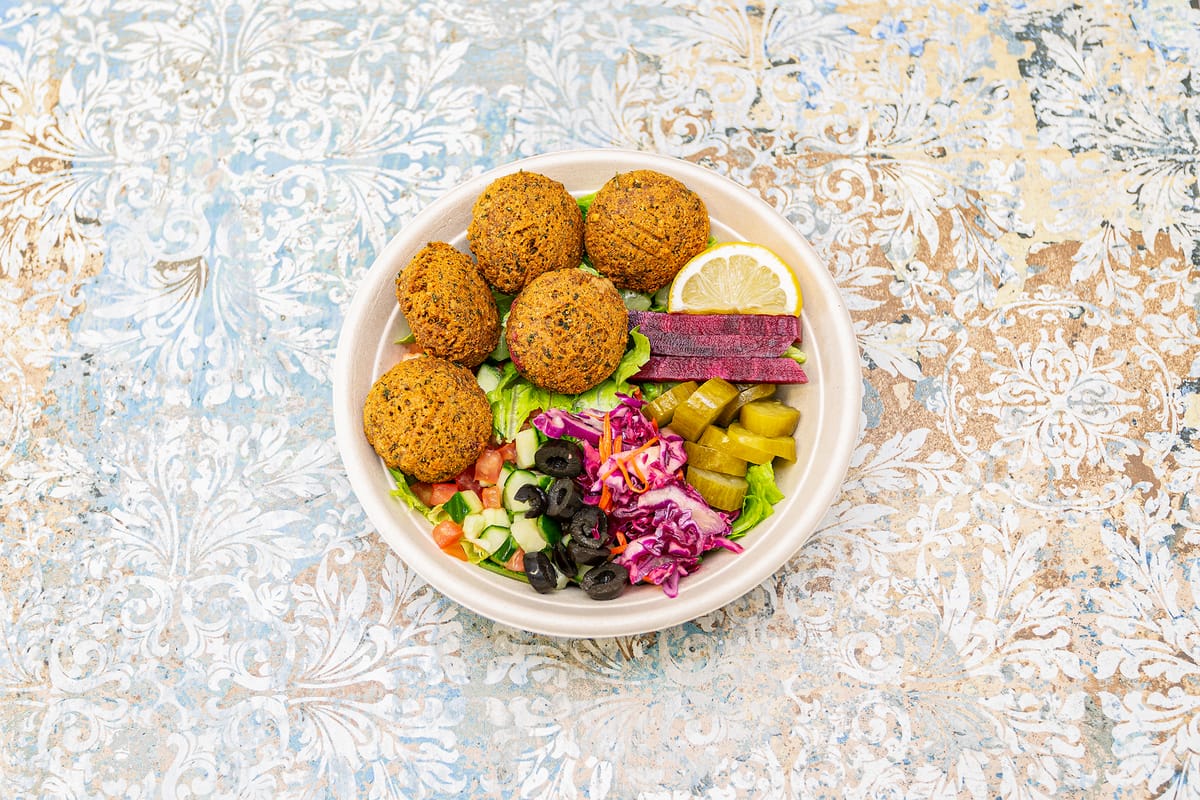
From Phyllo to Syrup: How Baklava Is Made
Four steps. Dozens of layers. Real butter. Fresh nuts. Rose-water honey syrup. The same method that Levantine bakers have followed for centuries.
Phyllo Sheets Layered and Buttered by Hand
The foundation of baklava is its phyllo. Dozens of paper-thin sheets are stacked one on top of the other. Each sheet is brushed with clarified butter before the next one goes down. This is not a step that can be rushed or mechanized without losing quality. The butter must coat every sheet evenly -- too much and the pastry is greasy, too little and the layers stick together and lose their individual crispness. When baked, each buttered sheet becomes a separate, shattering layer. That is the texture that defines baklava.
Pistachio and Walnut Filling Prepared
The nut filling is a blend of pistachios and walnuts, chopped to a specific coarseness. The pistachios provide color, sweetness, and a distinctive earthy flavor. The walnuts add depth and a heartier crunch. The mixture is spread in an even layer between the phyllo stacks -- not pressed, not packed, but distributed so that every piece of baklava gets the same generous amount of nuts. The quality of the nuts is non-negotiable. Stale or rancid nuts ruin baklava entirely. Fresh, high-quality pistachios and walnuts are what give the filling its fragrance and flavor.
Baked Until Deep Golden in a Hot Oven
The assembled baklava goes into a hot oven. The heat crisps the butter-brushed phyllo from the outside in, turning each layer golden and brittle. The nut filling toasts gently inside, intensifying its flavor. Timing is critical. Underbaked baklava has pale, soft phyllo that feels doughy. Overbaked baklava has burned edges and a bitter taste. The goal is a deep, even golden color across the entire surface, with every phyllo layer crisped through to the center.
Rose-Water Honey Syrup Poured Hot Over Hot
The most important step happens immediately after the tray comes out of the oven. The syrup -- made from honey, sugar, water, and rose water -- is poured over the hot baklava while both are still at temperature. Hot syrup on hot pastry is the only combination that works. The syrup is absorbed through every phyllo layer, saturating the nut filling and pooling slightly at the base. As the baklava cools, the syrup sets, and the phyllo regains its crispness with a sweet, sticky glaze. The rose water gives the finished pastry its signature floral fragrance.
Baklava: A Pastry That Crosses Borders and Centuries
More than a dessert. Baklava is a centuries-old tradition, a celebration food, a cultural gift, and a defining expression of Levantine hospitality.
Centuries of Phyllo: Baklava's Ancient Origins
Historians trace layered pastries filled with nuts and sweetened with honey back to the ancient Assyrians, as early as the 8th century BCE. The technique of stretching dough into paper-thin sheets -- the ancestor of modern phyllo -- appears in records from the Byzantine Empire and the Persian court. By the time the Ottoman Empire consolidated the technique in its palace kitchens in Istanbul, baklava had become a ceremonial dessert served during Ramadan, at weddings, and on religious holidays. The Ottoman palace kitchen in Topkapi employed specialized baklava makers whose only job was producing trays of the pastry for the sultan and his court. That level of craftsmanship established baklava as the premier dessert of the region.
From Beirut and Damascus to Falls Church
In Lebanon and Syria, baklava is not an everyday dessert. It is a celebration food. Trays of baklava are brought to family gatherings, sent as gifts during holidays, and served to guests as a sign of hospitality and generosity. The quality of the baklava you serve reflects the respect you have for the occasion and the people at the table. In the diaspora, baklava carries this same weight. Lebanese and Syrian families in Northern Virginia, including Falls Church, Arlington, Annandale, and Fairfax, seek out baklava that matches what they grew up eating. At Taza, the recipe follows the Levantine tradition: real butter, real pistachios, real rose-water honey syrup.
Baklava as a Gift and Gathering Staple
In Middle Eastern culture, you do not arrive at someone's home empty-handed. Baklava is one of the most common gifts to bring to a dinner party, a holiday gathering, or a celebration. A box of baklava communicates something specific: this is a real dessert, made with care, worth sharing. At $2.95 per serving at Taza, you can order multiple servings to share at a gathering or to bring as a gift. Pair it with Arabic coffee for the traditional after-dinner experience that has been the standard across the Levant for generations.
Baklava in Northern Virginia's Food Scene
Northern Virginia has one of the largest Arab-American communities on the East Coast. Falls Church, Arlington, Annandale, and the surrounding areas have a deep, established demand for authentic Middle Eastern sweets. Grocery stores carry pre-packaged baklava imported from Lebanon and Turkey, but the difference between factory-made and freshly prepared baklava is immediately obvious. Fresh baklava has a crisp, shattering phyllo that gives way to a fragrant nut filling and a syrup that has been absorbed into every layer. Stale baklava is chewy, flat, and tastes of cardboard. Taza serves baklava that is prepared with real ingredients and maintained for freshness.
Baklava and the Taza Menu: Complete Meal Ideas
Baklava is the final course. Here are the main courses, sides, and drinks that lead up to it -- each one a natural pairing rooted in Levantine dining tradition.
Rice Pudding
The reason you are on this page. Layers of paper-thin phyllo pastry, brushed with real butter, filled with finely chopped pistachios and walnuts, baked until deep golden, and drenched in fragrant rose-water honey syrup. Each bite shatters through the crisp phyllo into a dense, nutty, floral-sweet center. At $2.95 per serving, it is one of the most authentic and affordable baklava options in Northern Virginia.
Rice Pudding
Creamy rice pudding, slowly cooked with whole milk, sweetened with sugar, and perfumed with rose water. Dusted with cinnamon and served chilled. A completely different texture from baklava -- smooth, cool, and comforting. Together, baklava and rice pudding represent the two pillars of Levantine dessert: the crisp and the creamy.
Chicken Shawarma Bowl
A generous chicken shawarma bowl -- sliced shawarma over rice or greens with Arabic salad, garlic sauce, and pickled turnips. Follow it with baklava. The savory depth of the shawarma, the brightness of the salad, and the sweet fragrance of the baklava create a three-course experience in two items. A complete meal at Taza for under $18.
Lahm Bi Ajin Manaeesh
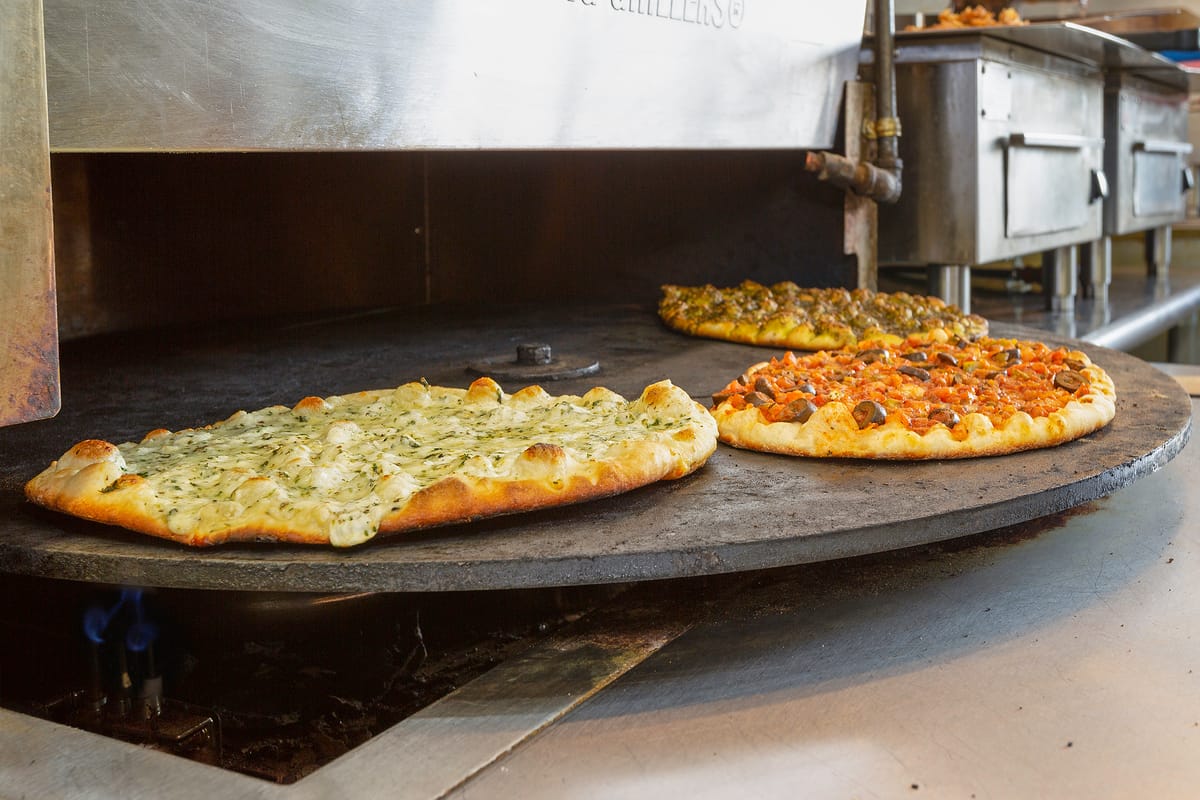
Thin, crispy flatbread topped with seasoned ground beef, onion, and parsley. A squeeze of lemon before eating is the traditional finish. Follow it with a serving of baklava for the full Lebanese bakery experience -- savory flatbread first, then sweet layered pastry. Lahm bil ajin at $8.95 plus baklava at $2.95 comes to under $12 for a complete meal and dessert.
Avocado Boost
A rich, creamy smoothie made with ripe avocado, whole milk, honey, and mixed nuts. The nutty, creamy profile of the avocado boost complements the nutty, crisp sweetness of the baklava. A combination that works as an afternoon treat or a lighter alternative to a full savory meal before dessert.
What to Eat and Drink with Baklava
Traditional pairings and smart combinations that make baklava the sweet conclusion to a complete Taza meal.
Chicken Shawarma Pita
from $9.95The most popular item on the Taza menu. Tender chicken shawarma in warm pita with garlic sauce and pickled turnips. The savory, garlicky richness of the shawarma creates the perfect contrast for the sweet, floral baklava that follows. Order a chicken shawarma pita for the main course and baklava for dessert -- that is one of the most complete meals at Taza.
View Item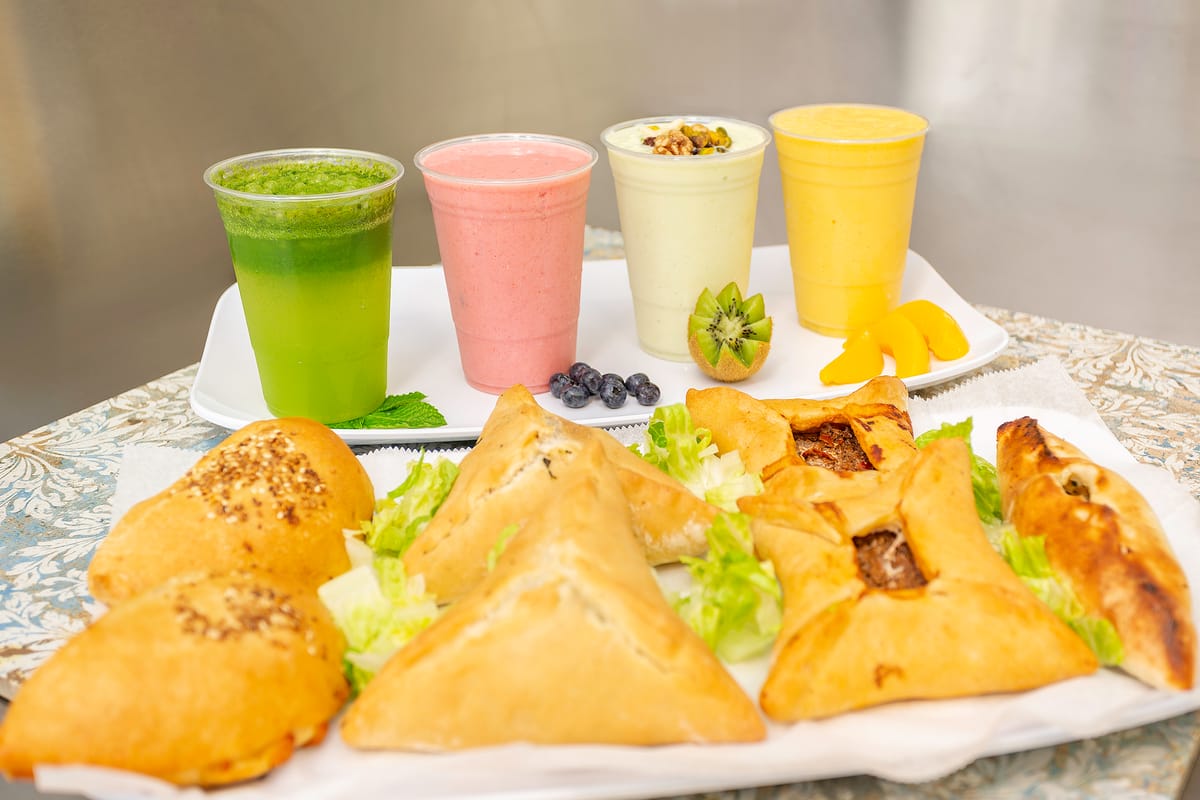
Falafel Pita
from $8.95Crispy chickpea falafel in a warm pita pocket with tahini, lettuce, tomatoes, and pickles. A fully vegetarian main course that pairs naturally with baklava for dessert. The tahini in the falafel and the nuts in the baklava share a similar richness, creating a meal that is cohesive from start to finish. Both items are vegetarian.
View ItemLemon Mint
$5.95Fresh-squeezed lemon and mint blended cold. The acidity of the lemon and the coolness of the mint cut through the sweetness of the baklava syrup, cleansing the palate between bites. This is the drink that is served alongside baklava and sweets across Lebanon and Syria as a matter of tradition. Bright, refreshing, and the natural complement to any dessert.
View Item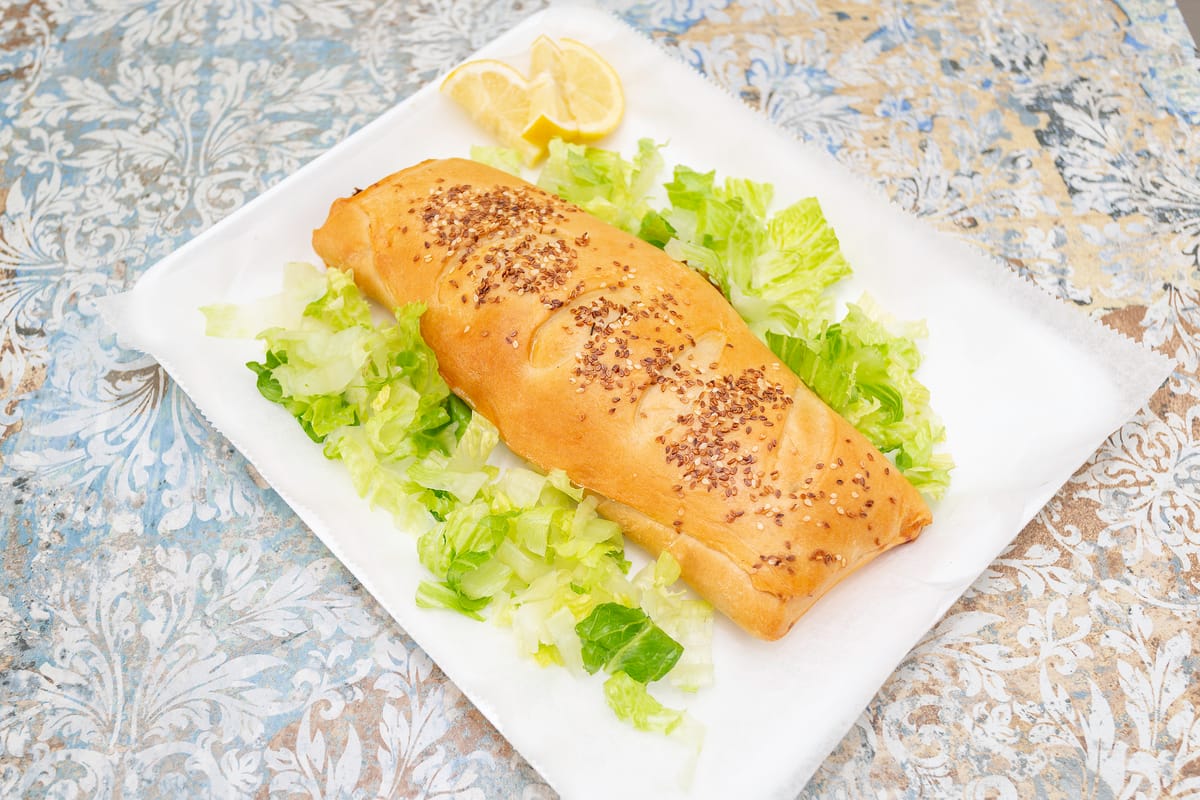
Hummus
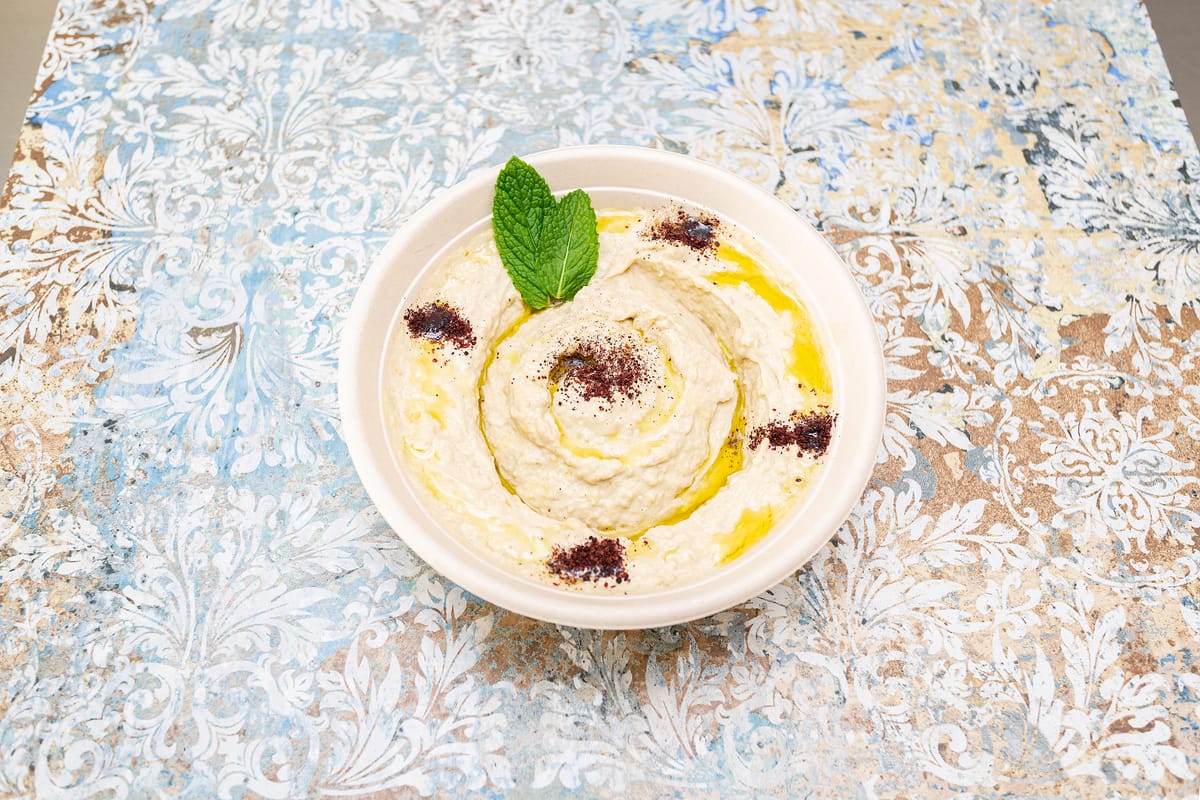
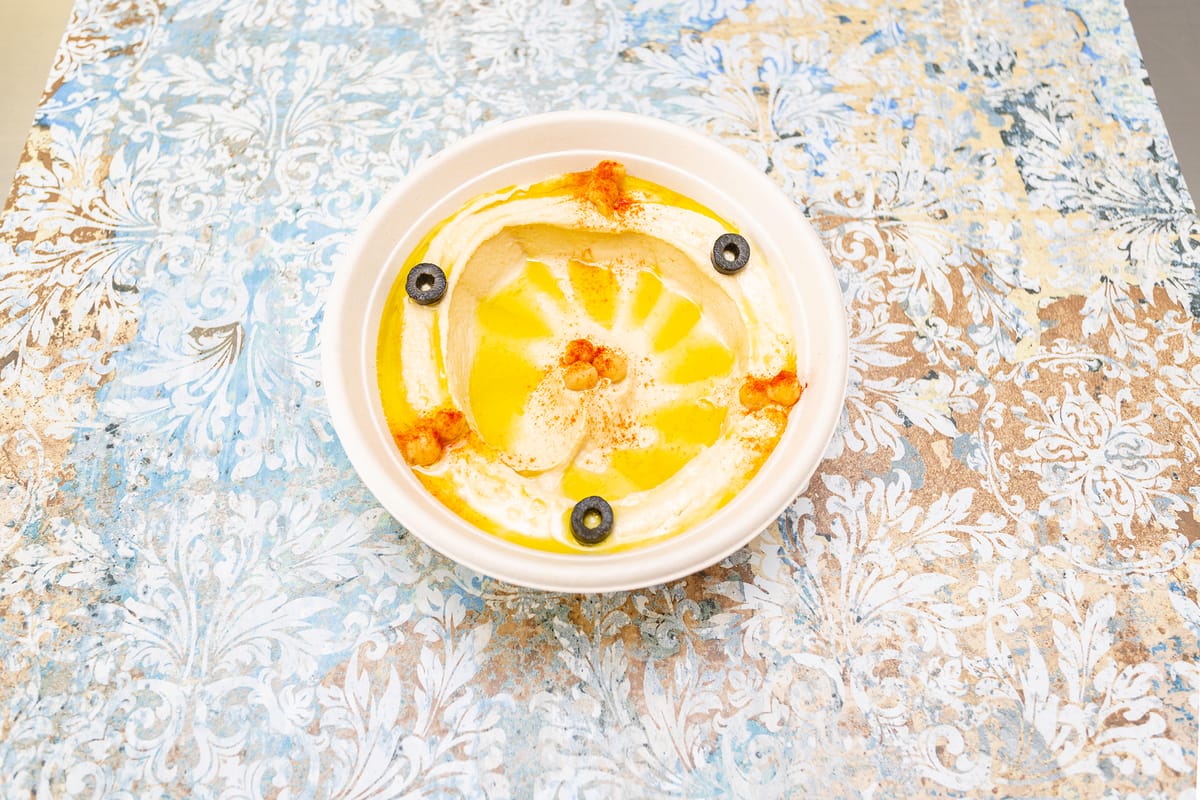
$4.95Begin with hummus and warm pita as an appetizer, move to a main course, then finish with baklava. The creamy, garlicky hummus establishes a savory baseline that makes the floral sweetness of the baklava stand out even more when it arrives at the end. A progression from savory to sweet -- the way a traditional Lebanese meal is structured.
View ItemRice Pudding
$2.95For people who take dessert seriously: order both baklava and rice pudding. The rice pudding is creamy, perfumed with rose water, and dusted with cinnamon. The baklava is crisp, nutty, and drenched in honey syrup. Two entirely different textures, two different sweetness profiles, both rooted in the same Levantine dessert tradition. Together they cost under $10.
View ItemBaklava Near Me -- How Far Is Taza from You?
Located at 5820 Seminary Rd Ste O, Falls Church, VA 22041. Here is how long it takes to get here from neighborhoods across Northern Virginia and DC.
Three Ways to Get Baklava from Taza
Order Online for Pickup
Place your order through our website and pick up your baklava fresh. Easy parking at our Seminary Road location. Most orders ready in 10-15 minutes. Baklava is packaged in containers that protect the delicate phyllo layers during transport. The best option for maximum freshness and intact presentation.
DoorDash Delivery
Get baklava delivered to your door through DoorDash. We package baklava carefully to preserve the crisp phyllo layers and prevent the syrup from pooling. Typical delivery time across Northern Virginia is 25-40 minutes depending on distance. Order alongside shawarma, pies, or any other item on the menu.
Uber Eats Delivery
Order through Uber Eats for delivery across the NoVA and DC metro area. Same quality baklava -- real butter phyllo, pistachio-walnut filling, rose-water honey syrup. Delivered to your home, office, or gathering. Add baklava to any meal order for a complete dining experience delivered to your door.
Frequently Asked Questions About Baklava
Baklava is a layered pastry made from dozens of sheets of paper-thin phyllo dough, each brushed with clarified butter, filled with a mixture of finely chopped pistachios and walnuts, baked until golden, and drenched in a fragrant syrup made from honey, sugar, water, and rose water. The result is a pastry with a crisp, shattering exterior, a dense nutty center, and a sweet, floral finish. It is one of the oldest and most widely recognized desserts in Middle Eastern, Mediterranean, and Levantine cuisine. At Taza, baklava is $2.95 per serving.
Taza Shawarma & Falafel at 5820 Seminary Rd Ste O, Falls Church, VA 22041 serves authentic Levantine baklava made with real butter-brushed phyllo, pistachio and walnut filling, and rose-water honey syrup for $2.95 per serving. We also serve rice pudding ($2.95) as a second dessert option. Open 7 days a week, 11 AM to midnight. Dine-in, pickup, and delivery available via DoorDash and Uber Eats. We serve Falls Church, Arlington, Alexandria, Annandale, Fairfax, Tysons, Springfield, and the broader DC metro area.
Yes. Every item at Taza is 100% halal, including the baklava. The butter used in the phyllo is halal-certified. The honey and sugar syrup contain no animal-derived additives. The nuts are pure pistachios and walnuts with no cross-contamination. The entire Taza kitchen operates under halal standards -- from the shawarma and falafel to the desserts. There is no ambiguity.
Baklava at Taza is $2.95 per serving. Rice pudding, our other dessert option, is $2.95. Both are made with traditional Levantine recipes and real ingredients. For a complete meal with dessert, add baklava to any entree: a falafel pita (from $8.95) plus baklava comes to under $14. A chicken shawarma pita (from $9.95) plus baklava is under $15.
Traditionally, baklava is served after a savory meal as the final course. At Taza, the most popular combination is a shawarma or falafel main course followed by baklava for dessert. The lemon mint drink ($5.95) is the traditional beverage pairing -- the acidity and mint cut through the sweetness of the syrup. Arabic coffee is the classic hot drink companion. You can also pair baklava with rice pudding ($2.95) for a full Levantine dessert spread -- crisp and creamy side by side.
Yes. Baklava is one of the most traditional items to bring to a gathering, dinner party, or celebration in Middle Eastern culture. At $2.95 per serving, you can order multiple servings for any occasion. For larger orders, call Taza directly at (703) 340-1014 with advance notice. We can prepare larger quantities and have them packaged and ready for pickup at a specific time. Standard online ordering through our website or through DoorDash and Uber Eats works for smaller orders.
Both use phyllo dough, butter, nuts, and syrup, but the specifics differ. Lebanese and Syrian baklava -- the tradition Taza follows -- emphasizes pistachios in the filling and uses a syrup flavored with rose water or orange blossom water and honey. The result is lighter, more fragrant, and more floral. Turkish baklava often uses walnuts, a heavier simple syrup (sugar and water without rose water), and is sometimes denser. Greek baklava typically includes cinnamon and cloves in the nut filling. All are authentic to their regions. Taza serves the Levantine version.
Yes. Baklava at Taza is fully vegetarian. The ingredients are phyllo dough, butter, pistachios, walnuts, honey, sugar, water, and rose water. No meat, no gelatin, no animal-derived additives beyond butter and honey. It is also halal. For a fully vegetarian meal ending with baklava, pair it with a falafel pita (from $8.95) or a falafel bowl, hummus ($4.95), and a lemon mint drink ($5.95).
Taza Shawarma & Falafel is located at 5820 Seminary Rd Ste O, Falls Church, VA 22041. Open 7 days a week, 11:00 AM - 12:00 AM. Phone: (703) 340-1014. Dine-in, pickup, and delivery available. We serve Falls Church, Arlington, Alexandria, Fairfax, Tysons, Springfield, Annandale, and the entire Northern Virginia / DC metro area.
Baklava Near Me in Falls Church, VA: The Complete Guide
If you searched for baklava near me, Lebanese baklava near me, or Middle Eastern desserts near me, you are looking for a specific thing: a layered pastry made from paper-thin phyllo dough, brushed with real butter, filled with chopped pistachios and walnuts, baked until deep golden, and drenched in a fragrant syrup made with honey and rose water. That is exactly what Taza Shawarma & Falafel serves at 5820 Seminary Rd Ste O, Falls Church, VA 22041, seven days a week, from 11 AM to midnight.
Baklava is the most recognized dessert in Middle Eastern and Mediterranean cuisine. Its origins stretch back centuries, with roots in the ancient empires of Mesopotamia, Persia, and the Byzantine world. The technique of stretching dough into translucent sheets and layering them with nuts and honey was refined over generations of palace kitchens and bakery guilds. By the time the Ottoman Empire formalized baklava production in its kitchens in Istanbul, the pastry had already been a staple across the Levant, Anatolia, and the Caucasus for hundreds of years.
The version served at Taza follows the Levantine tradition -- the style of Lebanon, Syria, and Palestine. Levantine baklava emphasizes pistachios as the primary nut, uses a lighter syrup perfumed with rose water or orange blossom water, and favors a delicate, shatteringly crisp phyllo over a denser, chewier style. The syrup is absorbed into the layers rather than pooling on top, creating a pastry that is sweet but not cloying, nutty but not dry, and fragrant without being overpowering.
At Taza, baklava is $2.95 per serving. That price gets you a portion of layered phyllo with a generous pistachio and walnut filling, soaked in rose-water honey syrup. It is enough to serve as a complete dessert after any meal on the menu. For a fuller dessert spread, add rice pudding ($2.95) -- a creamy, rose-water-scented pudding dusted with cinnamon. Together, the two desserts represent the crisp and the creamy pillars of Levantine sweet-making.
Baklava pairs naturally with everything on the Taza menu. After a chicken shawarma pita (from $9.95), the sweet, floral baklava provides a clean, satisfying ending. After a falafel bowl or a round of specialty pies -- cheese pie ($2.95), spinach pie ($2.95), sfiha ($2.95) -- the baklava adds a final note that ties the meal together. The traditional drink pairing is lemon mint ($5.95): the acidity of the lemon and the coolness of the mint cut through the sweetness of the syrup, cleansing the palate between bites.
What Makes Good Baklava: The Details That Matter
The quality of baklava depends on four things: the phyllo, the butter, the nuts, and the syrup. Each one must be right for the final product to work.
The phyllo must be paper-thin -- translucent when held up to light. Each sheet is brushed individually with clarified butter, which gives the baked pastry its golden color and its characteristic shatter. Using margarine or vegetable oil instead of real butter produces a greasy, flat pastry that lacks crispness and flavor. The difference between butter- brushed phyllo and oil-brushed phyllo is immediately obvious on the first bite.
The nuts must be high quality and chopped to the right texture. Pistachios give baklava its distinctive green color and a sweet, slightly earthy flavor. Walnuts add a deeper, richer nuttiness. The mixture must be coarse enough to provide texture but fine enough to form a cohesive layer between the phyllo sheets. Producers who cut costs by using peanuts, cashews, or mostly sugar paste create a product that bears no resemblance to authentic baklava.
The syrup is what transforms baked phyllo and nuts into baklava. A proper Levantine syrup is made from sugar, water, honey, and rose water. Some recipes add a squeeze of lemon juice to prevent crystallization. The syrup must be poured over the baklava while the pastry is still hot from the oven. Hot syrup on cool pastry or cool syrup on hot pastry both fail -- the first makes the pastry soggy, the second does not absorb. Hot syrup on hot pastry penetrates every layer, is absorbed evenly, and sets as the baklava cools, creating the characteristic sticky-but-crisp texture.
Baklava for Gatherings, Gifts, and Special Occasions
In Lebanese and Syrian culture, baklava is a celebration food and a gift. You bring a box of baklava when visiting someone's home. You serve trays of baklava at weddings, engagement parties, and holiday gatherings. The quality of the baklava you bring reflects your regard for the people receiving it. This cultural significance carries directly into the diaspora communities of Northern Virginia.
At $2.95 per serving, Taza's baklava is priced for everyday enjoyment and for special occasions alike. For larger orders -- a dozen or more servings for a gathering or party -- call Taza directly at (703) 340-1014 with advance notice. We can have your order prepared and packaged for pickup at a specific time.
Baklava vs. Other Levantine Desserts at Taza
Taza offers two desserts: baklava ($2.95) and rice pudding ($2.95). They represent two completely different approaches to sweetness. Baklava is crisp, layered, nutty, and drenched in floral syrup. Rice pudding is smooth, creamy, perfumed with rose water, and dusted with cinnamon. One is hot-baked and complex in texture. The other is chilled and comforting. Ordering both gives you the full range of what Levantine dessert tradition offers -- for under $10 combined.
Taza serves Falls Church, Bailey's Crossroads, Seven Corners, Arlington, Alexandria, Annandale, Merrifield, Fairfax, Tysons, Springfield, McLean, and the broader DC metro area. Delivery through DoorDash and Uber Eats. Pickup via our website. Catering for large orders available -- call (703) 340-1014. Open 11:00 AM - 12:00 AM, seven days a week.
Authentic Lebanese Baklava in Falls Church, VA
Real phyllo. Real pistachios. Rose-water honey syrup. $2.95 per serving. Taza Shawarma & Falafel, 5820 Seminary Rd Ste O, Falls Church, VA 22041. Open until midnight, seven days a week.